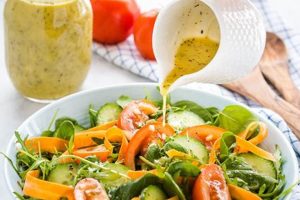
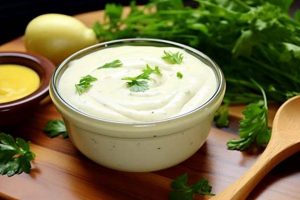
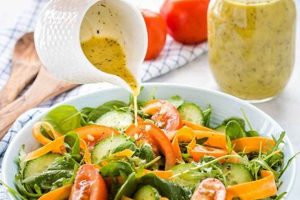
A typical dressing for Lebanese salads, often called simply “Lebanese dressing,” features a vibrant combination of lemon juice, olive oil, and garlic. Common additions include dried or fresh herbs like mint, parsley, and oregano. Variations might incorporate sumac for a tangy twist or a touch of pomegranate molasses for sweetness and depth. This emulsion provides a bright, citrusy counterpoint to the fresh vegetables often used in Lebanese cuisine.
This style of dressing contributes significantly to the distinctive flavor profile of Lebanese salads, such as fattoush and tabbouleh. Its refreshing acidity and herbaceous notes complement the crisp vegetables, herbs, and sometimes toasted pita bread found in these dishes. The use of high-quality olive oil contributes healthy fats, while the lemon juice offers Vitamin C and antioxidants. This dressing reflects the broader culinary landscape of the Levant, highlighting the region’s emphasis on fresh, seasonal ingredients and simple yet flavorful preparations.
The following sections will explore specific variations on this classic dressing, offering detailed recipes and tips for achieving optimal flavor and texture. Techniques for ingredient preparation, emulsion stability, and storage will also be discussed.
Tips for a Superior Lebanese Salad Dressing
Achieving a balanced and flavorful Lebanese salad dressing involves attention to detail and an understanding of the interplay between its core components. The following tips offer guidance for elevating this simple yet essential element of Lebanese cuisine.
Tip 1: Freshly Squeezed Lemon Juice is Essential: Bottled lemon juice often contains additives that can negatively impact the dressing’s brightness. Freshly squeezed lemon juice provides the optimal level of acidity and a more vibrant flavor.
Tip 2: High-Quality Olive Oil Makes a Difference: Extra virgin olive oil, with its robust flavor and health benefits, is recommended. The olive oil forms the base of the emulsion and contributes significantly to the overall taste.
Tip 3: Balance Acidity and Sweetness: While lemon juice provides the primary acidic note, a touch of sweetness can enhance the overall flavor profile. A small amount of pomegranate molasses or a pinch of sugar can achieve this balance.
Tip 4: Proper Emulsification is Key: Whisking the lemon juice and olive oil vigorously creates a stable emulsion, preventing separation and ensuring a smooth, creamy texture. Alternatively, a blender can be used for a more consistent result.
Tip 5: Fresh Herbs Enhance the Flavor: Freshly chopped mint, parsley, and oregano add depth and complexity. Adding these herbs just before serving preserves their vibrant flavor and aroma.
Tip 6: Garlic Adds Pungency: Finely minced or grated garlic adds a pungent note that complements the other ingredients. Adjust the amount according to preference.
Tip 7: Sumac Offers a Tangy Twist: This Middle Eastern spice provides a unique tartness. A small amount can add another layer of flavor complexity.
By following these tips, one can create a Lebanese salad dressing that is not only flavorful but also showcases the quality of its individual ingredients. A well-made dressing elevates the overall salad experience, transforming simple vegetables into a vibrant and satisfying dish.
The following section will provide a selection of specific recipes, enabling practical application of these tips and further exploration of this versatile dressing.
1. Freshly Squeezed Lemon Juice

Freshly squeezed lemon juice constitutes a cornerstone of Lebanese salad dressing, providing the essential acidic component that balances the richness of olive oil and enhances the other flavors. Its importance extends beyond mere tartness; it contributes significantly to the overall sensory experience and cultural authenticity of the dish.
- Brightness and Acidity
Fresh lemon juice offers a clean, vibrant acidity that bottled varieties often lack. This brightness cuts through the richness of the olive oil, creating a balanced and refreshing flavor profile. The acidity also helps to preserve the fresh herbs and vegetables in the salad.
- Flavor Complexity
The volatile aromatic compounds present in fresh lemon juice contribute a layer of complexity beyond simple sourness. These compounds interact with the other ingredients, such as garlic and herbs, creating a more nuanced and flavorful dressing. The absence of preservatives and additives in fresh juice allows these subtle flavors to shine.
- Emulsification and Texture
The natural acidity of lemon juice aids in the emulsification process, helping to bind the oil and water-based ingredients together. This contributes to the desired creamy texture of the dressing and prevents separation. Fresh juice generally provides a more stable emulsion compared to bottled alternatives.
- Cultural Significance
The use of fresh lemon juice reflects a broader culinary tradition in Lebanese and Middle Eastern cuisine, emphasizing the importance of fresh, seasonal ingredients. This practice aligns with a focus on simplicity and maximizing the natural flavors of the components.
The preference for freshly squeezed lemon juice in Lebanese salad dressing underscores its multifaceted role in contributing to the dish’s overall success. It highlights the significance of seemingly simple ingredients and their impact on flavor, texture, and cultural authenticity. This attention to detail elevates the salad dressing beyond a mere condiment, transforming it into an integral component of the Lebanese culinary experience.
2. High-Quality Extra Virgin Olive Oil
High-quality extra virgin olive oil forms the foundation of a truly exceptional Lebanese salad dressing. Its contribution extends beyond simply providing a lipid base; it imparts distinct flavor characteristics, textural nuances, and nutritional value that significantly influence the dressing’s overall quality.
- Flavor Profile and Aromatic Complexity
Extra virgin olive oil possesses a complex flavor profile, ranging from fruity and peppery to grassy and buttery, depending on the olive varietal, terroir, and production methods. These nuances interact with the other dressing components, such as lemon juice, garlic, and herbs, creating a more sophisticated and layered flavor experience. A high-quality oil contributes significantly to the dressing’s aromatic depth.
- Texture and Emulsion Stability
The viscosity and chemical composition of extra virgin olive oil play a crucial role in the emulsification process, contributing to the dressing’s creamy texture and stability. A high-quality oil emulsifies more readily with the acidic lemon juice, creating a cohesive and visually appealing dressing that resists separation.
- Nutritional Value and Health Benefits
Extra virgin olive oil is rich in monounsaturated fats, antioxidants, and anti-inflammatory compounds, offering potential health benefits. Its inclusion in the salad dressing contributes to the nutritional value of the overall dish, aligning with the Mediterranean diet’s emphasis on healthy fats.
- Cultural Significance and Authenticity
Olive oil holds a significant place in Lebanese and Mediterranean cuisine, representing a long-standing culinary tradition. Using a high-quality extra virgin olive oil reflects an appreciation for authentic ingredients and elevates the dressing’s cultural resonance.
The selection of high-quality extra virgin olive oil represents a crucial step in crafting a Lebanese salad dressing that is not only flavorful but also embodies the principles of healthy eating and cultural heritage. This attention to ingredient quality underscores the importance of each component in contributing to the overall culinary experience.
3. Finely Minced Garlic

Finely minced garlic plays a crucial role in shaping the distinctive flavor profile of Lebanese salad dressing. Its pungent and aromatic qualities contribute a depth and complexity that complements the other key ingredients, such as lemon juice, olive oil, and fresh herbs. Understanding the impact of garlic preparation on the final dressing is essential for achieving optimal flavor and balance.
- Pungency and Flavor Impact
The degree of mincing directly influences the intensity of garlic’s flavor in the dressing. Finely minced garlic releases more of its volatile compounds, resulting in a more pronounced and pungent flavor compared to larger pieces or crushed cloves. This pungent note adds a savory depth to the dressing, contrasting with the brightness of lemon juice and the richness of olive oil.
- Distribution and Texture
Finely mincing garlic ensures even distribution throughout the dressing, preventing pockets of intense garlic flavor and contributing to a smoother texture. This allows the garlic to meld seamlessly with the other ingredients, creating a cohesive and balanced flavor profile. Larger pieces of garlic can create an uneven textural experience and overpowering bursts of flavor.
- Emulsification and Stability
While not a primary emulsifying agent, finely minced garlic contributes to the overall stability of the dressing by helping to suspend the smaller oil droplets within the aqueous phase. This effect is amplified when the garlic is emulsified along with the other ingredients, further enhancing the dressing’s texture and preventing separation.
- Cultural Context and Traditional Practices
The use of garlic in Lebanese cuisine, and particularly in salad dressings, reflects a broader cultural preference for bold and aromatic flavors. The technique of finely mincing the garlic is a traditional practice that maximizes its flavor contribution while ensuring even distribution and a pleasant textural experience.
The careful preparation of garlic, specifically through fine mincing, significantly impacts the final flavor, texture, and overall quality of Lebanese salad dressing. This seemingly minor detail highlights the importance of technique and ingredient preparation in achieving an authentic and balanced culinary experience.
4. Freshly Chopped Herbs (Mint, Parsley)

Freshly chopped herbs, particularly mint and parsley, constitute essential aromatic components of Lebanese salad dressing. Their inclusion contributes significantly to the dressing’s overall flavor profile, freshness, and cultural authenticity. An understanding of their individual characteristics and combined effect is crucial for achieving a balanced and flavorful result.
- Aromatic Complexity and Flavor Enhancement
Mint and parsley possess distinct aromatic profiles that complement the other ingredients in Lebanese salad dressing. Mint offers a cool, refreshing herbaceousness, while parsley contributes a slightly peppery, earthy note. Their combined presence adds depth and complexity to the dressing’s flavor, balancing the acidity of lemon juice and the richness of olive oil.
- Freshness and Visual Appeal
The vibrant green color and fresh aroma of chopped mint and parsley enhance the salad’s visual appeal and overall sensory experience. Incorporating these herbs just before serving maximizes their freshness and prevents wilting or discoloration, ensuring an appetizing presentation.
- Cultural Significance and Traditional Usage
The use of fresh herbs, particularly mint and parsley, is deeply rooted in Lebanese and Middle Eastern culinary traditions. Their inclusion in salad dressings reflects a broader emphasis on fresh, seasonal ingredients and a preference for vibrant, herbaceous flavors. This practice contributes to the dressing’s cultural authenticity and connects it to a rich culinary heritage.
- Nutritional Value and Health Benefits
Mint and parsley are sources of vitamins, minerals, and antioxidants, contributing to the nutritional value of the salad dressing. While their presence in the dressing is primarily for flavor enhancement, their inherent nutritional benefits further enhance the overall healthfulness of the dish. This aligns with the broader Mediterranean diet emphasis on incorporating fresh herbs and vegetables.
The inclusion of freshly chopped mint and parsley elevates Lebanese salad dressing beyond a simple condiment, transforming it into a flavorful and aromatic element that embodies the principles of freshness, balance, and cultural authenticity. Their careful selection and preparation contribute significantly to the overall culinary experience, highlighting the importance of these seemingly simple ingredients.
5. Subtle Sweetness (Pomegranate Molasses)
The inclusion of a subtle sweetness, often achieved through the use of pomegranate molasses, represents a nuanced yet crucial aspect of Lebanese salad dressing. This element balances the acidity of the lemon juice and enhances the complexity of the overall flavor profile, contributing to the dressing’s characteristic balance and depth. An exploration of the specific roles and implications of this subtle sweetness provides further insight into the art of crafting a truly authentic Lebanese salad dressing.
- Balancing Acidity
Pomegranate molasses, with its distinctive sweet-tart flavor, tempers the sharpness of the lemon juice, preventing the dressing from becoming overly acidic. This balance allows the other flavors, such as those of the fresh herbs and garlic, to shine through without being overpowered. The subtle sweetness rounds out the taste, creating a more harmonious and palatable experience.
- Flavor Complexity and Depth
Pomegranate molasses contributes a complex layer of flavor beyond simple sweetness. Its inherent tanginess and subtle fruity notes add depth and richness to the dressing, complementing the herbaceousness of the mint and parsley and the pungency of the garlic. This interplay of flavors creates a more nuanced and sophisticated taste profile.
- Color and Visual Appeal
The deep ruby hue of pomegranate molasses adds a subtle yet attractive color dimension to the dressing. This visual element enhances the overall presentation of the salad, making it more appealing and appetizing. The color also subtly hints at the complex flavor profile that awaits.
- Cultural Relevance and Authenticity
The use of pomegranate molasses in Lebanese cuisine reflects a broader regional preference for incorporating fruit-derived sweeteners and souring agents. Its inclusion in salad dressings aligns with traditional culinary practices and contributes to the authenticity of the dish, showcasing a deep connection to the region’s culinary heritage.
The subtle sweetness imparted by pomegranate molasses, or similar ingredients, plays a vital role in shaping the overall character of Lebanese salad dressing. This nuanced element contributes to the balance, complexity, and cultural authenticity of the dressing, elevating it from a simple condiment to an integral component of the Lebanese culinary experience. The careful consideration of sweetness exemplifies the attention to detail that characterizes authentic Lebanese cuisine.
6. Ground Sumac (Optional)
Ground sumac, while optional, offers a unique dimension to Lebanese salad dressing, contributing a distinctive tartness and earthy depth that complements the other ingredients. Its presence, though not strictly traditional in all variations, reflects a broader regional appreciation for its culinary versatility and potential to enhance flavor complexity.
- Tartness and Acidity
Sumac’s primary contribution lies in its tart, citrusy flavor profile. This tartness provides a counterpoint to the sweetness of pomegranate molasses and complements the acidity of lemon juice, adding another layer of complexity to the overall balance. The distinct tartness of sumac differs from that of lemon, offering a more earthy and less overtly citrusy character.
- Earthy and Complex Flavor Notes
Beyond its tartness, sumac possesses subtle earthy and slightly floral notes that contribute to the dressing’s overall depth of flavor. These nuances interact with the other ingredients, particularly the fresh herbs, creating a more complex and well-rounded taste profile. Sumac’s earthy notes can be particularly complementary to the peppery qualities of parsley.
- Visual Appeal and Color Enhancement
Ground sumac’s deep reddish-purple color adds a visually appealing element to the salad dressing. This vibrant hue enhances the overall presentation, creating a more attractive and appetizing dish. The color also subtly signals the presence of sumac’s distinctive flavor profile.
- Regional Culinary Context
While not a universal component of all Lebanese salad dressings, sumac’s use reflects its prevalence in broader Middle Eastern cuisine. Its inclusion represents an opportunity to explore regional variations and add another layer of cultural authenticity to the dish. Sumac’s presence can indicate a connection to specific regional culinary traditions within Lebanon and neighboring countries.
The optional inclusion of ground sumac in Lebanese salad dressing provides a pathway to further flavor exploration and customization. Its distinctive tartness, earthy undertones, and vibrant color contribute to a more complex and nuanced sensory experience, showcasing the versatility and depth of Lebanese culinary traditions. Whether included or omitted, understanding sumac’s potential impact on the dressing’s overall profile provides valuable insight into the delicate balance of flavors that define this culinary staple.
Frequently Asked Questions
This section addresses common inquiries regarding Lebanese salad dressing preparation and its various components, offering practical guidance for achieving optimal results.
Question 1: Can bottled lemon juice be substituted for fresh?
While bottled lemon juice offers convenience, it often contains additives that can negatively impact the dressing’s brightness and overall flavor profile. Freshly squeezed lemon juice is strongly recommended for optimal quality and taste.
Question 2: What type of olive oil is best suited for this dressing?
Extra virgin olive oil, with its robust flavor and health benefits, is the preferred choice. Its quality significantly influences the dressing’s overall taste and texture.
Question 3: How can the dressing’s consistency be adjusted?
If the dressing is too thick, additional lemon juice or a small amount of water can be added to achieve the desired consistency. Conversely, if too thin, a bit more olive oil can be incorporated.
Question 4: What is the role of pomegranate molasses in the dressing?
Pomegranate molasses contributes a subtle sweetness and tanginess that balances the acidity of the lemon juice and adds depth to the flavor profile. It is an optional ingredient but highly recommended for an authentic taste.
Question 5: Can the dressing be made ahead of time?
While the dressing can be prepared in advance, it’s best to add the fresh herbs just before serving to maintain their vibrant flavor and prevent wilting. Store the dressing without herbs in an airtight container in the refrigerator for up to three days.
Question 6: What salads pair well with Lebanese dressing?
This dressing complements a variety of salads, particularly those featuring fresh vegetables, herbs, and sometimes toasted pita bread, such as fattoush and tabbouleh. It also pairs well with grain-based salads and grilled vegetables.
Understanding these key aspects allows for a more informed approach to Lebanese salad dressing preparation. Careful consideration of each element contributes to a more authentic and flavorful culinary experience.
The following section will offer a collection of curated recipes, allowing for practical application of these principles and further exploration of this versatile dressing’s potential.
Lebanese Salad Dressing Recipe
This exploration of Lebanese salad dressing recipes has highlighted the crucial role of fresh, high-quality ingredients in achieving optimal flavor and authenticity. From the vibrant acidity of freshly squeezed lemon juice to the rich nuances of extra virgin olive oil, each component contributes significantly to the dressing’s overall character. The careful balance of acidity, sweetness, and herbaceous notes, achieved through the considered inclusion of ingredients like pomegranate molasses, mint, parsley, and optional sumac, defines this culinary staple. Proper emulsification techniques and attention to ingredient preparation further enhance the dressing’s texture and stability, ensuring a harmonious blend of flavors.
Lebanese salad dressing represents more than a simple condiment; it embodies a rich culinary heritage and a deep appreciation for fresh, seasonal ingredients. Further exploration of regional variations and ingredient combinations offers a pathway to deeper culinary understanding and a more nuanced appreciation of the vibrant flavors of Lebanese cuisine. This exploration encourages culinary experimentation and a continued appreciation for the subtle yet profound impact of each ingredient in creating a truly authentic and flavorful experience.