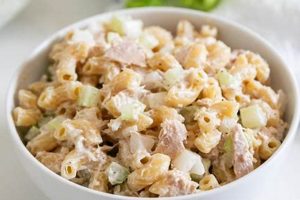
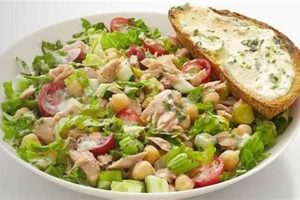
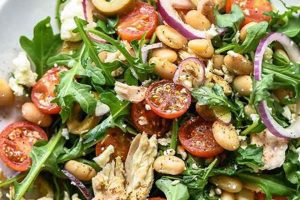
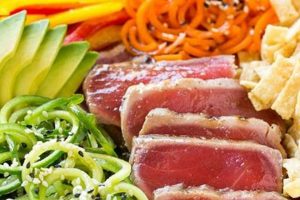
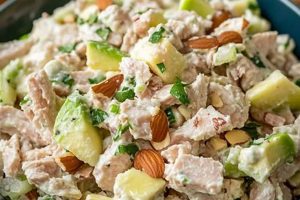
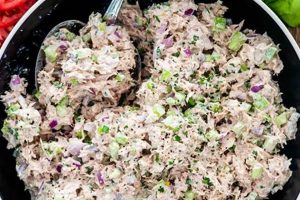
A Mediterranean-inspired variation on a classic dish, this salad typically features canned tuna combined with ingredients such as celery, onion, olives, capers, and a simple vinaigrette. Regional variations might include artichoke hearts, roasted red peppers, or white beans. A lemon-herb dressing, often featuring oregano or basil, replaces the mayonnaise commonly found in American-style tuna salad, offering a lighter, brighter flavor profile.
This preparation provides a healthy and flavorful meal option. The use of olive oil contributes beneficial fats, while the vegetables provide essential vitamins and fiber. Its versatility makes it suitable for a light lunch, a picnic dish, or a component of a larger antipasto platter. Tuna itself has a long history as a food source in Mediterranean cultures, and its inclusion in salads reflects both culinary tradition and practical resourcefulness.
Further exploration will detail ingredient selection, preparation methods, and potential serving suggestions to create a delicious and authentic culinary experience.
Tips for Preparing an Authentic Italian Tuna Salad
Optimizing ingredient selection and preparation techniques enhances the flavor and authenticity of this Mediterranean-inspired dish.
Tip 1: Use High-Quality Tuna: Opting for tuna packed in olive oil, rather than water, contributes richer flavor and a more desirable texture.
Tip 2: Embrace Fresh Herbs: Freshly chopped basil or oregano elevates the characteristic brightness of the salad. Dried herbs can be substituted if fresh are unavailable, but use them sparingly.
Tip 3: Marinate the Tuna: Briefly marinating the tuna in a portion of the dressing before combining it with the other ingredients allows the flavors to meld more thoroughly.
Tip 4: Incorporate Quality Olives and Capers: These ingredients contribute a briny, salty element characteristic of Mediterranean cuisine. Look for salt-cured olives rather than those packed in brine.
Tip 5: Balance Acidity: Achieving a harmonious balance between the acidity of the lemon juice and the richness of the olive oil is key to a well-rounded flavor profile. Adjust proportions to taste.
Tip 6: Consider Textural Variety: Adding ingredients like chopped celery or thinly sliced red onion introduces a pleasant textural contrast to the softness of the tuna.
Tip 7: Serve Chilled: Allowing the salad to chill for a short time before serving enhances the flavors and creates a more refreshing experience.
By following these suggestions, one can create a dish that authentically captures the essence of Italian flavors.
These guidelines offer a solid foundation for crafting a delightful and authentic culinary experience. Experimentation with variations can further personalize the dish.
1. High-quality Canned Tuna
The foundation of an exceptional Italian tuna salad rests upon the selection of superior canned tuna. Its quality significantly influences the final dish’s overall flavor, texture, and nutritional value, distinguishing a truly authentic experience from a mediocre one. Understanding the nuances of high-quality canned tuna is essential for achieving optimal results.
- Species and Processing:
Albacore or yellowfin tuna, known for their firmer texture and robust flavor, are preferred choices. Look for tuna packed in olive oil, which enhances both flavor and moisture content, unlike water-packed alternatives. “Solid” or “chunk” designations indicate larger pieces, offering a more substantial texture compared to flaked or grated options. Sustainable fishing practices are also a consideration for environmentally conscious consumers.
- Flavor Profile:
High-quality canned tuna exhibits a clean, oceanic flavor, devoid of excessive fishiness or metallic undertones. The olive oil packing medium infuses subtle richness and fruitiness, complementing the other ingredients in the salad. Avoid products with added flavors or spices, as these can mask the natural taste of the tuna and clash with the delicate balance of an Italian-style dressing.
- Nutritional Value:
Tuna is a valuable source of protein and omega-3 fatty acids. Opting for high-quality products ensures these nutritional benefits are maximized. Checking labels for sodium content is also important, particularly for those monitoring dietary intake.
- Visual Appearance:
Upon opening the can, high-quality tuna presents a consistent color and texture. The pieces should be firm and intact, maintaining their shape rather than appearing mushy or fragmented. The oil should be clear and free from cloudiness or discoloration.
Selecting high-quality canned tuna elevates the Italian tuna salad from a simple dish to a culinary experience. The interplay of superior ingredients creates a symphony of flavors and textures, showcasing the simplicity and elegance of Mediterranean cuisine. Investing in premium tuna ensures a truly authentic and satisfying result.
2. Fresh Mediterranean Herbs
Fresh Mediterranean herbs constitute an essential element in authentic Italian tuna salad, contributing significantly to its characteristic flavor profile. These herbs, cultivated and utilized throughout the Mediterranean region for centuries, provide distinct aromatic notes that elevate the salad beyond a simple combination of ingredients. The particular herbs chosen, and their freshness, directly influence the final product’s overall quality and taste.
Oregano and basil are frequently favored choices. Oregano offers a pungent, slightly bitter, and earthy flavor that complements the richness of the tuna and olive oil. Basil, with its sweet, anise-like aroma, introduces a refreshing counterpoint. Other herbs, such as marjoram, thyme, or mint, can also be incorporated, though less traditionally, to create unique flavor variations. Freshly harvested herbs are ideal, as they retain the full intensity of their essential oils and volatile aromatic compounds. Dried herbs may be substituted when fresh are unavailable; however, their flavor is less pronounced, necessitating careful adjustment of quantities. The synergistic interaction of these herbs with other ingredients like capers, olives, and lemon creates a complex and balanced flavor profile characteristic of Mediterranean cuisine.
Understanding the role of fresh Mediterranean herbs allows for a more nuanced approach to preparing Italian tuna salad. The selection and proper utilization of these herbs elevates a simple dish, transforming it into a flavorful and aromatic culinary experience. This attention to detail reflects a deep appreciation for the interplay of ingredients and the importance of freshness in Mediterranean culinary traditions. The result offers a vibrant and flavorful salad that embodies the essence of Italian gastronomy.
3. Extra Virgin Olive Oil

Extra virgin olive oil plays a crucial role in Italian tuna salad, contributing significantly more than just a source of fat. Its distinct characteristics influence the salad’s flavor profile, texture, and overall culinary experience, differentiating it from versions utilizing other oils. This specific oil’s quality and characteristics are integral to achieving an authentic taste.
The fruity, peppery notes of high-quality extra virgin olive oil complement the savory tuna and briny elements like olives and capers. It acts as a flavor carrier, binding the ingredients together and enhancing their individual characteristics. Beyond flavor, extra virgin olive oil contributes a luxurious mouthfeel, coating the palate and creating a smooth, velvety texture that contrasts pleasantly with the other components. This textural element enhances the overall sensory experience. For instance, a Tuscan-style tuna salad might use a robust, peppery extra virgin olive oil to complement the boldness of sun-dried tomatoes and salty Pecorino Romano cheese, while a Sicilian version might incorporate a milder, fruitier oil to harmonize with the sweetness of chopped bell peppers and the bright acidity of lemon. These examples highlight the oil’s versatility and its ability to create regionally specific flavor profiles.
Understanding the integral role of extra virgin olive oil in Italian tuna salad allows for a more discerning approach to ingredient selection and recipe development. It demonstrates how seemingly simple components contribute significantly to a dish’s overall complexity and authenticity. Appreciating this connection allows one to elevate the culinary outcome, moving beyond a basic preparation to a more nuanced and flavorful experience. Substituting other oils diminishes the authenticity and flavor complexity, impacting the overall culinary result. Therefore, the choice of extra virgin olive oil is paramount in achieving an authentic and delicious Italian tuna salad.
4. Briny, Salty Elements
Briny, salty elements are essential for balancing the richness of tuna and the acidity of the dressing in an Italian tuna salad recipe. These ingredients provide a pungent, savory depth that distinguishes the Italian variation from other tuna salads. Their strategic inclusion elevates the dish beyond a simple protein source, transforming it into a complex and flavorful culinary experience.
- Olives
Olives, particularly Castelvetrano, Cerignola, or Kalamata varieties, contribute a distinctly briny, salty flavor. Their fleshy texture also offers a pleasant counterpoint to the flaked tuna. The choice of olive variety influences the overall taste profile; for example, Kalamata olives impart a robust, slightly fermented flavor, while Castelvetrano olives offer a milder, buttery taste. The quantity used should be carefully considered to avoid overwhelming the other ingredients.
- Capers
Capers, the unopened flower buds of the caper bush, deliver a sharp, salty, and slightly tangy flavor. Their small size allows for even distribution throughout the salad, ensuring each bite incorporates this distinctive taste. Salt-packed capers are preferred over those preserved in brine, as they offer a more concentrated flavor. Rinsing them before use helps manage saltiness.
- Anchovies
While not always included, anchovies offer a potent umami flavor that deepens the overall complexity of the salad. Used sparingly, they melt into the dressing, enhancing the savory notes without overpowering the other ingredients. High-quality oil-packed anchovies are recommended for their superior flavor and texture. Their inclusion contributes a depth of flavor not easily replicated by other ingredients.
- Salted Cheeses
Certain cheeses, such as Pecorino Romano or Feta, can introduce both saltiness and a unique textural element. These cheeses, crumbled or shaved, provide bursts of sharp, salty flavor throughout the salad, further balancing the richness of the tuna and acidity of the dressing. Their use, however, should complement and not clash with other dominant flavors.
The careful selection and balanced incorporation of these briny, salty elements distinguish an authentic Italian tuna salad. Their presence elevates the dish from simple sustenance to a more complex and satisfying culinary experience, showcasing the thoughtful layering of flavors characteristic of Italian cuisine. Understanding the specific contributions of each ingredient allows for a more nuanced and flavorful outcome.
5. Minimal Mayonnaise (or None)
The absence or minimal use of mayonnaise is a defining characteristic of Italian tuna salad, distinguishing it from its American counterpart. This distinction reflects a broader culinary philosophy that prioritizes fresh, vibrant flavors and lighter textures, allowing the quality of individual ingredients to shine. Exploring the implications of minimizing mayonnaise reveals a deeper understanding of Italian culinary principles and their application in this specific dish.
- Emphasis on Freshness and Simplicity
Italian cuisine often emphasizes the natural flavors of fresh ingredients. Minimizing mayonnaise allows the taste of high-quality tuna, olive oil, and herbs to take center stage. This approach aligns with a broader Mediterranean diet philosophy that prioritizes unprocessed foods and simple preparations. A reliance on fresh, seasonal ingredients is valued over heavier sauces or condiments that might mask natural flavors.
- Balance and Texture
Mayonnaise, with its creamy texture and rich flavor, can easily overpower more delicate ingredients. In Italian tuna salad, the absence of mayonnaise allows for a lighter, more balanced flavor profile. The texture becomes less creamy and more toothsome, highlighting the individual textures of the tuna, vegetables, and herbs. This approach allows for a cleaner, more refreshing culinary experience, particularly in warmer climates.
- Health Considerations
Minimizing mayonnaise reduces the overall fat and calorie content of the salad, aligning with the health-conscious aspects of the Mediterranean diet. The emphasis shifts towards the healthy fats provided by olive oil and the nutritional benefits of fresh vegetables. This creates a dish that is both flavorful and nutritionally sound, contributing to a balanced diet.
- Authenticity and Regional Variation
Traditional Italian cuisine rarely incorporates mayonnaise, especially in dishes like tuna salad. Adhering to this practice preserves the authenticity of the recipe, reflecting regional culinary traditions. Variations might include a small amount of high-quality olive oil mayonnaise if desired, but the overall emphasis remains on a lighter, brighter flavor profile that showcases the primary ingredients. The absence of mayonnaise serves as a marker of authenticity, distinguishing the Italian approach from others.
The minimal use of mayonnaise, or its complete omission, in Italian tuna salad is more than just a recipe detail; it reflects a fundamental difference in culinary philosophy. This approach highlights the importance of fresh, high-quality ingredients, emphasizes balanced flavors and textures, and maintains the dishs nutritional integrity and regional authenticity. By understanding the rationale behind this practice, one can fully appreciate the nuances of Italian cuisine and its expression in this classic dish.
Frequently Asked Questions
This section addresses common inquiries regarding the preparation and enjoyment of Italian tuna salad.
Question 1: What type of tuna is best suited for Italian tuna salad?
High-quality oil-packed tuna, preferably albacore or yellowfin, is recommended for its superior flavor and texture. Oil-packed tuna offers a richer, more desirable result compared to water-packed varieties.
Question 2: Can dried herbs be substituted for fresh herbs?
While fresh herbs are ideal, dried herbs can be substituted if necessary. However, the flavor intensity of dried herbs differs; therefore, smaller quantities should be used to avoid overpowering the salad.
Question 3: What can be used in place of capers if they are unavailable?
Finely chopped green olives or a small amount of rinsed, chopped anchovy fillets can provide a similar briny, salty element in the absence of capers.
Question 4: How long can Italian tuna salad be stored?
Properly refrigerated in an airtight container, Italian tuna salad can be stored for up to three days. However, its quality and flavor are best enjoyed within the first 24 hours.
Question 5: Is Italian tuna salad gluten-free?
Italian tuna salad, prepared with traditional ingredients, is naturally gluten-free. However, always verify the gluten-free status of any pre-made or packaged ingredients incorporated into the recipe.
Question 6: What are some suitable serving suggestions for Italian tuna salad?
Italian tuna salad can be served as a filling for sandwiches or wraps, atop a bed of greens, as part of an antipasto platter, or as a light meal accompanied by crusty bread or crackers.
Understanding these common points of inquiry ensures a more informed and successful approach to creating and enjoying this dish. Careful consideration of these details contributes to an enhanced culinary outcome.
This concludes the frequently asked questions section.
Italian Tuna Salad Recipe
This exploration of the Italian tuna salad recipe has highlighted the essential components and techniques that distinguish it from other variations. From the selection of high-quality canned tuna packed in olive oil to the incorporation of fresh Mediterranean herbs and briny, salty elements, each ingredient contributes to the dish’s distinctive character. The emphasis on simple preparations, minimal mayonnaise, and extra virgin olive oil underscores the Italian culinary philosophy of showcasing fresh, high-quality ingredients. Understanding the nuances of these components allows for a more informed approach to creating an authentic and flavorful experience.
The Italian tuna salad recipe offers a versatile and flavorful option for a light meal, appetizer, or picnic addition. Its adaptability allows for creative interpretations while maintaining the core principles of Mediterranean cuisine. Further exploration and experimentation with regional variations can enhance appreciation for the simplicity and depth of flavor achievable through careful ingredient selection and preparation. The dish serves as a testament to the enduring appeal of fresh, flavorful, and health-conscious cuisine.