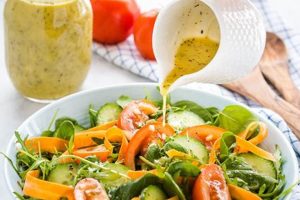
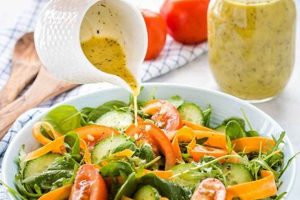
A vinaigrette-style condiment typically composed of oil, vinegar, and a blend of herbs and spices, this mixture enhances the flavor of leafy greens and other salad components. A classic example includes olive oil, red wine vinegar, oregano, basil, garlic, and red pepper flakes.
Beyond its flavor-enhancing properties, this type of dressing offers potential health benefits. Olive oil contributes monounsaturated fats, while herbs and spices offer antioxidant potential. Variations exist, reflecting regional preferences and culinary innovation, but the fundamental concept remains consistent: a balanced, flavorful complement to raw vegetables. Its enduring popularity stems from its simplicity, versatility, and ability to transform a basic salad into a satisfying culinary experience.
The subsequent sections will explore specific formulations, variations, and tips for creating a perfect emulsion, ensuring a delicious and well-balanced dressing every time. Additionally, guidance will be provided on ingredient selection, storage, and creative applications beyond the traditional salad.
Tips for Crafting Exceptional Italian Salad Dressing
Achieving a well-balanced and flavorful Italian dressing requires attention to detail and an understanding of key ingredients. These tips provide guidance for optimizing flavor profiles and creating a delightful culinary experience.
Tip 1: Quality Ingredients Matter: The foundation of a superb dressing lies in the quality of its components. Opt for extra virgin olive oil for its robust flavor and health benefits. Select a flavorful vinegar, such as red wine vinegar or balsamic, considering its acidity level.
Tip 2: Fresh Herbs Elevate Flavor: Dried herbs offer convenience, but fresh herbs contribute a brighter, more vibrant taste. Finely chop fresh oregano, basil, and parsley to maximize their impact.
Tip 3: Balance is Key: Achieving the perfect balance between oil, vinegar, and seasonings is crucial. Start with a standard ratio (e.g., 3:1 oil to vinegar) and adjust according to personal preference. Taste and refine the balance as needed.
Tip 4: Emulsification Enhances Texture: A proper emulsion ensures a smooth and creamy texture, preventing separation of oil and vinegar. Whisk vigorously or use a blender to create a stable emulsion.
Tip 5: Garlic and Red Pepper Flakes Add Depth: Freshly minced garlic and a pinch of red pepper flakes introduce complexity and a subtle heat. Adjust the quantity to suit individual spice preferences.
Tip 6: Experiment with Variations: The classic recipe provides a solid foundation for experimentation. Consider adding ingredients such as Dijon mustard, lemon zest, or honey for unique flavor profiles.
Tip 7: Allow Flavors to Meld: Preparing the dressing in advance allows the flavors to meld and intensify. Store in an airtight container in the refrigerator for at least 30 minutes before serving.
By following these guidelines, one can consistently create a delicious and well-balanced Italian dressing that elevates any salad. Careful ingredient selection, proper emulsification, and attention to flavor balance contribute to a superior culinary outcome.
The following section will provide specific recipe variations and explore complementary salad combinations to further enhance your culinary endeavors.
1. High-quality olive oil
High-quality olive oil plays a crucial role in an Italian salad dressing recipe, significantly impacting the final flavor profile. Extra virgin olive oil, the highest grade available, offers a complex flavor profile characterized by fruity, peppery notes and a distinct aroma. This complexity enhances the other ingredients in the dressing, creating a more nuanced and enjoyable sensory experience. The choice of olive oil directly influences the overall quality and taste of the dressing. For example, a robust Tuscan extra virgin olive oil lends a peppery bite, while a delicate Ligurian olive oil contributes a smoother, more buttery flavor. This distinction allows for customization based on desired taste preferences.
Beyond flavor, high-quality olive oil contributes to the texture and mouthfeel of the dressing. Its viscosity helps create a smooth, emulsified texture that coats salad ingredients evenly. This emulsification process, crucial for a well-balanced dressing, relies on the quality of the oil to maintain its stability. Cheaper, refined olive oils may lack the necessary properties for a stable emulsion, leading to a separated and less appealing dressing. Furthermore, the health benefits associated with extra virgin olive oil, rich in monounsaturated fats and antioxidants, add another layer of value to its inclusion in the recipe. These beneficial compounds contribute to a healthier dietary choice.
Selecting a high-quality olive oil is an essential step in crafting a truly exceptional Italian dressing. Its impact on flavor, texture, and nutritional value cannot be overstated. While other oils can be substituted, they often lack the distinct characteristics that elevate this classic dressing. Understanding the role of olive oil quality allows for informed decision-making and ensures a superior culinary outcome. The investment in a premium olive oil translates directly into a more flavorful and healthful final product.
2. Freshly minced garlic
Freshly minced garlic constitutes a cornerstone of flavor in Italian salad dressing, contributing a pungent, savory depth that complements the other ingredients. Its sharp, aromatic presence enhances the overall sensory experience, providing a distinctive character absent when using dried or powdered alternatives. The volatile sulfur compounds released upon mincing create this characteristic pungency, dissipating rapidly upon cooking. Therefore, incorporating raw, freshly minced garlic maximizes its impact within the dressing.
The enzymatic action triggered by crushing or mincing garlic cloves releases allicin, the compound responsible for its distinctive aroma and numerous purported health benefits. In the context of an Italian dressing, allicin interacts with the other components, particularly the acidity of the vinegar and the richness of the olive oil, to create a more complex and nuanced flavor profile. For instance, a dressing featuring freshly minced garlic alongside oregano and basil develops a distinctly Mediterranean character, while the same dressing with dried garlic would lack the same vibrancy. The freshness of the garlic contributes directly to the brightness and overall balance of the dressing’s flavor profile. Furthermore, the quantity of garlic used can be adjusted to cater to individual preferences, offering flexibility in tailoring the intensity of its presence.
Beyond flavor, the inclusion of freshly minced garlic introduces potential health benefits to the dressing. Allicin possesses antioxidant and antimicrobial properties, potentially contributing to overall well-being. While these benefits are not the primary focus of a salad dressing, they represent a valuable secondary advantage. However, it is crucial to note that the allicin content diminishes over time and with exposure to heat. Therefore, utilizing freshly minced garlic not only maximizes flavor but also optimizes any potential health benefits. Ultimately, the strategic use of freshly minced garlic significantly elevates the flavor profile and overall quality of Italian salad dressing.
3. Balanced vinegar acidity

Balanced vinegar acidity constitutes a critical factor in achieving a harmonious Italian salad dressing. Acidity provides the necessary brightness to cut through the richness of the olive oil and create a lively counterpoint to the other ingredients. The specific type of vinegar influences not only the acidity level but also introduces unique flavor nuances. Red wine vinegar, a common choice, offers a robust, slightly fruity acidity that complements the herbaceous notes often found in Italian dressings. White wine vinegar, milder in flavor, provides a gentler acidity, while balsamic vinegar introduces a deeper, sweeter complexity. The interplay between the chosen vinegar and the other components, such as garlic, herbs, and sweeteners, ultimately determines the overall balance and character of the dressing. An overly acidic dressing can be harsh and unpalatable, while insufficient acidity can result in a bland, oily mixture. For instance, a dressing relying solely on a strongly acidic vinegar like apple cider vinegar might overpower the delicate flavors of fresh basil and oregano. Conversely, using an overly mild vinegar might fail to provide the necessary contrast to the richness of the olive oil. Careful consideration of vinegar selection and its proportional balance within the recipe is essential for a successful outcome.
Beyond flavor, vinegar acidity plays a functional role in emulsion stability and food safety. The acidic environment helps emulsify the oil and water components of the dressing, preventing separation and creating a homogenous mixture. This emulsification is crucial for both texture and visual appeal. Furthermore, the acidic pH of the dressing contributes to inhibiting bacterial growth, enhancing its shelf life and ensuring food safety. Practical application of this understanding involves tasting and adjusting the acidity level during preparation. Starting with a measured amount of vinegar and gradually adding more allows for fine-tuning the balance to achieve the desired flavor profile. A simple taste test can reveal whether the acidity is appropriately balanced with the other ingredients or requires further adjustment. Consider the specific salad ingredients as well; a robust salad with bitter greens may benefit from a more assertive acidity, while a delicate salad with fresh herbs might require a gentler touch. The ability to assess and adjust vinegar acidity represents a key skill in creating a well-balanced and flavorful Italian dressing.
In summary, the role of balanced vinegar acidity in Italian salad dressing extends beyond mere flavor enhancement. It contributes to emulsion stability, food safety, and the overall harmony of the final product. A thoughtful approach to vinegar selection, careful measurement, and attentive tasting are essential for achieving the desired balance. Understanding these interconnected factors allows for informed decision-making and consistent creation of delicious, well-balanced Italian salad dressings tailored to individual preferences and specific salad compositions. Mastering this balance allows one to create a dressing that elevates the salad from a simple side dish to a culinary highlight.
4. Fresh or dried herbs
The selection and utilization of herbs constitute a defining characteristic of Italian salad dressing, profoundly influencing its aromatic complexity and overall flavor profile. Whether fresh or dried, these botanical elements contribute significantly to the dressing’s character, offering distinct advantages and considerations.
- Fresh Herbs: Vibrancy and Nuance
Fresh herbs impart a vibrant, bright flavor to Italian dressing. Their delicate, complex aromas offer a nuanced depth often absent in dried counterparts. Examples include oregano, basil, parsley, and thyme. However, fresh herbs possess a shorter shelf life and require proper storage. Their immediate impact on the dressing’s flavor profile makes them a preferred choice for maximizing freshness and aromatic intensity.
- Dried Herbs: Convenience and Concentration
Dried herbs provide convenience and a concentrated flavor profile due to moisture removal. Their extended shelf life makes them a practical choice for long-term storage. However, dried herbs require rehydration and may possess a slightly more muted flavor compared to fresh counterparts. Careful portioning is crucial, as their concentrated nature can easily overpower a delicate dressing. Common examples include dried oregano, basil, and marjoram.
- Balancing Fresh and Dried: A Synergistic Approach
Combining fresh and dried herbs offers a balanced approach, leveraging the vibrancy of fresh herbs and the concentrated potency of dried options. This method extends shelf life while retaining a significant portion of the fresh herb character. For instance, incorporating fresh parsley and basil alongside dried oregano can create a complex, layered flavor profile. This synergistic approach allows for flexibility and customization depending on ingredient availability and desired flavor intensity.
- Herb Quality and Sourcing: Impact on Flavor
Regardless of whether fresh or dried herbs are used, their quality significantly impacts the final result. High-quality herbs, whether sourced from a local garden or a reputable supplier, possess superior flavor and aroma compared to lower-quality options. Factors influencing quality include growing conditions, harvesting methods, and drying processes. Investing in high-quality herbs elevates the overall culinary experience and ensures the dressing achieves its full flavor potential.
Ultimately, the choice between fresh and dried herbs, or a combination thereof, depends on individual preferences, ingredient availability, and desired flavor outcomes. Careful consideration of these factors allows for informed decision-making and ensures the creation of an Italian salad dressing that perfectly complements the accompanying salad and satisfies culinary expectations. Understanding the nuances of herb selection contributes significantly to the overall success and enjoyment of the dish.
5. Proper emulsification

Proper emulsification represents a crucial step in crafting a successful Italian salad dressing, directly influencing its texture, stability, and overall palatability. Emulsification refers to the process of combining two immiscible liquids, in this case oil and vinegar, into a stable mixture. Without proper emulsification, the dressing will quickly separate, resulting in an oily layer on top and a watery layer beneath. This separation not only compromises the dressing’s visual appeal but also leads to uneven distribution of flavor across the salad. A properly emulsified dressing, conversely, exhibits a smooth, creamy texture that clings evenly to salad ingredients, ensuring a consistent flavor experience in every bite. The stability achieved through emulsification prevents the dressing from separating, even after a period of rest. This stability is particularly important when preparing the dressing in advance.
Several factors contribute to successful emulsification in an Italian dressing. Vigorous whisking creates the necessary shear force to break down the oil into smaller droplets and disperse them evenly throughout the vinegar. The addition of emulsifying agents, such as Dijon mustard or a small amount of honey, can further enhance stability by reducing surface tension between the oil and vinegar molecules. These emulsifiers help to bind the two phases together, preventing separation. Ingredient ratios also play a role. A typical Italian dressing contains a higher proportion of oil to vinegar, which influences the viscosity of the final emulsion. Achieving the desired balance between these components contributes to both flavor and stability. For example, a dressing with an excessively high oil content might be prone to separation, while a dressing with too much vinegar might be overly acidic and thin. Practical applications of this understanding involve gradual addition of the oil to the vinegar while whisking constantly. This method ensures that the oil droplets are effectively dispersed and incorporated into the vinegar phase, creating a stable emulsion.
In conclusion, proper emulsification is essential for creating a high-quality Italian salad dressing. It directly impacts the dressing’s texture, appearance, flavor distribution, and stability. Understanding the underlying principles of emulsification, considering factors such as whisking technique, emulsifying agents, and ingredient ratios, allows for consistent creation of a smooth, creamy, and flavorful dressing that enhances the overall dining experience. Failure to achieve proper emulsification, on the other hand, results in a separated, less appealing dressing that compromises the salad’s sensory appeal and culinary potential.
6. Seasoning Adjustments
Seasoning adjustments represent the final, crucial step in perfecting an Italian salad dressing recipe. They allow for customization and ensure the dressing complements individual palates and specific salad ingredients. Precise seasoning elevates the dressing beyond a simple mixture of oil and vinegar, transforming it into a balanced, flavorful complement to the overall dish.
- Salt and Black Pepper: Foundational Seasoning
Salt and freshly ground black pepper serve as the foundation of seasoning in virtually all culinary applications, including Italian salad dressing. Salt enhances the inherent flavors of the other ingredients, while black pepper adds a subtle bite and complexity. The interplay between these two fundamental seasonings creates a baseline upon which other flavors can build. However, over-salting can easily ruin a dressing, so a cautious approach, starting with a small amount and gradually adding more to taste, is recommended.
- Herbaceous Enhancements: Balancing Aromatic Complexity
Beyond basic salt and pepper, dried or fresh herbs play a significant role in seasoning Italian dressing. Dried oregano, basil, thyme, and marjoram contribute earthy, savory notes, while fresh herbs offer a brighter, more vibrant flavor. The selection and quantity of herbs should complement the other ingredients in both the dressing and the salad itself. For example, a dressing intended for a Caprese salad might benefit from fresh basil, while a dressing for a Greek salad might incorporate dried oregano.
- Acidity Adjustment: Balancing Brightness and Tang
While the primary vinegar provides the base acidity, additional acidic elements can further refine the dressing’s flavor profile. A squeeze of lemon juice or a splash of white wine vinegar can introduce a brighter, more nuanced tang. Careful adjustments to acidity ensure the dressing balances richness with vibrancy, preventing it from becoming overly heavy or bland. This balance is particularly important when the salad itself contains acidic elements, such as tomatoes or citrus fruits.
- Sweetness and Heat: Nuances of Flavor
A touch of sweetness, often from a pinch of sugar or a drizzle of honey, can balance the acidity and add depth to the dressing. Similarly, a pinch of red pepper flakes or a dash of hot sauce introduces a subtle layer of heat, enhancing the overall complexity. These nuanced additions should be used judiciously, complementing rather than dominating the primary flavors of the dressing. The balance between sweet, spicy, and acidic notes contributes significantly to the final flavor profile.
Careful seasoning adjustments allow for a customized Italian dressing tailored to specific preferences and salad compositions. The interplay between salt, pepper, herbs, acidity, sweetness, and heat creates a harmonious balance that elevates the dressing from a simple condiment to a crucial component of a delicious and satisfying salad. The ability to taste, assess, and adjust seasonings represents a fundamental skill in culinary practice, ensuring the final product achieves its full flavor potential.
Frequently Asked Questions
This section addresses common inquiries regarding the preparation and utilization of Italian salad dressing.
Question 1: What is the ideal ratio of oil to vinegar in Italian dressing?
A classic ratio is 3:1 oil to vinegar. However, this can be adjusted based on personal preference and the specific type of vinegar used. A milder vinegar may require a higher ratio, while a stronger vinegar may necessitate a lower ratio.
Question 2: Can other oils be substituted for olive oil?
While olive oil is traditional, other oils, such as avocado or grapeseed oil, can be substituted. However, these substitutions may alter the flavor profile of the dressing. The distinct flavor of olive oil contributes significantly to the classic Italian dressing character.
Question 3: How long can homemade Italian dressing be stored?
Homemade Italian dressing can typically be stored in an airtight container in the refrigerator for up to one week. Separation may occur, so shaking well before use is recommended.
Question 4: What are common mistakes to avoid when making Italian dressing?
Common mistakes include using low-quality olive oil, over-seasoning with garlic or herbs, and failing to achieve proper emulsification. These errors can result in a dressing that is unbalanced, overly pungent, or separated.
Question 5: How can one adapt Italian dressing for specific dietary needs, such as low-sodium or vegan diets?
Adapting Italian dressing for dietary needs is readily achievable. For low-sodium diets, reduce or omit the salt and opt for low-sodium ingredients. For vegan diets, ensure all ingredients, including any added sweeteners or emulsifiers, are plant-based.
Question 6: Beyond salads, what other culinary applications exist for Italian dressing?
Italian dressing possesses versatility beyond salads. It can be used as a marinade for meats, vegetables, or tofu, a dipping sauce for bread, or a flavor enhancer for cooked grains.
Understanding these frequently asked questions assists in creating and utilizing Italian salad dressing effectively. Careful consideration of these points ensures a flavorful, well-balanced, and versatile addition to various culinary endeavors.
The following section will offer a selection of recipe variations, providing further inspiration and guidance for culinary experimentation.
Conclusion
This exploration of Italian salad dressing recipes has highlighted the essential components and techniques for crafting a balanced and flavorful condiment. From the selection of high-quality olive oil and fresh herbs to the importance of proper emulsification and nuanced seasoning adjustments, each step contributes significantly to the final product. Understanding the interplay of these elements allows for informed decision-making and consistent results. Furthermore, addressing common inquiries and exploring potential recipe variations provides a comprehensive resource for both novice and experienced cooks.
The enduring appeal of Italian salad dressing stems from its simplicity, versatility, and capacity to elevate a basic salad into a culinary experience. Continued experimentation and adaptation of classic recipes promise further innovation and enjoyment within the culinary realm. By embracing the principles outlined herein, individuals can consistently create dressings that enhance the flavors of fresh ingredients and contribute to a more satisfying and healthful diet.