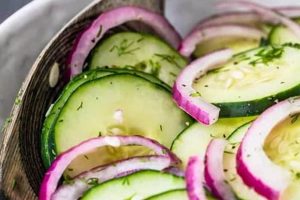
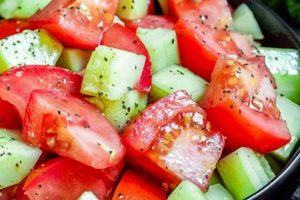
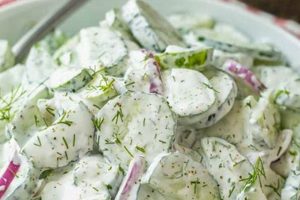
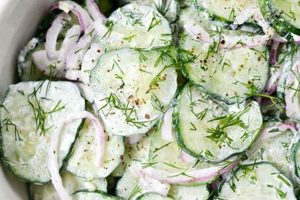
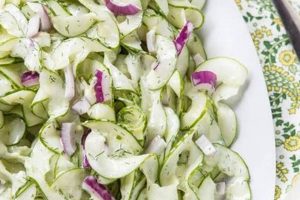
A refreshing and healthful dish, this culinary creation combines the creamy tang of thick, strained yogurt with the cool crispness of cucumbers. Often enhanced with fresh herbs like dill or mint, and sometimes with additions such as garlic, lemon juice, or red onion, it offers a versatile base for a light lunch, side dish, or appetizer. Variations can include different herbs, spices, or even the addition of other vegetables like tomatoes or bell peppers. A simple example involves combining Greek yogurt, diced cucumbers, chopped fresh dill, minced garlic, lemon juice, salt, and pepper.
The popularity of this dish stems from its nutritional value and ease of preparation. Greek yogurt provides a good source of protein and probiotics, promoting gut health, while cucumbers offer hydration and essential vitamins. The dish is naturally low in calories and fat, making it a suitable choice for health-conscious individuals. Its adaptability to diverse palates and dietary needs further contributes to its widespread appeal. Historically, yogurt and cucumber combinations have been enjoyed in various cuisines, particularly in Mediterranean and Middle Eastern regions, where fresh ingredients and simple preparations are valued.
Further exploration will delve into specific variations, detailed preparation methods, nutritional information, and tips for maximizing flavor and presentation. Different cultural adaptations and the dish’s versatility within various meal plans will also be discussed.
Tips for a Perfect Greek Yogurt Cucumber Salad
Optimizing the flavor and texture of this simple dish requires attention to a few key details. The following tips offer guidance for achieving a consistently delicious and satisfying result.
Tip 1: Select High-Quality Yogurt: Opt for plain, full-fat Greek yogurt for the richest flavor and creamiest texture. Low-fat or non-fat varieties can result in a thinner, less satisfying salad.
Tip 2: Remove Excess Moisture from Cucumbers: Salting and draining diced cucumbers before adding them to the yogurt helps prevent a watery salad. Gently patting them dry with a paper towel further enhances this effect.
Tip 3: Balance Flavors with Acidity: Lemon juice or red wine vinegar adds brightness and balances the richness of the yogurt. Start with a small amount and adjust to taste.
Tip 4: Enhance with Fresh Herbs: Fresh dill, mint, or parsley add depth and complexity. Chop the herbs finely to distribute their flavor evenly throughout the salad.
Tip 5: Consider Garlic and Spices: A small amount of minced garlic or a pinch of red pepper flakes can add a subtle kick. Ground cumin or coriander also complement the flavors of the dish.
Tip 6: Chill Before Serving: Allowing the salad to chill in the refrigerator for at least 30 minutes allows the flavors to meld and the cucumbers to become more crisp.
Tip 7: Add Texture with Optional Ingredients: Toasted nuts, such as pine nuts or walnuts, or chopped olives or sun-dried tomatoes can provide interesting textural contrasts.
By following these suggestions, one can elevate a simple cucumber and yogurt salad to a truly delightful culinary experience. Careful ingredient selection and attention to detail contribute significantly to the final product’s overall quality.
The following section will explore variations on this classic recipe, demonstrating its versatility and adaptability to diverse preferences and dietary needs.
1. Ingredients

Ingredient selection significantly impacts the flavor profile, texture, and nutritional value of a Greek yogurt cucumber salad. Careful consideration of each component contributes to a well-balanced and satisfying final product. The following facets explore key ingredient categories and their influence on the overall dish.
- Dairy
The foundation of this salad lies in the choice of yogurt. Greek yogurt, with its thick, creamy texture and tangy flavor, provides a substantial base. Full-fat varieties offer the richest flavor, while low-fat or non-fat options reduce the overall calorie content but may compromise creaminess. Alternatives, such as labneh or kefir, can create interesting variations, though they alter the traditional character of the dish.
- Produce
Cucumbers provide the refreshing, crisp element. English cucumbers, with their thinner skin and fewer seeds, are often preferred. Other vegetables, such as diced tomatoes, bell peppers, or red onion, can be added for complexity and visual appeal. The freshness and quality of the produce directly influence the salad’s overall flavor and texture.
- Herbs and Spices
Fresh herbs, such as dill, mint, parsley, or chives, contribute aromatic complexity and brightness. Dried herbs can be substituted in a pinch, but fresh herbs offer superior flavor. Garlic, either minced or grated, adds a pungent note. Spices like cumin, coriander, or a pinch of red pepper flakes introduce warmth and depth.
- Acidic Elements
Lemon juice, red wine vinegar, or white wine vinegar provide essential acidity, balancing the richness of the yogurt and enhancing the other flavors. The amount used can be adjusted to achieve the desired level of tanginess. These ingredients contribute to the overall brightness and freshness of the salad.
The interplay of these ingredient categories determines the ultimate character of the Greek yogurt cucumber salad. Balancing the richness of the dairy with the freshness of the produce, the aromatic complexity of the herbs and spices, and the brightness of the acidic elements creates a harmonious and flavorful dish. Thoughtful ingredient selection elevates this simple salad to a culinary experience.
2. Preparation
Proper preparation techniques are essential for optimizing the texture, flavor, and overall quality of a Greek yogurt cucumber salad. These methods ensure that the ingredients combine harmoniously, creating a refreshing and palatable dish. The following facets detail key preparatory steps and their impact on the final product.
- Cucumber Treatment
Cucumbers contain a high water content, which, if not addressed, can lead to a watery salad. To prevent this, diced cucumbers should be salted and allowed to drain in a colander for at least 15 minutes. This process draws out excess moisture. Gently patting the cucumbers dry with a paper towel further reduces water content, ensuring a desirable texture.
- Yogurt Selection and Handling
Using thick, strained Greek yogurt is crucial for achieving the proper consistency. Stirring the yogurt before incorporating other ingredients ensures a smooth and evenly distributed base. If the yogurt is excessively thick, a small amount of milk or water can be added to achieve the desired creaminess, although this should be done sparingly to avoid thinning the salad.
- Ingredient Incorporation
The order in which ingredients are added can influence the final result. Generally, the yogurt serves as the base, followed by the drained cucumbers. Herbs, spices, and acidic elements are then added and gently folded in to ensure even distribution without crushing the cucumbers. This methodical approach maximizes flavor and maintains textural integrity.
- Chilling Time
Allowing the prepared salad to chill in the refrigerator for at least 30 minutes before serving allows the flavors to meld. Chilling also enhances the refreshing quality of the dish. The cucumbers become more crisp, and the overall flavor profile intensifies, creating a more satisfying culinary experience.
These preparatory steps, while seemingly simple, contribute significantly to the final quality of the Greek yogurt cucumber salad. Careful attention to cucumber treatment, yogurt handling, ingredient incorporation, and chilling time ensures a harmonious blend of flavors and textures, resulting in a truly delightful dish.
3. Flavor Profiles
Flavor profiles play a crucial role in the overall success of a Greek yogurt cucumber salad recipe. The inherent tanginess of Greek yogurt provides a foundational flavor upon which other ingredients build. This tanginess creates a dynamic interplay with the refreshing, subtly sweet flavor of cucumbers. The careful selection and balance of additional components determine the ultimate character of the dish, allowing for a wide spectrum of flavor experiences. A Mediterranean-inspired profile, for example, might incorporate dill, mint, lemon juice, and a touch of garlic, creating a bright and herbaceous flavor combination. Alternatively, a spicier profile could include red pepper flakes, cumin, and chopped red onion, offering a bolder, more assertive taste.
The versatility of this salad lies in its adaptability to diverse flavor preferences. The mildness of the yogurt and cucumber allows for both subtle and robust flavor enhancements. Herbs, spices, and acidic elements each contribute unique characteristics, enabling customization to suit individual palates. The interplay of these components creates a layered flavor experience, moving beyond the basic ingredients to a more complex and satisfying culinary creation. Understanding the impact of each ingredient on the overall flavor profile empowers one to craft a salad tailored to specific tastes. For instance, incorporating roasted red peppers adds a smoky sweetness, while toasted pine nuts offer a nutty depth and textural contrast.
Successful flavor profile development in a Greek yogurt cucumber salad hinges on a delicate balance. Overpowering the subtle flavors of the yogurt and cucumber should be avoided. A judicious approach to ingredient selection and quantity ensures that each component contributes harmoniously to the overall taste experience. The objective is to create a balanced and refreshing salad where the individual flavors complement rather than compete with one another. This careful orchestration of flavors elevates a simple dish to a sophisticated and enjoyable culinary expression.
4. Nutritional Benefits
Nutritional benefits represent a significant advantage of incorporating this salad into one’s diet. The dish derives its nutritional value primarily from the core ingredients: Greek yogurt and cucumbers. Greek yogurt offers a substantial source of protein, crucial for muscle building and repair. It also provides calcium, vital for bone health, and probiotics, beneficial bacteria that support gut health and digestion. Cucumbers, while lower in calories, offer hydration and essential vitamins and minerals, including vitamin K, important for blood clotting, and vitamin C, an antioxidant that supports immune function. The combination creates a nutrient-rich meal or snack option.
The synergistic effect of combining these ingredients amplifies the nutritional benefits. The protein in the yogurt complements the hydrating properties of cucumbers, creating a satiating and refreshing dish. This combination makes the salad a suitable option for individuals seeking a light yet nutritious meal. Furthermore, the low calorie and fat content of this salad contribute to weight management goals. Compared to higher-calorie alternatives, this dish provides essential nutrients without excessive caloric intake. For example, a serving of this salad might contain significantly fewer calories than a comparable serving of pasta salad or potato salad, making it a healthier choice for those watching their calorie intake. The probiotic content of the yogurt further enhances the nutritional profile by promoting a healthy gut microbiome, which plays a crucial role in overall well-being.
In summary, the nutritional advantages offered by this dish stem from the inherent properties of its core ingredients. The combination of protein, calcium, probiotics, vitamins, and minerals contributes to a balanced and healthful dietary choice. This understanding underscores the value of incorporating this versatile and nutritious salad into various meal plans. The dish offers a practical and palatable way to enhance dietary intake without compromising flavor or satisfaction. Further exploration could analyze the specific vitamin and mineral content per serving, compare nutritional values across different variations of the recipe, or examine the impact of the salad on specific dietary needs or health conditions.
5. Serving Suggestions
Serving suggestions highlight the versatility of the Greek yogurt cucumber salad recipe, demonstrating its adaptability across various culinary contexts. Understanding these applications expands the dish’s utility beyond a simple side dish, transforming it into a key component of diverse meal structures and culinary occasions.
- Light Lunch or Snack
The salad’s refreshing qualities and balanced nutritional profile make it an ideal standalone light lunch or snack. Its protein content contributes to satiety, while the cucumbers offer hydration and essential nutrients. This application is particularly suitable for warm weather or as a quick and healthful meal option.
- Side Dish
As a side dish, this salad complements a wide range of main courses. It pairs well with grilled meats, fish, or roasted vegetables. The cool, creamy texture and bright flavors provide a refreshing counterpoint to richer, heavier dishes, enhancing the overall meal experience.
- Appetizer or Dip
Served with pita bread, crudits, or crackers, the salad functions as a flavorful and healthy appetizer or dip. Its versatility allows for adjustments in consistency to suit dipping preferences. A slightly thicker version can be achieved by reducing the amount of liquid added, making it ideal for scooping with pita chips or vegetables.
- Part of a Larger Meal
Incorporating the salad into larger meals, such as bowls or wraps, expands its utility further. The salad can add a refreshing and creamy element to grain bowls, alongside roasted vegetables and protein sources. It also functions as a flavorful component within wraps or sandwiches, adding moisture and nutritional value.
These varied serving suggestions underscore the adaptability of the Greek yogurt cucumber salad recipe across diverse culinary situations. Its ability to function as a standalone dish, a complement to other foods, or a component within larger meals speaks to its versatility and inherent appeal. This understanding broadens the recipe’s practical applications, solidifying its place as a valuable and adaptable culinary asset.
Frequently Asked Questions
This section addresses common inquiries regarding the preparation, storage, and variations of Greek yogurt cucumber salad, providing clear and concise information to ensure optimal results and address potential concerns.
Question 1: How long can this salad be stored in the refrigerator?
Properly stored in an airtight container, the salad typically lasts for up to three days in the refrigerator. However, its quality may begin to deteriorate after the first 48 hours due to the cucumbers releasing moisture.
Question 2: Can other types of yogurt be substituted for Greek yogurt?
While other yogurts can be used, they may alter the salad’s texture and flavor. Greek yogurt’s thick consistency is essential for optimal results. Regular yogurt, for example, tends to be thinner, potentially creating a watery salad.
Question 3: What can be done to prevent a watery salad?
Salting and draining the diced cucumbers before adding them to the yogurt is crucial. This process extracts excess moisture. Thoroughly patting the cucumbers dry with a paper towel further helps prevent a watery consistency.
Question 4: Can this salad be frozen?
Freezing is not recommended. Freezing negatively impacts the texture of both the yogurt and cucumbers, resulting in a less desirable consistency upon thawing. The salad is best enjoyed fresh.
Question 5: What are some suitable variations for those avoiding dairy?
Dairy-free alternatives, such as coconut yogurt or cashew-based yogurt, can be substituted, though they may alter the flavor profile. Experimentation is key to finding a suitable alternative that aligns with individual preferences.
Question 6: How can the flavor profile be adjusted to suit individual preferences?
The addition of various herbs, spices, and acidic elements provides flexibility in tailoring the flavor. Fresh dill, mint, or parsley offer herbaceous notes, while garlic or red pepper flakes introduce a more pungent element. Lemon juice or vinegar enhances brightness. Adjusting the quantities of these ingredients allows for customization to individual tastes.
These responses offer guidance on maximizing the quality and enjoyment of this versatile and refreshing salad. Addressing these common points of inquiry ensures a successful culinary experience and encourages exploration of individual variations.
The following section will offer a concluding summary of the key aspects discussed throughout this exploration of Greek yogurt cucumber salad.
Greek Yogurt Cucumber Salad Recipe
Exploration of the Greek yogurt cucumber salad recipe reveals a dish characterized by simplicity, versatility, and nutritional value. From ingredient selection and preparation techniques to flavor profiles and serving suggestions, each facet contributes to the dish’s overall appeal. Emphasis on fresh, high-quality ingredients, proper moisture control, and balanced flavor combinations ensures a consistently satisfying culinary experience. The inherent nutritional benefits, derived from the protein-rich yogurt and hydrating cucumbers, further enhance the dish’s value within a balanced diet. The adaptability of the recipe to diverse palates and culinary contexts solidifies its position as a versatile and healthful option.
Culinary exploration often reveals unexpected treasures in simple combinations. The Greek yogurt cucumber salad recipe exemplifies this principle, demonstrating how readily available ingredients can be transformed into a delightful and nutritious dish. Continued experimentation with flavor profiles and serving suggestions promises further culinary discoveries, underscoring the enduring appeal of fresh, wholesome cuisine.