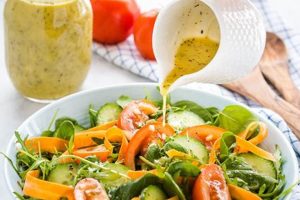
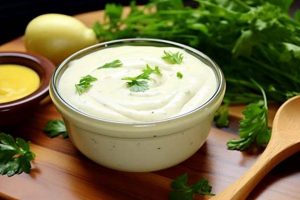
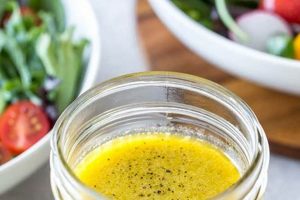
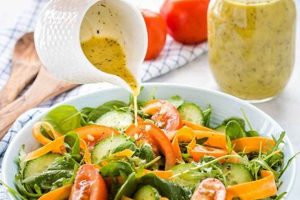
A preparation combining the sweetness of figs with other ingredients like oil, vinegar, and seasonings creates a condiment for salads. This blend offers a unique flavor profile, often balancing sweetness with tanginess and savory notes, depending on the specific components. For instance, a balsamic vinegar base provides a tart counterpoint to the fig’s natural sugars, while the addition of Dijon mustard can introduce a subtle sharpness.
Such condiments elevate salads beyond simple vegetable medleys, adding depth and complexity. The unique character of figs lends itself to both light summer salads and heartier autumnal compositions, offering a versatile option for various greens, cheeses, nuts, and fruits. Historically, figs have been a valued ingredient in numerous cuisines, and their incorporation into dressings reflects a continued appreciation for their distinct taste and texture. Their natural sweetness often allows for a reduction in added sugars, aligning with contemporary health-conscious trends.
This exploration will delve further into various preparation methods, ingredient variations, and complementary salad pairings, providing a comprehensive guide to crafting and utilizing this flavorful condiment.
Tips for Crafting Exceptional Fig Salad Dressings
Achieving a well-balanced and flavorful fig salad dressing requires attention to detail and a thoughtful approach to ingredient selection and preparation. The following tips offer guidance for creating dressings that enhance a variety of salads.
Tip 1: Fig Selection is Key: Opt for ripe, fresh figs when possible for the most vibrant flavor. Dried figs, while convenient, require rehydration and may yield a slightly different texture and taste. Consider the variety of fig, as some offer a more intense sweetness than others.
Tip 2: Balancing Sweetness and Acidity: The natural sweetness of figs necessitates a counterbalancing acidity. Balsamic, red wine, or apple cider vinegar are excellent choices. Lemon juice offers a brighter, citrusy alternative. Taste and adjust accordingly to achieve the desired balance.
Tip 3: Oil Selection Matters: Extra virgin olive oil is a classic choice, providing a robust flavor that complements figs. For a milder option, consider grapeseed or avocado oil.
Tip 4: Enhancing Complexity with Seasonings: Freshly cracked black pepper is essential. A pinch of salt enhances the other flavors. Experiment with Dijon mustard, minced shallots, or a touch of honey for added depth.
Tip 5: Emulsification Techniques: A proper emulsion creates a smooth, creamy texture. Whisk the ingredients vigorously or use a blender for a more consistent result. A small amount of honey or Dijon can help stabilize the emulsion.
Tip 6: Adjusting Consistency: For a thinner dressing, add a teaspoon or two of water or additional vinegar. To thicken, reduce the dressing over low heat or incorporate a small amount of pureed fig.
Tip 7: Pairing Considerations: Consider the salad ingredients when crafting the dressing. A lighter dressing complements delicate greens and fruits, while a bolder, more complex dressing pairs well with heartier ingredients like roasted vegetables or cheeses.
By following these guidelines, one can consistently create flavorful fig salad dressings that elevate any salad from simple to extraordinary.
This exploration now concludes with a summary of key takeaways and suggestions for further experimentation.
1. Fresh, Ripe Figs

The foundation of a superior fig salad dressing rests upon the quality of its primary ingredient: fresh, ripe figs. Selecting optimal figs is paramount for achieving the desired flavor profile and texture. Their inherent sweetness, subtle floral notes, and delicate texture influence the final character of the dressing.
- Ripeness Indicators:
Ripeness profoundly impacts flavor. Ripe figs yield easily to gentle pressure, exuding a subtle fragrance. Their skin color deepens depending on the variety, ranging from deep purple to golden brown. Avoid figs that are hard, overly soft, or show signs of bruising or spoilage. A perfectly ripe fig contributes optimal sweetness and a desirable texture to the dressing.
- Variety Selection:
Different fig varieties offer nuances in flavor and sweetness. Black Mission figs, with their deep purple skin and rich, jammy flavor, are a popular choice. Brown Turkey figs offer a milder sweetness and a lighter texture. Adriatic figs, with their greenish-yellow skin and delicate flavor, provide a subtle sweetness. Choosing the appropriate variety allows for tailoring the dressing’s sweetness and overall flavor profile.
- Preparation Techniques:
Proper preparation maximizes flavor integration. Stems should be removed before incorporating the figs into the dressing. Depending on the recipe, figs can be blended, chopped, or pureed. Blending creates a smooth, homogenous dressing, while chopping or pureeing retains some texture. The chosen technique influences the final consistency and visual appeal of the dressing.
- Seasonal Availability:
Fresh figs are typically available during late summer and early fall. While dried figs can be substituted, they possess a concentrated sweetness and chewier texture, requiring adjustments to the recipe. Using fresh, in-season figs ensures optimal flavor and aligns the dressing with seasonal ingredients.
The selection, preparation, and variety of fresh figs directly influence the final quality and character of a fig salad dressing. Prioritizing these considerations ensures a dressing that showcases the unique and delicate flavors of this remarkable fruit.
2. Balanced Acidity
Balanced acidity is crucial in a fig salad dressing recipe. Figs possess a notable natural sweetness. Without a sufficient acidic counterpoint, the resulting dressing can become cloyingly sweet and lack complexity. The acidity provides a necessary contrast, brightening the overall flavor profile and preventing the sweetness from dominating. This balance allows the other ingredients, such as herbs, spices, and oils, to contribute more effectively to the overall taste experience.
The choice of acid significantly influences the final character of the dressing. A balsamic vinegar contributes a rich, tangy sweetness that complements the fig’s flavor profile. Lemon juice, conversely, provides a brighter, more citrusy acidity. Red wine vinegar offers a sharper, more robust contrast. The specific acid selected should harmonize with the other ingredients and the intended salad pairing. For instance, a lighter vinaigrette with lemon juice and a touch of honey might accompany a delicate spring salad with fresh greens and berries, while a balsamic-based dressing with a hint of Dijon mustard complements a heartier autumn salad with roasted vegetables and goat cheese.
Achieving balanced acidity involves careful consideration and adjustment. The inherent sweetness of the figs, the type of acid used, and the presence of other ingredients all contribute to the final balance. Tasting and adjusting throughout the preparation process is essential. A dressing that initially tastes too sweet may benefit from a touch more vinegar or lemon juice. Conversely, if the acidity is too pronounced, a small amount of honey or a pinch of sugar can restore the equilibrium. Understanding the role of acidity and its interplay with other components allows for the creation of a nuanced and flavorful fig salad dressing that complements a wide range of salads.
3. Complementary Oil
Oil forms an integral part of any salad dressing, contributing to texture, flavor, and mouthfeel. In a fig salad dressing recipe, the chosen oil plays a crucial role in balancing the sweetness of the figs and the acidity of the vinegar or citrus juice. The oil’s inherent characteristics interact with the other ingredients, influencing the overall taste and consistency of the final dressing.
- Flavor Profile:
The oil’s flavor profile should complement, not overpower, the delicate sweetness of figs. Extra virgin olive oil, with its robust, fruity notes, is a classic choice. Its peppery finish can provide an interesting contrast to the sweetness of the figs. For a milder option, grapeseed or avocado oil offer a neutral backdrop that allows the fig flavor to shine through. Nut oils, such as walnut or hazelnut, can add a nuanced complexity but should be used judiciously to avoid masking the fig’s subtle sweetness.
- Texture and Body:
The oil contributes significantly to the dressing’s texture. A lighter oil, like grapeseed, creates a thinner, more delicate dressing. Olive oil, with its higher viscosity, yields a richer, more substantial mouthfeel. The desired texture depends on the specific salad and personal preference. A light, vinaigrette-style dressing might be suitable for a simple green salad, while a creamier emulsion may be preferred for a more complex salad with heavier ingredients.
- Health Considerations:
Different oils offer various health benefits. Extra virgin olive oil is rich in monounsaturated fats and antioxidants. Avocado oil is a good source of vitamin E and healthy fats. Choosing an oil with beneficial properties adds nutritional value to the salad dressing. The health considerations should be weighed alongside flavor and texture when selecting the appropriate oil.
- Ratio to Other Ingredients:
The ratio of oil to vinegar or citrus juice affects the dressing’s overall balance and emulsification. A classic vinaigrette typically employs a 3:1 ratio of oil to vinegar. However, this ratio can be adjusted based on the desired flavor profile and the specific ingredients used. A higher proportion of oil creates a richer, more emulsified dressing, while a higher proportion of vinegar yields a sharper, more acidic result. Careful consideration of the balance between oil, acid, and sweetness is essential for a harmonious dressing.
Selecting a complementary oil is essential for creating a well-balanced and flavorful fig salad dressing. The oil’s flavor profile, texture, health benefits, and ratio to other ingredients all play significant roles in the final outcome. By understanding these factors, one can craft a dressing that enhances the natural sweetness of figs and complements the other salad components.
4. Flavorful Seasonings

Flavorful seasonings play a pivotal role in elevating a fig salad dressing recipe from simple to exceptional. While the sweetness of figs and the acidity of vinegar provide a foundational balance, carefully chosen seasonings add depth, complexity, and nuance. The interplay of these seasonings with the core ingredients creates a symphony of flavors that enhances the overall sensory experience.
Consider the impact of freshly cracked black pepper. Its subtle heat and pungent aroma cut through the sweetness of the figs, adding a savory counterpoint. A pinch of sea salt, while seemingly basic, enhances the other flavors, allowing the sweetness and acidity to shine. The warmth of ground cinnamon or the earthiness of cumin can introduce unexpected yet complementary notes, adding intrigue to the dressing. Fresh herbs, such as thyme or mint, contribute a refreshing element, while a touch of Dijon mustard provides a subtle tang and complexity. The choice of seasonings should be guided by the desired flavor profile and the other ingredients in both the dressing and the salad itself.
Practical application demonstrates the significance of this understanding. A fig salad dressing intended for a salad with peppery arugula, creamy goat cheese, and toasted walnuts might benefit from the addition of thyme and a touch of honey. The thyme complements the peppery arugula, while the honey enhances the sweetness of the figs and balances the tang of the goat cheese. Conversely, a fig dressing designed for a lighter salad with spinach, strawberries, and feta could be enhanced with fresh mint and a squeeze of lemon. The mint adds a refreshing element that complements the strawberries, while the lemon brightens the overall flavor profile. Successfully integrating flavorful seasonings transforms a fig salad dressing into a culinary creation that elevates the entire salad experience.
5. Proper Emulsification

Proper emulsification is essential for a successful fig salad dressing recipe. Emulsification refers to the process of combining two immiscible liquids, such as oil and vinegar, into a stable mixture. In a fig salad dressing, emulsification prevents the oil and vinegar from separating, creating a smooth, creamy texture that coats the salad ingredients evenly. Without proper emulsification, the dressing will appear watery and the flavors will not blend harmoniously. The oil will float on top, and the vinegar will sink to the bottom, resulting in an uneven distribution of flavor and a less appealing texture.
Several factors influence the emulsification process. Vigorous whisking or blending is essential to disperse the oil droplets evenly throughout the vinegar. The addition of an emulsifying agent, such as Dijon mustard or honey, helps stabilize the emulsion by binding the oil and vinegar molecules together. The ratio of oil to vinegar also plays a role. A classic vinaigrette typically uses a 3:1 ratio of oil to vinegar, which provides a good balance for emulsification. The quality and freshness of the ingredients also contribute to the stability of the emulsion. Using fresh, high-quality ingredients ensures optimal flavor and texture, promoting a more stable emulsion.
A practical example illustrates the importance of proper emulsification. Imagine a fig salad dressing made with high-quality extra virgin olive oil, balsamic vinegar, fresh figs, and a touch of Dijon mustard. If the ingredients are simply mixed together without proper emulsification, the oil will separate from the vinegar, and the dressing will lack the desired creamy texture and balanced flavor. However, if the ingredients are vigorously whisked together or blended until the oil and vinegar are fully incorporated and emulsified, the dressing will have a smooth, creamy consistency, and the flavors will meld together harmoniously, enhancing the overall salad experience. The emulsification process ensures that each bite of the salad is coated in a flavorful and texturally appealing dressing.
6. Appropriate Consistency
Appropriate consistency is a critical factor in a successful fig salad dressing recipe. Consistency influences how the dressing coats the salad ingredients, its mouthfeel, and its overall impact on the dish. A dressing that is too thin may be watery and fail to cling to the salad components, resulting in a bland and unevenly flavored salad. Conversely, a dressing that is too thick can be heavy and overwhelm the delicate flavors of the salad ingredients. The ideal consistency lies in a balance that allows the dressing to coat the salad lightly yet thoroughly, delivering flavor without overpowering the other components. This balance is achieved through careful consideration of the ingredients and their proportions, as well as the emulsification process.
The desired consistency often depends on the type of salad being prepared. A light vinaigrette with a thinner consistency is well-suited for delicate greens and fresh vegetables, allowing their flavors to shine through. A thicker, creamier dressing complements heartier salads with robust ingredients like roasted vegetables, nuts, or cheese. For example, a thin fig vinaigrette with a touch of lemon juice might accompany a salad of baby spinach, strawberries, and feta cheese, while a thicker, balsamic-based fig dressing with a hint of Dijon mustard complements a salad with roasted beets, walnuts, and goat cheese. The consistency also influences the visual appeal of the salad. A thin dressing creates a light, glistening coat, while a thicker dressing adds a richer, more substantial appearance.
Achieving the appropriate consistency requires attention to detail throughout the preparation process. Careful measurement of ingredients, particularly the ratio of oil to vinegar, is crucial. The incorporation of emulsifying agents, such as honey or Dijon mustard, helps stabilize the emulsion and contributes to the desired texture. The method of preparation also plays a role. Whisking or blending creates a smoother, more emulsified dressing, while simply mixing the ingredients may result in a thinner consistency. The final consistency can be adjusted by adding small amounts of water or additional vinegar to thin it out or reducing the dressing over low heat to thicken it. Mastering the art of achieving appropriate consistency ensures that the fig salad dressing complements the salad perfectly, enhancing both its flavor and visual appeal.
Frequently Asked Questions
This section addresses common inquiries regarding fig salad dressing preparation and usage.
Question 1: Can dried figs be substituted for fresh figs?
Dried figs can be substituted, but require rehydration. Soaking them in warm water for 30 minutes softens the texture and restores some moisture. Adjust sweetness accordingly, as dried figs have a more concentrated flavor.
Question 2: How long can fig salad dressing be stored?
Properly stored in an airtight container in the refrigerator, fig salad dressing typically lasts for up to one week. Always check for signs of spoilage before consuming.
Question 3: What types of salads pair well with fig salad dressing?
The versatility of fig salad dressing allows it to complement various salads. It pairs particularly well with salads featuring bitter greens like arugula, spinach, or kale. Salads incorporating nuts, cheeses, or fruits also benefit from its complex flavor profile.
Question 4: Can the sweetness of the dressing be adjusted?
Sweetness can be adjusted by adding a touch of honey or maple syrup for increased sweetness or a squeeze of lemon juice or additional vinegar for a more tart flavor. Taste and adjust incrementally until the desired balance is achieved.
Question 5: What oils work best in fig salad dressing?
Extra virgin olive oil is a classic choice, offering a robust flavor. For milder options, consider grapeseed, avocado, or walnut oil. The oil’s flavor should complement the figs without overpowering their delicate sweetness.
Question 6: How can a thicker or thinner consistency be achieved?
For a thinner consistency, add water or additional vinegar a teaspoon at a time. To thicken the dressing, reduce it over low heat or incorporate a small amount of pureed fig. This allows customization based on the specific salad.
Understanding these common points facilitates successful preparation and utilization of this versatile condiment.
The next section provides a collection of varied fig salad dressing recipes.
Fig Salad Dressing Recipe
Exploration of fig salad dressing recipes reveals a versatile condiment capable of elevating a wide array of salads. From the selection of ripe figs to the balance of acidity and the nuanced incorporation of seasonings, each element contributes to the final product’s complexity and depth of flavor. Proper emulsification and achieving the desired consistency are crucial technical aspects that ensure both textural appeal and harmonious flavor distribution. Whether paired with delicate greens, robust cheeses, or seasonal fruits, the adaptability of fig salad dressing offers a canvas for culinary creativity.
The potential of fig salad dressing extends beyond mere flavor enhancement; it represents a bridge between tradition and innovation. Continued experimentation with diverse fig varieties, complementary oils, and innovative seasonings promises a future rich with culinary discovery. This exploration encourages both a deeper appreciation for the fig’s unique contribution to gastronomy and a renewed interest in crafting exceptional salad dressings.