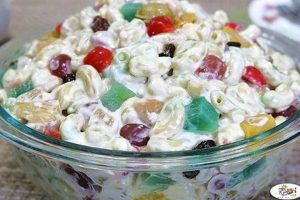
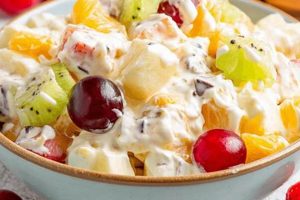
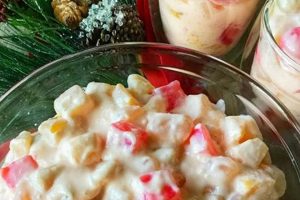
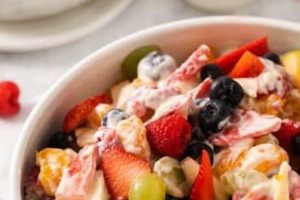
Dishes categorized as such typically combine a mixture of fresh or canned fruits with a creamy, fluffy base often created using whipped cream, whipped topping, or a combination of marshmallows and cream cheese. Variations can include the addition of nuts, miniature marshmallows, or other textural elements. A classic example might feature a blend of mandarin oranges, pineapple chunks, and maraschino cherries folded into a sweetened whipped topping.
These desserts offer a light and refreshing option, particularly suitable for potlucks, picnics, and holiday gatherings. Their versatility allows for adaptations based on seasonal fruit availability and individual preferences. The relative ease of preparation and adaptability to dietary restrictions, through ingredient substitutions, contributes to their continued popularity. Historically, such recipes gained traction in the mid-20th century with the rise of convenience foods and the proliferation of recipe sharing in community cookbooks and women’s magazines.
The following sections will delve into specific recipe variations, exploring diverse ingredient combinations and offering practical tips for achieving optimal texture and flavor. Guidance on ingredient substitutions for dietary needs and creative presentation techniques will also be provided.
Tips for Creating Excellent Fruit Fluff Salads
Achieving the ideal texture and flavor balance requires attention to detail. These tips offer guidance for optimal results.
Tip 1: Fruit Selection and Preparation: Opt for a variety of fruits with complementary flavors and textures. Consider using both canned and fresh options. Ensure canned fruits are well-drained to prevent excess liquid from thinning the fluff. Fresh fruits should be ripe but firm.
Tip 2: Base Consistency: Whether using whipped cream, whipped topping, or a marshmallow-cream cheese mixture, achieving the right consistency is crucial. Over-whipping cream can lead to a grainy texture, while under-whipping results in a less stable fluff. For a marshmallow base, ensure complete melting and smooth incorporation with the cream cheese.
Tip 3: Sweetness Level: Adjust sweetness according to the chosen fruits and personal preference. Taste the base before adding fruit and adjust with powdered sugar or a touch of sweetener if needed.
Tip 4: Ingredient Incorporation: Gently fold the fruit into the base to prevent crushing or breaking delicate pieces. Overmixing can deflate the fluff.
Tip 5: Chill Time: Chilling allows the flavors to meld and the fluff to set. Refrigerate for at least one hour before serving.
Tip 6: Presentation: Consider serving in individual bowls, a large trifle dish, or other creative vessels. Garnishing with toasted nuts, fresh mint, or a sprinkle of coconut adds visual appeal.
Tip 7: Adaptations for Dietary Needs: Substitute dairy-based ingredients with plant-based alternatives like coconut whipped cream or vegan cream cheese for dairy-free versions. Sugar-free sweeteners and lower-sugar fruits can be utilized for reduced-sugar variations.
By following these tips, one can elevate a simple fruit salad into a delightful and memorable dessert experience.
This guidance provides a strong foundation for crafting delicious fruit fluff salad variations. The following section will conclude with final thoughts and suggestions for further exploration.
1. Fruit Variety

Fruit variety is paramount in crafting a well-balanced and flavorful fruit fluff salad. The selection and combination of different fruits contribute significantly to the overall sensory experience, impacting texture, flavor profile, and visual appeal.
- Flavor Profiles
Balancing sweet, tart, and tangy flavors is key. Incorporating fruits like sweet berries (strawberries, blueberries) alongside tart citrus segments (mandarin oranges, grapefruit) creates a complex flavor profile that prevents monotony. This interplay enhances the overall enjoyment of the dish.
- Textural Variation
Different fruits offer a range of textures, from the soft, juicy flesh of berries to the firm bite of apples or grapes. Combining various textures adds complexity and interest. Consider including fruits with some firmness to contrast with the creamy fluff base. For instance, grapes provide a juicy pop, while diced apples offer a crisp element.
- Visual Appeal
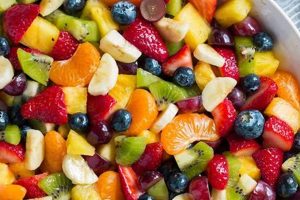
A vibrant and colorful presentation is crucial. Utilizing a variety of colors not only enhances the visual appeal but also subtly suggests a diversity of flavors. The deep reds of strawberries, the bright orange of mandarin segments, and the green of kiwi create a visually enticing dish. This element contributes significantly to the overall enjoyment.
- Seasonal Considerations
Utilizing seasonal fruits offers peak flavor and freshness while supporting local agriculture. Adapting recipes based on seasonal availability provides opportunities to explore different flavor combinations throughout the year. A summer fruit salad might feature berries and peaches, while a fall version could include apples, pears, and grapes. This flexibility allows for continuous enjoyment while highlighting seasonal produce.
The considered selection of a diverse range of fruits elevates a fruit fluff salad from a simple dish to a multi-sensory experience. By strategically combining fruits based on their flavor profiles, textures, colors, and seasonal availability, one can create a truly delightful culinary creation.
2. Fluffy Base

The fluffy base is the defining characteristic of a fruit fluff salad, providing the textural contrast and creamy sweetness that complements the fruit components. Its composition and preparation are crucial for achieving the desired lightness and overall balance within the dish. Understanding the various options for creating this base and the factors influencing its success is essential.
- Whipped Cream
Whipped cream offers a classic, light, and airy base. Heavy cream, whipped to soft or stiff peaks, provides a neutral canvas for the fruit flavors. Its fat content contributes to a rich mouthfeel. Stabilization can be achieved through the addition of gelatin or a commercial stabilizer, especially important in warmer climates. The choice of dairy or non-dairy whipped cream allows for adaptability to dietary preferences.
- Whipped Topping
Whipped topping, often derived from vegetable oils, offers a convenient and stable alternative to whipped cream. Its lighter texture and increased stability, particularly at room temperature, make it suitable for large gatherings or outdoor events. However, its flavor profile may differ from that of whipped cream, and some individuals may find the texture less desirable. Awareness of these distinctions informs recipe choices.
- Marshmallow-Cream Cheese Mixture
This combination creates a denser, sweeter, and more stable base. Melted marshmallows combined with softened cream cheese provide a unique flavor and texture, distinct from whipped cream or whipped topping. This option often requires chilling to achieve optimal firmness, making it less suitable for immediate consumption. The sweetness level can be adjusted based on the sweetness of the chosen fruits.
- Other Fluffy Base Variations
Beyond the traditional options, variations can incorporate elements like Greek yogurt, sour cream, or pudding mixes to achieve different flavor profiles and textures. Greek yogurt adds a tangy element, while sour cream contributes a richer, denser texture. Pudding mixes offer a range of flavor options, from vanilla to chocolate, expanding the possibilities for creative combinations. These variations provide opportunities for customization and experimentation.
The chosen fluffy base significantly impacts the overall flavor, texture, and stability of the fruit fluff salad. Careful consideration of the desired outcome, along with an understanding of the various base options and their characteristics, ensures a successful and enjoyable dish. Whether opting for the classic lightness of whipped cream, the convenience of whipped topping, or the unique flavor of a marshmallow-cream cheese combination, the fluffy base remains a critical element in defining this popular dessert.
3. Sweetness Balance
Sweetness balance is a critical aspect of successful fruit fluff salad recipes. A harmonious blend of sweetness is essential for a palatable and enjoyable dessert. Overly sweet salads can be cloying, while insufficient sweetness can make the dish taste bland. Achieving this balance requires careful consideration of the sweetness levels of individual ingredients and their interaction within the overall composition.
- Natural Fruit Sugars
Fruits possess varying degrees of natural sweetness. Berries, for example, range from the tartness of raspberries to the sweetness of strawberries. Balancing these inherent sweetness levels is crucial. Incorporating tart fruits alongside sweeter options prevents an overly sugary profile. Understanding the sugar content of chosen fruits allows for informed recipe adjustments, such as adding a touch of acidity or reducing added sugars in the fluffy base.
- Added Sweeteners in the Base
The fluffy base, whether whipped cream, whipped topping, or a marshmallow mixture, often incorporates added sugars. Granulated sugar, powdered sugar, or corn syrup contribute to sweetness and texture. The amount of added sugar should complement, not overpower, the natural sweetness of the fruit. Tasting the base before incorporating the fruit allows for adjustments, ensuring a harmonious balance. Over-sweetening the base can mask the delicate flavors of the fruit, creating a one-dimensional taste experience.
- Sweetness Enhancers
Ingredients like extracts (vanilla, almond), spices (cinnamon, nutmeg), or liqueurs can enhance sweetness perception without adding significant amounts of sugar. These additions contribute complexity and depth of flavor, creating a more nuanced sweetness profile. A touch of vanilla extract in the whipped cream, for example, can amplify the sweetness of the fruit without requiring additional sugar. Such enhancements contribute to a more sophisticated and balanced flavor.
- Acidity as a Counterpoint
A touch of acidity can balance sweetness, preventing the dish from becoming cloying. A squeeze of lemon or lime juice, or the inclusion of slightly tart fruits like cranberries or pineapple, provides a refreshing counterpoint to the sweetness. This interplay of sweet and tart flavors creates a more dynamic and enjoyable sensory experience. Acidity also enhances the perception of other flavors, creating a more well-rounded taste profile.
Successfully balancing sweetness in a fruit fluff salad requires a thoughtful approach to ingredient selection and preparation. Consideration of the natural sweetness of fruits, the added sugars in the base, the use of sweetness enhancers, and the balancing effect of acidity allows for the creation of a harmonious and delightful dessert. A well-balanced sweetness profile elevates the fruit fluff salad from a simple dish to a sophisticated and satisfying treat.
4. Textural Contrast

Textural contrast significantly contributes to the enjoyment of fruit fluff salad recipes. The interplay of textures creates a more dynamic and engaging sensory experience. The inherent creamy, smooth texture of the fluff base, whether achieved with whipped cream, whipped topping, or a marshmallow mixture, benefits from the incorporation of elements that offer a contrasting textural experience. This contrast prevents the dish from becoming monotonous and adds depth to each bite.
Consider the addition of chopped nuts, such as pecans, walnuts, or almonds. Their crispness and firmness provide a stark contrast to the smooth, airy fluff and softer fruits. Toasted coconut flakes offer a similar textural counterpoint, adding a subtle chewiness. Even incorporating firmer fruits like grapes or diced apples introduces textural variation. These elements disrupt the uniformity of the fluff and create a more interesting and satisfying mouthfeel. The absence of such textural contrast can result in a dish that feels one-dimensional and less appealing.
Beyond nuts and coconut, other ingredients can contribute to textural complexity. Miniature marshmallows add a soft, spongy texture, while crumbled cookies or graham crackers introduce a contrasting crunch. Even a sprinkle of chopped candied ginger offers a unique chewy and spicy element. The strategic incorporation of such texturally diverse components elevates the fruit fluff salad from a simple dessert to a more sophisticated and engaging culinary experience. Understanding the importance of textural contrast allows for informed ingredient choices and recipe adaptations, ensuring a more enjoyable and memorable dish.
5. Chill Time
Chill time is a crucial element in fruit fluff salad preparation, impacting both flavor development and structural integrity. Adequate chilling allows the flavors of the various fruits and the fluffy base to meld, creating a more harmonious and balanced flavor profile. Furthermore, chilling firms the fluffy base, enhancing its stability and preventing excessive softening or weeping, especially crucial for recipes utilizing whipped cream or a marshmallow base.
- Flavor Enhancement
Chilling allows the individual fruit flavors to permeate the fluffy base and vice versa, creating a more unified and complex flavor profile. This melding of flavors enhances the overall taste experience, transforming disparate ingredients into a cohesive whole. A freshly made fruit fluff salad, while palatable, lacks the depth of flavor achieved through chilling. The chill time allows subtle flavor notes to emerge and integrate, resulting in a richer, more nuanced taste.
- Structural Integrity
The fluffy base, particularly when made with whipped cream or a marshmallow mixture, benefits significantly from chilling. Cold temperatures solidify the fats in whipped cream, increasing its stability and preventing it from deflating or weeping. Similarly, chilling a marshmallow base allows it to firm up, providing structural support for the incorporated fruits. This enhanced structural integrity ensures that the salad maintains its desired form and texture, preventing it from becoming overly soft or watery.
- Prevention of Fruit Degradation
Chilling slows down enzymatic activity in fresh fruits, which can cause browning and textural changes. While some browning is unavoidable, chilling minimizes these effects, preserving the fresh appearance and texture of the fruit. This preservation is particularly important for fruits prone to rapid browning, such as apples, bananas, and peaches. The lower temperature inhibits the oxidation process, maintaining the fruit’s visual appeal and preventing undesirable textural changes.
- Optimal Serving Temperature
A chilled fruit fluff salad offers a refreshing and enjoyable culinary experience, particularly in warmer weather. The cool temperature enhances the perception of sweetness and provides a welcome contrast to the often richer flavors of accompanying dishes. Serving the salad chilled also complements its light and airy texture, creating a more satisfying sensory experience. A warm fruit fluff salad, conversely, can feel heavy and less refreshing.
Chill time is therefore not merely a practical step but a crucial element in optimizing the flavor, texture, and overall quality of fruit fluff salad recipes. The integration of flavors, the enhancement of structural integrity, the preservation of fruit quality, and the attainment of optimal serving temperature all contribute to a more enjoyable and successful culinary creation. Understanding the importance of chill time allows for better planning and execution, ensuring a consistently delightful dessert experience.
6. Presentation Style

Presentation style significantly influences the perceived appeal and enjoyment of fruit fluff salad recipes. While flavor and texture remain paramount, visual presentation elevates the dining experience, transforming a simple dish into a visually appealing and enticing dessert. Consideration of serving vessels, garnishes, and overall arrangement enhances the sensory experience and contributes to a more memorable culinary creation.
- Serving Vessels
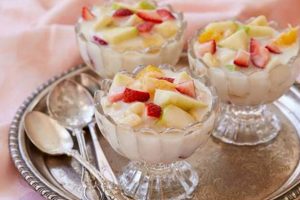
The choice of serving vessel impacts both portion control and aesthetic appeal. Individual glasses, such as dessert cups or stemmed glasses, offer elegant portioning and allow for layered presentations showcasing the various components. A large trifle bowl provides a dramatic centerpiece for gatherings, allowing for a visually impressive display of the fruit and fluff mixture. Even rustic serving dishes, like ceramic bowls or wooden platters, can contribute to a charming, homemade aesthetic. The selected vessel should complement the overall style and occasion.
- Garnishes
Garnishes provide visual interest and enhance flavor profiles. Fresh mint sprigs offer a vibrant green accent and a refreshing aroma. Toasted nuts or coconut flakes contribute textural contrast and visual appeal. A sprinkle of grated chocolate or a dusting of powdered sugar adds a touch of elegance. Even a simple arrangement of reserved fruit pieces on top elevates the presentation. Garnishes should complement the existing flavors and colors without overpowering the dish.
- Layering and Arrangement
Creating visual layers enhances the presentation, particularly in transparent serving vessels. Alternating layers of fruit and fluff create a visually appealing cross-section, showcasing the variety of ingredients. Consider arranging fruit pieces around the edges of the serving dish for an attractive border. Even a simple swirl of the fluff mixture on top adds a touch of elegance. Thoughtful layering and arrangement transform a simple mixture into a visually captivating dessert.
- Contextual Considerations
The presentation style should align with the overall context of the meal or event. A formal dinner party might call for elegant individual servings with delicate garnishes. A casual picnic or potluck might warrant a simpler presentation in a large bowl. Seasonal considerations also play a role. A festive holiday gathering might benefit from a more elaborate presentation with thematic decorations. Adapting the presentation style to the specific occasion enhances the overall dining experience.
Presentation style, therefore, plays a significant role in the overall enjoyment of fruit fluff salad recipes. Careful consideration of serving vessels, garnishes, layering techniques, and contextual appropriateness elevates this simple dessert to a visually appealing and memorable culinary creation. A well-presented fruit fluff salad not only delights the palate but also enhances the overall dining experience, demonstrating attention to detail and a commitment to culinary excellence.
7. Dietary Adaptations

Dietary adaptations play a crucial role in expanding the accessibility and inclusivity of fruit fluff salad recipes. Food sensitivities, intolerances, and specific dietary choices necessitate ingredient substitutions and modifications to ensure these desserts can be enjoyed by a wider range of individuals. Understanding the relationship between dietary adaptations and recipe adjustments allows for greater flexibility and inclusivity in food preparation.
Common dietary adaptations include dairy-free, gluten-free, vegan, and reduced-sugar variations. Dairy-free versions often substitute whipped cream with coconut whipped cream or a non-dairy whipped topping. Vegan recipes require the exclusion of all animal products, necessitating alternatives for both the fluffy base and any additional ingredients like marshmallows. Gluten-free adaptations focus on eliminating gluten-containing ingredients, often found in certain cookie or cake additions. Reduced-sugar recipes utilize sugar substitutes or lower-sugar fruits and limit added sugars in the base. For example, a dairy-free version might use coconut whipped cream and agave nectar, while a vegan option could incorporate a cashew-based cream and maple syrup.
Successfully adapting fruit fluff salad recipes requires careful consideration of ingredient interactions and potential impacts on texture and flavor. Substituting dairy-based whipped cream with a plant-based alternative may result in a slightly different texture and stability. Sugar substitutes can alter the sweetness profile and overall flavor balance. Careful testing and adjustments are crucial to ensure the adapted recipe retains the desired qualities of a traditional fruit fluff salad. Awareness of these nuances allows for informed substitutions and modifications, ensuring a satisfying and inclusive culinary experience for individuals with diverse dietary needs. Ignoring these considerations can result in a subpar final product that fails to meet dietary requirements or deliver the expected flavor and texture.
Frequently Asked Questions
This section addresses common inquiries regarding fruit fluff salad recipes, providing clarity and guidance for successful preparation.
Question 1: Can frozen fruit be used in fruit fluff salads?
While fresh fruit is generally preferred, frozen fruit can be used with certain precautions. Frozen fruit should be thawed completely and drained thoroughly before incorporation to prevent excess liquid from thinning the fluff base. Additionally, the freezing process can sometimes alter the texture of certain fruits, making them softer. This should be considered when selecting frozen fruit options.
Question 2: How long can fruit fluff salad be stored?
Storage duration depends on the ingredients used. Salads made with whipped cream or whipped topping are best consumed within 24 hours to maintain optimal texture and prevent spoilage. Variations utilizing a marshmallow-cream cheese base can often last for 2-3 days when refrigerated, though the texture of the fruit may change over time.
Question 3: Can fruit fluff salad be made ahead of time?
The base can typically be prepared a day in advance and stored separately. Incorporating the fruit shortly before serving helps maintain its fresh texture and prevents excessive softening. However, recipes using a marshmallow-cream cheese base can be assembled a day ahead and chilled, as the firmer base offers greater stability.
Question 4: How can one prevent the fruit from sinking to the bottom of the salad?
Ensuring a sufficiently thick and stable base is key to preventing fruit from sinking. Adequate whipping of cream or thorough incorporation of marshmallow and cream cheese helps create a base with enough structure to support the fruit. Gently folding the fruit into the base, rather than stirring vigorously, also helps prevent it from settling.
Question 5: What are some alternatives to traditional whipped cream or whipped topping?
Plant-based whipped creams, such as coconut whipped cream, offer dairy-free alternatives. Greek yogurt or a mixture of Greek yogurt and whipped cream provides a tangier and protein-rich option. For a richer flavor, mascarpone cheese can be incorporated. These alternatives allow for customization based on dietary preferences and desired flavor profiles.
Question 6: How can one adjust the sweetness level of a fruit fluff salad?
Sweetness can be adjusted by modifying the amount of sugar added to the fluffy base. Adding a touch of acidity, such as a squeeze of lemon or lime juice, or incorporating tart fruits like cranberries or raspberries, balances sweetness without reducing overall flavor. Using sugar substitutes in the base offers a lower-sugar option, though it may alter the texture.
Understanding these common points of inquiry facilitates a more successful and enjoyable fruit fluff salad preparation experience. Careful consideration of ingredient selection, preparation techniques, and storage guidelines ensures a delightful outcome.
The next section will offer concluding thoughts and suggestions for further culinary exploration.
Conclusion
Exploration of fruit fluff salad recipes reveals a dessert adaptable to diverse palates and occasions. Emphasis on ingredient selection, base consistency, sweetness balance, textural contrast, chill time, presentation, and dietary adaptations underscores the potential for culinary creativity within this seemingly simple dish. Careful consideration of these elements allows for a customized approach, transforming basic ingredients into a delightful and memorable dessert experience.
Culinary traditions evolve through experimentation and adaptation. Fruit fluff salad recipes offer a platform for such exploration. Continued experimentation with flavor profiles, textures, and presentation styles ensures the enduring appeal of this versatile dessert, offering a canvas for culinary expression and innovation for generations to come. The potential for personalization within established frameworks allows for the creation of unique and satisfying culinary experiences, further enriching the diverse landscape of dessert traditions.