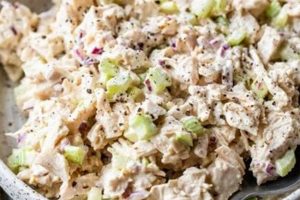
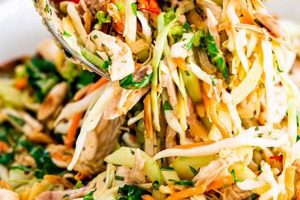
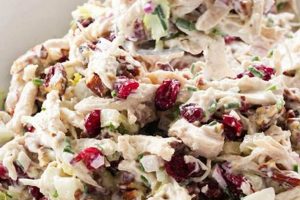
A deli-style chicken salad, typically found in grocery stores like Food City, is generally composed of cooked chicken, mayonnaise, and a variety of other ingredients such as celery, onion, grapes, and seasonings. Variations can include additions like nuts, dried cranberries, or different types of mayonnaise. These salads are often used in sandwiches, wraps, or served as a standalone side dish.
Convenient and readily available, this type of prepared salad offers a quick meal solution or party staple. Its popularity stems from its familiar flavor profile and versatility. While the precise historical origins within specific grocery chains are difficult to pinpoint, the underlying concept of combining cooked chicken with mayonnaise and other complementary elements has existed for generations, evolving alongside changing culinary preferences and regional variations.
This discussion will further explore various aspects of chicken salad, including preparation methods, ingredient selection, nutritional information, and serving suggestions. It will also touch upon variations and how they cater to diverse tastes and dietary needs.
Tips for a Delicious Chicken Salad
Elevating basic chicken salad to something truly special involves attention to detail and a willingness to experiment. These tips offer guidance on enhancing flavor, texture, and overall enjoyment.
Tip 1: Utilize High-Quality Chicken: Rotisserie chicken provides excellent flavor and moistness, simplifying the preparation process. Alternatively, poaching or grilling boneless, skinless chicken breasts allows for precise control over seasoning and texture.
Tip 2: Mind the Mayonnaise: The quality and type of mayonnaise significantly impact the final product. Experiment with different brands or consider making homemade mayonnaise for a richer, more nuanced flavor.
Tip 3: Incorporate Textural Variety: Finely diced celery and onion offer classic crunch. Consider adding chopped grapes, apples, walnuts, or pecans for additional textural complexity.
Tip 4: Season Strategically: Freshly ground black pepper, sea salt, and a touch of paprika are essential. A dash of Dijon mustard or a squeeze of lemon juice can brighten the flavors.
Tip 5: Balance Sweet and Savory: A touch of sweetness from dried cranberries or chopped grapes can complement the savory notes of the chicken and mayonnaise. Adjust the amount to personal preference.
Tip 6: Chill Thoroughly: Chilling allows the flavors to meld and the salad to firm up, enhancing both taste and texture. Aim for at least 30 minutes of refrigeration before serving.
Tip 7: Consider Garnishes: Fresh herbs like parsley or chives add visual appeal and a burst of freshness. A sprinkle of paprika or a few toasted nuts can also elevate the presentation.
By following these tips, one can create a chicken salad that is not only delicious but also offers a personalized culinary experience. Attention to these details significantly improves the final result, transforming a simple dish into something memorable.
These insights into chicken salad preparation provide a foundation for further exploration of recipes, variations, and culinary applications.
1. Ingredients
Ingredients form the foundation of any recipe, and a Food City-style chicken salad is no exception. The careful selection and balance of ingredients directly impact the final product’s flavor, texture, and overall quality. Understanding the role of each ingredient allows for informed choices regarding taste preferences and dietary needs.
For example, the type of chicken used significantly influences the salad’s character. Rotisserie chicken offers a convenient and flavorful option, often imbued with smoky notes. Alternatively, using poached or baked chicken breasts allows for greater control over seasoning and sodium content. Similarly, the mayonnaise choice affects the richness and tanginess of the salad. Standard mayonnaise creates a classic flavor profile, while using a lighter version reduces overall fat content. The inclusion of celery provides a characteristic crunch and subtle vegetal flavor, while additions like grapes, nuts, or dried cranberries introduce sweetness and textural complexity. Seasonings such as salt, pepper, onion powder, and garlic powder further enhance the overall flavor profile. Each ingredient contributes not only to the taste but also to the nutritional value, texture, and appearance of the final dish.
Successful replication of a Food City-style chicken salad requires an understanding of these ingredient interactions. This knowledge enables informed substitutions and adjustments to suit individual preferences. Modifying ingredients allows for customization based on dietary restrictions, such as reducing sodium or fat content, or incorporating allergen-free alternatives. Ultimately, appreciation for the role of each ingredient contributes to a more satisfying and personalized culinary experience.
2. Preparation Method
Preparation methods significantly influence the final characteristics of a Food City-style chicken salad. The method employed affects not only the texture and consistency of the salad but also the integration and development of flavors. For instance, hand-shredding cooked chicken preserves the meat’s fibrous structure, resulting in a more textured salad compared to using a food processor, which creates a smoother, more homogenous mixture. The order of ingredient incorporation also plays a vital role. Adding seasonings directly to the chicken before combining it with other ingredients ensures even distribution and flavor penetration. Furthermore, gently folding in delicate ingredients like grapes or herbs prevents them from being crushed and maintains their visual appeal.
Consider the impact of chilling time. Allowing the prepared salad to rest in refrigeration for a period allows the flavors to meld and deepen. This chilling period also firms the salad, making it easier to handle for sandwich or wrap preparation. Different preparation techniques can also influence the salad’s nutritional profile. For example, using reduced-fat mayonnaise or Greek yogurt in place of traditional mayonnaise lowers the overall fat content without significantly compromising flavor or texture. Understanding these nuances allows for adaptation and customization of the recipe to meet specific dietary requirements or taste preferences.
Mastery of the preparation method is essential for achieving a Food City-style chicken salad that balances flavor, texture, and appearance. This understanding translates to a more enjoyable and satisfying culinary experience. It provides a framework for consistent results, enabling confident adaptation and personalization while maintaining the core characteristics of this popular deli staple. Careful consideration of each step, from ingredient preparation to chilling time, contributes to a superior final product.
3. Flavor Profile

The flavor profile of a Food City chicken salad recipe is a critical aspect of its appeal, contributing significantly to its popularity. Understanding the interplay of flavors provides insights into the recipe’s construction and allows for adjustments catering to individual preferences. Deconstructing the flavor profile involves analyzing its key components and their contributions to the overall sensory experience.
- Savory Base:
The foundational savory element typically derives from the cooked chicken itself, often enhanced by the addition of salt and potentially other seasonings like onion or garlic powder. This savory base provides a neutral backdrop for other flavors to build upon, creating a balanced and satisfying profile.
- Creamy Texture and Richness:
Mayonnaise contributes the characteristic creaminess and richness, binding the ingredients together while also imparting a subtle tang. The quality and type of mayonnaise used can significantly influence the overall richness and mouthfeel of the salad.
- Balancing Acidity and Sweetness:
A touch of sweetness, often from grapes or dried cranberries, balances the savory and creamy elements. This interplay prevents the salad from being overly rich and adds complexity to the flavor profile. A subtle acidic note, sometimes from a squeeze of lemon juice or the addition of pickles, further brightens the flavors and adds another layer of complexity.
- Textural Contrasts:
The interplay of textures contributes significantly to the overall sensory experience. The tender chicken, creamy mayonnaise, and crisp celery or nuts create a dynamic contrast that enhances enjoyment. This textural variety prevents the salad from feeling monotonous and adds interest to each bite.
These intertwined elements work synergistically to create the recognizable and appealing flavor profile of a Food City chicken salad recipe. Recognizing these components allows for a deeper appreciation of the recipe’s construction and provides a framework for modifications. Understanding how each element contributes to the overall flavor profile empowers informed adjustments based on individual preferences and dietary needs, ensuring a satisfying and personalized culinary outcome.
4. Serving Suggestions
Serving suggestions provide context and inspiration for enjoying a Food City chicken salad recipe, transforming a simple dish into a versatile meal component. Understanding these suggestions expands culinary possibilities and maximizes enjoyment of this deli staple. The following facets illustrate the diverse ways to incorporate this chicken salad into various meal occasions.
- Classic Sandwiches and Wraps:
Traditional sandwich bread, croissants, or wraps provide a convenient and familiar vehicle for chicken salad. Adding lettuce, tomato, and onion enhances texture and flavor. Serving on whole-wheat bread or in a lettuce wrap offers a healthier alternative.
- Salads and Bowls:
Chicken salad can elevate a simple green salad, adding protein and flavor. Incorporating it into grain bowls with quinoa or rice, alongside roasted vegetables, creates a balanced and nutritious meal. These options cater to lighter meals and provide opportunities for creative ingredient combinations.
- Appetizers and Snacks:
Serving chicken salad as a dip with crackers, vegetables, or pita chips provides a flavorful and easy appetizer. Stuffing celery sticks or cherry tomatoes with the salad creates visually appealing and convenient finger foods, ideal for gatherings and casual entertaining.
- Creative Culinary Applications:
Utilizing chicken salad as a filling for baked potatoes or avocados offers a unique twist. Incorporating it into omelets or frittatas provides a protein-rich breakfast or brunch option. These creative applications highlight the versatility of chicken salad beyond traditional sandwich fillings.
These serving suggestions demonstrate the adaptable nature of Food City chicken salad, extending its utility beyond a simple standalone dish. Understanding these various applications provides a framework for incorporating this convenient and flavorful salad into diverse meal occasions, from quick lunches to elegant appetizers. The versatility of this deli staple contributes to its continued popularity and offers a canvas for culinary creativity.
5. Storage Guidelines

Proper storage is crucial for maintaining the quality and safety of Food City chicken salad. Adhering to appropriate storage guidelines prevents bacterial growth and preserves the salad’s freshness, flavor, and texture. Neglecting these guidelines can lead to spoilage and potential foodborne illnesses. The following facets outline essential storage practices for maximizing shelf life and ensuring safe consumption.
- Refrigeration:
Refrigeration is paramount for preserving chicken salad. Storing the salad in an airtight container at a temperature of 40F (4C) or below inhibits bacterial proliferation and maintains optimal quality. Prompt refrigeration after purchase or preparation is essential to minimize the risk of spoilage. Leaving chicken salad at room temperature for extended periods, especially in warmer environments, creates conditions conducive to bacterial growth, potentially leading to foodborne illness.
- Shelf Life:
Commercially prepared chicken salad from Food City typically has a shelf life of 3-5 days when properly refrigerated, according to the “use by” date on the packaging. Homemade chicken salad generally maintains peak quality for 3-4 days under refrigeration. Beyond these timeframes, the risk of spoilage increases significantly, even when refrigerated. Monitoring the salad for changes in appearance, texture, or odor provides further indication of freshness. Discarding the salad beyond its recommended shelf life is crucial for food safety.
- Freezing (Not Recommended):
Freezing chicken salad is generally not recommended. The mayonnaise-based dressing separates upon thawing, resulting in an undesirable texture and compromised flavor. The freezing process can also negatively impact the chicken’s texture, leading to a dry or rubbery consistency upon thawing. While technically safe to freeze, the quality degradation upon thawing makes it an impractical storage method for maintaining the desired characteristics of the salad.
- Container Considerations:
Choosing appropriate containers plays a role in preserving chicken salad. Airtight containers minimize exposure to oxygen, which can contribute to oxidation and spoilage. Using clean containers prevents cross-contamination from other foods. Properly sealing the container also helps retain moisture, preventing the salad from drying out during refrigeration. These container considerations contribute to maintaining the salad’s freshness, flavor, and overall quality.
Adherence to these storage guidelines is essential for ensuring the safe consumption and optimal enjoyment of Food City chicken salad. Proper storage practices preserve the salad’s quality, minimize the risk of spoilage, and contribute to a positive culinary experience. Neglecting these guidelines can compromise both the flavor and safety of the salad, emphasizing the importance of proper refrigeration, attention to shelf life, and appropriate container selection.
6. Variations

Variations on the classic chicken salad recipe represent both regional preferences and individual creativity, showcasing the adaptability of this deli staple. Exploring these variations provides insights into the diverse culinary landscape and allows for personalized interpretations of a familiar dish. Understanding the rationale behind these adaptations expands appreciation for the core recipe and its potential for customization.
- Classic Southern Style:
This variation often incorporates sweet pickle relish, hard-boiled eggs, and a touch of mustard, contributing a tangy and slightly sweet flavor profile. Its prevalence in the Southern United States reflects regional culinary traditions and preferences for these specific flavor combinations. This classic rendition exemplifies how regional influences shape variations on a core recipe.
- Fruity and Nutty:
The addition of grapes, apples, cranberries, or pecans introduces textural complexity and sweetness. These additions complement the savory chicken and creamy mayonnaise, offering a balanced flavor profile. The prevalence of these fruit and nut combinations highlights consumer preferences for incorporating diverse textures and complementary flavors into the traditional recipe.
- Health-Conscious Adaptations:
Substituting Greek yogurt or avocado for mayonnaise reduces fat and calorie content without sacrificing creaminess. Using whole-wheat bread or lettuce wraps further enhances the nutritional value. These modifications cater to health-conscious consumers seeking healthier versions of classic comfort foods, demonstrating the adaptability of the core recipe to diverse dietary needs.
- Spicy and Savory:
Incorporating ingredients like jalapeos, curry powder, or sriracha adds a spicy kick, catering to those who prefer bolder flavor profiles. These variations often feature additional savory elements like chopped onions or chives to balance the heat. The inclusion of spice demonstrates the potential for customizing chicken salad to reflect individual preferences for bolder and more intense flavor combinations.
These variations highlight the adaptability of the Food City chicken salad recipe, showcasing how simple modifications can cater to diverse palates and dietary requirements. They underscore the enduring appeal of chicken salad as a culinary canvas for both regional traditions and individual creativity, transforming a familiar dish into a personalized culinary experience. Each variation contributes to the ongoing evolution of this classic recipe, reflecting the dynamic interplay between tradition and innovation within the culinary landscape.
Frequently Asked Questions
This section addresses common inquiries regarding chicken salad, providing concise and informative responses to clarify potential uncertainties and enhance understanding.
Question 1: What is the typical shelf life of store-bought chicken salad?
Store-bought chicken salad, such as that found at Food City, typically has a shelf life of 3-5 days when properly refrigerated according to package instructions. Always check the “use by” date for specific guidance.
Question 2: Can chicken salad be frozen?
Freezing is generally not recommended. Mayonnaise-based dressings tend to separate upon thawing, negatively impacting texture. The chicken’s texture can also be adversely affected.
Question 3: What are common signs of spoiled chicken salad?
Indicators of spoilage include a sour or unpleasant odor, a slimy texture, and discoloration. If any of these are present, the salad should be discarded.
Question 4: How can sodium content be reduced in chicken salad?
Sodium content can be reduced by using lower-sodium chicken and mayonnaise. Seasoning with fresh herbs and spices instead of salt can also enhance flavor without increasing sodium intake.
Question 5: What are healthy alternatives to mayonnaise in chicken salad?
Greek yogurt or mashed avocado provide healthy alternatives to mayonnaise, reducing fat and calories while maintaining a creamy consistency. These substitutions offer a nutritional advantage without significantly compromising flavor.
Question 6: How can one adapt chicken salad to different dietary needs?
Chicken salad can be adapted to various dietary needs. Using gluten-free bread or crackers addresses gluten sensitivities. Incorporating allergen-free ingredients caters to specific allergies. Adjusting ingredients based on dietary guidelines allows for personalized versions.
Addressing these common queries provides a more comprehensive understanding of chicken salad selection, storage, and adaptation. This knowledge empowers informed choices and enhances appreciation for this versatile dish.
Further exploration of recipe variations and nutritional information can enhance culinary skills and promote informed dietary choices.
Food City Chicken Salad Recipe
This exploration of Food City chicken salad recipes has delved into various facets, from ingredient selection and preparation methods to flavor profiles, serving suggestions, storage guidelines, and recipe variations. Understanding these elements allows for informed choices regarding ingredient quality, preparation techniques, and customization options. The examination of flavor profiles provides insight into the balance of savory, creamy, sweet, and acidic notes, while serving suggestions showcase the dish’s versatility. Proper storage guidelines emphasize food safety and quality maintenance. Exploration of variations highlights the adaptability of this classic deli staple to diverse palates and dietary preferences.
Culinary traditions evolve through ongoing exploration and adaptation. Encouraging experimentation with ingredients and preparation techniques promotes culinary creativity and personalized interpretations of classic recipes. Continued exploration of regional variations and health-conscious adaptations contributes to a dynamic and evolving culinary landscape. Informed choices regarding food preparation and consumption contribute not only to individual enjoyment but also to a broader appreciation for the cultural significance of food.