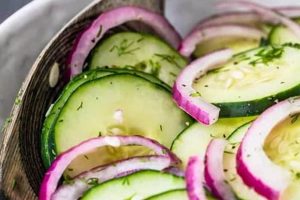
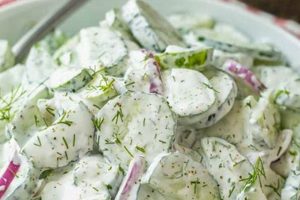
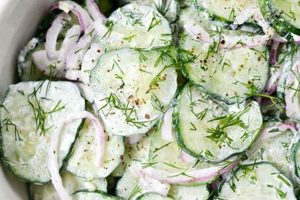
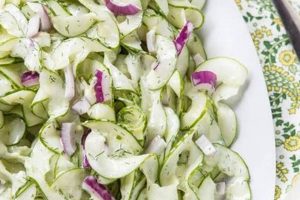
Sunomono, often featuring thinly sliced cucumber marinated in a rice vinegar-based dressing, provides a refreshing and light counterpoint to richer sushi ingredients. Variations can include seaweed, sesame seeds, or other vegetables, enhancing the textural and flavor profile. These preparations are frequently served as a side dish alongside sushi or incorporated into rolls, adding a bright, acidic element. One example is kappa maki, a simple sushi roll consisting solely of cucumber and seasoned rice, showcasing the vegetable’s delicate flavor and satisfying crunch.
The incorporation of these refreshing elements offers several benefits. The light, acidic flavors cleanse the palate between richer fish or meat-based sushi. The high water content of cucumber contributes to a hydrating dining experience. Furthermore, the relative simplicity of preparation makes it an accessible entry point for novice sushi enthusiasts. Historically, such preparations reflect Japanese culinary traditions that value balance and seasonality, utilizing readily available ingredients to create harmonious flavor combinations.
This exploration will further delve into various sunomono recipes and their integration into sushi, covering topics such as ingredient selection, preparation techniques, and variations to suit different palates and dietary preferences. Detailed instructions and visual aids will be provided to guide readers through the creation of these flavorful and healthy additions to the sushi experience.
Tips for Cucumber Salad in Sushi
Optimizing the preparation of cucumber for sushi involves attention to detail and technique. The following tips offer guidance for achieving optimal flavor and texture.
Tip 1: Salt and Drain: Salting thinly sliced cucumbers draws out excess moisture, preventing a watery filling and maintaining the structural integrity of sushi rolls. Allow the cucumber to rest for approximately 15-20 minutes after salting, then gently pat dry with a clean cloth or paper towel.
Tip 2: Rice Vinegar Selection: Unseasoned rice vinegar provides a clean, slightly sweet base for the marinade. Avoid using seasoned rice vinegar, as its pre-existing flavors may clash with other ingredients.
Tip 3: Marinating Time: A brief marinating period of 10-15 minutes allows the cucumber to absorb the flavors of the dressing without becoming overly saturated or losing its crisp texture.
Tip 4: Ingredient Balance: A balanced flavor profile is crucial. Consider incorporating a touch of sugar and a pinch of salt to complement the acidity of the rice vinegar.
Tip 5: Knife Skills: Consistent thin slices ensure even marinating and contribute to a pleasant textural experience. A sharp knife and mindful cutting technique are essential.
Tip 6: Seed Removal: Removing the seeds from the cucumber reduces excess moisture and enhances the overall texture of the salad. A small spoon or melon baller can be used for this purpose.
Tip 7: Creative Additions: Enhance flavor and texture with additions like toasted sesame seeds, thinly sliced red onion, or a sprinkle of chili flakes.
Tip 8: Storage: Marinated cucumber can be stored in an airtight container in the refrigerator for up to 2 days. However, it is best used fresh for optimal flavor and texture.
Adhering to these tips ensures a crisp, flavorful cucumber salad that complements the other sushi components, contributing to a satisfying and balanced culinary experience.
By following these guidelines, individuals can elevate their sushi preparation, creating a dish that exemplifies both freshness and flavor.
1. Thinly Sliced Cucumber

Thinly sliced cucumber serves as a foundational element in various cucumber salad sushi recipes. Its preparation and characteristics significantly impact the final dish’s flavor, texture, and overall aesthetic. Understanding its role is crucial for successful recipe execution.
- Texture and Mouthfeel
Thinly sliced cucumber offers a delicate crunch that contrasts with the soft texture of the sushi rice. This textural interplay enhances the overall sensory experience. Slices that are too thick can create an unwieldy bite, disrupting the balance of the sushi roll or salad. Precision in slicing ensures a harmonious combination of textures.
- Marinade Absorption
Thin slices maximize surface area, facilitating efficient absorption of the marinade. This ensures that the cucumber is infused with the desired flavors, contributing to a balanced and well-integrated taste profile. Thicker slices may result in uneven flavor distribution, leaving the center bland while the exterior is overly saturated.
- Aesthetic Presentation
The thin, translucent slices of cucumber contribute to the visual appeal of sushi. They allow other ingredients to be visible, creating a visually layered and attractive presentation. Uniformly thin slices are essential for maintaining a consistent aesthetic and preventing a cluttered appearance.
- Versatility in Application
Thinly sliced cucumber can be incorporated into various sushi preparations, including kappa maki (cucumber rolls), salads, and garnishes. Its versatility allows for creative applications and adaptations to suit different flavor profiles and culinary preferences. This adaptability makes it a valuable ingredient in a wide range of sushi dishes.
The precise slicing of cucumber is therefore not merely a preparatory step but a crucial determinant of the final product’s quality and appeal. Properly sliced cucumber enhances the sensory experience, facilitates flavor absorption, contributes to visual appeal, and allows for versatile application within the realm of cucumber salad sushi recipes. This attention to detail elevates a simple ingredient to a crucial component of a refined culinary experience.
2. Rice Vinegar Marinade
Rice vinegar marinade forms the cornerstone of many cucumber salad sushi recipes, imbuing the cucumber with a characteristic tangy flavor that balances the richness of other sushi components. Its composition and preparation significantly influence the final dish’s overall taste profile and contribute to the refreshing, palate-cleansing quality often associated with sushi accompaniments.
- Acidity and Flavor Balance
Rice vinegar’s mild acidity provides a refreshing counterpoint to the fattiness of fish and the subtle sweetness of sushi rice. This balance is crucial for preventing the overall meal from becoming overly rich or heavy. The acidity also enhances the perception of other flavors in the dish, creating a more complex and nuanced taste experience. For example, the brightness of the marinade accentuates the umami notes of seaweed or the subtle sweetness of crab.
- Preservation and Crispness
The acetic acid in rice vinegar acts as a mild preservative, extending the shelf life of the cucumber salad. Additionally, the marinade helps maintain the cucumber’s crisp texture, preventing it from becoming soggy or wilted. This is particularly important in sushi preparations where textural contrast plays a significant role. For instance, in kappa maki, the crispness of the marinated cucumber contrasts delightfully with the soft rice.
- Sugar and Salt Harmony
Sugar and salt are often added to rice vinegar marinades to create a balanced flavor profile. The sugar tempers the sharpness of the vinegar, while the salt enhances the overall savoriness and rounds out the flavor. The precise ratio of these ingredients can be adjusted to achieve different levels of sweetness and saltiness, allowing for customization based on personal preference and the specific sushi dish being prepared. A slightly sweeter marinade complements lighter fish, while a more savory one pairs well with richer seafood.
- Aromatic Infusions and Enhancements
Rice vinegar marinades can be further enhanced with aromatic additions such as ginger, garlic, or chili flakes. These infusions add complexity and depth to the flavor profile, complementing the cucumber and other sushi ingredients. For instance, a hint of ginger adds a warming spice, while garlic imparts a pungent savory note. These additions allow for creative variations and customization of the marinade to suit specific taste preferences and culinary goals.
The careful preparation and application of rice vinegar marinade are essential for creating a successful cucumber salad sushi recipe. The marinade not only contributes to the dish’s flavor profile but also enhances the textural experience and overall balance. By understanding the various facets of its role, one can appreciate its significance in elevating a simple cucumber salad to a crucial element of a complex and satisfying sushi meal.
3. Sugar and Salt Balance
Sugar and salt play a crucial role in cucumber salad sushi recipes, extending beyond mere seasoning. Their balanced interplay within the rice vinegar marinade directly influences the final product’s palatability and overall culinary experience. This balance affects not only the flavor profile but also the cucumber’s texture and preservation.
The primary function of sugar is to temper the sharp acidity of the rice vinegar. Without sugar, the marinade could be overly tart, overpowering the delicate flavor of the cucumber. Sugar contributes a subtle sweetness that complements the refreshing nature of the salad, creating a more harmonious flavor profile. Conversely, salt enhances the inherent flavors of both the cucumber and the vinegar. It acts as a flavor enhancer, amplifying the subtle nuances and creating a more well-rounded taste. Salt also contributes to the preservation of the cucumber, drawing out excess moisture and extending its shelf life. The synergistic relationship between sugar and salt ensures that neither dominates, creating a balanced and nuanced flavor profile.
Consider kappa maki, a simple sushi roll featuring cucumber and rice. The sugar-salt balance in the marinade prevents the cucumber from tasting overly sour or bland. The subtle sweetness of the sugar harmonizes with the umami of the rice and nori, while the salt amplifies the refreshing taste of the cucumber. This balanced flavor profile enhances the overall sensory experience of the kappa maki, demonstrating the practical significance of this seemingly simple culinary principle. Achieving this balance requires careful consideration of the specific type of rice vinegar used, as acidity levels can vary. Adjusting the sugar and salt proportions accordingly ensures a consistently palatable and flavorful outcome. Failure to achieve proper balance can result in a marinade that is either too sweet, too sour, or simply lacks depth, compromising the overall quality of the sushi.
4. Optional sesame seeds

Sesame seeds, while optional, offer a significant contribution to cucumber salad sushi recipes, enhancing both flavor and texture. Their presence introduces a nutty depth and a subtle crunch, complementing the refreshing cucumber and tangy marinade. The small seeds adhere well to the marinated cucumber slices, ensuring their flavor and texture are integrated into each bite. Toasted sesame seeds offer a more pronounced nutty aroma and flavor, further elevating the sensory experience. For example, in kappa maki, the addition of sesame seeds provides a textural counterpoint to the soft rice and crisp cucumber, while their nutty flavor complements the subtle sweetness of the seasoned rice.
Beyond flavor and texture, sesame seeds also offer nutritional benefits, contributing small amounts of healthy fats, protein, and minerals to the dish. This nutritional contribution aligns with the broader health-conscious aspects often associated with sushi. Furthermore, sesame seeds provide visual appeal, adding a subtle contrast in color and texture to the often monochromatic cucumber salad. This visual enhancement elevates the overall presentation of the dish, making it more appealing. In various sushi rolls incorporating cucumber salad, the sesame seeds embedded within the roll become visible when sliced, adding visual interest to the cross-section.
The judicious use of sesame seeds exemplifies the attention to detail characteristic of Japanese cuisine. While optional, their inclusion demonstrates how seemingly minor ingredients can contribute significantly to the overall culinary experience. Consideration of such details elevates a simple cucumber salad to a more complex and satisfying element within a sushi meal. This highlights the practical significance of understanding the role of each ingredient, even those considered optional, in achieving a balanced and harmonious culinary outcome.
5. Kappa maki integration
Kappa maki, translating to “cucumber roll,” represents a fundamental expression of cucumber salad within sushi cuisine. Its simplicity underscores the importance of properly prepared cucumber salad, highlighting the delicate balance of flavors and textures essential for a successful sushi experience. Analyzing kappa maki’s construction provides insight into the broader principles governing cucumber’s role in sushi.
- Ingredient Simplicity & Flavor Emphasis
Kappa maki’s minimal ingredientssushi rice, nori seaweed, and marinated cucumberplace significant emphasis on the cucumber’s flavor profile. The absence of strongly flavored ingredients, such as fish or avocado, necessitates a perfectly balanced cucumber salad to prevent a bland or underwhelming result. This highlights the importance of precise seasoning and marinating techniques in cucumber salad preparation.
- Textural Interplay
The crisp texture of the marinated cucumber contrasts with the soft, slightly sticky sushi rice and the delicate chewiness of the nori seaweed. This interplay of textures is a hallmark of well-made sushi and demonstrates how cucumber contributes to the overall sensory experience. Kappa maki provides a clear example of this textural synergy, illustrating how cucumber’s crispness balances other elements within a sushi roll.
- Culinary Technique Foundation
Mastering kappa maki construction often serves as a foundational step in learning more complex sushi preparations. The precise rolling technique required for kappa maki is directly applicable to other hosomaki (thin rolls) and provides essential skills for preparing more intricate uramaki (inside-out rolls) or futomaki (thick rolls). This establishes kappa maki as a crucial stepping stone in sushi education.
- Palate Cleanser and Digestive Aid
Kappa maki frequently functions as a palate cleanser between richer, more intensely flavored sushi pieces. The light, refreshing cucumber and the tangy rice vinegar marinade help to reset the palate, preparing it for the next flavor experience. Additionally, cucumber’s high water content aids digestion, contributing to a more comfortable and enjoyable sushi meal.
Kappa maki’s construction and consumption offer valuable insights into the integral role cucumber salad plays within the broader context of sushi cuisine. From its emphasis on balanced flavors and textures to its function as a palate cleanser and foundational learning tool, kappa maki exemplifies the versatility and significance of cucumber salad in enhancing the overall sushi experience. Understanding these principles enables a deeper appreciation of the careful balance and intentionality characteristic of Japanese culinary traditions.
6. Freshness and Crispness
Freshness and crispness are paramount in cucumber salad sushi recipes, directly influencing the overall sensory experience and culinary success. These qualities affect not only the cucumber’s palatability but also its textural interplay with other sushi components. Compromised freshness results in a noticeable decline in quality, impacting both flavor and texture. A fresh cucumber exhibits a vibrant green hue and firm texture, offering a refreshing, slightly sweet taste. Conversely, a less-than-fresh cucumber may appear dull, with a softer texture and a potentially bitter or off-flavor. This deterioration negatively impacts the overall balance of the dish, diminishing the intended culinary experience.
Crispness, inextricably linked to freshness, provides a satisfying textural contrast within sushi. Consider kappa maki: the crisp cucumber provides a counterpoint to the soft rice and delicate nori. A loss of crispness results in a less satisfying, potentially soggy texture, compromising the intended balance. Maintaining crispness requires careful handling and preparation. Salting the cucumber slices draws out excess moisture, a crucial step in preserving texture. Proper storage, preferably in a cool, humid environment, also contributes to maintaining optimal crispness. In gunkan maki, where the cucumber salad might be used as a topping, maintaining crispness is essential for preventing the delicate seaweed enclosure from becoming soggy.
Achieving optimal freshness and crispness requires selecting high-quality cucumbers and employing appropriate preparation and storage techniques. These qualities contribute significantly to the overall success of cucumber salad sushi recipes, highlighting the importance of prioritizing ingredient quality and culinary technique. Failure to maintain freshness and crispness diminishes the intended sensory experience, underscoring their crucial role in achieving a balanced and harmonious culinary outcome. This understanding enables informed ingredient selection, careful handling, and appropriate storage, ultimately contributing to a more satisfying and authentic sushi experience.
7. Palate Cleansing Function

The palate cleansing function of cucumber salad plays a crucial role within the broader context of sushi cuisine. Sushi often involves a progression of flavors, ranging from delicate white fish to richer, more intensely flavored selections like fatty tuna or eel. Cucumber salad, with its light, refreshing qualities, acts as an intermediary, effectively resetting the palate between these diverse flavor experiences. This allows for a more nuanced appreciation of each individual piece of sushi, preventing flavor fatigue and ensuring a balanced overall meal. The high water content of cucumber contributes to this cleansing effect, literally rinsing the palate and preparing it for the next taste sensation. The mild acidity of the rice vinegar marinade further enhances this function, cutting through richness and leaving a clean, refreshing feeling.
Consider a traditional omakase experience, where the chef carefully curates a sequence of sushi. After a rich, oily piece of chutoro (medium-fatty tuna), a small portion of sunomono, a type of cucumber salad, might be served. The light, refreshing cucumber, marinated in a subtly sweet and sour dressing, effectively cleanses the palate, allowing the diner to fully appreciate the subsequent piece of sushi, perhaps a delicate piece of hirame (flounder). Without this palate cleanser, the richness of the chutoro might linger, potentially overpowering the subtle flavors of the hirame. This illustrates the practical significance of cucumber salad’s palate-cleansing function in enhancing the overall sushi dining experience. Similarly, within a single roll, such as a dragon roll, the refreshing cucumber filling balances the richness of the avocado and eel, preventing the roll from becoming overly heavy.
Understanding the palate-cleansing function of cucumber salad provides insight into the careful consideration of balance and harmony characteristic of Japanese culinary traditions. This seemingly simple element plays a significant role in enhancing the overall sushi experience, enabling a more nuanced appreciation of the diverse flavors and textures offered within this complex and sophisticated cuisine. Its presence demonstrates the intentionality behind every component of a sushi meal, where even the simplest elements contribute to a greater whole. This understanding allows for a deeper appreciation of the culinary artistry and cultural significance embedded within the tradition of sushi.
Frequently Asked Questions
This section addresses common inquiries regarding the utilization of cucumber salad in sushi preparation, offering concise and informative responses.
Question 1: How critical is removing cucumber seeds before incorporating them into sushi?
Seed removal is recommended as it minimizes excess moisture, contributing to a firmer texture and preventing the sushi roll from becoming soggy. While not mandatory, it enhances the overall quality and structural integrity of the sushi.
Question 2: Can other types of vinegar be substituted for rice vinegar in cucumber salad sushi recipes?
While other vinegars can be used, rice vinegar provides a specific mild sweetness and subtle acidity that is characteristic of many sushi preparations. Substitutions may alter the intended flavor profile. If necessary, white wine vinegar or apple cider vinegar can be used sparingly, but adjustments to sugar and salt levels may be required.
Question 3: What is the ideal thickness for cucumber slices in sushi?
Aim for thin, even slices, approximately 1-2 millimeters thick. This allows for optimal marinade absorption and contributes to a pleasant texture within the sushi roll.
Question 4: How long can marinated cucumber be stored for sushi preparation?
Marinated cucumber is best used immediately for optimal flavor and texture. If storage is necessary, refrigerate in an airtight container for up to 2 days, recognizing that some textural changes may occur.
Question 5: Beyond kappa maki, how else can cucumber salad be incorporated into sushi?
Cucumber salad can be utilized as a filling in various sushi rolls, a topping for gunkan maki, or a refreshing side dish alongside nigiri or sashimi. It can also be a component in more complex rolls, adding a layer of flavor and texture.
Question 6: Are there specific types of cucumbers best suited for sushi?
Japanese cucumbers, known for their thin skin and crisp flesh, are ideal. Persian cucumbers also offer a suitable alternative. Avoid cucumbers with thick skins or large seed cavities.
Proper preparation and handling of cucumber contribute significantly to the overall quality and enjoyment of sushi. Attention to these details ensures a balanced and harmonious culinary experience.
The following section will provide a selection of specific cucumber salad sushi recipes, offering practical guidance for incorporating these principles into culinary practice.
Cucumber Salad Sushi Recipe
Exploration of cucumber salad within sushi recipes reveals its multifaceted role extending beyond a simple ingredient. From the precise slicing technique that maximizes marinade absorption and contributes to textural interplay, to the delicate balance of sugar and salt within the rice vinegar marinade, each element contributes significantly to the final product. The optional addition of sesame seeds further enhances both flavor and texture, while kappa maki exemplifies the cucumber’s potential as a standalone sushi component. Furthermore, the emphasis on freshness and crispness underscores the importance of ingredient quality and proper handling. Finally, cucumber salad’s palate-cleansing function highlights its crucial role in balancing richer flavors within a sushi meal, contributing to a more nuanced and satisfying culinary experience.
Mastery of cucumber salad preparation elevates sushi creation, transforming a seemingly simple element into a defining characteristic of a balanced and harmonious dish. Further exploration of regional variations and innovative applications promises to unveil even greater potential within this versatile ingredient, enriching the ongoing evolution of sushi cuisine.