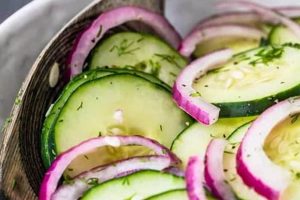
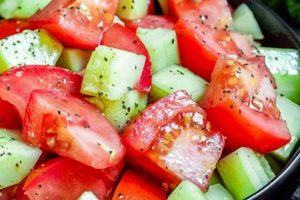
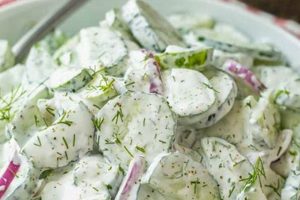
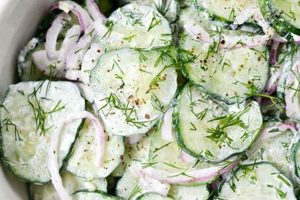
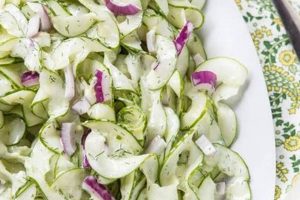
A refreshing and flavorful salad featuring cucumbers as the primary ingredient, enhanced by the salty, tangy addition of feta cheese, typically incorporates other elements such as onions, herbs, and a vinaigrette. A simple version might include thinly sliced cucumbers, crumbled feta, red onion, fresh dill, and a lemon-herb dressing. More complex variations could involve other vegetables, different types of feta, or unique dressings with ingredients like yogurt or tahini.
This combination of ingredients offers a balance of textures and flavors, from the cool, crisp cucumber to the creamy, salty feta. The addition of feta not only provides a salty, savory element but also contributes to the dish’s nutritional value, being a source of calcium and protein. Such salads are versatile, serving as a light lunch, a side dish to grilled meats or fish, or part of a larger buffet spread. Their popularity stems from the ease of preparation, the refreshing nature of the dish, and the adaptability to different cuisines and palates.
Further exploration will delve into specific recipe variations, highlighting different flavor profiles and ingredient combinations. Techniques for achieving optimal cucumber texture and feta integration will also be discussed. Additionally, nutritional information and suggested pairings will be provided to offer a comprehensive understanding of this culinary creation.
Tips for a Perfect Cucumber and Feta Salad
Achieving optimal flavor and texture requires attention to detail. The following tips offer guidance for creating a truly exceptional salad.
Tip 1: Salt the Cucumbers: Salting the cucumbers draws out excess moisture, preventing a watery salad. Place sliced cucumbers in a colander with salt and let them sit for 15-20 minutes before rinsing and drying thoroughly.
Tip 2: Choose Quality Feta: Opt for feta packed in brine for optimal freshness and flavor. Consider different varieties like sheep’s milk feta for a richer, tangier taste.
Tip 3: Balance the Flavors: A successful salad hinges on a balance of salty, tangy, and fresh elements. Adjust the amount of feta, acidity in the dressing, and fresh herbs to achieve harmony.
Tip 4: Enhance with Fresh Herbs: Fresh herbs like dill, mint, or parsley elevate the salad’s flavor profile. Experiment with different herb combinations to discover preferred pairings.
Tip 5: Consider the Dressing: A simple vinaigrette with olive oil, lemon juice, and herbs complements the cucumbers and feta beautifully. Explore variations incorporating yogurt, tahini, or different vinegars for unique flavor profiles.
Tip 6: Don’t Overcrowd the Salad: Avoid overcrowding the serving bowl, allowing the ingredients to breathe and maintain their texture.
Tip 7: Chill Before Serving: Chilling the salad enhances the flavors and provides a refreshing experience, particularly during warmer months.
By following these tips, one can elevate a simple cucumber and feta salad to a culinary masterpiece, maximizing flavor and texture.
These techniques demonstrate the potential for creating a dish that is both simple and sophisticated. The following section will conclude with a summary of key learnings and further resources for exploration.
1. Fresh Cucumbers

Fresh cucumbers are fundamental to a successful cucumber salad with feta. Their crisp texture and mild, refreshing flavor provide the base upon which the other ingredients build. Cucumbers lacking freshness contribute a watery texture and diminished flavor, detracting significantly from the overall quality of the salad. The choice of cucumber variety also influences the final result. For instance, English cucumbers, known for their thinner skin and fewer seeds, offer a more refined texture compared to standard garden cucumbers. Persian cucumbers, smaller and sweeter, provide a different flavor profile.
The freshness of cucumbers directly impacts the balance of flavors within the salad. The subtle sweetness of a fresh cucumber contrasts beautifully with the salty tang of feta cheese. This balance is crucial; a less-than-fresh cucumber can introduce unwanted bitterness, disrupting the intended harmony. Furthermore, the structural integrity of fresh cucumbers allows them to hold their shape when sliced or diced, maintaining an appealing presentation even after being dressed. Conversely, older cucumbers tend to become mushy, resulting in an unappetizing salad.
Selecting and preparing fresh cucumbers is therefore essential for a high-quality cucumber and feta salad. Opting for firm cucumbers with vibrant green skin is a good starting point. Proper storage also plays a role; refrigeration in a crisper drawer helps maintain freshness. Finally, the method of preparation, whether thinly sliced, diced, or ribboned, can further enhance both the aesthetic appeal and the enjoyment of this refreshing dish. Attention to these details elevates the salad from simple to exceptional.
2. High-Quality Feta
High-quality feta cheese is paramount in a cucumber salad; it provides a crucial salty, tangy counterpoint to the cool, refreshing cucumber. Feta’s quality significantly impacts the overall flavor profile and texture of the salad, elevating it from simple to exceptional. Understanding the characteristics of high-quality feta allows for informed selection and optimal culinary results.
- Milk Source and Production
Authentic feta is traditionally made from sheep’s milk or a blend of sheep and goat’s milk. The milk source influences the cheese’s final flavor and texture. Sheep’s milk feta tends to be richer and creamier with a more pronounced tang, while goat’s milk adds a subtle sharpness. Traditional production methods, including aging in brine, contribute to feta’s characteristic salty, crumbly texture.
- Texture and Appearance
High-quality feta exhibits a creamy, crumbly texture, with a bright white color. It should hold its shape when crumbled but not be excessively hard or dry. Avoid feta that appears overly wet or slimy, as this indicates improper storage or lower quality. The texture of the feta contrasts pleasingly with the crisp cucumber, providing a multi-sensory experience.
- Flavor Profile
The flavor of high-quality feta is a balance of salty, tangy, and slightly acidic notes. It should not be overly salty or possess a sharp, unpleasant aftertaste. The distinct flavor of feta enhances the subtle sweetness of the cucumber, creating a complex and satisfying flavor profile.
- Storage and Freshness
Proper storage is crucial for maintaining feta’s quality. Feta should be stored in brine to preserve its moisture and prevent it from drying out or developing off-flavors. Check the expiration date and avoid feta with visible mold or an unpleasant odor. Fresh feta is essential for maximizing the salad’s flavor and overall quality.
The selection of high-quality feta significantly influences the success of a cucumber and feta salad. Its creamy, salty, and tangy characteristics complement the cucumber’s refreshing qualities, creating a balanced and flavorful dish. By understanding the nuances of feta production, texture, flavor, and storage, one can make informed choices that elevate this simple salad to a culinary delight.
3. Balanced Vinaigrette

A balanced vinaigrette is essential for a successful cucumber salad recipe featuring feta. The vinaigrette acts as a unifying element, harmonizing the contrasting flavors and textures of the cucumber and feta while enhancing the overall sensory experience. An imbalanced vinaigrette can easily overpower the delicate cucumber or clash with the salty feta, resulting in a less satisfying dish. The balance hinges on the careful interplay of acidity, oil, and seasonings.
The acidity in the vinaigrette, typically derived from vinegar or citrus juice, provides brightness and cuts through the richness of the feta. Lemon juice, red wine vinegar, and white wine vinegar are popular choices, each offering a unique flavor profile. The acidity also helps to tenderize the cucumbers slightly, enhancing their texture. The oil component of the vinaigrette contributes richness and helps to distribute the flavors evenly throughout the salad. Extra virgin olive oil is a classic choice, its fruity notes complementing both cucumber and feta. Other oils like avocado or grapeseed oil can also be used, offering subtle flavor variations. The balance between oil and acid is crucial; too much acidity can make the salad sharp, while too much oil can render it heavy.
Seasonings further enhance the vinaigrette and tie the flavors together. Fresh herbs like dill, mint, or parsley add brightness and complexity. Dried herbs, such as oregano or thyme, offer a more robust flavor profile. A touch of garlic or shallot can add a pungent note, while a pinch of red pepper flakes introduces a subtle heat. Salt and freshly ground black pepper are essential for seasoning the vinaigrette and balancing the overall flavor profile. Over-seasoning can mask the delicate flavors of the cucumber and feta, while under-seasoning can result in a bland salad. A well-balanced vinaigrette elevates the cucumber and feta salad, transforming simple ingredients into a harmonious and refreshing dish. Careful consideration of the acidity, oil, and seasonings ensures a vinaigrette that complements rather than overpowers the other components, creating a cohesive and delightful culinary experience.
4. Complementary Herbs
Complementary herbs play a vital role in enhancing the flavor profile of a cucumber salad recipe with feta. Their aromatic and flavorful contributions elevate the dish beyond a simple combination of ingredients, adding depth and complexity. Careful selection and application of herbs can transform a basic cucumber and feta salad into a vibrant and nuanced culinary experience. The choice of herbs should consider their individual characteristics and how they interact with the other ingredients.
- Fresh Herbs vs. Dried Herbs
Fresh herbs are generally preferred for their vibrant flavor and aroma. They offer a brighter, more nuanced taste compared to dried herbs, which can sometimes have a more concentrated, almost bitter flavor. Common fresh herbs used in cucumber and feta salads include dill, mint, parsley, and chives. While dried herbs can be used as a substitute when fresh herbs are unavailable, it’s important to use them sparingly, as their flavor can be overpowering. The delicate flavor of fresh herbs complements the cucumber and feta without masking their inherent qualities.
- Pairing Herbs with Cucumber and Feta
Specific herbs pair particularly well with cucumber and feta due to their complementary flavor profiles. Dill, with its slightly tangy and anise-like flavor, enhances the creamy saltiness of the feta and the refreshing cucumber. Mint adds a cool, invigorating element, contrasting with the feta’s richness. Parsley provides a clean, slightly peppery note, while chives contribute a subtle onion flavor that harmonizes with the other ingredients. Understanding these pairings allows for a more intentional and flavorful salad creation.
- Balancing Herb Intensity
The intensity of different herbs varies, impacting the overall balance of the salad. Stronger herbs like mint and dill should be used more judiciously than milder herbs like parsley and chives. The goal is to enhance the flavors of the cucumber and feta, not to overpower them. The amount of herbs used should also be considered in relation to the quantity of other ingredients, ensuring a harmonious flavor profile. A balanced approach prevents any single flavor from dominating the dish.
- Incorporating Herbs into the Salad
Herbs can be incorporated into the salad in various ways. Chopping fresh herbs and adding them directly to the salad is the most common method, allowing their flavor to permeate the other ingredients. Alternatively, herbs can be infused into the vinaigrette, adding an extra layer of flavor complexity. Another approach involves muddling herbs with a bit of salt to release their essential oils before adding them to the salad. Each method offers a slightly different flavor experience.
The judicious use of complementary herbs significantly elevates a cucumber salad recipe with feta. Fresh herbs, carefully chosen and balanced, enhance the flavors of the primary ingredients, transforming a simple salad into a more complex and satisfying dish. By understanding the nuances of herb selection, pairing, and incorporation, one can create a truly exceptional culinary experience. The interplay between the fresh, crisp cucumber, the salty, tangy feta, and the aromatic herbs creates a harmonious and refreshing dish perfect for a light lunch, side dish, or part of a larger spread.
5. Optional Additions

Optional additions offer opportunities to personalize and enhance a cucumber salad recipe with feta, expanding its flavor profile and textural complexity. While the core ingredientscucumber and fetaprovide the foundation, carefully chosen additions can transform the salad from a simple side dish to a more substantial and nuanced culinary creation. These additions should complement the existing flavors without overpowering the delicate balance between the cucumber and feta.
Several additions can contribute different dimensions to the salad. Tomatoes, for instance, introduce a juicy sweetness and vibrant color contrast. Red onion adds a sharp, pungent note, while Kalamata olives provide a briny, salty element. Bell peppers, available in various colors, offer both sweetness and crunch. Avocado contributes a creamy texture and healthy fats. Toasted nuts or seeds, such as pine nuts, walnuts, or sunflower seeds, introduce a satisfying crunch and nutty flavor. Adding protein-rich elements like chickpeas or grilled chicken or shrimp transforms the salad into a complete meal. The choice of additions depends on individual preferences and the desired overall flavor profile. For example, a Mediterranean-inspired salad might include Kalamata olives, tomatoes, and red onion, while a more substantial salad could incorporate grilled chicken or chickpeas.
The key to successful additions lies in considering their impact on the overall balance and harmony of the salad. The quantity of each addition should be carefully considered to avoid overwhelming the core flavors of cucumber and feta. Additionally, the additions should be prepared appropriately. Tomatoes should be ripe and juicy, onions thinly sliced to minimize their pungency, and nuts lightly toasted to enhance their flavor. Understanding the interplay of flavors and textures allows for a more nuanced and satisfying culinary outcome. Thoughtful consideration of optional additions can elevate a cucumber and feta salad, offering a personalized culinary experience tailored to individual preferences. The versatility of this salad allows for endless variations, transforming a simple dish into a culinary canvas for creativity and exploration.
6. Proper Chilling
Proper chilling significantly impacts the overall quality and enjoyment of a cucumber salad with feta. Chilling allows the flavors of the various componentscucumber, feta, vinaigrette, and any other additionsto meld and harmonize, creating a more cohesive and nuanced flavor profile. Furthermore, chilling enhances the textural contrast between the crisp cucumber and creamy feta. A room-temperature salad often presents a less vibrant flavor experience, with the individual ingredients tasting somewhat disjointed. The cucumber may also become slightly limp, diminishing its refreshing crispness. For example, a chilled salad featuring cucumbers, feta, red onion, mint, and a lemon vinaigrette offers a refreshing and balanced culinary experience, with each ingredient contributing distinct yet complementary flavors.
The temperature of the salad affects the perception of individual flavors. Chilling dulls the perception of bitterness, which can sometimes be present in cucumbers, while enhancing the perception of sweetness and saltiness. This effect contributes to a more balanced and palatable flavor profile. Moreover, chilling firms the texture of the cucumber, making it more enjoyable to eat. A chilled vinaigrette also delivers a more refreshing sensation. Conversely, a warm salad can result in a less appealing texture, with the cucumber becoming soft and the feta losing its characteristic crumbliness. The practical application of this understanding ensures a more pleasurable dining experience.
Optimal chilling involves refrigerating the salad for at least 30 minutes prior to serving, allowing sufficient time for the flavors to meld and the temperature to drop. Over-chilling, however, should be avoided, as it can negatively impact the texture of the cucumbers, making them excessively firm. A well-chilled cucumber and feta salad offers a refreshing and harmonious culinary experience, highlighting the interplay of flavors and textures. This understanding allows one to maximize the enjoyment and sensory appeal of this versatile dish. Balancing chilling time with optimal temperature results in the most flavorful and texturally pleasing salad.
Frequently Asked Questions
This section addresses common inquiries regarding cucumber salad recipes featuring feta cheese, providing concise and informative responses.
Question 1: How can excess moisture be prevented in a cucumber salad?
Salting the sliced cucumbers prior to adding them to the salad draws out excess moisture. Place the cucumber slices in a colander, sprinkle with salt, and let them sit for approximately 15-20 minutes. Rinse the cucumbers thoroughly and pat them dry before combining them with the other ingredients. This process helps maintain the salad’s crispness and prevents a watery consistency.
Question 2: What type of feta cheese is recommended for this salad?
Feta cheese packed in brine is generally recommended for optimal flavor and texture. Brine-packed feta retains moisture and freshness better than vacuum-packed or dry feta. Sheep’s milk feta offers a richer, tangier flavor, while cow’s milk feta is milder. Consider exploring different varieties to find a preferred taste profile.
Question 3: Can other vegetables be added to a cucumber and feta salad?
Other vegetables can complement cucumber and feta, adding flavor, texture, and nutritional value. Tomatoes, red onion, bell peppers, and olives are popular additions. However, the quantity of additional vegetables should be carefully considered to maintain balance and avoid overwhelming the core flavors of cucumber and feta.
Question 4: What herbs pair well with cucumber and feta?
Fresh herbs like dill, mint, parsley, and chives enhance the flavor profile of cucumber and feta salads. Dill offers a tangy, anise-like flavor; mint provides a cool, refreshing contrast; parsley adds a clean, peppery note; and chives contribute a subtle onion flavor. Experimentation with different herb combinations can lead to personalized flavor discoveries.
Question 5: What type of dressing is best suited for this salad?
A simple vinaigrette made with olive oil, lemon juice or vinegar, and seasonings complements the flavors of cucumber and feta. Variations incorporating yogurt, tahini, or different types of vinegar can add complexity and depth. The dressing should enhance, not overpower, the other ingredients.
Question 6: How long should the salad be chilled before serving?
Chilling the salad for at least 30 minutes before serving allows the flavors to meld and enhances the refreshing qualities of the dish. However, avoid over-chilling, as this can negatively impact the texture of the cucumbers. Optimal chilling enhances both flavor and texture.
Understanding these key aspects of preparation ensures a successful and enjoyable cucumber salad experience, balancing flavor, texture, and freshness.
The following section will offer a selection of specific recipes, demonstrating the versatility and adaptability of this dish.
Cucumber Salad Recipe Feta
Exploration of cucumber salad recipes incorporating feta cheese reveals the importance of ingredient quality, preparation techniques, and flavor balancing. Fresh, crisp cucumbers provide the foundation, while high-quality feta contributes essential salty, tangy notes. A balanced vinaigrette harmonizes these contrasting elements, with complementary herbs adding depth and complexity. Optional additions, such as other vegetables, nuts, or proteins, offer opportunities for personalization and expanded culinary exploration. Proper chilling allows flavors to meld, enhancing the final sensory experience.
The simplicity of this dish belies its potential for culinary nuance. Understanding the interplay of ingredients and techniques allows for the creation of a refreshing, flavorful, and adaptable salad suitable for various occasions. Further exploration of regional variations and flavor combinations offers continued opportunities for culinary discovery and personalized enjoyment.