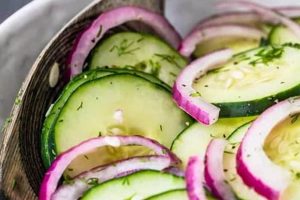
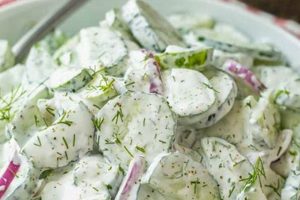
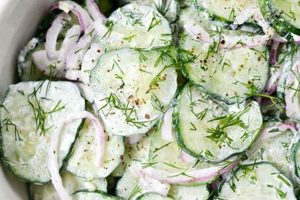
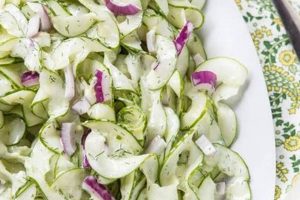
A refreshing and flavorful dish, typically composed of thinly sliced cucumbers, combined with other vegetables like bell peppers, red onion, and carrots, and tossed in a vibrant, often tangy, Asian-inspired dressing. Variations can include the addition of protein such as sesame-crusted seared tuna or shredded chicken, as well as garnishes like sesame seeds, chopped cilantro, or crispy fried noodles. A simple example would be thinly sliced cucumbers marinated in a mixture of rice vinegar, soy sauce, sesame oil, and a touch of ginger and garlic.
This type of salad offers a light and healthy meal option, often low in calories and rich in vitamins and antioxidants. The crispness of the cucumbers and other fresh vegetables provides a satisfying crunch, while the dressing delivers a complex flavor profile balancing sweet, sour, salty, and umami notes. Historically, cucumbers have held a significant place in Asian cuisine, valued for their cooling properties and versatility. The fusion of these fresh ingredients with characteristic Asian flavors has led to the development of countless regional variations, reflecting the diverse culinary traditions across the continent.
Exploration of specific ingredients commonly used in these salads, an analysis of different regional variations, and practical guidance on preparation techniques will further illuminate the subject. Additionally, nutritional information and potential health benefits will be examined.
Tips for a Perfect Cucumber Asian Salad
Achieving optimal flavor and texture in a cucumber Asian salad requires attention to detail. The following tips offer guidance for creating a truly exceptional dish.
Tip 1: Salt the Cucumbers: Salting the cucumbers prior to adding them to the salad draws out excess moisture, preventing a watery final product and allowing the dressing to adhere more effectively. Place the sliced cucumbers in a colander with a sprinkle of salt and let them sit for 15-20 minutes. Gently pat them dry before incorporating them into the salad.
Tip 2: Balance the Dressing: The ideal dressing balances sweet, sour, salty, and umami elements. Experiment with different ratios of rice vinegar, soy sauce, sesame oil, and sweeteners like honey or maple syrup to achieve the desired flavor profile.
Tip 3: Utilize Fresh Ingredients: Opt for the freshest cucumbers, herbs, and other vegetables available. The quality of the ingredients significantly impacts the overall flavor and texture of the salad.
Tip 4: Consider Texture: Incorporate a variety of textures to create a more engaging culinary experience. Toasted sesame seeds, chopped peanuts, crispy fried noodles, or thinly sliced red onion can add a satisfying crunch.
Tip 5: Chill Before Serving: Chilling the salad for at least 30 minutes before serving allows the flavors to meld and enhances the refreshing qualities of the dish. However, avoid chilling for an extended period, as this can cause the vegetables to become soggy.
Tip 6: Customize with Protein: Grilled chicken, shrimp, or tofu can be added to create a more substantial meal. Ensure the protein is properly seasoned and complements the flavors of the salad.
Tip 7: Garnish Thoughtfully: A simple garnish can elevate the presentation and add a final burst of flavor. Consider chopped cilantro, mint, or a sprinkle of chili flakes.
By following these tips, one can create a cucumber Asian salad that is not only visually appealing but also offers a delightful balance of flavors and textures.
A concluding overview of the versatility and appeal of this culinary creation will follow.
1. Fresh Cucumbers

Fresh cucumbers are fundamental to a successful cucumber Asian salad recipe. Their crisp texture and mild, refreshing flavor provide a neutral base that complements the bold flavors of the Asian-inspired dressing and other components. Using fresh cucumbers is crucial for achieving the desired textural contrast, as less fresh cucumbers can become soft and watery, detracting from the overall sensory experience. For instance, a salad made with wilted cucumbers will lack the satisfying crunch that balances the richness of a sesame-soy dressing. The choice of cucumber variety can also influence the outcome; English cucumbers, known for their thin skin and minimal seeds, are a popular option for salads.
The freshness of cucumbers directly impacts the flavor profile of the salad. Cucumbers that have been stored improperly or for extended periods can develop off-flavors, negatively affecting the delicate balance of the dish. Furthermore, fresh cucumbers offer a higher water content, contributing to the refreshing quality of the salad, particularly desirable in warmer climates. Consider a scenario where a cucumber Asian salad is served as a light lunch on a summer day; the crisp, cool cucumbers provide a welcome contrast to the heat, enhancing the overall enjoyment of the meal.
Selecting and preparing fresh cucumbers is therefore essential for creating a cucumber Asian salad recipe that delivers the intended sensory experience. Opting for firm, unblemished cucumbers and storing them appropriately ensures optimal freshness. Proper preparation techniques, such as salting the cucumbers to remove excess moisture, further enhance their textural contribution to the finished dish. Ultimately, the quality of the cucumbers directly impacts the success of the recipe, highlighting the significance of this core ingredient.
2. Flavorful Dressing

The dressing is arguably the most crucial element of a cucumber Asian salad recipe, acting as the unifying component that binds the individual ingredients and defines the overall flavor profile. A well-crafted dressing elevates the simple combination of fresh vegetables into a vibrant and complex culinary experience. Its importance lies in its ability to balance and enhance the inherent flavors of the cucumbers and other components, creating a harmonious and refreshing dish.
- Balance of Flavors
A successful Asian-inspired dressing achieves a delicate balance of sweet, sour, salty, and umami. This balance is typically achieved through a combination of ingredients such as rice vinegar (sour), soy sauce or tamari (salty and umami), sesame oil (nutty and aromatic), and a sweetener like honey, maple syrup, or sugar (sweet). A dressing that leans too heavily on one flavor profile can overpower the delicate flavors of the cucumbers and other vegetables. For instance, an overly sweet dressing can mask the refreshing crispness of the cucumbers, while an excessively salty dressing can make the salad unpalatable. Careful consideration of the proportions of each ingredient is crucial for achieving the desired balance and complexity.
- Ingredient Quality
The quality of the ingredients used in the dressing significantly impacts the overall flavor of the salad. Using high-quality soy sauce, fresh ginger and garlic, and unrefined sesame oil can elevate the dressing from ordinary to exceptional. Freshly squeezed lime or lemon juice can also brighten the flavors and add a touch of acidity. Conversely, using low-quality ingredients can result in a dressing that lacks depth and complexity. For example, a dressing made with stale ginger or low-quality soy sauce can have a dull, almost metallic taste, detracting from the freshness of the cucumbers and other vegetables.
- Texture and Viscosity
The texture and viscosity of the dressing also play a role in the overall sensory experience. A dressing that is too thin can be watery and fail to coat the vegetables properly, while a dressing that is too thick can be overwhelming and mask the individual flavors of the salad components. The desired texture can be achieved by adjusting the proportions of the liquid and thickening agents. For example, a small amount of cornstarch or arrowroot powder can be used to thicken the dressing without altering the flavor profile significantly. The dressing’s consistency should allow it to cling lightly to the vegetables, ensuring that each bite is infused with flavor without making the salad soggy.
- Complementary Flavor Combinations
The flavor profile of the dressing should complement the other ingredients in the salad. For example, a sesame-ginger dressing pairs well with the fresh, clean flavors of cucumbers, carrots, and bell peppers. Other popular flavor combinations include peanut dressings, miso dressings, and dressings infused with chili garlic sauce. Experimenting with different combinations of herbs, spices, and aromatics can lead to unique and exciting flavor profiles. The key is to ensure that the flavors of the dressing enhance, rather than overpower, the other ingredients in the salad.
The flavorful dressing acts as the cornerstone of a successful cucumber Asian salad recipe, unifying the various components and creating a harmonious balance of flavors and textures. The interplay between the dressing and the fresh cucumbers, along with other carefully selected ingredients, determines the overall culinary experience. A well-balanced, flavorful dressing elevates the simple cucumber salad into a refreshing and satisfying dish, showcasing the versatility and depth of Asian-inspired cuisine.
3. Complementary Vegetables
Complementary vegetables play a vital role in a cucumber Asian salad recipe, expanding the flavor profile, adding nutritional value, and enhancing textural complexity. While cucumbers provide a refreshing base, carefully chosen complementary vegetables contribute depth and balance, transforming a simple cucumber salad into a multifaceted culinary experience. The selection of these vegetables should consider factors such as flavor compatibility, texture, color, and nutritional contribution.
- Flavor Compatibility
The flavors of the complementary vegetables should harmonize with the dominant flavors of the dressing and the mild cucumber base. For example, the sweetness of bell peppers complements the savory notes of a soy-based dressing, while the sharpness of red onion provides a counterpoint to the richness of sesame oil. Ingredients like shredded carrots, bean sprouts, and edamame offer subtle yet distinct flavors that enhance the overall complexity without overpowering the delicate cucumber. Clashing flavors, such as an excessively bitter vegetable, can disrupt the intended balance and detract from the overall enjoyment.
- Textural Contrast
A variety of textures creates a more engaging sensory experience. While cucumbers offer a refreshing crunch, incorporating vegetables with different textures adds depth and interest. Examples include the crisp snap of snow peas, the soft chewiness of blanched green beans, or the satisfying bite of water chestnuts. This textural diversity prevents the salad from becoming monotonous and enhances the enjoyment of each bite. Consider the difference between a salad solely composed of sliced cucumbers and one that includes the added crunch of shredded carrots and the delicate texture of bean sprouts; the latter offers a more dynamic and satisfying textural experience.
- Visual Appeal
The visual appeal of a salad enhances its overall presentation and can stimulate the appetite. Complementary vegetables offer an opportunity to introduce a variety of colors and shapes, creating a visually engaging dish. The vibrant red of bell peppers, the deep green of spinach, or the bright orange of carrots can transform a simple salad into a work of art. This visual appeal not only makes the salad more enticing but also adds to the overall dining experience. A monochromatic salad, even if flavorful, may lack the visual appeal that encourages enjoyment.
- Nutritional Value
Incorporating a variety of complementary vegetables increases the nutritional value of the salad. Different vegetables offer different vitamins, minerals, and antioxidants, contributing to a more balanced and nutrient-rich meal. Adding spinach provides a boost of iron and vitamin K, while including bell peppers adds vitamin C and antioxidants. This nutritional diversity enhances the health benefits of the salad, making it a more complete and wholesome meal option. A salad limited to cucumbers, while refreshing, lacks the nutritional breadth of one that incorporates a variety of vegetables.
The careful selection of complementary vegetables is essential for maximizing the flavor, texture, visual appeal, and nutritional value of a cucumber Asian salad recipe. These vegetables, when chosen thoughtfully, elevate the dish beyond a simple combination of ingredients, transforming it into a balanced and satisfying culinary creation. The interplay of flavors, textures, and colors creates a symphony of sensations, demonstrating the significant role complementary vegetables play in a successful cucumber Asian salad.
4. Optional Protein

Inclusion of protein transforms a cucumber Asian salad from a light side dish or appetizer into a more substantial and complete meal. While the refreshing base of cucumbers and complementary vegetables provides essential vitamins, minerals, and fiber, the addition of protein contributes satiety and balances the macronutrient profile. This addition allows the salad to serve as a satisfying lunch or dinner option, appealing to those seeking a lighter yet nutritionally balanced meal. Consider the contrast between a cucumber salad served as a refreshing side to grilled fish and the same salad enhanced with grilled chicken or tofu, becoming the main course itself. This adaptability makes the inclusion of protein a valuable consideration when tailoring the salad to specific dietary needs and preferences.
Several protein options harmonize well with the flavors of a typical cucumber Asian salad. Grilled or shredded chicken, often marinated in soy sauce, ginger, and garlic, provides a savory complement to the fresh vegetables and tangy dressing. Similarly, pan-seared or baked tofu, cubed and tossed in a similar marinade, offers a plant-based protein source that absorbs the surrounding flavors effectively. Seafood, such as shrimp or flaked salmon, provides a lighter protein option, aligning with the refreshing nature of the salad. The choice of protein influences not only the nutritional value but also the overall flavor profile, allowing for customization based on individual preferences. For example, a salad featuring spicy shrimp caters to different palates than one with marinated tofu.
Understanding the role of optional protein allows for strategic customization of cucumber Asian salads to meet specific dietary needs and preferences. The inclusion of protein enhances the nutritional value and satiety of the dish, broadening its appeal and versatility. Whether opting for poultry, tofu, seafood, or another protein source, this addition elevates the cucumber Asian salad from a side dish to a complete and satisfying meal. Careful consideration of protein choices and their complementary flavors ensures a well-balanced and enjoyable culinary experience. This knowledge empowers individuals to tailor the salad to fit various dietary restrictions and preferences, maximizing both nutritional value and culinary satisfaction.
5. Crunchy Elements

Crunchy elements contribute significantly to the sensory appeal of a cucumber Asian salad recipe. Texture plays a crucial role in the overall dining experience, and the interplay of crisp, fresh vegetables with contrasting crunchy elements elevates the salad from simple to sophisticated. This textural diversity provides a satisfying counterpoint to the softer elements of the salad, such as the cucumbers and dressing, creating a more dynamic and enjoyable culinary experience. Consider the difference between a salad composed solely of sliced cucumbers and one that includes toasted sesame seeds, chopped peanuts, or crispy fried wontons; the latter offers a more engaging textural profile. This interplay of textures stimulates multiple sensory receptors, enhancing enjoyment and contributing to a more memorable dining experience.
Several crunchy elements enhance cucumber Asian salads. Toasted sesame seeds provide a nutty flavor and delicate crunch, complementing the Asian-inspired dressing. Chopped peanuts offer a more robust crunch and a richer, more pronounced flavor. Crispy fried wontons or noodles contribute a contrasting texture and a satisfyingly loud crunch. Other options include toasted slivered almonds, cashews, or even crispy baked chickpeas. The choice of crunchy element influences not only the texture but also the overall flavor profile, offering opportunities for customization and experimentation. For example, the addition of wasabi peas introduces a spicy kick, while crispy shallots offer a subtle sweetness. The selected crunchy elements should harmonize with the other flavors in the salad, creating a balanced and cohesive flavor profile.
Strategic incorporation of crunchy elements demonstrates an understanding of the importance of textural complexity in culinary creations. This attention to detail elevates the cucumber Asian salad from a basic dish to a more refined and satisfying meal. The interplay of textures creates a more engaging and enjoyable dining experience, appealing to a broader range of palates. Furthermore, the versatility of crunchy elements allows for customization, enabling individuals to tailor the salad to specific preferences and dietary needs. Successfully incorporating crunchy elements highlights the practical significance of understanding texture as a key component of a balanced and enjoyable cucumber Asian salad.
6. Aromatic Herbs
Aromatic herbs contribute a final layer of complexity and freshness to a cucumber Asian salad recipe. Their inclusion elevates the sensory experience beyond the foundational flavors of the cucumbers, dressing, and other vegetables. Fresh herbs introduce vibrant aromas and nuanced flavors that brighten the overall profile, creating a more dynamic and engaging culinary experience. Careful selection and application of aromatic herbs are essential for maximizing their impact without overpowering the delicate balance of flavors.
- Flavor Enhancement
Aromatic herbs impart distinct flavors that complement and enhance the existing flavor profile of the salad. Cilantro, with its bright, citrusy notes, adds a refreshing element that cuts through the richness of sesame oil or the umami of soy sauce. Mint provides a cooling, slightly sweet flavor that balances the heat of chili flakes or the tanginess of rice vinegar. Thai basil offers a subtle anise-like flavor that complements the savory notes of a peanut dressing. The choice of herbs should align with the overall flavor profile of the salad, creating a harmonious and balanced taste.
- Aromatic Complexity
The volatile compounds in fresh herbs release aromatic notes that enhance the sensory experience. The bright, pungent aroma of cilantro, the refreshing scent of mint, or the peppery aroma of Thai basil stimulate the olfactory senses, adding another dimension to the enjoyment of the salad. These aromatic notes interact with the flavors of the other ingredients, creating a more complex and nuanced sensory experience. The interplay of aromas and flavors contributes to a more memorable and satisfying meal.
- Visual Appeal
Fresh herbs contribute to the visual appeal of the salad, adding vibrant green hues and textural contrast. A sprinkle of chopped cilantro, a few sprigs of mint, or a scattering of Thai basil leaves elevates the presentation, making the salad more visually appealing. This visual enhancement not only makes the dish more enticing but also contributes to the overall dining experience.
- Cultural Significance
The use of specific herbs often reflects regional culinary traditions. Cilantro is a staple in Southeast Asian cuisine, while mint is commonly used in Middle Eastern and Mediterranean dishes. The inclusion of specific herbs can add an authentic touch to the salad, reflecting the diverse culinary influences that inspire Asian cuisine. This cultural context adds depth and meaning to the culinary experience, connecting the dish to broader culinary traditions.
The inclusion of aromatic herbs represents a final, crucial step in crafting a well-rounded and flavorful cucumber Asian salad. Their contribution extends beyond mere flavor enhancement, encompassing aromatic complexity, visual appeal, and even cultural significance. By understanding the nuanced role of aromatic herbs, one can elevate a simple cucumber salad into a sophisticated and satisfying culinary creation that tantalizes the senses and reflects a deeper understanding of flavor dynamics.
Frequently Asked Questions
This section addresses common inquiries regarding cucumber Asian salads, providing concise and informative responses to facilitate a deeper understanding of this culinary creation.
Question 1: How can excess moisture in cucumber Asian salad be prevented?
Salting the sliced cucumbers prior to incorporating them into the salad draws out excess water. Place the cucumber slices in a colander, sprinkle with salt, and allow them to rest for 15-20 minutes before patting dry.
Question 2: What are common dressing variations for cucumber Asian salads?
Common variations include sesame-ginger, peanut, miso, and chili-garlic dressings. Each offers a distinct flavor profile, allowing for customization based on individual preferences.
Question 3: Beyond cucumbers, what vegetables complement an Asian-inspired salad?
Carrots, bell peppers, red onion, bean sprouts, snow peas, edamame, and water chestnuts offer complementary flavors, textures, and colors.
Question 4: Can protein be added to a cucumber Asian salad?
Protein such as grilled chicken, tofu, shrimp, or flaked salmon can be added to enhance the nutritional value and create a more substantial meal.
Question 5: What crunchy elements can enhance the texture of the salad?
Toasted sesame seeds, chopped peanuts, crispy fried wontons, crispy noodles, or toasted nuts like almonds or cashews provide textural contrast.
Question 6: What herbs typically complement the flavors of a cucumber Asian salad?
Cilantro, mint, and Thai basil are frequently used to enhance the flavor profile and add aromatic complexity.
Understanding these key aspects allows for a more informed approach to creating and enjoying cucumber Asian salads. Each element, from the cucumbers to the dressing and complementary ingredients, contributes to the overall culinary experience.
A collection of curated recipes will further demonstrate the versatility and adaptability of this dish.
Cucumber Asian Salad Recipe
This exploration of the cucumber Asian salad recipe has highlighted the essential components and techniques that contribute to a successful and satisfying culinary outcome. From the selection of fresh, crisp cucumbers to the careful balance of flavors in the dressing, each element plays a crucial role in the overall sensory experience. The strategic incorporation of complementary vegetables, optional protein, crunchy elements, and aromatic herbs further enhances the complexity and nutritional value of the dish. The analysis of these components underscores the importance of understanding the interplay of flavors, textures, and aromas in creating a well-balanced and enjoyable salad.
The cucumber Asian salad recipe represents a versatile and adaptable culinary creation, offering a refreshing and flavorful meal option. Its adaptability to various dietary preferences and the potential for creative customization ensures its continued relevance in the culinary landscape. Further exploration of regional variations and innovative ingredient combinations promises to unlock even greater culinary potential, solidifying the cucumber Asian salad’s position as a staple dish in kitchens worldwide. Ultimately, a deeper understanding of this recipe empowers individuals to create not just a salad, but a personalized culinary experience.