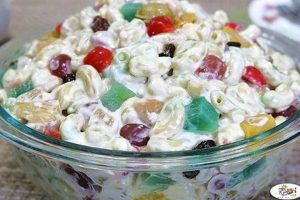
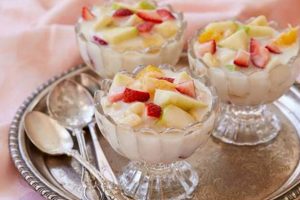
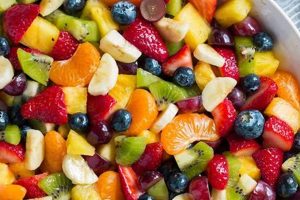
Fruit salads incorporating a creamy element encompass a wide range of dishes, from those using a simple sweetened whipped cream or yogurt dressing to more complex preparations involving custard, pastry cream, or cream cheese-based sauces. A classic example might feature berries and grapes folded into a vanilla-infused whipped cream, while a more elaborate version could involve layers of tropical fruits interspersed with a rich coconut cream and topped with toasted nuts.
Such dishes offer a delightful contrast of textures and flavors, balancing the sweetness and acidity of the fruit with the richness and smoothness of the cream. The addition of a creamy component can also elevate a simple fruit salad into a more substantial and satisfying dessert or side dish, suitable for a variety of occasions from casual gatherings to festive celebrations. Historically, fruit salads combined with creams or custards can be traced back to European culinary traditions, evolving alongside the availability of refined sugar and dairy products.
This discussion will further explore variations on this theme, examining specific recipes, suitable fruit combinations, different types of creamy dressings, and tips for achieving optimal flavor and presentation. Nutritional information and considerations for dietary restrictions will also be addressed.
Tips for Creating Exceptional Fruit Salads with Creamy Dressings
Achieving a harmonious balance of flavors and textures is key to a successful creamy fruit salad. The following tips offer guidance for optimal preparation and presentation.
Tip 1: Select ripe, but firm fruit. Overripe fruit will contribute excess moisture and result in a less appealing texture. Slightly underripe fruit can provide a pleasant tartness.
Tip 2: Consider the flavor profiles of the chosen fruits and the creamy dressing. A tangy dressing complements sweeter fruits, while a milder dressing pairs well with fruits possessing more subtle sweetness.
Tip 3: Prepare the fruit close to serving time. This prevents oxidation and maintains the vibrant colors and fresh flavors of the ingredients. Certain fruits, such as apples and bananas, are particularly susceptible to browning.
Tip 4: Chill the fruit and the creamy dressing separately before combining. This helps maintain the desired temperature and prevents the dressing from becoming too thin.
Tip 5: Add the creamy dressing just before serving. This prevents the fruit from becoming soggy and maintains the integrity of the salad’s overall texture.
Tip 6: Gently fold the dressing into the fruit. Avoid vigorous mixing, which can damage delicate fruits.
Tip 7: Enhance visual appeal through thoughtful presentation. Consider using a variety of colors and textures, and garnish with complementary elements such as toasted nuts, fresh herbs, or a dusting of spices.
By adhering to these guidelines, one can create a fruit salad that is both visually appealing and deliciously satisfying. Proper preparation ensures a delightful culinary experience.
These tips represent a starting point for crafting delectable creamy fruit salads. Experimentation with different fruit combinations, dressings, and presentation styles is encouraged.
1. Fruit Selection

Fruit selection forms the foundation of any successful creamy fruit salad recipe. The choice of fruits dictates the overall flavor profile, sweetness, acidity, and textural complexity of the final dish. Careful consideration of these factors is crucial for a balanced and appealing result.
- Flavor Compatibility
Certain fruits harmonize well with creamy elements, while others clash. For instance, berries and stone fruits often pair well with lighter creams and yogurts, their tartness balancing the richness. Conversely, tropical fruits like mango and pineapple might complement richer coconut-based creams. Understanding these flavor affinities ensures a harmonious blend.
- Textural Variety
A compelling fruit salad offers a range of textures. Combining softer fruits like bananas and berries with firmer options such as apples and grapes creates a more interesting mouthfeel. This contrast is further enhanced by the addition of the creamy element, which provides an additional layer of textural complexity.
- Seasonal Availability
Utilizing seasonal fruits not only guarantees peak flavor and freshness but also allows for creative exploration based on what is readily available. A summer fruit salad might feature berries and melons, while a fall version could incorporate apples, pears, and grapes. Adapting to seasonal availability ensures optimal quality and taste.
- Visual Appeal
Color plays a significant role in the overall appeal of a fruit salad. A diverse array of colors contributes to visual interest and can enhance the dining experience. Incorporating fruits of varying hues creates a vibrant and appetizing presentation. For instance, a combination of red strawberries, green grapes, and orange segments offers a visually striking contrast.
The interplay of these factors ultimately determines the success of the creamy fruit salad. A well-chosen selection of fruits elevates the dish from a simple combination of ingredients to a carefully crafted culinary experience. By understanding the nuances of flavor compatibility, textural variety, seasonality, and visual appeal, one can create a truly exceptional dessert or side dish.
2. Creamy Base
The creamy base forms an integral component of creamy fruit salad recipes, significantly influencing the final dish’s texture, flavor, and overall appeal. This base provides a unifying element, binding the diverse fruits together while adding a layer of richness and complexity. The choice of creamy base directly impacts the perceived sweetness, tanginess, and overall balance of the salad. For example, a whipped cream base lends a light and airy sweetness, while a Greek yogurt base introduces a tangy element. A custard-based dressing contributes a dense, creamy texture and a richer flavor profile.
The interplay between the creamy base and the chosen fruits is crucial. A delicate cream complements subtly sweet fruits like berries, preventing them from being overpowered. Conversely, robust tropical fruits can hold their own against richer bases like coconut cream. Understanding this dynamic allows for the creation of balanced flavor profiles, where neither the fruit nor the creamy element dominates the other. The creamy base also contributes to the overall mouthfeel. Its smooth texture contrasts with the varying textures of the fruit, creating a more satisfying sensory experience. This contrast is further emphasized by the interplay of temperatures, particularly when chilled fruit is paired with a cool creamy base.
Careful consideration of the creamy base is therefore essential for a successful creamy fruit salad recipe. The choice should complement the selected fruits, enhancing their natural flavors while contributing desirable textural and sensory qualities. Whether a classic whipped cream, a tangy yogurt, or a decadent custard, the creamy base serves as the unifying element that transforms individual fruits into a cohesive and delightful dish. Mastering this element allows for a wide range of culinary exploration, adapting to various flavor preferences and dietary considerations. The careful selection and integration of the creamy base ensures the fruit salad transcends a simple mixture of ingredients, becoming a balanced and harmonious culinary creation.
3. Flavor Balance

Flavor balance represents a critical aspect of successful creamy fruit salad recipes. The interplay of sweetness, acidity, and richness determines the overall palatability and enjoyment of the dish. A harmonious balance prevents any single flavor from dominating, allowing the complexity of the individual components to shine through. Disproportionate sweetness can mask the subtle nuances of the fruit, while excessive acidity can create an unpleasant sharpness. The creamy element, whether a light whipped cream or a richer custard, introduces a textural and flavor dimension that requires careful integration to maintain equilibrium. For instance, a fruit salad featuring tart berries benefits from a slightly sweetened cream, while a salad with sweeter fruits like mangoes or bananas might pair well with a tangy yogurt-based dressing.
Achieving optimal flavor balance requires careful consideration of the chosen fruits and the creamy base. Tart fruits such as raspberries or cranberries provide a counterpoint to the richness of the cream, preventing the salad from becoming cloyingly sweet. Conversely, sweeter fruits like peaches or pears necessitate a less sweet or even slightly tangy creamy component to maintain balance. The ripeness of the fruit also plays a significant role; overly ripe fruit contributes excessive sweetness, disrupting the intended flavor profile. Furthermore, the addition of complementary flavors, such as a hint of citrus zest or a sprinkle of spices, can enhance the overall complexity and balance of the creamy fruit salad. A squeeze of lemon juice can brighten the flavors and balance the sweetness of the cream and fruit, while a dash of cinnamon or nutmeg can add warmth and depth.
Mastering flavor balance in creamy fruit salads elevates the dish from a simple combination of ingredients to a carefully composed culinary experience. Attention to the interplay of sweetness, acidity, and richness ensures that each component contributes to a harmonious and delightful whole. This understanding empowers culinary exploration and allows for the creation of fruit salads that are both refreshing and satisfying, showcasing the natural flavors of the fruit while highlighting the complementary role of the creamy element. A well-balanced creamy fruit salad offers a complex sensory experience, where each bite delivers a delightful interplay of textures and tastes.
4. Textural Contrast

Textural contrast contributes significantly to the sensory appeal of creamy fruit salad recipes. The interplay of textures elevates the eating experience beyond simple flavor, creating a more dynamic and engaging encounter. A successful creamy fruit salad strategically balances the smooth, creamy element with the varied textures of the fruit components.
- Creamy Base Texture
The creamy base, whether whipped cream, yogurt, or custard, provides the foundation of the textural contrast. Its smooth, often cool temperature, offers a counterpoint to the fruit. A light and airy whipped cream provides a delicate contrast, while a thicker Greek yogurt offers a more substantial textural presence. The chosen cream’s viscosity influences the overall perception of the salad, impacting how it coats the fruit and interacts with the palate.
- Fruit Texture Variety
The variety of fruits selected directly impacts the textural complexity. Incorporating fruits with different textures creates a more interesting and satisfying experience. Soft fruits like berries and bananas offer a delicate contrast to the cream, while firmer fruits such as apples or grapes provide a more substantial bite. The strategic combination of soft and firm fruits ensures a multi-faceted textural experience.
- Enhancing Textural Contrast with Additions
Textural contrast can be further amplified by incorporating additional elements. Toasted nuts, granola, or crumbled cookies introduce a satisfying crunch, while shredded coconut adds a delicate chewiness. These additions create layers of texture that interact with both the creamy base and the fruit, enhancing the overall sensory experience. For example, toasted almonds offer a crisp contrast to the smooth cream and the soft fruit.
- Impact of Preparation Techniques on Texture
Preparation techniques also influence textural contrast. Dicing fruit into uniform pieces creates a consistent texture, while leaving some pieces larger or incorporating slices introduces variation. Additionally, the timing of the cream’s addition plays a role; adding the cream immediately before serving preserves the individual textures, while allowing the salad to sit allows for some softening and integration of textures.
The careful consideration of textural contrast elevates creamy fruit salad recipes from simple mixtures to complex culinary creations. Balancing the smooth creaminess with the diverse textures of the fruit and potential additions results in a more engaging and enjoyable sensory experience. The interplay of these elements creates a symphony of textures that enhances the overall appreciation of the dish.
5. Presentation
Presentation plays a crucial role in the overall appeal of creamy fruit salad recipes. While flavor and texture are paramount, visual appeal significantly enhances the dining experience. A thoughtfully presented salad is more enticing and appetizing, elevating it from a simple dish to a visually captivating culinary creation. Effective presentation techniques highlight the vibrant colors and diverse textures of the fruit and creamy elements, maximizing the sensory experience.
- Color and Contrast
Strategic use of color enhances visual appeal. Incorporating a variety of colorful fruits creates a vibrant and attractive presentation. Contrasting colors, such as red strawberries against green grapes or orange segments against a backdrop of white cream, make the salad more visually dynamic and appealing. This visual contrast stimulates appetite and enhances the perceived freshness of the ingredients.
- Arrangement and Height
Thoughtful arrangement elevates presentation. Simply tossing ingredients together lacks visual interest. Consider layering the fruit and cream in a glass bowl to showcase the individual components or arranging the salad on a platter with a central mound of cream surrounded by artfully placed fruit. Creating height and varying the arrangement adds visual depth and dimension, making the salad more enticing.
- Garnishes and Finishing Touches
Garnishes provide the finishing touch, enhancing both visual appeal and flavor. Fresh mint leaves, a sprinkle of toasted nuts, a dusting of powdered sugar, or a drizzle of honey can elevate the presentation while adding complementary flavors and textures. A simple garnish can transform a basic fruit salad into a visually stunning dessert. For instance, a sprig of mint adds a pop of color and a refreshing aroma.
- Serving Vessels and Context
The choice of serving vessel contributes to the overall presentation. A clear glass bowl showcases the colorful layers of fruit and cream, while a rustic wooden bowl adds a touch of natural elegance. The serving context also plays a role; a casual gathering might call for individual portions in small bowls or glasses, while a more formal occasion might warrant a large, elaborately arranged platter. Adapting the presentation to the context enhances the dining experience.
Consideration of these presentation elements enhances the enjoyment of creamy fruit salad recipes. A visually appealing salad is more inviting and appetizing, elevating the dining experience. By understanding the interplay of color, arrangement, garnishes, and serving context, one can transform a simple fruit salad into a visually captivating and delectable culinary creation. These elements contribute to a holistic sensory experience, where visual appeal complements the flavors and textures of the dish, resulting in a more satisfying and memorable culinary experience.
6. Freshness

Freshness is paramount in creamy fruit salad recipes, directly impacting the overall flavor, texture, and appeal. Dishes relying on the natural flavors of fruit necessitate high-quality, recently harvested ingredients. Compromised freshness manifests as diminished flavor, undesirable textures, and potential health risks. Therefore, prioritizing fresh ingredients is crucial for a successful and enjoyable culinary outcome.
- Flavor Enhancement
Freshly picked fruit exhibits optimal flavor profiles. The vibrant sweetness, tartness, and aromatic complexity characteristic of ripe fruit are essential for a delicious creamy fruit salad. As fruit ages, these flavors diminish, resulting in a bland or even off-putting taste. The creamy element, while contributing richness, cannot compensate for a lack of fresh fruit flavor. Thus, freshness serves as the foundation upon which the other components build.
- Textural Integrity
Fresh fruit maintains optimal texture. The desired firmness, juiciness, and structural integrity contribute to the overall sensory experience. As fruit ages, it can become mushy, mealy, or even slimy, compromising the textural contrast that is desirable in a creamy fruit salad. Maintaining textural integrity through freshness ensures a pleasant mouthfeel and enhances enjoyment.
- Visual Appeal
Freshness is visually evident. Vibrant colors and a healthy sheen indicate optimal quality. Fruits past their prime often exhibit dull colors, bruising, or blemishes, diminishing the visual appeal of the salad. Given the importance of presentation in culinary creations, freshness plays a key role in creating a visually appealing and appetizing dish. The vibrant colors of fresh fruit enhance the overall aesthetic and contribute to a positive dining experience.
- Safety and Quality
Freshness directly correlates with food safety and quality. Fruits nearing spoilage can harbor bacteria or mold, posing health risks. Using fresh, high-quality ingredients minimizes these risks and ensures a safe and enjoyable culinary experience. Prioritizing freshness is not only a matter of taste and texture but also of ensuring the well-being of those consuming the dish. Adhering to food safety standards and utilizing fresh ingredients is paramount.
The emphasis on freshness underscores its crucial role in creamy fruit salad recipes. Each facet, from flavor enhancement and textural integrity to visual appeal and safety, contributes to the overall success of the dish. Prioritizing freshness ensures a delightful culinary experience that showcases the natural flavors of the fruit while maximizing quality and safety. This dedication to freshness elevates the simple act of preparing a fruit salad to a culinary pursuit that values quality and flavor.
Frequently Asked Questions
This section addresses common inquiries regarding the preparation and enjoyment of creamy fruit salads.
Question 1: How can browning of certain fruits, such as apples and bananas, be prevented in a creamy fruit salad?
Browning can be minimized by coating susceptible fruits with an acidic agent like lemon juice. This inhibits enzymatic oxidation, preserving their appearance.
Question 2: What are suitable alternatives to whipped cream for individuals seeking lower-fat options?
Greek yogurt or a combination of low-fat yogurt and whipped topping offer lower-fat alternatives while maintaining a creamy texture. These options also introduce a tangy flavor profile.
Question 3: Can creamy fruit salads be prepared in advance?
While feasible, optimal flavor and texture are achieved when the creamy dressing is added immediately before serving. Advanced preparation can lead to sogginess and diminished quality.
Question 4: How can one ensure a balanced sweetness level when using canned fruits in a creamy fruit salad?
Canned fruits often contain added sugar. Thorough draining and rinsing can reduce excess sweetness. Fresh or frozen fruits are generally preferred for optimal flavor and nutritional value.
Question 5: What storage recommendations apply to leftover creamy fruit salad?
Leftover portions should be refrigerated in an airtight container and consumed within two days. Separation of the creamy component and fruit may occur due to moisture release, affecting texture upon storage.
Question 6: How can one adapt creamy fruit salad recipes to accommodate dietary restrictions, such as veganism or gluten intolerance?
Substitutions can readily accommodate dietary restrictions. Coconut cream or cashew cream can replace dairy-based options for vegan diets. Gluten-free adaptations necessitate ensuring all additional ingredients, such as cookies or granola, are certified gluten-free.
Addressing these common inquiries provides a comprehensive understanding of creamy fruit salad preparation. Thoughtful consideration of these points ensures a successful and enjoyable culinary outcome.
The following section will offer a collection of specific creamy fruit salad recipes, incorporating the principles discussed above.
Creamy Fruit Salad Recipes
Creamy fruit salad recipes represent a versatile culinary category, offering a diverse range of flavor and textural experiences. Successful execution relies on a careful balance of key elements: judicious fruit selection, thoughtful choice of creamy base, harmonious flavor balance, strategic textural contrast, appealing presentation, and an emphasis on freshness. From classic combinations of berries and whipped cream to more elaborate creations incorporating tropical fruits and custards, the possibilities within this culinary realm are extensive. Understanding the interplay of these elements allows for both creative exploration and consistent achievement of desirable outcomes.
Culinary innovation within the domain of creamy fruit salads continues to evolve. Exploration of novel flavor combinations, incorporation of diverse cultural influences, and adaptation to evolving dietary preferences contribute to the ongoing refinement and expansion of this culinary category. The enduring appeal of creamy fruit salad recipes lies in their adaptability and capacity to offer refreshing, satisfying, and visually appealing culinary experiences.