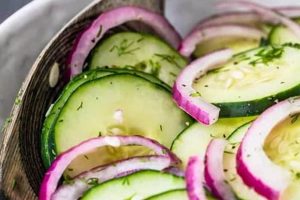
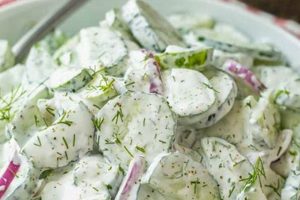
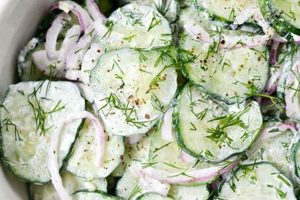
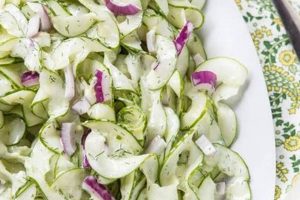
A refreshing and flavorful dish, this type of salad typically combines thinly sliced cucumbers and onions in a creamy dressing. Variations often include fresh dill, vinegar, sugar, and sometimes sour cream or mayonnaise. A simple yet elegant side, it can complement a wide range of main courses, from grilled meats and fish to sandwiches and heavier salads.
The cool, crisp nature of cucumbers and the pungent bite of onions create a delightful contrast in textures and flavors. The creamy dressing adds a richness that balances the sharpness of the ingredients. Historically, cucumbers have been cultivated for thousands of years, originating in South Asia, while onions have a similar long history, originating in Central Asia. Their combination in a salad, particularly with creamy dressings, reflects a more modern culinary approach, embracing the versatility and refreshing qualities of these vegetables. This preparation is especially popular in warmer climates and during summer months.
Discussions of this culinary creation often involve exploration of different dressing variations, ranging from traditional sour cream or mayonnaise-based dressings to lighter, yogurt-based alternatives. Furthermore, analyses of optimal cucumber varieties, slicing techniques, and onion preparation methods provide valuable insights for achieving the perfect balance of flavor and texture. The exploration of complementary ingredients, such as different herbs and spices, further expands the possibilities of this versatile dish.
Tips for a Perfect Creamy Cucumber Onion Salad
Achieving optimal flavor and texture requires attention to detail throughout the preparation process. The following tips offer guidance for creating a truly exceptional salad.
Tip 1: Salt the Cucumbers: Salting the cucumbers draws out excess moisture, preventing a watery salad. Place thinly sliced cucumbers in a colander, sprinkle with salt, and let them sit for at least 15 minutes before rinsing and patting dry.
Tip 2: Thinly Slice the Vegetables: Uniformly thin slices ensure even coating with the dressing and contribute to a pleasant texture. A mandoline slicer can be helpful for achieving consistent thinness.
Tip 3: Soak the Onions (Optional): Soaking thinly sliced red onions in cold water for 10-15 minutes mellows their sharp flavor, making them more palatable for those sensitive to strong onion taste.
Tip 4: Chill the Ingredients: Chilling the cucumbers, onions, and dressing separately before combining ensures a refreshing final product. This is particularly important during warmer months.
Tip 5: Balance the Dressing: Achieve a harmonious blend of creamy, tangy, and sweet flavors in the dressing. Taste and adjust the proportions of vinegar, sugar, or other seasonings as needed.
Tip 6: Add Fresh Herbs: Fresh dill is a classic addition, but other herbs like parsley, chives, or mint can also complement the flavors of the salad. Add herbs just before serving to maximize their freshness and aroma.
Tip 7: Don’t Overdress: Start with a smaller amount of dressing and add more as needed. An overdressed salad can become soggy and lose its crispness.
By following these tips, one can elevate this simple salad to a truly delightful culinary experience. Attention to these details ensures a balanced flavor profile and an appealing textural contrast.
Through careful preparation and thoughtful ingredient selection, a creamy cucumber onion salad offers a refreshing and flavorful complement to any meal.
1. Cucumbers (thinly sliced)

Cucumbers serve as a foundational ingredient, providing a refreshing, cool base for the creamy cucumber onion salad recipe. Their preparation, specifically thin slicing, significantly influences the final dish’s texture, flavor absorption, and overall aesthetic appeal. Understanding the nuances of cucumber selection and slicing techniques is essential for creating a successful salad.
- Cucumber Variety Selection
Different cucumber varieties offer varying levels of water content and flavor profiles. English cucumbers, known for their thin skin and lower water content, are often preferred as they require less salting and maintain a desirable crispness. Alternatively, garden cucumbers, while requiring salting to remove excess moisture, contribute a more pronounced cucumber flavor. The choice of cucumber directly impacts the salad’s final texture and taste.
- Slicing Techniques and Thickness
Thinly slicing cucumbers maximizes surface area, allowing for better absorption of the creamy dressing and even distribution of flavor. Uniform slices create a pleasing visual appeal and contribute to a consistent texture throughout the salad. Using a mandoline slicer or sharp knife ensures precise and consistent cuts. Overly thick slices can result in uneven flavor distribution and a less refined texture.
- Moisture Control and Salting
Cucumbers naturally contain a high water content, which, if not addressed, can lead to a watery salad. Salting sliced cucumbers draws out excess moisture, preserving the salad’s crispness and preventing dilution of the dressing. This step is particularly important when using garden cucumbers. Thorough rinsing after salting removes excess salt and ensures a balanced flavor.
- Visual Appeal and Presentation
The way cucumbers are sliced contributes to the salad’s overall presentation. Uniform, thinly sliced cucumbers create an elegant and appetizing appearance. Attention to detail in slicing enhances the visual appeal, making the salad more inviting and enjoyable.
The careful consideration of cucumber variety, slicing technique, and moisture control contributes significantly to the creamy cucumber onion salad’s overall success. These factors, combined with the other ingredients, create a harmonious balance of flavors, textures, and visual appeal, resulting in a truly satisfying culinary experience.
2. Onions (thinly sliced)
Onions contribute a pungent, savory dimension to creamy cucumber onion salads. Their preparation, specifically thin slicing, significantly impacts the final dish. Proper slicing ensures even flavor distribution, optimal texture, and successful integration with other ingredients. An examination of onion selection, slicing methods, and flavor balancing techniques clarifies their crucial role within the recipe.
- Onion Variety Selection
Different onion varieties offer unique flavor profiles and levels of pungency. Red onions, commonly used for their vibrant color and relatively mild flavor, provide a sharp yet balanced contrast to the cucumbers. Sweet onions, such as Vidalia or Walla Walla, offer a milder, less pungent option. The choice of onion variety directly influences the salad’s overall flavor profile.
- Slicing Techniques and Thickness
Uniformly thin slices ensure even distribution of flavor and prevent overpowering onion bites. Thin slices also integrate seamlessly with the other ingredients, creating a harmonious textural experience. A sharp knife or mandoline slicer facilitates precise and consistent cuts, optimizing both flavor and texture.
- Mellowing Onion Pungency
Soaking thinly sliced onions in cold water for a short period can mellow their pungency, making them more palatable for those sensitive to strong onion flavors. This process reduces the intensity of the onion’s sulfur compounds without compromising its overall contribution to the salad.
- Flavor Balancing and Complementary Ingredients
The sharp flavor of onions requires careful balancing within the overall recipe. The creamy dressing, typically made with sour cream or mayonnaise, tempers the onion’s pungency. The addition of vinegar introduces acidity, further complementing the onion’s flavor and contributing to a well-rounded taste profile. The sweetness of sugar or other sweeteners further balances the savory and acidic elements, creating a harmonious blend of flavors.
The careful selection, precise slicing, and thoughtful flavor balancing of onions are essential for creating a successful creamy cucumber onion salad. These considerations, combined with the other components, contribute to a well-balanced, refreshing, and flavorful dish.
3. Creamy Dressing
Creamy dressing forms the backbone of a creamy cucumber onion salad recipe, binding the ingredients and contributing significantly to its characteristic flavor and texture. The dressing’s richness coats the cucumbers and onions, mellowing the onion’s pungency while enhancing the overall palatability. A well-executed creamy dressing elevates the simple combination of cucumbers and onions into a cohesive and satisfying dish. For example, a classic sour cream-based dressing provides a tangy, creamy counterpoint to the crisp vegetables. Alternatively, a mayonnaise-based dressing offers a richer, more decadent experience. The choice of dressing influences the salad’s overall character, impacting both taste and mouthfeel. Understanding this connection allows for informed decisions regarding dressing selection and customization.
The interplay between the creamy dressing and the fresh vegetables creates a dynamic textural contrast. The crispness of the cucumbers and onions juxtaposes the smooth, velvety texture of the dressing, resulting in a multi-sensory eating experience. Furthermore, the dressing’s flavor profile plays a critical role in balancing the other ingredients. The tanginess of sour cream or the richness of mayonnaise complements the subtle flavors of the cucumbers and the sharpness of the onions. This balance is crucial for achieving a harmonious and well-rounded flavor profile. Consider a dill-infused sour cream dressing, where the herbaceous notes of the dill enhance the overall freshness and complexity of the salad. Such nuanced flavor combinations demonstrate the dressing’s potential to elevate the dish beyond its simple components.
Mastering the art of creamy dressing preparation is essential for achieving a successful creamy cucumber onion salad. Careful consideration of ingredient ratios, flavor combinations, and textural nuances allows for customization and optimization of the dressing to suit individual preferences. Challenges may include achieving the right balance of tanginess, sweetness, and richness, as well as ensuring the dressing complements, rather than overpowers, the fresh vegetables. Ultimately, the creamy dressing acts as the unifying element, transforming individual components into a cohesive and flavorful culinary creation.
4. Fresh Dill
Fresh dill contributes a bright, herbaceous element that significantly enhances creamy cucumber onion salad recipes. Its distinctive flavor profile, feathery texture, and aromatic presence elevate the dish beyond a simple combination of vegetables and dressing. An examination of dill’s multifaceted role reveals its importance within this culinary context.
- Flavor Enhancement
Dill’s flavor, often described as slightly tangy, grassy, and subtly sweet with anise undertones, complements the cool cucumbers and pungent onions. It adds a layer of complexity, preventing the salad from tasting bland. For instance, the dill’s subtle anise notes harmonize particularly well with the creamy richness of a sour cream-based dressing. This synergistic relationship elevates the overall flavor profile.
- Aromatic Appeal
Dill’s distinctive aroma enhances the sensory experience of the salad. Its fresh, herbaceous scent complements the other ingredients, creating an inviting and appetizing appeal. The aromatic dimension adds another layer of enjoyment beyond the taste and texture. The volatile oils responsible for dill’s fragrance are released when the leaves are chopped or torn, intensifying the sensory experience.
- Visual Enhancement and Textural Contrast
Dill’s delicate, feathery fronds add visual appeal and textural contrast to the salad. The bright green sprigs create a visually appealing contrast against the white of the cucumbers and the colors of the onions. Its delicate texture contrasts with the smoothness of the creamy dressing and the crispness of the vegetables, creating a multi-sensory experience.
- Culinary Tradition and Cultural Significance
Dill’s use in cucumber salads has historical and cultural roots in various cuisines, particularly in Eastern European and Scandinavian traditions. Its presence in these culinary traditions underscores its established role in enhancing cucumber-based dishes. This historical context reinforces dill’s suitability and importance within the creamy cucumber onion salad recipe.
Fresh dill’s multifaceted contribution, encompassing flavor, aroma, visual appeal, and cultural significance, elevates the creamy cucumber onion salad from a simple side dish to a more complex and satisfying culinary creation. Its careful integration into the recipe enhances the overall sensory experience and demonstrates a thoughtful approach to flavor balancing and ingredient synergy.
5. Vinegar
Vinegar plays a crucial role in creamy cucumber onion salad recipes, contributing a balancing acidity that enhances and complements the other ingredients. This acidity provides a counterpoint to the richness of the creamy dressing and the sweetness of any added sugar, preventing the salad from becoming overly rich or cloying. Furthermore, vinegar’s sharp notes enhance the subtle flavors of the cucumbers and cut through the pungency of the onions, creating a more complex and balanced flavor profile. For example, a white wine vinegar adds a subtle fruity tartness, while apple cider vinegar contributes a slightly sweeter, more mellow acidity. The specific type of vinegar chosen influences the overall flavor profile of the salad.
Beyond flavor enhancement, vinegar also contributes to the preservation and textural integrity of the salad. Its acidic properties inhibit bacterial growth, extending the salad’s shelf life. Additionally, vinegar helps to maintain the crispness of the cucumbers and onions, preventing them from becoming soggy over time. This is particularly important in creamy salads where the dressing can sometimes soften the vegetables. The choice of vinegar, along with the quantity used, requires careful consideration to achieve the desired balance of flavor and texture. Using too much vinegar can result in an overly sharp or acidic salad, while too little may not provide the necessary balance to the richness of the dressing.
In summary, vinegar’s role in creamy cucumber onion salad recipes extends beyond mere flavoring. Its acidity balances the richness of the dressing, enhances the other ingredients’ flavors, contributes to preservation, and helps maintain the desired texture. Understanding these multiple functions allows for informed decisions regarding vinegar selection and quantity, ultimately leading to a more balanced and flavorful salad. Challenges include selecting the appropriate type and amount of vinegar to achieve the desired flavor profile without overpowering the other ingredients. The successful integration of vinegar exemplifies the delicate balance required to create a harmonious and refreshing culinary experience.
6. Sugar (or sweetener)

Sugar, or a chosen sweetener, plays a crucial role in a creamy cucumber onion salad recipe, contributing to the overall balance and complexity of flavors. Its primary function is to temper the acidity of the vinegar and the pungency of the onions, creating a more harmonious flavor profile. This balancing act prevents the salad from becoming overly sharp or tart, allowing the subtle flavors of the cucumbers and the richness of the creamy dressing to shine through. For instance, a small amount of granulated sugar in a sour cream-based dressing offsets the tanginess, resulting in a more palatable and well-rounded flavor. Alternatively, honey or maple syrup can be used to add subtle nuances of flavor while achieving the same balancing effect. The choice and quantity of sweetener depend on the desired level of sweetness and the overall balance of the other ingredients. Using too much sweetener can result in an overly sweet salad that masks the other flavors, while too little may not adequately balance the acidity.
Beyond flavor balancing, sugar also contributes to the textural aspects of the salad. It helps to draw out moisture from the cucumbers and onions through osmosis, contributing to the desirable crispness of the salad. This effect is particularly important when using garden cucumbers, which have a higher water content. Additionally, sugar contributes to the mouthfeel of the dressing, adding a subtle viscosity that complements the creamy texture. Understanding this multifaceted role allows for informed decisions regarding sweetener selection and quantity. For example, using powdered sugar in the dressing creates a smoother texture compared to granulated sugar. This nuanced approach further highlights the importance of sugar beyond simple sweetness.
In summary, sugar’s role in a creamy cucumber onion salad recipe extends beyond simply adding sweetness. Its presence balances acidity, enhances flavor complexity, influences texture, and contributes to the overall palatability of the dish. Challenges include achieving the correct balance of sweetness without overpowering the other flavors and understanding the interplay between the sweetener and the other ingredients. Mastering this balance is crucial for creating a truly harmonious and refreshing culinary experience.
7. Salt and Pepper
Salt and pepper, while seemingly simple ingredients, play a crucial role in enhancing the flavor profile of a creamy cucumber onion salad. Salt acts as a flavor enhancer, amplifying the existing flavors of the cucumbers, onions, and dressing. It also helps to draw out excess moisture from the cucumbers, contributing to a crisper texture. Furthermore, salt balances the sweetness of the sugar and the acidity of the vinegar, creating a more harmonious flavor profile. The amount of salt used requires careful consideration, as too much can overpower the other flavors, while too little can result in a bland salad. For instance, if using salted butter in the dressing, less additional salt may be required. This highlights the importance of tasting and adjusting seasoning throughout the preparation process. Pepper, typically black pepper, adds a subtle layer of complexity and spice, contrasting with the cool freshness of the cucumbers and the creamy richness of the dressing. Freshly ground black pepper offers a more pronounced and aromatic flavor compared to pre-ground pepper.
The interplay between salt, pepper, and the other ingredients is crucial for achieving a balanced and flavorful salad. Salt enhances the sweetness of the sugar and the tanginess of the vinegar, while pepper adds a contrasting element of spice. This synergy creates a more dynamic and complex flavor profile than if each ingredient were considered in isolation. Furthermore, the quantity of salt used directly impacts the salad’s overall taste. Salting the cucumbers prior to adding them to the salad helps to draw out moisture and prevent the final dish from becoming watery. This step also seasons the cucumbers themselves, ensuring a consistent flavor throughout. The use of pepper, while often subtle, adds a depth of flavor that complements the other ingredients. For example, using white pepper instead of black pepper offers a milder flavor and avoids the visible black specks, which can be a preference for presentation purposes.
In conclusion, salt and pepper are essential components of a creamy cucumber onion salad, contributing significantly to its overall flavor and texture. Salt enhances existing flavors, balances sweetness and acidity, and aids in moisture control, while pepper adds a layer of complexity and spice. Challenges include achieving the correct balance of salt and pepper to complement, rather than overpower, the other ingredients. Understanding the interplay of these seasonings with the other components is crucial for creating a well-balanced, flavorful, and texturally pleasing salad.
Frequently Asked Questions
This section addresses common inquiries regarding creamy cucumber onion salads, providing concise and informative responses to facilitate a deeper understanding of this culinary creation.
Question 1: What type of cucumber is best suited for this salad?
English cucumbers are often preferred due to their lower water content and thinner skin, minimizing the need for salting. However, garden cucumbers can also be used; they offer a more pronounced cucumber flavor but require salting to remove excess moisture.
Question 2: How can one prevent the salad from becoming watery?
Salting the sliced cucumbers draws out excess moisture. Place the cucumber slices in a colander, sprinkle with salt, and let them sit for 15-20 minutes. Rinse thoroughly and pat dry before combining with the other ingredients.
Question 3: Can the onions be made less pungent?
Soaking thinly sliced red onions in cold water for 10-15 minutes can mellow their sharpness. This process reduces the intensity of the sulfur compounds responsible for the pungent flavor.
Question 4: What are common alternatives to sour cream in the dressing?
Greek yogurt, mayonnaise, or a combination of both offer viable alternatives to sour cream. These options provide a similar creamy texture while allowing for variations in flavor and richness.
Question 5: How long can this salad be stored in the refrigerator?
Properly stored in an airtight container, the salad can typically last for 2-3 days in the refrigerator. However, its texture and flavor are best enjoyed within the first 24 hours.
Question 6: Can other herbs be used besides dill?
Fresh parsley, chives, or mint can be used as alternatives or additions to dill. These herbs offer distinct flavor profiles that complement the cucumbers and onions, providing opportunities for customization.
Addressing these common inquiries provides a comprehensive understanding of the key elements contributing to a successful creamy cucumber onion salad. Careful consideration of these points ensures a flavorful and enjoyable culinary experience.
Further exploration of specific variations and techniques can enhance one’s appreciation for this versatile and refreshing dish.
Creamy Cucumber Onion Salad Recipe
Exploration of creamy cucumber onion salad recipes reveals a dish greater than the sum of its parts. Careful selection and preparation of cucumbers and onions establish a foundation of contrasting textures and flavors. The creamy dressing, whether a classic sour cream base or a richer mayonnaise variation, binds these elements, its tanginess and richness balancing the sharpness of the onions and the subtle sweetness of the cucumbers. Fresh dill contributes a bright herbal note, further elevating the flavor profile. Vinegar, sugar, and salt, while often subtle, play crucial roles in balancing acidity, sweetness, and overall taste. Understanding these individual components and their interactions provides a framework for creating a truly exceptional salad.
Creamy cucumber onion salad recipes offer a refreshing and versatile culinary experience. Adaptable to individual preferences and dietary needs, this dish embodies the potential for simple ingredients to create something extraordinary. Continued exploration of ingredient variations, dressing customizations, and complementary pairings promises further culinary discoveries, ensuring this classic salad remains a vibrant and evolving culinary tradition.