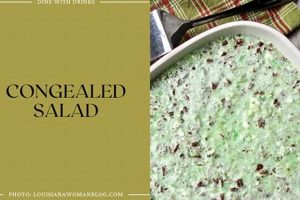
A molded fruit salad featuring cranberries suspended in a gelatin base is a popular dish, especially during holidays. Variations can include additional ingredients such as oranges, pineapple, nuts, or marshmallows, contributing to diverse textures and flavors. This dish often serves as a refreshing side or a light dessert.
The blend of tart cranberries and sweet, jiggly gelatin offers a pleasing contrast in both taste and texture. Its festive appearance, often enhanced by vibrant colors, makes it a visually appealing addition to celebratory meals. Historically, gelatin-based salads gained popularity in the mid-20th century, becoming a staple at potlucks and holiday gatherings. This type of salad provided a convenient and attractive way to incorporate fruit into meals.
This exploration will delve into various aspects of creating this classic dish, covering ingredient selection, preparation techniques, variations, and presentation tips. It will also address nutritional considerations and offer suggestions for adapting the recipe to accommodate dietary restrictions.
Tips for Creating a Perfect Molded Cranberry Salad
Achieving optimal results with a molded cranberry salad involves attention to detail throughout the preparation process. These tips offer guidance for enhancing flavor, texture, and presentation.
Tip 1: Cranberry Selection: Fresh or frozen cranberries work well. If using frozen, ensure they are fully thawed and drained before incorporating them into the gelatin mixture.
Tip 2: Gelatin Choice: While various gelatin flavors can be used, cranberry, orange, or raspberry complement the fruit well. Sugar-free options are also available for those seeking to reduce sugar content.
Tip 3: Enhancing Flavor Complexity: Consider incorporating orange zest, chopped pecans, or walnuts for added flavor and textural contrast. A splash of orange juice or Grand Marnier can further enhance the flavor profile.
Tip 4: Mold Preparation: Lightly oiling the mold before adding the mixture ensures easy removal once the salad is set. Alternatively, using a non-stick mold simplifies the process.
Tip 5: Chilling Time: Allow sufficient time for the salad to chill and solidify completely, typically at least four hours, or preferably overnight. This ensures a firm texture and clean presentation when unmolding.
Tip 6: Unmolding Technique: To unmold, briefly dip the mold in warm water, ensuring the water doesn’t reach the top of the salad. Invert the mold onto a serving plate. A gentle shake should release the salad.
Tip 7: Garnishing: Fresh mint sprigs, a dollop of whipped cream, or a scattering of candied cranberries can elevate the presentation.
By following these tips, one can create a visually appealing and flavorful molded cranberry salad that complements any meal. Attention to these details ensures a successful outcome and a delightful culinary experience.
These guidelines provide a solid foundation for crafting a delicious and visually appealing cranberry salad. The following section will conclude this exploration with a summary of key takeaways and further suggestions for customization and enjoyment.
1. Cranberries (fresh or frozen)

Cranberries serve as the foundational ingredient, providing the characteristic tart flavor profile that balances the sweetness of the gelatin. Understanding the nuances of cranberry selection and preparation is essential for achieving the desired taste and texture in the final product. Whether fresh or frozen, cranberries contribute significantly to the overall sensory experience.
- Fresh Cranberries
Fresh cranberries offer a vibrant tartness and firm texture. Selecting plump, brightly colored berries ensures optimal flavor and quality. These berries require rinsing and may benefit from being chopped or pulsed in a food processor to distribute their tartness evenly throughout the salad.
- Frozen Cranberries
Frozen cranberries offer convenience and year-round availability. Thawing and draining them thoroughly before incorporating them into the recipe prevents excess moisture from affecting the gelatin’s ability to set properly. Frozen cranberries often release more juice upon thawing, potentially impacting the final color and flavor intensity.
- Impact on Texture
The choice between fresh and frozen cranberries can influence the final texture of the salad. Fresh cranberries provide a slightly firmer bite, while frozen cranberries, once thawed, tend to be softer. The desired texture should guide the selection process.
- Flavor Considerations
While both fresh and frozen cranberries deliver the characteristic tartness, slight variations in flavor intensity can occur. Fresh cranberries might possess a slightly brighter, more pronounced tartness compared to their frozen counterparts. This potential difference can be adjusted by adding a touch of sweetener or citrus juice.
Ultimately, the choice between fresh and frozen cranberries depends on availability, personal preference, and the desired textural and flavor nuances in the finished cranberry salad. Considering these factors ensures a successful and enjoyable culinary outcome.
2. Jello (flavor selection)

Gelatin flavor selection significantly influences the overall taste profile of a cranberry salad. The chosen flavor interacts with the cranberries’ natural tartness, creating a balance that defines the dish’s character. Careful consideration of flavor pairings ensures a harmonious blend of tastes and enhances the overall culinary experience.
- Complementary Flavors
Flavors that complement cranberries’ tartness include orange, raspberry, and cherry. These options create a balanced profile where the sweetness of the gelatin harmonizes with the fruit’s natural acidity. For example, orange-flavored gelatin enhances the citrus notes often present in cranberry salads containing oranges or mandarins.
- Contrasting Flavors
Contrasting flavors, such as lime or lemon, offer a bolder, more pronounced tartness. This approach amplifies the existing tartness of the cranberries, creating a zesty and refreshing salad. Such selections might pair well with added ingredients like pineapple or ginger, which share similar flavor profiles.
- Neutral Flavors
Unflavored or lightly flavored gelatin options, such as pineapple or apple, provide a subtle sweetness that allows the cranberry flavor to dominate. This approach offers a cleaner palate experience, emphasizing the fruit’s natural taste. It provides flexibility for incorporating a wider range of additional ingredients without clashing flavors.
- Flavor Intensity
The intensity of the chosen gelatin flavor also plays a role. A bolder flavor might overpower the cranberries, while a milder one might not provide enough sweetness to balance the tartness. The desired balance dictates the appropriate flavor intensity.
Ultimately, the chosen gelatin flavor should complement the other ingredients and create a harmonious flavor profile. A balanced approach, considering the interplay between sweetness and tartness, ensures a delicious and satisfying cranberry salad. Experimentation with different flavor combinations allows for personalized variations and the discovery of unique flavor experiences.
3. Additional Ingredients
Beyond the core components of cranberries and gelatin, additional ingredients play a crucial role in shaping the flavor, texture, and visual appeal of a cranberry salad. These additions contribute complexity and personalize the dish, transforming it from a simple base to a multifaceted culinary creation. Understanding the potential of various additions allows for customized variations tailored to individual preferences and desired outcomes.
- Fruits
Incorporating other fruits complements the cranberries and introduces textural and flavor contrasts. Common choices include oranges, mandarin oranges, pineapple, and grapes. These additions provide sweetness and juiciness, balancing the tartness of the cranberries. The choice of fruit influences the overall flavor profile; for example, oranges enhance citrus notes, while pineapple contributes a tropical sweetness.
- Nuts
Nuts add a satisfying crunch and depth of flavor to the salad. Pecans, walnuts, and almonds are popular options, offering distinct textural and flavor profiles. Toasted nuts enhance their inherent flavors, while chopped nuts distribute evenly throughout the salad. The choice of nut complements the other ingredients; for example, pecans pair well with orange-flavored gelatin, while walnuts complement a raspberry-flavored base.
- Sweeteners
While gelatin provides inherent sweetness, additional sweeteners can adjust the overall sugar level and flavor profile. Sugar, honey, or maple syrup can be added to the gelatin mixture before chilling. The choice of sweetener introduces subtle flavor nuances; honey offers a floral sweetness, while maple syrup imparts a distinct caramel note.
- Flavor Enhancers
Flavor enhancers further refine the taste profile of the salad. Orange zest, spices like cinnamon or ginger, and extracts such as almond or vanilla introduce complexity and depth. These additions complement the other ingredients and personalize the dish; for example, orange zest amplifies the citrus notes in a salad containing oranges, while a touch of cinnamon adds warmth to a cranberry-apple combination.
The strategic incorporation of additional ingredients elevates the cranberry salad, transforming it from a basic dish into a culinary expression. Consideration of flavor pairings, textural contrasts, and visual appeal allows for customized variations tailored to specific preferences and desired outcomes. The careful selection of these elements ensures a balanced and satisfying sensory experience.
4. Mold Preparation

Mold preparation is a crucial step in creating a successful cranberry salad with jello. Proper preparation ensures the salad sets correctly and releases cleanly from the mold, preserving its intended shape and presentation. Overlooking this step can lead to difficulties in unmolding, potentially compromising the final appearance and potentially damaging the delicate structure of the set gelatin.
- Mold Selection
The choice of mold influences the final presentation of the salad. Various shapes and sizes are available, from simple bowls to intricate decorative molds. Bundt pans, ring molds, and loaf pans offer distinct visual appeal. Consider the serving occasion and desired aesthetic when selecting a mold.
- Material Considerations
Molds made from materials like metal, glass, or plastic offer different properties. Metal conducts temperature efficiently, potentially influencing setting time. Glass provides a clear view of the salad setting within the mold. Plastic offers flexibility and ease of use. The material’s properties impact handling and unmolding.
- Preparing the Mold Surface
Preparing the mold surface ensures effortless release of the set salad. Lightly coating the interior with a neutral-flavored oil, such as vegetable or canola oil, creates a barrier between the gelatin and the mold. This lubrication prevents sticking and facilitates clean unmolding, preserving the salad’s shape and smooth surface.
- Mold Size and Capacity
The recipe’s yield and the desired serving size determine the appropriate mold size. An excessively large mold results in a thin, potentially unstable salad, while an overly small mold might overflow during filling. Accurate estimation of the recipe’s volume ensures the mold accommodates the mixture without spillage or distortion.
Careful mold preparation contributes significantly to the success of a cranberry salad with jello recipe. Appropriate mold selection, material considerations, surface preparation, and size assessment ensure the salad sets correctly, releases cleanly, and presents beautifully. Attention to these details elevates the final product, enhancing both visual appeal and ease of serving.
5. Chilling and Serving

Chilling and serving are integral steps in preparing a molded cranberry salad with jello. Adequate chilling dictates the structural integrity and textural quality of the dish. Serving methods influence presentation and overall enjoyment. The interplay between these two stages significantly impacts the final product.
Chilling allows the gelatin to solidify fully, creating the desired firm yet jiggly consistency. Insufficient chilling results in a weak structure, prone to collapsing or melting quickly upon serving. Conversely, excessive chilling may make the gelatin overly firm, diminishing its pleasant texture. A balance must be struck to achieve optimal results. Four hours of refrigeration typically suffices, but chilling overnight enhances stability and allows flavors to meld. The surrounding temperature also plays a role; warmer environments necessitate longer chilling times. Serving a partially set salad leads to a less visually appealing and structurally compromised dish, diminishing the intended dining experience. Conversely, a properly chilled salad holds its shape, showcasing the vibrant colors and embedded ingredients. Presentation style further enhances the final product. Unmolding onto a decorative platter creates a centerpiece-worthy presentation, suitable for festive occasions. Alternatively, serving directly from the mold offers a more casual approach, appropriate for everyday meals. Garnishes like fresh mint sprigs or a dollop of whipped cream add visual flair. Serving temperature also influences enjoyment. A well-chilled salad provides a refreshing contrast to heavier dishes, particularly in warmer weather.
Successful preparation of a molded cranberry salad with jello hinges on understanding the relationship between chilling and serving. Adequate chilling ensures the structural integrity and desired texture, while thoughtful serving methods enhance presentation and enjoyment. Attention to these details elevates this simple dish, creating a visually appealing and satisfying culinary experience. Neglecting these steps compromises the dish’s structural integrity and aesthetic appeal, diminishing the overall dining experience.
Frequently Asked Questions
This section addresses common inquiries regarding cranberry salad with jello recipes, providing concise and informative responses to clarify potential uncertainties and enhance understanding of key aspects related to preparation and variations.
Question 1: Can frozen cranberries be used directly in the recipe without thawing?
Using frozen cranberries directly is not recommended. Thawing and draining them thoroughly prevents excess moisture from diluting the gelatin and compromising its ability to set properly.
Question 2: What can be done if the salad doesn’t set firmly?
Insufficient chilling time or excessive liquid can hinder setting. If the salad remains too soft, return it to the refrigerator for additional chilling. If excess liquid is suspected, carefully drain any excess before re-chilling.
Question 3: How can the sweetness of the salad be adjusted?
Sweetness can be modified by adjusting the amount of sugar added to the gelatin mixture or by incorporating additional sweeteners like honey or maple syrup.
Question 4: What are suitable alternatives to traditional gelatin?
Vegetarian alternatives, such as agar-agar or carrageenan, can be used as substitutes for traditional gelatin. However, their setting properties differ, requiring recipe adjustments.
Question 5: How long can the prepared salad be stored?
Properly stored in an airtight container in the refrigerator, the salad can typically be kept for up to three to five days.
Question 6: Can this recipe be adapted for specific dietary restrictions?
Adaptations for dietary restrictions are possible. Sugar-free gelatin and alternative sweeteners address sugar concerns. Specific allergens, such as nuts, can be omitted or substituted with suitable alternatives.
Addressing these frequently asked questions provides clarity on key aspects of cranberry salad with jello recipes. Understanding these points empowers individuals to confidently approach recipe preparation, customize variations, and troubleshoot potential challenges.
The following section will offer a concluding summary of key takeaways and further suggestions for enhancing cranberry salad with jello recipes.
Cranberry Salad with Jello Recipe
This exploration has provided a comprehensive overview of crafting cranberry salad with jello recipes. Key aspects covered include ingredient selection (cranberries and jello flavors), the incorporation of additional ingredients (fruits, nuts, and flavor enhancers), mold preparation techniques, chilling and serving best practices, and addressing frequently asked questions. Understanding the interplay between these elements allows for creating a visually appealing and palatable dish. Proper selection of cranberries and complementary jello flavors establishes the foundation. Incorporating additional ingredients enhances complexity and personalization. Meticulous mold preparation ensures clean unmolding and preserves the intended presentation. Appropriate chilling guarantees desired texture and structural integrity. Adherence to these guidelines contributes significantly to a successful outcome.
Cranberry salad with jello recipes offer a versatile platform for culinary creativity. The adaptable nature of this dish allows for customization based on individual preferences and dietary needs. Exploration of flavor combinations, ingredient variations, and presentation styles yields unique and satisfying results. This classic dish holds a place in culinary tradition and continues to offer a refreshing and enjoyable experience for both preparation and consumption. Continued experimentation and refinement promise further evolution and enjoyment of this versatile dish.