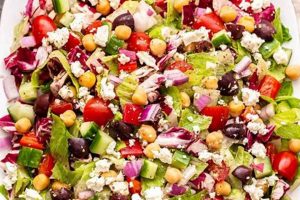
A refreshing and customizable dish, this culinary creation typically features seasoned ground meat (often beef or turkey), crisp lettuce, tomatoes, onions, cheese, and often black olives, all combined with a vibrant dressing. Variations may include corn, beans, salsa, sour cream, guacamole, or other desired toppings. The defining characteristic is its chilled temperature, making it a popular choice for warm weather or potlucks.
The appeal stems from its versatility, ease of preparation, and satisfying blend of textures and flavors. Offering a lighter alternative to traditional tacos, this dish can be adapted to accommodate various dietary needs and preferences. Vegetarian versions utilize beans or lentils in place of meat, while specific ingredients can be omitted or substituted to address individual sensitivities. Its history likely traces back to the mid-20th century alongside the rising popularity of convenience foods and casual dining in North America.
The following sections will explore various aspects of this dish, including ingredient selection, preparation techniques, customization options, and nutritional information. Readers will gain a comprehensive understanding of how to create their own versions, from classic preparations to innovative interpretations.
Tips for an Exceptional Taco Salad
Creating a truly satisfying taco salad involves attention to detail and thoughtful ingredient selection. These tips offer guidance for achieving optimal flavor and texture.
Tip 1: Optimize Ingredient Temperature. Thoroughly chill all components before assembling the salad. This preserves crispness and prevents the dressing from becoming watery.
Tip 2: Season the Meat Strategically. Use a blend of spices beyond standard taco seasoning for a more complex flavor profile. Consider incorporating chili powder, cumin, smoked paprika, and a touch of oregano.
Tip 3: Elevate the Crunch Factor. Incorporate crushed tortilla chips for added texture and a satisfying crunch. Alternatively, baked tortilla strips offer a lighter option.
Tip 4: Dress Smartly. Choose a dressing that complements the other ingredients. A creamy cilantro-lime dressing, a tangy vinaigrette, or even a classic Catalina dressing can enhance the overall experience. Avoid overdressing, which can lead to a soggy salad.
Tip 5: Layer for Success. Layer ingredients strategically to prevent the salad from becoming overly mixed and losing textural contrast. Start with a base of lettuce, followed by the meat, then other toppings, and finally the dressing.
Tip 6: Embrace Fresh Ingredients. Opt for fresh produce whenever possible. Ripe tomatoes, crisp lettuce, and freshly chopped onions contribute significantly to the flavor and overall quality.
Tip 7: Customize to Preference. Adapt the recipe to suit individual tastes. Explore different cheeses, beans, vegetables, and toppings to create a personalized culinary experience.
By following these tips, one can achieve a well-balanced and flavorful taco salad that offers a delightful combination of textures and tastes.
The following section offers a complete recipe incorporating these principles, allowing readers to put their newfound knowledge into practice.
1. Fresh Ingredients

Ingredient freshness is paramount to a successful cold taco salad. Freshness significantly impacts the overall flavor, texture, and visual appeal. The crispness of lettuce, the juiciness of tomatoes, and the vibrancy of onions contribute to a more satisfying sensory experience. Wilted lettuce or bland tomatoes can detract significantly, resulting in a less appealing and potentially unappetizing dish. For instance, using freshly chopped cilantro and onions provides a brighter, more pronounced flavor compared to using pre-chopped or older ingredients. Similarly, ripe, in-season tomatoes offer a burst of sweetness and juiciness that enhances the overall taste.
Beyond flavor, fresh ingredients offer nutritional advantages. Vitamins and antioxidants are often more potent in recently harvested produce. Using fresh ingredients maximizes the nutritional value of the salad, contributing to a healthier meal. Furthermore, the textural contrast between crisp vegetables and other components is a defining characteristic. Fresh, crisp lettuce provides a structural foundation, while other elements like crunchy tortilla chips or creamy avocado create a multi-dimensional culinary experience. Consider the difference between a salad made with crisp romaine lettuce versus one using wilted iceberg lettuce the former offers a satisfying crunch, while the latter results in a soggy, less enjoyable texture.
Prioritizing fresh ingredients elevates the cold taco salad from a simple assembly of components to a vibrant, flavorful, and nutritious meal. While convenience may tempt some to utilize pre-packaged or less-than-fresh ingredients, the difference in the final product is undeniable. The emphasis on freshness ensures a superior culinary outcome that highlights the natural flavors and textures of the individual components. This commitment to quality enhances the overall dining experience and contributes to a healthier and more satisfying meal.
2. Crisp Lettuce
Crisp lettuce is fundamental to a successful cold taco salad. Its structural integrity provides a foundation for the other ingredients, preventing a collapsed, soggy salad. The textural contrast between the crisp lettuce and other components, such as seasoned ground meat, creamy dressing, and crunchy tortilla chips, is essential for a balanced and enjoyable culinary experience. Imagine a taco salad built on wilted lettuce the flavors might be present, but the overall texture would be compromised, diminishing the eating experience. Romaine, iceberg, and butter lettuce are common choices, each offering distinct textural variations. The crispness also helps to keep the other ingredients from becoming overly saturated with the dressing, maintaining their individual flavors and textures.
Beyond texture, crisp lettuce contributes a refreshing element. Its coolness complements the overall temperature profile of the salad, enhancing the perception of freshness. This is particularly important in a dish served cold, where temperature plays a significant role in enjoyment. The subtle vegetal flavor of lettuce provides a neutral backdrop that allows the other, bolder flavors of the salad to shine. Furthermore, the visual appeal of crisp, vibrant lettuce enhances presentation. A salad built with fresh, appealing greens is simply more inviting than one with wilted or discolored leaves. Consider the difference in presentation between a salad using crisp romaine hearts versus one with limp, aged iceberg lettuce. The former offers a vibrant, appealing presentation that elevates the entire dish.
Selecting and maintaining crisp lettuce is therefore crucial. Proper storage, including refrigeration in a crisper drawer and avoiding pre-washing, helps preserve its texture. Choosing the right type of lettuce based on personal preference also contributes to overall enjoyment. While romaine offers a robust crunch, butter lettuce provides a delicate, tender counterpoint. Ultimately, the choice of crisp lettuce elevates the cold taco salad from a simple dish to a multi-sensory experience where texture, temperature, and flavor harmonize.
3. Seasoned Meat

Seasoned meat forms the savory foundation of a cold taco salad, contributing depth and complexity to balance the fresh vegetables and crunchy elements. The choice of meat and its seasoning significantly influence the overall flavor profile, distinguishing a memorable salad from a bland one. Understanding the nuances of meat selection and seasoning techniques is essential for creating a well-balanced and flavorful dish.
- Meat Selection
Ground beef, often lean or extra-lean, is a popular choice due to its affordability and ease of preparation. Ground turkey or chicken offer leaner alternatives. For richer flavor, some recipes incorporate shredded beef, pork, or even chorizo. The chosen meat influences the overall taste and nutritional content. Ground beef provides a familiar, robust flavor, while ground turkey offers a milder profile. Shredded meats introduce textural variation and often absorb marinades more effectively, intensifying their flavor.
- Seasoning Choices
Pre-made taco seasoning blends offer convenience, but custom spice combinations allow for greater control and complexity. Common spices include chili powder, cumin, paprika, garlic powder, onion powder, and oregano. The balance of these spices creates distinct flavor profiles, from smoky and earthy to bright and herbaceous. Adding a touch of smoked paprika, for example, imparts a smoky depth, while incorporating ground coriander seeds introduces a citrusy note.
- Cooking Methods
Properly cooking the meat is crucial for both flavor and food safety. The meat should be browned thoroughly to develop rich flavors through the Maillard reaction. Draining excess grease prevents a greasy salad. Alternative cooking methods like grilling or broiling can impart smoky nuances. Grilling, for instance, adds a charred flavor that complements the other ingredients, while broiling offers a quick and convenient method for achieving a similar effect.
- Flavor Enhancement Techniques
Beyond basic spices, additional ingredients can elevate the flavor profile of the meat. Sauting chopped onions or bell peppers with the meat adds depth and complexity. Incorporating a small amount of tomato paste or adobo seasoning intensifies the savory notes. These additions contribute subtle nuances that enhance the overall experience without overpowering the other components. For example, a touch of adobo seasoning introduces a smoky, savory depth, while incorporating diced poblano peppers adds a mild heat and vegetal sweetness.
By considering these facets of seasoned meat preparation, one can significantly enhance the flavor profile and overall enjoyment of a cold taco salad. The chosen meat, its seasoning, cooking method, and flavor enhancements contribute to the dish’s complexity and balance. A thoughtful approach to seasoned meat transforms the cold taco salad from a simple assembly of ingredients to a cohesive and satisfying culinary experience.
4. Flavorful Dressing
Flavorful dressing is integral to a successful cold taco salad recipe, serving as a unifying element that binds the diverse components and elevates the overall taste experience. The dressing not only adds flavor but also contributes to the texture and moisture content of the salad, impacting its overall appeal. Careful consideration of dressing choices and their interplay with other ingredients is essential for achieving a harmonious and satisfying culinary outcome.
- Flavor Profile Harmony
The dressing’s flavor profile should complement the other ingredients, creating a balanced and cohesive taste. A creamy cilantro-lime dressing, for instance, enhances the fresh flavors of the vegetables and herbs, while a tangy vinaigrette provides a contrasting acidity that cuts through the richness of the meat and cheese. A mismatch, such as a heavy, creamy ranch dressing with delicate fish tacos, could overpower the subtle flavors and create an unbalanced profile.
- Texture and Consistency
Dressing texture contributes significantly to the overall mouthfeel of the salad. Creamy dressings add richness and coat the ingredients, while thinner vinaigrettes offer a lighter, more refreshing touch. The consistency also impacts how the dressing clings to the other components. A thick, creamy dressing adheres well, ensuring every bite is flavorful, while a thin vinaigrette might pool at the bottom, requiring frequent tossing. Consider the difference between a creamy avocado dressing and a light citrus vinaigrette the former provides a luscious coating, while the latter offers a bright, tangy burst.
- Ingredient Compatibility
The dressing’s ingredients should harmonize with the other components of the salad. For example, a dressing containing cumin and chili powder might complement a salad with seasoned ground beef and black beans, creating a cohesive Southwestern flavor profile. Conversely, a sweet and fruity dressing might clash with savory ingredients, resulting in a disjointed flavor experience. A raspberry vinaigrette, while delicious on its own, might not pair well with a traditional taco salad.
- Moisture Management
The dressing’s moisture content impacts the salad’s overall texture and structural integrity. Overly watery dressings can make the salad soggy, especially if added too far in advance. Creamier dressings tend to hold their shape better and prevent the salad from becoming watery. This factor is particularly important for cold salads, where the chilled temperature can exacerbate the effects of excess moisture. Adding a watery vinaigrette too early can result in a soggy, unappetizing salad, while a thicker dressing maintains the crispness of the ingredients.
A well-chosen flavorful dressing elevates the cold taco salad, transforming individual components into a cohesive and enjoyable culinary experience. By considering flavor profile harmony, texture and consistency, ingredient compatibility, and moisture management, one can select or create a dressing that perfectly complements the other elements, resulting in a balanced, flavorful, and satisfying meal. The interplay of these factors distinguishes a truly exceptional cold taco salad from a mediocre one.
5. Chilled Components

The concept of “chilled components” is central to a successful cold taco salad recipe. Temperature significantly influences flavor perception and textural enjoyment, distinguishing this dish from its warm counterparts. Maintaining appropriately chilled ingredients is essential for maximizing the salad’s refreshing qualities and preventing undesirable textural changes.
- Lettuce and Vegetables
Crisp, chilled lettuce provides a refreshing foundation. Cold temperatures maintain its structural integrity, preventing wilting and ensuring a pleasant crunch. Other vegetables, such as tomatoes, onions, and peppers, also benefit from chilling, retaining their vibrant colors and crisp textures. Room-temperature vegetables would contribute to a less refreshing and potentially soggy salad, diminishing the overall appeal. Imagine biting into a cold taco salad with warm, limp lettuce the contrast in temperatures and textures would be jarring and unpleasant.
- Meat and Protein
While the meat is typically cooked and then cooled, maintaining its chilled temperature prevents the fat from solidifying and becoming unappetizing. This is especially important for ground meats, which can become greasy at room temperature. Chilled protein also contributes to the refreshing nature of the salad, offering a pleasant contrast to the crisp vegetables. A salad with lukewarm ground beef would lack the desired balance of temperatures, impacting the overall enjoyment.
- Cheese and Dairy
Chilled cheese, whether shredded or crumbled, retains its structure and flavor better. Warmer temperatures can cause cheese to soften excessively, altering its texture and potentially leading to a less appealing, clumpy consistency. This is particularly relevant for cheeses like cheddar or Monterey Jack, commonly used in taco salads. Imagine shredded cheddar becoming soft and oily at room temperature, compromising the salad’s texture and visual appeal.
- Dressing and Condiments
Chilled dressings and condiments, such as salsa, guacamole, or sour cream, contribute to the overall refreshing quality of the salad. Maintaining their cool temperature prevents them from becoming watery or separating, preserving their desired consistency and flavor. Room-temperature condiments would not only detract from the refreshing experience but could also negatively impact the structural integrity of the salad. A warm, runny salsa, for example, could make the salad excessively soggy and less appealing.
The careful attention to chilled components distinguishes a truly refreshing and enjoyable cold taco salad. The interplay of cool temperatures and crisp textures enhances the overall sensory experience, making it a popular choice for warm weather meals and potlucks. By maintaining the appropriate chill, each component contributes to the salad’s refreshing qualities, ensuring a harmonious blend of flavors and textures. Neglecting this crucial aspect can compromise the salad’s structural integrity, flavor balance, and overall appeal.
6. Versatile Toppings
The versatility of toppings is a defining characteristic of the cold taco salad, offering a canvas for personalized flavor combinations and textural contrasts. This facet distinguishes the dish from more rigidly structured salads, allowing for customization based on individual preferences, dietary needs, and available ingredients. Exploring the range of topping options provides insight into the adaptability and creative potential inherent within the cold taco salad format.
- Textural Variety
Toppings contribute significantly to textural diversity, enhancing the overall sensory experience. Crunchy elements like tortilla chips, crushed tortilla strips, or toasted nuts provide a counterpoint to the softer textures of lettuce, meat, and cheese. Creamy additions, such as guacamole, sour cream, or a dollop of Greek yogurt, introduce another layer of contrast. The interplay of these textures elevates the salad from a simple combination of ingredients to a multi-dimensional culinary creation. Consider the textural symphony achieved by combining crispy tortilla strips, creamy avocado, and juicy diced tomatoes.
- Flavor Dimensions
Toppings expand the flavor profile beyond the core ingredients. Spicy jalapeos, pickled onions, or a sprinkle of chili flakes introduce heat, while fresh herbs like cilantro or parsley provide a bright, herbaceous note. The strategic use of toppings allows for the creation of complex flavor combinations that cater to individual preferences. A sprinkle of crumbled cotija cheese adds a salty, tangy dimension, while a drizzle of smoky chipotle sauce introduces a depth of flavor.
- Dietary Adaptations
Versatile toppings facilitate customization for various dietary requirements. Vegetarian or vegan variations can incorporate plant-based proteins like black beans, corn, or crumbled tofu. Individuals avoiding dairy can opt for non-dairy cheese alternatives or omit cheese altogether. The adaptability of toppings allows the cold taco salad to accommodate diverse dietary needs without sacrificing flavor or satisfaction. Substituting roasted sweet potatoes for ground meat creates a hearty and flavorful vegetarian option.
- Visual Appeal
Toppings enhance the visual presentation, transforming the salad into an aesthetically pleasing dish. Brightly colored ingredients, such as diced bell peppers, shredded carrots, or chopped radishes, create visual interest. The strategic placement of toppings adds dimension and elevates the presentation beyond a simple mix of ingredients. A garnish of fresh cilantro sprigs or a sprinkle of black sesame seeds adds a touch of elegance and visual appeal.
The versatility of toppings transforms the cold taco salad from a basic recipe into a platform for culinary creativity. The ability to personalize the dish through a diverse range of toppings ensures its continued appeal and adaptability. By strategically incorporating toppings that complement and contrast in texture, flavor, and visual appeal, individuals can create a cold taco salad that perfectly suits their individual tastes and preferences, making each iteration a unique and satisfying culinary experience.
Frequently Asked Questions
This section addresses common inquiries regarding cold taco salads, providing concise and informative responses to clarify potential uncertainties and enhance understanding of this versatile dish.
Question 1: What type of lettuce is best suited for a cold taco salad?
Crisp lettuce varieties like romaine, iceberg, or butter lettuce are ideal. Their structural integrity maintains the salad’s form, preventing sogginess. The choice depends on individual preference regarding texture and flavor.
Question 2: Can ground turkey or chicken be substituted for ground beef?
Ground turkey or chicken serve as excellent alternatives to ground beef, offering leaner protein options. Adjust seasoning accordingly to accommodate the milder flavor profiles.
Question 3: How can one prevent the salad from becoming soggy?
Thoroughly chilling all components, including the meat, vegetables, and dressing, is crucial. Adding the dressing immediately before serving also helps maintain crispness.
Question 4: What are some suitable vegetarian protein options?
Black beans, lentils, or crumbled tofu provide substantial vegetarian protein sources. Seasoning these options appropriately ensures a flavorful and satisfying outcome.
Question 5: Can the salad be prepared in advance?
While components can be prepared separately in advance, it’s recommended to assemble the salad shortly before serving to maintain optimal texture and prevent sogginess. Store prepared components separately and combine just before serving.
Question 6: What are some gluten-free options for toppings?
Crushed tortilla chips made from corn tortillas offer a gluten-free alternative to traditional wheat-based chips. Ensure other toppings, such as dressings or spice blends, are also gluten-free.
Addressing these frequently asked questions provides a deeper understanding of the nuances involved in creating a successful cold taco salad. The adaptability of this dish allows for numerous variations, catering to diverse tastes and dietary preferences.
The following section will delve into variations and adaptations of the classic cold taco salad recipe, further expanding the possibilities of this versatile dish.
Cold Taco Salad Recipe
This exploration of the cold taco salad recipe has highlighted its adaptable nature, emphasizing the importance of fresh ingredients, crisp lettuce, seasoned meat, a flavorful dressing, chilled components, and versatile toppings. Each element contributes significantly to the overall sensory experience, distinguishing a truly exceptional salad from a mediocre one. From the foundational elements of crisp lettuce and seasoned meat to the personalized touch of versatile toppings, the recipe offers a platform for culinary creativity within a structured framework.
The enduring appeal of the cold taco salad recipe lies in its adaptability and capacity to satisfy diverse palates. Its continued evolution through culinary innovation promises further exploration of flavors and textures. The simplicity of its construction belies the complexity of its potential, offering a refreshing and satisfying culinary experience for both novice cooks and seasoned chefs alike. A thoughtful approach to ingredient selection and preparation elevates this dish beyond a simple salad, transforming it into a celebration of flavor, texture, and culinary artistry.