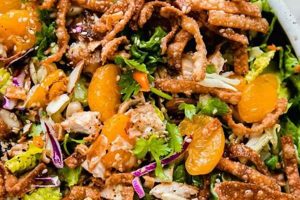
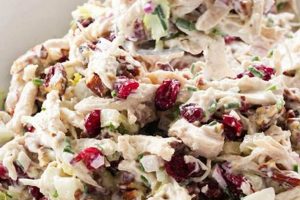
A dish combining grilled or pan-fried chicken marinated in teriyaki sauce with fresh salad ingredients offers a flavorful and balanced meal. Variations are numerous, incorporating diverse greens, vegetables, fruits, and nuts, with potential additions such as sesame seeds, crispy noodles, or a sprinkle of green onions. A simple example includes grilled teriyaki chicken served over mixed greens with carrots, cucumber, and a light vinaigrette.
This culinary combination provides a nutritious and satisfying meal option. The lean protein from chicken contributes to muscle growth and repair, while the vegetables and fruits offer essential vitamins and minerals. Teriyaki marinade, a blend of soy sauce, mirin, sake, and sugar, delivers a savory-sweet umami flavor that enhances the overall palatability. Furthermore, the adaptability of the dish allows for customization to dietary needs and preferences, offering gluten-free, low-carb, or vegetarian adaptations through ingredient substitutions.
The following sections will explore various aspects of creating this dish, including selecting quality ingredients, mastering the teriyaki marinade, achieving perfectly cooked chicken, and building a complementary salad. Guidance will be provided on balancing flavors, textures, and nutritional value, culminating in a delicious and healthful meal.
Tips for a Perfect Teriyaki Chicken Salad
Achieving a well-balanced and flavorful salad involves attention to detail in every step, from ingredient selection to final presentation. These tips offer guidance for optimal results.
Tip 1: Marinate the Chicken Thoroughly: Adequate marination, at least 30 minutes, ensures the chicken absorbs the teriyaki flavors fully. Overnight marination yields even richer flavor permeation.
Tip 2: Control Cooking Temperature: Consistent heat prevents burning and ensures the chicken cooks evenly. Medium-high heat is generally recommended for pan-frying or grilling.
Tip 3: Balance Sweet and Savory: Adjust the teriyaki marinade’s sugar content to personal preference. A touch of ginger or garlic can enhance the savory notes.
Tip 4: Consider Salad Ingredient Variety: A diverse range of vegetables and fruits adds textural and flavor complexity. Consider ingredients like shredded carrots, edamame, mandarin oranges, or toasted almonds.
Tip 5: Dress Lightly: A light vinaigrette complements the teriyaki flavor without overpowering it. A simple sesame-ginger dressing or a light rice vinegar dressing works well.
Tip 6: Don’t Overcrowd the Salad: Too many ingredients can create a soggy and less appealing salad. Strive for a balance that allows each element to shine.
Tip 7: Garnish Thoughtfully: A sprinkle of sesame seeds, chopped green onions, or crispy wonton strips adds visual appeal and a final layer of flavor.
By following these guidelines, one can create a teriyaki chicken salad that offers a delightful balance of flavors, textures, and nutritional value.
The combination of succulent chicken, vibrant vegetables, and a flavorful dressing provides a culinary experience that is both satisfying and healthful. Experimentation with ingredients and variations allows for endless possibilities.
1. Chicken Preparation

Chicken preparation forms the foundation of a successful teriyaki chicken salad. Proper technique ensures optimal flavor, texture, and food safety, influencing the overall quality of the dish. This section explores key aspects of chicken preparation relevant to creating a delicious and satisfying salad.
- Marinating
Marinating plays a crucial role in flavor development and tenderization. A teriyaki marinade, typically composed of soy sauce, mirin, sake, ginger, and garlic, infuses the chicken with umami-rich flavors. Adequate marinating time, ideally 30 minutes to several hours, allows the marinade to penetrate the chicken, resulting in a more flavorful and tender final product. The duration and composition of the marinade can be adjusted to achieve desired flavor profiles.
- Cooking Method
The chosen cooking method impacts both the flavor and texture of the chicken. Grilling imparts a smoky char, while pan-frying creates a crispy exterior. Baking offers a convenient and healthier option. Ensuring the chicken is cooked thoroughly to an internal temperature of 165F (74C) is essential for food safety. Each cooking method requires specific temperature and time adjustments to achieve optimal results.
- Cutting Technique
After cooking, the chicken’s presentation and integration within the salad depend on the cutting technique. Slicing, dicing, or shredding the chicken influences its texture and how it interacts with other salad components. For instance, thinly sliced chicken offers a delicate texture, while diced chicken provides heartier bites. The chosen technique should complement the overall salad composition.
- Cooling and Storage
Allowing the cooked chicken to cool completely before adding it to the salad prevents wilting of delicate greens and other temperature-sensitive ingredients. Proper storage of cooked chicken, refrigerated in an airtight container, maintains its quality and safety for subsequent consumption. This is particularly important for meal prepping or making larger batches of salad.
These facets of chicken preparation contribute significantly to the final quality of the teriyaki chicken salad. Careful consideration of marinating, cooking method, cutting technique, and storage practices ensures a flavorful, texturally appealing, and safe culinary experience.
2. Teriyaki Marinade
Teriyaki marinade forms the cornerstone of a chicken teriyaki salad recipe, acting as the primary flavoring agent. The marinade’s composition, typically a blend of soy sauce, mirin, sake, sugar, and aromatics such as ginger and garlic, imparts the characteristic savory-sweet umami flavor profile. This marinade not only seasons the chicken but also contributes to its tenderization through the enzymatic action of ingredients like ginger. The depth and complexity of the teriyaki flavor directly influence the overall palatability of the salad. For instance, a marinade with a higher sugar content yields a sweeter glaze, while increased ginger or garlic intensifies the savory notes. The careful balance of these components is crucial for a successful recipe.
The effectiveness of the teriyaki marinade relies on factors beyond its ingredients. Marinating time plays a significant role in flavor penetration and tenderization. A longer marinating period allows the chicken to absorb more of the marinade’s flavor, resulting in a more pronounced teriyaki taste. Additionally, the method of application influences the final outcome. Ensuring the chicken is fully coated and submerged in the marinade promotes even flavor distribution. Practical applications include scoring the chicken’s surface to facilitate deeper marinade penetration and using a resealable bag for efficient marination and reduced cleanup.
Understanding the role and impact of the teriyaki marinade is fundamental to creating a well-executed chicken teriyaki salad. The interplay between marinade composition, marinating time, and application technique directly affects the final flavor and texture of the chicken. Challenges may include balancing the desired sweetness and savoriness, achieving consistent flavor throughout the chicken, and adapting the marinade to accommodate dietary restrictions such as gluten-free or low-sodium diets. Mastering these elements ensures a flavorful and satisfying culinary experience, emphasizing the marinade’s significance within the overall recipe.
3. Salad Components

Salad components play a crucial role in a chicken teriyaki salad recipe, contributing significantly to texture, flavor, and nutritional value. They provide counterpoint to the richness of the teriyaki-glazed chicken, offering a refreshing and contrasting element. A thoughtful selection of components creates a balanced and satisfying meal, elevating it beyond simply protein and sauce. The interplay between the components and the marinated chicken determines the overall sensory experience.
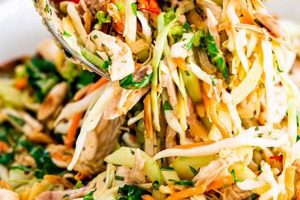
Consider a salad featuring crisp romaine lettuce, crunchy carrots, and juicy mandarin orange segments. The romaine provides a refreshing base, while the carrots offer a contrasting sweetness and crunch. The mandarin oranges introduce a burst of citrusy acidity, cutting through the richness of the teriyaki glaze. This combination offers a diverse textural and flavor profile, complementing the savory chicken. Alternatively, a salad incorporating edamame, shredded red cabbage, and toasted sesame seeds introduces different elements. The edamame contributes plant-based protein and a slightly nutty flavor, the red cabbage offers a peppery bite, and the sesame seeds provide a subtle toastiness and visual appeal. These choices demonstrate how varying components can create distinct salad experiences.
Careful selection of salad components is essential for achieving a balanced and flavorful chicken teriyaki salad. Consideration should be given to texture, flavor profiles, color, and nutritional value. Challenges may include maintaining the crispness of delicate greens, preventing the salad from becoming soggy from the teriyaki glaze, and catering to dietary restrictions or preferences. Understanding the interplay of components allows for a more nuanced approach to recipe development, resulting in a more satisfying and complete culinary experience.
4. Flavor Balance
Flavor balance is paramount in a successful chicken teriyaki salad recipe. It represents the harmonious interplay of sweet, savory, acidic, and umami elements, creating a complex and satisfying culinary experience. Achieving this balance requires careful consideration of the teriyaki marinade, the chicken itself, the chosen salad components, and the dressing. A well-balanced salad avoids extremes, allowing each flavor dimension to contribute without overpowering the others. This delicate equilibrium ensures a nuanced and enjoyable meal.
- The Teriyaki Foundation
The teriyaki marinade establishes the foundational flavor profile. The interplay of soy sauce (savory), mirin and sugar (sweet), and sake (subtle acidity and umami) forms the core. Adjusting the proportions of these ingredients allows for customization, from a sweeter, more glaze-like teriyaki to a more savory, umami-forward version. For example, reducing the sugar content and adding grated ginger or garlic shifts the balance towards savory. This foundation influences the subsequent layering of flavors from other components.
- Counterbalancing Components
Salad components play a critical role in balancing the richness of the teriyaki chicken. Acidic elements, such as mandarin orange segments or a vinaigrette with rice vinegar, cut through the sweetness and richness of the teriyaki glaze. Crunchy vegetables like carrots, cucumbers, or bell peppers offer textural contrast and a refreshing element. Incorporating ingredients with subtle bitterness, like radicchio or arugula, further enhances complexity.
- Dressing as a Bridge
The salad dressing acts as a bridge, connecting and harmonizing the flavors of the chicken and salad components. A light vinaigrette, perhaps with a touch of sesame oil and ginger, complements the teriyaki flavor without overpowering it. Avoid heavy, creamy dressings that might clash with the existing flavor profile. The dressing should enhance, not mask, the delicate balance achieved through other components.
- Seasonality and Freshness
Seasonal ingredients contribute significantly to flavor balance. Utilizing fresh, in-season produce at its peak flavor intensifies the overall impact of the salad. Summer salads might benefit from ripe tomatoes and cucumbers, while fall salads might incorporate roasted butternut squash or crisp apples. This awareness of seasonality allows for a more dynamic and balanced flavor experience.
Flavor balance within a chicken teriyaki salad represents a carefully orchestrated interplay of tastes and textures. Each component plays a specific role in creating a harmonious whole. Successfully balancing these elements elevates the dish from simple to sophisticated, offering a nuanced and satisfying culinary experience that highlights the complexity of flavors within this seemingly simple salad.
5. Dressing Choice
Dressing choice significantly impacts the overall balance and palatability of a chicken teriyaki salad recipe. The dressing functions as a unifying element, harmonizing the flavors of the marinated chicken and the chosen salad components. An appropriate dressing complements the existing flavor profile, enhancing rather than masking the nuanced interplay of sweet, savory, and acidic notes characteristic of teriyaki cuisine. An ill-suited dressing, conversely, can disrupt this balance, resulting in a clash of flavors that detracts from the overall dining experience. Therefore, dressing selection requires careful consideration of its interaction with the other salad elements.
Consider the interplay between a ginger-soy vinaigrette and a chicken teriyaki salad featuring mixed greens, shredded carrots, and mandarin orange segments. The light acidity of the vinaigrette, derived from rice vinegar, complements the sweetness of the teriyaki glaze and the citrus notes of the mandarin oranges. The ginger within the dressing echoes the aromatic notes often present in teriyaki marinades, creating a cohesive flavor profile. Conversely, a creamy ranch dressing, while palatable in other contexts, would likely clash with the delicate balance of the teriyaki salad. Its richness could overwhelm the subtle flavors of the other ingredients, resulting in a less nuanced and ultimately less satisfying experience. This example demonstrates the practical implications of dressing selection.
Selecting an appropriate dressing hinges on understanding its role within the broader context of the chicken teriyaki salad recipe. The dressing should enhance, not dominate, the existing flavors. Light vinaigrettes with complementary flavor profiles, such as ginger-soy, sesame-ginger, or even a simple rice vinegar dressing, often prove suitable. The intensity of the dressing should also be considered; a heavily flavored dressing can overpower the delicate balance of the salad, while a bland dressing fails to contribute meaningfully. Successfully navigating these considerations ensures a harmonious flavor profile, highlighting the synergistic relationship between dressing choice and the overall success of the chicken teriyaki salad recipe. Challenges may include adapting dressings to accommodate dietary restrictions, such as creating a low-sodium or gluten-free version, while maintaining flavor integrity. Addressing such challenges reinforces the importance of thoughtful dressing selection within the recipe development process.
6. Presentation

Presentation significantly influences the perceived value and enjoyment of a chicken teriyaki salad recipe. Visual appeal enhances the dining experience, stimulating appetite and creating a sense of anticipation. Thoughtful plating elevates the dish beyond mere sustenance, transforming it into a more engaging and satisfying culinary experience. This connection between presentation and enjoyment stems from the inherent human response to aesthetically pleasing arrangements, impacting perception of flavor and overall satisfaction. A well-presented salad suggests care and attention to detail, positively influencing the diner’s perception before the first bite.
Consider the difference between a haphazardly tossed salad and one meticulously arranged. In the former, the chicken might be clumped together, the vegetables unevenly distributed, and the dressing haphazardly drizzled. This lack of visual appeal can diminish the perceived value of the dish, regardless of its inherent flavor. Conversely, a thoughtfully plated salad, with the chicken artfully arranged, the vegetables strategically placed for color contrast, and the dressing delicately applied, creates a sense of visual harmony. A sprinkle of sesame seeds or chopped green onions adds a final flourish, further enhancing the visual appeal. This contrast demonstrates the practical impact of presentation on the overall dining experience. For instance, a restaurant serving the same chicken teriyaki salad with varying presentations would likely receive different feedback; the well-presented salad would likely garner more positive responses, influencing customer perception of quality and value.
Effective presentation of a chicken teriyaki salad involves considerations beyond simply arranging ingredients. The choice of serving dish, the use of garnishes, and even the surrounding table setting contribute to the overall visual impact. Challenges may include maintaining the structural integrity of the salad, preventing ingredients from shifting during service, and adapting presentation techniques for different serving contexts, such as buffet-style versus individual plating. Understanding these nuances allows for a more comprehensive approach to recipe development, recognizing that presentation plays a vital role in the overall enjoyment and perceived value of the chicken teriyaki salad. The visual appeal of a dish significantly impacts the diner’s initial impression, setting the stage for a more positive and satisfying culinary experience. Therefore, attention to presentation should be considered an integral component of any chicken teriyaki salad recipe, contributing to a more complete and enjoyable meal.
7. Nutritional Value

Nutritional value represents a key consideration within a chicken teriyaki salad recipe, impacting its role as a balanced and healthful meal option. Understanding the nutritional composition allows for informed choices regarding ingredients and portion sizes, maximizing health benefits while enjoying a flavorful dish. This analysis explores the nutritional contributions of typical components, highlighting their impact on overall dietary intake.
- Macronutrient Profile
Chicken teriyaki salad offers a balanced macronutrient profile, providing protein, carbohydrates, and fats. Grilled chicken contributes lean protein, essential for muscle growth and repair. The salad components, including vegetables and fruits, provide carbohydrates, primarily in the form of fiber, supporting digestive health and promoting satiety. The teriyaki sauce and any added nuts or seeds contribute healthy fats, important for cell function and nutrient absorption. Managing portion sizes and ingredient choices allows for tailoring macronutrient ratios to individual dietary needs.
- Micronutrient Content
The salad components contribute a range of essential vitamins and minerals. Dark leafy greens, such as spinach or kale, offer vitamins A and K, while colorful vegetables like bell peppers and carrots provide vitamin C and antioxidants. The inclusion of fruits further enhances vitamin and mineral intake. Careful selection of diverse salad components ensures a wider spectrum of micronutrients, supporting overall health and well-being.
- Glycemic Impact
The glycemic impact of a chicken teriyaki salad depends largely on the chosen ingredients and dressing. The complex carbohydrates from vegetables and fruits have a lower glycemic index than refined grains, contributing to more stable blood sugar levels. Limiting added sugars in the teriyaki marinade and dressing further minimizes glycemic impact. This aspect becomes particularly relevant for individuals managing blood sugar levels or following specific dietary guidelines.
- Dietary Considerations
Chicken teriyaki salad offers adaptability for various dietary needs. Gluten-free versions can be achieved by using tamari or coconut aminos in place of traditional soy sauce. Vegetarian or vegan adaptations can substitute tofu or tempeh for the chicken. Adjusting portion sizes and ingredient choices allows for customization to meet specific caloric or macronutrient targets. This adaptability makes the dish a versatile option for diverse dietary preferences.
The nutritional value of a chicken teriyaki salad hinges on conscious ingredient selection and preparation methods. Prioritizing lean protein sources, incorporating a variety of colorful vegetables and fruits, and minimizing added sugars contribute to a balanced and nutritious meal. Understanding the nutritional components allows for informed choices that support individual health goals while enjoying a flavorful and satisfying dish.
Frequently Asked Questions
This section addresses common inquiries regarding chicken teriyaki salad recipes, offering concise and informative responses to facilitate a deeper understanding of preparation techniques, ingredient selection, and nutritional considerations.
Question 1: What is the best cut of chicken to use?
Boneless, skinless chicken breasts or thighs are generally preferred for their ease of preparation and adaptability to various cooking methods. Chicken breasts offer a leaner protein source, while thighs provide richer flavor and greater tenderness.
Question 2: How long should the chicken marinate?
A minimum of 30 minutes is recommended for adequate flavor penetration. Marinating overnight enhances flavor and tenderizes the chicken further. However, excessively long marinating periods, exceeding 24 hours, can result in a mushy texture.
Question 3: Can the recipe be adapted for gluten-free diets?
Gluten-free adaptations are readily achievable by substituting tamari or coconut aminos for traditional soy sauce in the marinade and dressing. Ensuring other ingredients, such as pre-made dressings or croutons, are also gluten-free is crucial.
Question 4: What are suitable salad dressing alternatives to a vinaigrette?
While vinaigrettes are commonly preferred, light dressings based on sesame oil, ginger, or even a simple mixture of rice vinegar and honey can offer complementary flavor profiles. Avoiding heavy, creamy dressings that might overwhelm the delicate balance of the salad is advisable.
Question 5: How can the nutritional value of the salad be maximized?
Incorporating a variety of colorful vegetables, such as bell peppers, carrots, and spinach, increases vitamin and mineral content. Adding nuts or seeds contributes healthy fats and fiber. Portion control remains essential for managing overall caloric intake.
Question 6: How should leftover chicken teriyaki salad be stored?
Storing the chicken and salad components separately is recommended to prevent the greens from becoming soggy. Refrigerate each component in airtight containers for optimal freshness. Consume leftovers within 2-3 days.
These responses offer practical guidance for achieving a balanced and flavorful chicken teriyaki salad, addressing common concerns and clarifying key aspects of preparation. Adaptability to individual preferences and dietary needs remains a hallmark of this versatile dish.
Further exploration of specific variations and techniques will be presented in the following sections.
Chicken Teriyaki Salad Recipe
Exploration of chicken teriyaki salad recipes reveals a dish offering remarkable versatility and nutritional value. Careful consideration of chicken preparation, marinade composition, salad component selection, and dressing choice contributes to a balanced and flavorful outcome. Achieving harmony among sweet, savory, and acidic elements is paramount. Presentation elevates the dining experience, while awareness of nutritional content allows for informed choices supporting individual dietary needs. Successful execution hinges on understanding the interplay of these elements.
Culinary exploration extends beyond established guidelines. Adaptability and experimentation with diverse ingredients and flavor profiles offer continued opportunities for culinary innovation. The underlying principles of balance and thoughtful ingredient selection remain constant, guiding the creation of personalized and satisfying chicken teriyaki salad experiences.