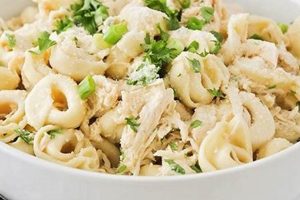
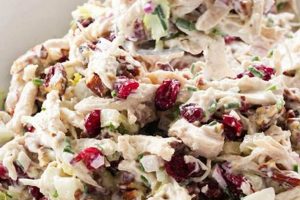
A simple preparation of this classic lunchtime staple involves combining cooked chicken, mayonnaise, and seasonings. Common additions include celery, onion, grapes, or nuts. This provides a quick, protein-rich meal option, adaptable to various dietary preferences with ingredient substitutions.
Accessibility and versatility contribute to the enduring popularity of this dish. Its customizable nature allows for adjustments to ingredients and flavor profiles, catering to individual tastes. Historically, chicken salad emerged as a way to utilize leftover cooked chicken, reflecting a resourceful approach to meal preparation that remains relevant today. Its ease of assembly makes it ideal for picnics, potlucks, or quick lunches, appealing to busy individuals and families alike.
Further exploration will cover variations in preparation methods, ingredient selections, and serving suggestions, providing a comprehensive guide to creating and enjoying this versatile dish.
Tips for Simple Chicken Salad Sandwiches
Optimizing preparation streamlines the creation of flavorful and satisfying chicken salad sandwiches. Attention to detail, from ingredient selection to assembly, elevates the final product.
Tip 1: Utilize high-quality cooked chicken. Rotisserie chicken or home-cooked, cooled chicken breast provides optimal flavor and texture. Canned chicken offers convenience but may require additional seasoning.
Tip 2: Control mayonnaise consistency. Start with a smaller amount of mayonnaise and add gradually to achieve the desired creaminess. Over-dressing can result in a soggy sandwich.
Tip 3: Balance flavors with complementary ingredients. Crisp celery and finely diced red onion provide textural contrast and sharpness. Sweet additions, like grapes or dried cranberries, offer a counterpoint to savory elements.
Tip 4: Season thoughtfully. Freshly ground black pepper, salt, and a touch of paprika enhance the chicken’s flavor. Experiment with herbs like dill or chives for a brighter profile.
Tip 5: Chill before serving. Refrigerating the chicken salad allows flavors to meld and enhances the sandwich’s overall freshness.
Tip 6: Consider bread choices. Classic white bread, whole wheat, croissants, or lettuce wraps offer varied textures and flavors, complementing the chicken salad filling.
Tip 7: Enhance presentation. Adding lettuce, tomato slices, or a sprinkle of paprika elevates the sandwich’s visual appeal.
By employing these techniques, one can consistently create delicious and satisfying chicken salad sandwiches with minimal effort. Careful ingredient selection and thoughtful assembly elevate this simple dish to a culinary staple.
These preparation tips provide a foundation for crafting a perfect chicken salad sandwich. The following section offers variations to customize the recipe and expand culinary horizons.
1. Cooked Chicken

Cooked chicken serves as the foundational ingredient in a simple chicken salad sandwich recipe. The quality and preparation of the chicken directly impact the overall flavor and texture of the final product. Using pre-cooked chicken, such as rotisserie chicken from a grocery store, significantly streamlines the preparation process, aligning with the “easy” aspect of the recipe. Alternatively, utilizing leftover baked or roasted chicken contributes to minimizing food waste while offering a flavorful base.
The choice of chicken preparation method influences the resulting salad’s characteristics. Shredded chicken from a rotisserie bird offers convenience and a tender texture. Cubed or diced leftover chicken provides a more substantial bite. Canned chicken, while convenient, often possesses a milder flavor and softer texture, requiring careful seasoning to enhance its contribution to the overall dish. For example, adding a pinch of smoked paprika or a dash of onion powder can compensate for the subtle flavor of canned chicken. Selecting boneless, skinless chicken breast, whether freshly cooked or pre-cooked, ensures a leaner, healthier final product.
Understanding the role of cooked chicken in a simplified chicken salad recipe is crucial for achieving both ease of preparation and desirable flavor outcomes. Careful consideration of chicken type, preparation method, and seasoning ensures a successful, satisfying meal. The utilization of pre-cooked or leftover chicken exemplifies the “easy” aspect, while attention to seasoning and texture elevates the final dish beyond basic convenience. Ultimately, the selection and preparation of the cooked chicken significantly influence the overall quality and enjoyment of a simple chicken salad sandwich.
2. Mayonnaise
Mayonnaise plays a crucial role in a simple chicken salad sandwich recipe, acting as the binding agent and contributing significantly to the overall texture, flavor, and moisture content. Its emulsive properties hold the ingredients together, creating a cohesive filling, while its richness complements the chicken and other components. Understanding mayonnaise’s function within this context is essential for achieving the desired “easy” preparation and a palatable final product.
- Binding Agent
Mayonnaise’s primary function is to bind the various ingredients, such as chicken, celery, and onion, into a cohesive mixture. This ensures that the filling remains intact within the sandwich and provides a pleasant eating experience. Without an adequate amount of mayonnaise, the salad would be dry and crumbly, lacking the characteristic creamy texture.
- Flavor Enhancer
Beyond its binding properties, mayonnaise contributes a rich, tangy flavor that complements the chicken. The subtle acidity balances the savory elements, preventing the sandwich from becoming bland. Different types of mayonnaise, such as those infused with herbs or spices, can further enhance the overall flavor profile.
- Texture and Moisture
Mayonnaise contributes significantly to the desired creamy texture and moisture content of the chicken salad. The amount used directly impacts the final consistency, ranging from a light and fluffy salad to a denser, richer filling. Careful control of mayonnaise quantity is crucial for achieving the optimal texture, preventing a soggy sandwich.
- Ease of Use
Mayonnaise’s ready-to-use nature contributes to the simplicity and ease of preparation central to an “easy” chicken salad sandwich recipe. Its inclusion requires no additional preparation steps, aligning with the quick and convenient nature of the dish. Furthermore, the versatility of mayonnaise allows for easy customization; reducing the quantity creates a lighter salad, while increasing it yields a richer, creamier filling.
The careful selection and utilization of mayonnaise are fundamental to a successful simple chicken salad sandwich recipe. Its multifaceted role as a binder, flavor enhancer, and contributor to texture and moisture directly impacts the overall quality and enjoyment of the final product. The ease with which mayonnaise can be incorporated aligns perfectly with the “easy” preparation aspect, making it an indispensable component of this classic dish.
3. Seasoning
Seasoning is integral to a successful easy chicken salad sandwich recipe, elevating it from simple to exceptional. Careful consideration of seasoning choices significantly impacts the overall flavor profile, balancing the richness of the mayonnaise and the inherent flavor of the chicken. This exploration delves into the critical aspects of seasoning within this context.
- Balancing Flavors
Seasoning acts as a balancing agent, preventing the sandwich from being bland or overly rich. The inherent fattiness of mayonnaise requires a counterpoint, achieved through the strategic use of salt, pepper, and other seasonings. Salt enhances the existing flavors, while pepper adds a touch of piquancy. This balance is crucial for a palatable and enjoyable sandwich.
- Enhancing Existing Flavors
Beyond balancing, seasoning enhances the inherent flavors of the core ingredients. A touch of paprika adds smokiness, while onion powder introduces a subtle savory note. Garlic powder provides a pungent depth, while herbs like dill or chives contribute a fresh, bright element. The judicious use of these seasonings elevates the overall flavor profile without overpowering the delicate balance.
- Customization and Personalization
Seasoning offers a pathway to personalize the chicken salad, catering to individual preferences. Curry powder introduces an exotic flair, while a dash of cayenne pepper adds a spicy kick. The versatility of seasoning allows for endless customization, transforming the basic recipe into a unique culinary expression.
- Simplicity and Accessibility
The “easy” aspect of the recipe remains central, even with the incorporation of various seasonings. Common pantry staples, like salt, pepper, and dried herbs, suffice to create a flavorful chicken salad. This accessibility ensures that enhancing the flavor profile does not compromise the recipe’s simplicity.
Strategic seasoning is paramount in crafting a delicious and easy chicken salad sandwich. It balances richness, enhances existing flavors, allows for personalization, and remains consistent with the recipe’s simplicity. Understanding the role of seasoning elevates this classic dish from basic sustenance to a flavorful and satisfying culinary experience. From classic combinations to more adventurous explorations, the appropriate use of seasoning unlocks the full potential of this versatile recipe.
4. Bread
Bread serves as the structural foundation of the chicken salad sandwich, playing a critical role in the overall sensory experience. Its texture, flavor, and ability to hold the filling contribute significantly to the “easy” aspect of the recipe. Choosing the right bread ensures both ease of assembly and a satisfying final product. For example, a sturdy, sliced loaf offers structural integrity, preventing the sandwich from falling apart, while a softer bread, like a croissant, provides a delicate contrast to the creamy filling.
The bread’s characteristics influence how the sandwich is perceived and consumed. A crusty baguette offers a textural counterpoint to the soft filling, while a simple white bread provides a neutral backdrop, allowing the flavors of the chicken salad to shine. Whole-wheat bread adds nutritional value and a slightly nutty flavor, complementing the savory notes of the salad. Practical considerations, such as the bread’s size and shape, also impact ease of preparation. Pre-sliced bread streamlines assembly, while smaller rolls or slider buns offer portion control and portability, ideal for picnics or packed lunches. Matching bread type to occasion and personal preference maximizes enjoyment and aligns with the “easy” preparation objective.
Bread selection presents a crucial decision point in crafting an easy chicken salad sandwich. The interplay between bread and filling determines not only the sandwich’s structural integrity but also its overall flavor and textural profile. Choosing a bread that complements the chicken salad while considering practical aspects of preparation enhances the dining experience. This understanding allows for informed decisions, maximizing both ease of assembly and enjoyment of the final product. The seemingly simple choice of bread significantly contributes to the overall success of this classic, easy-to-prepare dish.
5. Quick Preparation

Quick preparation forms the cornerstone of recipes designated “easy,” particularly relevant to the chicken salad sandwich. This speed stems from several factors, including the utilization of pre-cooked or readily available ingredients and minimal cooking or processing steps. The inherent simplicity of combining ingredients, rather than complex culinary techniques, contributes significantly to the rapid assembly of this dish. For example, using pre-cooked rotisserie chicken eliminates the time-consuming process of cooking and shredding chicken, significantly expediting the overall preparation time. Similarly, employing pre-chopped vegetables like celery and onion further streamlines the process. This emphasis on speed and convenience caters to busy lifestyles, making the chicken salad sandwich an ideal meal solution when time is limited.
The “easy” designation implies accessibility not only in terms of ingredient availability but also in the speed and simplicity of assembly. A minimal number of steps, combined with straightforward techniques, ensures that even those with limited culinary experience can achieve satisfactory results. The absence of complex cooking processes, such as sauting or baking, further reduces preparation time. This focus on efficiency allows individuals to create a nutritious and satisfying meal without significant time investment. The practical implication of this quick preparation is evident in various real-life scenarios, from packed lunches for work or school to a rapid meal solution for unexpected guests. This aspect contributes substantially to the enduring popularity of the chicken salad sandwich as a convenient and versatile meal option.
The connection between “quick preparation” and “chicken salad sandwich recipe easy” is fundamental. Speed and simplicity, achieved through readily available ingredients and minimal processing, define the “easy” classification. This characteristic makes the chicken salad sandwich an accessible and practical meal solution for various situations, highlighting its value in contemporary culinary practices. Understanding this connection allows for an appreciation of the recipe’s enduring appeal and its continued relevance in a fast-paced world. While variations and customizations exist, the core principle of quick preparation remains central to the definition of an “easy” chicken salad sandwich recipe.
Frequently Asked Questions
This section addresses common inquiries regarding the preparation of easy chicken salad sandwiches, providing concise and informative responses.
Question 1: What type of chicken is best suited for an easy chicken salad sandwich?
Rotisserie chicken offers convenience and optimal flavor. Alternatively, leftover cooked chicken breast or canned chicken provides viable options.
Question 2: How can sogginess in a chicken salad sandwich be prevented?
Sogginess can be mitigated by adding mayonnaise gradually and chilling the prepared salad before assembling the sandwich. Utilizing crisp lettuce or tomato within the sandwich also helps absorb excess moisture.
Question 3: What are some healthy ingredient substitutions for a chicken salad sandwich?
Greek yogurt can replace mayonnaise for a lower-fat option. Whole-wheat bread offers increased fiber content. Incorporating additional vegetables, such as chopped bell peppers or spinach, enhances nutritional value.
Question 4: How long can prepared chicken salad be stored safely?
Chicken salad should be stored in an airtight container in the refrigerator for up to three to five days. Ensure the chicken reaches a safe internal temperature during initial cooking if preparing from raw chicken.
Question 5: Can chicken salad be frozen for later consumption?
While freezing is possible, it may negatively impact the texture of the mayonnaise and other ingredients. It is generally recommended to consume chicken salad within a few days of preparation.
Question 6: Beyond traditional bread, what other options exist for serving chicken salad?
Chicken salad can be served on croissants, crackers, lettuce wraps, or as a filling for scooped-out avocados or tomatoes. These alternatives offer varied textures and presentations.
Addressing these common inquiries provides clarity on key aspects of preparing easy chicken salad sandwiches, promoting successful outcomes and enjoyment of this versatile dish.
The following section offers a collection of recipe variations, expanding upon the basic principles discussed and providing further culinary inspiration.
Chicken Salad Sandwich Recipe Easy
Exploration of “chicken salad sandwich recipe easy” reveals the fundamental elements contributing to its enduring popularity: accessible ingredients, adaptable preparation, and swift assembly. Analysis of core componentscooked chicken, mayonnaise, seasoning, and breadhighlights the interplay of flavor, texture, and convenience. Quick preparation, facilitated by pre-cooked or readily available ingredients, underscores the recipe’s suitability for time-constrained scenarios. Customization through ingredient variations and seasoning adjustments caters to diverse palates and dietary preferences. Addressing common inquiries clarifies preparation techniques and storage considerations, ensuring successful outcomes.
The enduring appeal of the chicken salad sandwich rests upon its adaptability and ease of creation. Its continued presence in culinary landscapes signifies its practicality and enduring satisfaction. Further exploration of ingredient combinations and flavor profiles promises continued evolution and enjoyment of this classic dish.