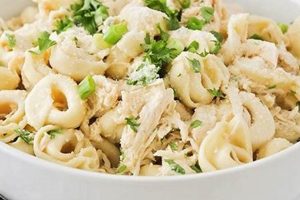
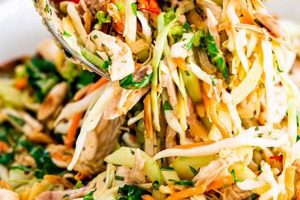
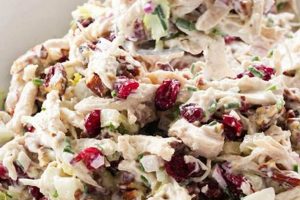
This dish typically combines cooked pasta, diced chicken, and a creamy dressing based on ranch seasoning or bottled ranch dressing. Common additions include bacon, cheese, vegetables such as tomatoes, cucumbers, and red onion, and occasionally hard-boiled eggs. Variations exist, offering flexibility in ingredients and preparation methods to cater to individual preferences.
A cold pasta salad featuring chicken and a ranch-flavored dressing offers a convenient and satisfying meal option, particularly suitable for picnics, potlucks, and quick lunches. Its customizable nature allows for adjustments to nutritional content and flavor profiles. The combination of protein, carbohydrates, and fats provides a balanced energy source, while the inclusion of fresh vegetables can contribute valuable vitamins and minerals. Historically, pasta salads gained popularity as a make-ahead dish, aligning with the rise of convenience foods in the mid-20th century. The versatility and ease of preparation continue to make them a popular choice today.
The following sections will explore various aspects of creating this dish, including selecting appropriate pasta shapes, preparing the chicken and other ingredients, creating flavorful dressings, and assembling the salad for optimal flavor and presentation. Tips for storage and serving will also be provided.
Tips for a Perfect Pasta Salad
Achieving a well-balanced and flavorful pasta salad requires attention to several key details. The following tips offer guidance for optimal results.
Tip 1: Pasta Selection: Opt for short, sturdy pasta shapes like rotini, farfalle, or penne. These hold the dressing well and provide textural variety. Avoid long, thin noodles, which can become clumped and difficult to manage in a salad.
Tip 2: Chicken Preparation: Using pre-cooked rotisserie chicken offers convenience. Alternatively, grilling or baking chicken breasts seasoned with complementary herbs and spices enhances flavor complexity. Dice or shred the chicken into bite-sized pieces for even distribution throughout the salad.
Tip 3: Dressing Consistency: Achieve the desired creaminess by adjusting the ratio of mayonnaise to other ingredients like buttermilk, sour cream, or plain yogurt. A thinner dressing coats the pasta more evenly while a thicker dressing adds richness.
Tip 4: Vegetable Incorporation: Enhance flavor and nutritional value by incorporating a variety of fresh vegetables. Crisp vegetables like celery, bell peppers, and red onion offer contrasting textures. Blanching certain vegetables, such as broccoli or cauliflower, can improve their tenderness and digestibility.
Tip 5: Flavor Balancing: Ranch dressing tends to be tangy and savory. Balance these flavors with sweetness from ingredients like chopped grapes or dried cranberries. A touch of acidity from lemon juice or vinegar can further enhance the overall flavor profile.
Tip 6: Chilling and Serving: Chilling the salad for at least 30 minutes allows the flavors to meld and the pasta to absorb the dressing. Garnish with fresh herbs, such as parsley or chives, before serving for an added visual and aromatic appeal.
Tip 7: Ingredient Quality: Using fresh, high-quality ingredients elevates the overall flavor and nutritional value of the salad. Opt for ripe vegetables, flavorful cheeses, and freshly ground spices whenever possible.
By following these tips, one can create a pasta salad that is both delicious and visually appealing. Attention to detail, from ingredient selection to chilling time, ensures a satisfying culinary experience.
This detailed guidance facilitates successful preparation and enjoyment of the dish. The following conclusion summarizes key elements and offers final recommendations.
1. Chicken

Chicken plays a crucial role in a chicken ranch pasta salad recipe, contributing significantly to its protein content and overall flavor profile. The choice of chicken preparation methods and types influences the final dish’s character. Options include using pre-cooked rotisserie chicken for convenience, grilling chicken for a smoky flavor, or poaching chicken for a more delicate taste. The chicken can be diced, shredded, or left in larger pieces depending on individual preference and the desired texture of the salad. For instance, diced chicken distributes evenly throughout the salad, while larger pieces offer a more substantial bite. The quality of the chicken also impacts the final product. Freshly cooked chicken generally provides a superior flavor and texture compared to pre-packaged or processed options.
The interplay between the chicken and the ranch dressing is another critical aspect to consider. The ranch dressing’s creamy, tangy flavor complements the savory nature of the chicken. Different types of ranch dressings, such as those made with buttermilk or sour cream, create varied flavor experiences. Additionally, the seasoning applied to the chicken during cooking can further enhance its compatibility with the ranch dressing. Herbs like dill, chives, and parsley, commonly found in ranch dressings, can also be used to season the chicken, creating a harmonious flavor profile. The chicken effectively absorbs the ranch dressing, ensuring each bite is infused with flavor. This absorption also helps to keep the chicken moist and tender within the salad.
Understanding the role of chicken in a chicken ranch pasta salad enables informed choices regarding preparation methods, seasoning, and pairing with the ranch dressing. This knowledge contributes to a well-balanced and flavorful dish. Selecting an appropriate chicken type and cooking method, combined with a complementary ranch dressing and careful seasoning, elevates the overall culinary experience. Addressing potential challenges, such as preventing the chicken from drying out during cooking or ensuring it is cooked to a safe internal temperature, further contributes to a successful dish. The chicken acts as a substantial component, complementing the other ingredients and contributing to a satisfying and nutritious meal.
2. Ranch Dressing
Ranch dressing serves as a defining component of the chicken ranch pasta salad, contributing the characteristic creamy, tangy, and herbaceous flavor profile. Its emulsion-based nature, typically combining mayonnaise, buttermilk, sour cream, and herbs like dill, chives, parsley, and garlic, coats the pasta and other ingredients, binding them together and delivering a cohesive flavor experience. The dressing’s viscosity also plays a crucial role, influencing the salad’s overall texture. A thicker dressing clings more readily to the pasta, while a thinner dressing provides a lighter coating. The balance of tanginess and richness within the ranch dressing complements the savory chicken and other ingredients, creating a harmonious flavor profile. For example, the acidity in buttermilk or sour cream balances the richness of mayonnaise and the savory notes of the chicken.
Variations in ranch dressing formulations impact the final dish. Using fresh herbs versus dried herbs, incorporating different dairy components, or adjusting the ratios of ingredients all contribute to nuanced flavor differences. Homemade ranch dressing offers greater control over ingredient quality and flavor customization, allowing for adjustments based on personal preferences or dietary restrictions. Commercially prepared ranch dressings provide convenience and consistent flavor profiles, streamlining the preparation process. The choice between homemade and store-bought ranch dressings depends on available time and desired level of control over the final product. Furthermore, the quantity of ranch dressing used influences the salad’s moisture content and overall flavor intensity. Too much dressing can result in a soggy salad, while too little can leave the ingredients dry and under-seasoned.
Understanding the role of ranch dressing in a chicken ranch pasta salad allows for informed decision-making regarding dressing selection and preparation. Careful consideration of ingredient quality, flavor balance, and desired consistency ensures optimal results. Addressing potential challenges, such as preventing the dressing from separating or ensuring its even distribution throughout the salad, contributes to a successful and enjoyable culinary experience. The interplay between the ranch dressing and the other ingredients, particularly the chicken and vegetables, ultimately determines the salad’s overall flavor profile and textural appeal. A well-balanced ranch dressing elevates the chicken ranch pasta salad from a simple combination of ingredients to a harmonious and flavorful dish.
3. Pasta

Pasta provides the foundation of the chicken ranch pasta salad, influencing both texture and flavor absorption. The choice of pasta shape significantly impacts the salad’s overall appeal and practicality. Different pasta shapes offer varying surface areas and structural integrity, affecting how they hold the dressing and interact with other ingredients.
- Shape and Structure
Short, sturdy pasta shapes, such as rotini, farfalle (bowtie), and penne, are generally preferred for pasta salad. Their compact forms prevent excessive clumping and allow them to hold the creamy ranch dressing effectively. Conversely, long, thin pasta like spaghetti or linguine tends to tangle and become unwieldy in a salad context. The structural integrity of the pasta is also crucial; it should maintain its shape after cooking and not become mushy when combined with the dressing. Overcooked pasta can result in a less appealing texture and diminished ability to absorb flavors.
- Cooking Method
Properly cooked pasta is essential for a successful salad. Pasta should be cooked al dente, meaning “to the tooth” in Italian, indicating a firm yet tender texture. Overcooked pasta becomes mushy and less palatable, while undercooked pasta remains unpleasantly firm. Cooling the pasta quickly after cooking prevents further softening and helps maintain its structural integrity. Rinsing the cooked pasta with cold water stops the cooking process and removes excess starch, which can contribute to a sticky texture.
- Flavor Absorption
While pasta itself has a relatively neutral flavor, its porous nature allows it to absorb the flavors of the dressing and other ingredients. This absorption is crucial for creating a cohesive and flavorful salad. The choice of pasta shape can influence the degree of flavor absorption. Shapes with ridges or folds, like rotini, tend to hold more dressing and therefore absorb more flavor. The chilling process also enhances flavor absorption, allowing the pasta to marinate in the dressing and other ingredients.
- Visual Appeal
Pasta contributes significantly to the visual appeal of the salad. The variety of shapes and colors available offers opportunities to create visually interesting combinations. Tri-color pasta can add a festive touch, while unique shapes like farfalle can create a more playful presentation. The pasta’s visual appeal, combined with the colors and textures of the other ingredients, enhances the overall dining experience.
The selection and preparation of pasta significantly influence the overall success of a chicken ranch pasta salad. Choosing an appropriate shape, cooking it correctly, and allowing sufficient time for flavor absorption are essential steps in creating a delicious and visually appealing dish. The pasta acts as a canvas for the other ingredients, providing a foundation for the creamy ranch dressing, savory chicken, and crisp vegetables to harmonize and create a satisfying culinary experience.
4. Vegetables
Vegetables play a crucial role in a chicken ranch pasta salad, contributing not only essential nutrients but also textural and flavor complexity. Their inclusion elevates the salad from a simple combination of ingredients to a more balanced and satisfying meal. The selection and preparation of vegetables significantly influence the final product’s overall appeal and nutritional value. Understanding the interplay between vegetables and the other components of the salad, such as the chicken, ranch dressing, and pasta, allows for informed choices that maximize flavor and nutritional benefits.
- Variety and Nutritional Value
Incorporating a diverse range of vegetables maximizes the nutritional content of the salad. Different vegetables offer unique vitamins, minerals, and antioxidants. For example, red bell peppers provide vitamin C, while carrots offer beta-carotene. The combination of various colors and textures contributes to a visually appealing and nutritionally balanced meal. This variety also enhances the overall flavor profile, preventing monotony and creating a more interesting culinary experience.
- Texture and Flavor Contrast
The textural contrast provided by vegetables is crucial for a well-balanced pasta salad. Crisp vegetables, such as celery, cucumbers, and bell peppers, offer a refreshing counterpoint to the creamy ranch dressing and tender chicken. This contrast prevents the salad from becoming overly rich or heavy. Furthermore, the distinct flavors of different vegetables, from the sweetness of cherry tomatoes to the sharpness of red onion, add depth and complexity to the overall flavor profile.
- Preparation and Incorporation
Proper preparation of vegetables ensures optimal texture and flavor. Raw vegetables, such as cucumbers and bell peppers, should be washed and diced or sliced appropriately. Some vegetables, like broccoli or cauliflower, may benefit from blanching to enhance their tenderness while preserving their nutritional value. The size and shape of vegetable pieces should be considered in relation to the other ingredients to create a balanced and visually appealing presentation. Even distribution throughout the salad ensures each bite contains a variety of flavors and textures.
- Freshness and Quality
The quality of the vegetables directly impacts the final product’s flavor and overall appeal. Fresh, seasonal vegetables offer the best flavor and nutritional value. Wilted or bruised vegetables should be avoided, as they can negatively impact the salad’s texture and taste. Proper storage of vegetables is essential for maintaining freshness and preventing spoilage. Using high-quality vegetables elevates the entire dish, contributing to a more satisfying and enjoyable dining experience.
The careful selection and preparation of vegetables elevate the chicken ranch pasta salad from a simple dish to a vibrant and nutritious meal. The interplay between the vegetables’ textures, flavors, and nutritional contributions, combined with the other components of the salad, creates a harmonious and balanced culinary experience. Addressing potential challenges, such as preventing vegetables from becoming soggy or ensuring their even distribution, further contributes to a successful and enjoyable dish. The inclusion of vegetables offers a versatile opportunity to customize the salad’s flavor profile and nutritional value, making it a adaptable and satisfying meal choice.
5. Seasoning
Seasoning plays a vital role in elevating the chicken ranch pasta salad beyond a simple combination of ingredients. It enhances the inherent flavors of the chicken, vegetables, and ranch dressing, creating a more complex and balanced flavor profile. Strategic seasoning also addresses potential flavor imbalances, such as the richness of the ranch or the blandness of the pasta, ensuring a harmonious final product. The choice and application of seasonings significantly impact the overall culinary experience.
- Salt and Pepper
Salt and freshly ground black pepper form the foundation of seasoning in virtually any culinary creation, including chicken ranch pasta salad. Salt enhances the flavors of other ingredients, bringing out their natural sweetness and savoriness. Pepper adds a subtle heat and complexity. The proper balance of salt and pepper is crucial; too much salt can overpower the dish, while too little can leave it tasting bland. The timing of seasoning also matters. Seasoning the chicken before cooking allows the flavor to penetrate the meat, while adding salt and pepper to the salad itself ensures even distribution of flavor.
- Herbs and Spices
Fresh or dried herbs and spices offer opportunities to customize the flavor profile of the chicken ranch pasta salad. Dill, chives, and parsley, commonly found in ranch dressing, can be added to further enhance the herbaceous notes. Garlic powder or onion powder can add savory depth. Other complementary spices, such as paprika or smoked paprika, can introduce subtle smoky or earthy undertones. The choice of herbs and spices depends on personal preference and desired flavor outcome. Experimentation with different combinations can lead to unique and exciting flavor profiles.
- Acidic Elements
A touch of acidity can brighten the flavors of the salad and balance the richness of the ranch dressing. Lemon juice or vinegar, added to the dressing or directly to the salad, provide a refreshing tang. The acidity also helps to cut through the richness of the mayonnaise-based dressing, preventing the salad from feeling heavy. Balancing the acidity with the other flavors is essential to avoid an overly tart or sour taste. A small amount of lemon zest can add a bright citrus aroma without excessive acidity.
- Balancing Flavors
The key to successful seasoning lies in achieving a balance of flavors. The saltiness, acidity, spiciness, and herbaceous notes should complement each other without any single flavor dominating. Tasting and adjusting the seasoning throughout the preparation process is crucial. Start with small amounts of each seasoning and gradually add more until the desired flavor profile is achieved. Consider the individual flavors of the ingredients and how they interact with each other. For example, if using a particularly tangy ranch dressing, less acidic seasoning might be required.
Careful consideration of seasoning elevates the chicken ranch pasta salad from a basic dish to a more nuanced and flavorful culinary experience. The interplay between salt, pepper, herbs, spices, and acidic elements creates a harmonious blend of flavors that complements the textures and tastes of the chicken, vegetables, and ranch dressing. Strategic seasoning enhances the overall enjoyment and satisfaction of the dish.
6. Chilling
Chilling is a crucial step in preparing chicken ranch pasta salad, significantly impacting food safety and flavor development. Lowering the temperature inhibits bacterial growth, ensuring the salad remains safe for consumption. Additionally, chilling allows the flavors of the various componentschicken, vegetables, pasta, and dressingto meld and deepen, resulting in a more cohesive and flavorful final product. The chilling process also affects the salad’s texture, particularly the pasta and vegetables, contributing to the overall dining experience.
- Food Safety
Maintaining a safe temperature is paramount when preparing dishes containing perishable ingredients like chicken and mayonnaise-based dressings. Chilling the cooked chicken promptly and thoroughly before incorporating it into the salad minimizes the risk of bacterial proliferation. Likewise, the prepared salad should be refrigerated at or below 40F (4C) to inhibit bacterial growth and maintain its quality. Proper food handling practices, such as using clean utensils and avoiding cross-contamination, further contribute to food safety throughout the preparation and chilling process. Consuming the salad within a safe timeframe, typically within 3-5 days of preparation, is also essential for preventing foodborne illnesses.
- Flavor Development
Chilling allows the diverse flavors within the salad to meld and mature. The pasta absorbs the ranch dressing, taking on its creamy, tangy, and herbaceous notes. The chicken, vegetables, and other ingredients also benefit from this melding process, their individual flavors harmonizing into a more complex and cohesive whole. The chilling period essentially acts as a marinating process, intensifying and unifying the overall flavor profile of the salad. The duration of chilling influences the intensity of flavor development; longer chilling times generally result in a more pronounced melding of flavors.
- Texture Enhancement
Chilling affects the textures of the various components within the salad. The pasta firms up slightly, providing a more pleasant bite. The vegetables retain their crispness, offering a refreshing contrast to the creamy dressing. The chilling process also stabilizes the emulsion of the ranch dressing, preventing separation and maintaining its desired consistency. The overall effect is a more texturally appealing and balanced salad. Avoiding excessive chilling, which can cause some vegetables to become overly firm or the dressing to thicken too much, is important for optimal texture.
- Serving Temperature
Serving the chicken ranch pasta salad chilled enhances its refreshing qualities, particularly in warmer weather. The cool temperature provides a welcome contrast to the richness of the dressing and the savory flavors of the chicken and other ingredients. Chilling also helps to maintain the structural integrity of the salad, preventing it from becoming soggy or wilted. The optimal serving temperature is generally between 40F (4C) and 45F (7C), cold enough to be refreshing yet not so cold as to numb the palate and diminish the flavors.
The chilling process is integral to the successful preparation of chicken ranch pasta salad. It contributes significantly to food safety, flavor development, and textural enhancement, ensuring a satisfying and enjoyable culinary experience. By understanding the impact of chilling on the various components of the salad, one can optimize the preparation process to achieve the desired flavor profile, texture, and food safety standards. Chilling transforms a simple mixture of ingredients into a cohesive and flavorful dish, elevating it from a basic side to a more complete and satisfying meal component.
Frequently Asked Questions
This section addresses common inquiries regarding the preparation and enjoyment of chicken ranch pasta salad.
Question 1: What type of pasta is best suited for this salad?
Short, sturdy pasta shapes like rotini, farfalle, or penne are recommended. These hold the dressing well and maintain their shape. Long, thin pasta tends to clump and become difficult to manage.
Question 2: Can rotisserie chicken be used?
Rotisserie chicken offers a convenient shortcut. Ensure it is properly shredded or diced before incorporating it into the salad.
Question 3: How can the creaminess of the dressing be adjusted?
The ratio of mayonnaise to other ingredients, such as buttermilk or sour cream, determines the dressing’s consistency. More mayonnaise yields a thicker, richer dressing.
Question 4: What vegetables complement this salad?
Common additions include chopped celery, bell peppers, red onion, cherry tomatoes, and cucumbers. Blanching certain vegetables, like broccoli, can improve their tenderness.
Question 5: How long can the salad be stored?
Properly stored in an airtight container in the refrigerator, chicken ranch pasta salad typically lasts for 3-5 days. Monitor for any signs of spoilage before consumption.
Question 6: Can the salad be frozen?
Freezing is not recommended. Mayonnaise-based dressings tend to separate upon thawing, resulting in an undesirable texture. Vegetables may also become mushy after freezing.
Addressing these common inquiries aims to provide a comprehensive understanding of the preparation and storage of chicken ranch pasta salad. Proper techniques ensure optimal flavor, texture, and food safety.
The following section explores variations and customizations to the classic recipe.
Chicken Ranch Pasta Salad Recipe
This exploration of chicken ranch pasta salad recipes has delved into the crucial elements that contribute to a successful dish. From the choice of pasta shape influencing dressing adherence and texture to the careful selection of fresh vegetables providing nutritional value and textural contrast, each component plays a vital role. The importance of proper chicken preparation, whether utilizing convenient rotisserie or enhancing flavor through grilling, has been underscored. Furthermore, understanding the nuances of ranch dressing, including the balance of tanginess and richness, and the impact of homemade versus store-bought options, contributes to a well-rounded culinary outcome. Proper seasoning and chilling techniques, critical for both flavor development and food safety, have also been addressed. These combined elements, when executed thoughtfully, elevate this dish beyond a simple combination of ingredients.
Chicken ranch pasta salad, while seemingly straightforward, offers a canvas for culinary creativity. Its adaptability allows for personalized variations, accommodating individual preferences and dietary needs. Further exploration of ingredient combinations, flavor profiles, and presentation styles can yield exciting culinary discoveries. Ultimately, the enduring popularity of this dish lies in its balance of convenience, flavor, and customizability, solidifying its place as a versatile and satisfying meal option.