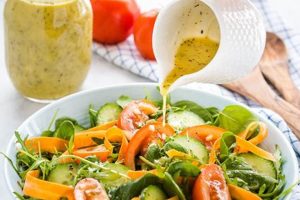
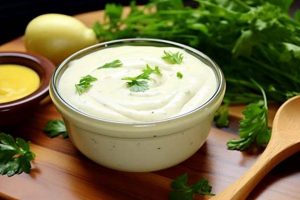
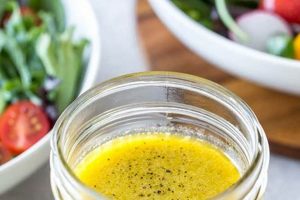
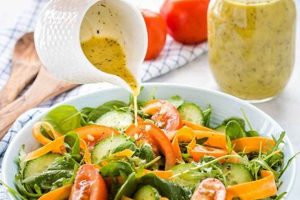
A vibrant and tangy culinary creation, typically composed of citrus fruit juice (such as lemon, lime, orange, or grapefruit), oil, and often additional flavoring agents like herbs, spices, or sweeteners. A simple example combines fresh orange juice, olive oil, Dijon mustard, and honey. The balance of sweet, sour, and savory elements makes it a versatile complement to various salads, from leafy greens to fruit salads, and even as a marinade for fish or poultry.
Bright, acidic dressings offer a refreshing counterpoint to rich or heavy dishes, aiding digestion and enhancing flavor profiles. Historically, citrus fruits have been valued for their nutritional benefits, and their incorporation into dressings adds a dose of vitamins and antioxidants. This style of dressing has evolved alongside culinary trends, adapting to regional preferences and ingredient availability, resulting in a wide range of variations.
Exploration of specific ingredient combinations, techniques for emulsification and balancing flavors, and pairing suggestions with different salad types will further illuminate the art of crafting these zesty additions to any meal.
Tips for Crafting Exceptional Citrus Dressings
Achieving a perfectly balanced and flavorful citrus dressing requires attention to detail and an understanding of key principles. The following tips offer guidance for creating dressings that elevate any salad.
Tip 1: Freshly Squeezed Juice is Paramount: Bottled juices often contain additives and lack the vibrant flavor of fresh fruit. Prioritize freshly squeezed juice for optimal taste and quality.
Tip 2: Balance is Key: The interplay of acidity, sweetness, and oil is crucial. Taste and adjust accordingly, adding a touch of honey or maple syrup for sweetness, or more citrus juice for tang.
Tip 3: Emulsification Creates Texture: Whisking the oil slowly into the juice creates a stable emulsion, preventing separation and providing a pleasant mouthfeel.
Tip 4: Consider the Oil: Extra virgin olive oil offers a robust flavor, while lighter oils like grapeseed or avocado oil provide a more neutral base.
Tip 5: Herbs and Spices Enhance Complexity: Fresh herbs like mint, basil, or chives, along with spices like ginger or chili flakes, can add depth and dimension.
Tip 6: Seasoning is Essential: Salt and freshly ground black pepper enhance the overall flavor profile. A pinch of salt can also help to emulsify the dressing.
Tip 7: Experiment with Different Citrus Varieties: Explore the unique flavor profiles of various citrus fruits. Combining lemon and lime, or orange and grapefruit, can create exciting combinations.
By adhering to these principles, one can consistently produce dressings that are both flavorful and visually appealing, transforming a simple salad into a culinary delight.
Considering these tips paves the way for creating dressings perfectly suited to individual palates and specific salad compositions, ensuring a delightful dining experience.
1. Fresh Citrus Juice

Fresh citrus juice forms the foundation of a successful citrus salad dressing. Its importance stems from the vibrant acidity and nuanced flavors inherent in freshly squeezed fruit. Bottled or processed juices often lack the brightness and complexity necessary for a truly exceptional dressing. This distinction arises from the degradation of flavor compounds and the presence of additives in commercially produced juices. The impact of using fresh juice is demonstrable: a lemon vinaigrette made with freshly squeezed lemons possesses a clean, zesty flavor profile unattainable with bottled alternatives. Similarly, an orange vinaigrette benefits from the sweet, aromatic notes of freshly squeezed oranges, resulting in a more balanced and flavorful dressing. The chemical composition of fresh juice, rich in volatile aromatic compounds and natural acids, contributes significantly to the overall sensory experience.
Consider the example of a grapefruit vinaigrette. The characteristic bitterness and tangy sweetness of fresh grapefruit juice create a unique flavor profile when combined with olive oil and a touch of honey. This complexity is lost when using pre-packaged grapefruit juice, often resulting in a flat, one-dimensional taste. The difference extends beyond flavor; the texture of a dressing is also affected. Fresh juice contributes to a lighter, brighter mouthfeel, while processed juices can sometimes create a heavier, less appealing consistency. Furthermore, the nutritional value of fresh juice, rich in Vitamin C and antioxidants, surpasses that of processed counterparts, adding an additional health benefit to the culinary experience.
Understanding the crucial role of fresh citrus juice is essential for crafting superior dressings. While convenience may tempt one to utilize bottled alternatives, the compromise in flavor and overall quality is significant. The commitment to using fresh juice elevates the dressing from merely acceptable to truly exceptional. Embracing this principle enables culinary exploration and the creation of dressings that enhance, rather than mask, the flavors of the accompanying salad ingredients. This understanding promotes a deeper appreciation for the connection between ingredient quality and culinary outcome.
2. High-Quality Oil

The selection of oil plays a crucial role in the overall success of a citrus salad dressing. High-quality oil contributes not only to the flavor profile but also to the texture and mouthfeel of the final product. Understanding the nuances of different oils and their interaction with citrus juices is essential for crafting a balanced and harmonious dressing.
- Flavor Profile:
Different oils possess distinct flavor profiles that can either complement or clash with the bright acidity of citrus. Extra virgin olive oil, with its robust, fruity notes, provides a strong counterpoint to citrus, while lighter oils like grapeseed or avocado oil offer a more neutral backdrop, allowing the citrus flavors to shine. The chosen oil significantly impacts the overall taste experience, influencing the balance between richness and brightness.
- Texture and Mouthfeel:
Oil viscosity contributes to the texture of the dressing. A thicker oil, such as extra virgin olive oil, creates a more substantial, coating mouthfeel, while a thinner oil like grapeseed oil results in a lighter, more delicate texture. This textural element interacts with the citrus juice, affecting how the dressing coats and clings to the salad ingredients. The desired texture depends on the specific salad and personal preference.
- Emulsification and Stability:
The oil’s ability to emulsify with the citrus juice is critical for creating a stable dressing that does not separate. Certain oils are more prone to emulsification than others, contributing to a cohesive and visually appealing dressing. A stable emulsion also ensures even distribution of flavor and prevents a greasy mouthfeel. Factors like the oil’s acidity and the presence of emulsifying agents in the recipe influence the stability of the emulsion.
- Health Considerations:
Different oils offer varying nutritional profiles. Extra virgin olive oil is rich in monounsaturated fats and antioxidants, while avocado oil is a good source of healthy fats and vitamin E. The choice of oil can contribute to the overall health benefits of the salad, aligning with dietary preferences and nutritional goals. Understanding the nutritional composition of different oils allows for informed decision-making in recipe development.
The interplay of these factors underscores the importance of selecting high-quality oil. The right oil elevates the citrus notes, creating a balanced and harmonious dressing that complements the other salad ingredients. A thoughtful approach to oil selection contributes significantly to the overall culinary experience, transforming a simple salad into a flavorful and satisfying dish.
3. Balanced Sweetness
Balanced sweetness plays a critical role in a successful citrus salad dressing, acting as a counterpoint to the inherent tartness of citrus fruits. The interplay between acidity and sweetness creates a harmonious flavor profile, preventing the dressing from being overly sharp or cloying. This balance enhances the complexity of the dressing, allowing the nuances of the citrus and other ingredients to shine through. For example, a lemon vinaigrette benefits from a touch of honey or maple syrup, which tempers the lemon’s acidity and adds a subtle floral note. Similarly, an orange vinaigrette can be balanced with a hint of agave nectar, complementing the orange’s sweetness while adding a nuanced caramel-like complexity.
The importance of balanced sweetness extends beyond mere flavor enhancement. It also influences the overall sensory experience of the salad. An overly acidic dressing can overwhelm the palate and clash with the flavors of the other salad components. Conversely, a dressing that is too sweet can mask the delicate flavors of fresh greens and other vegetables. The precise level of sweetness depends on the specific citrus fruit used, as well as the other ingredients in the dressing and the salad itself. A grapefruit vinaigrette, for instance, may require less added sweetener due to the grapefruit’s inherent sweetness and bitterness, while a lime vinaigrette, with its sharper acidity, may benefit from a more generous touch of honey or agave.
Achieving balanced sweetness requires careful consideration and adjustment. Starting with a small amount of sweetener and gradually increasing it to taste allows for precise control over the final flavor profile. Tasting the dressing throughout the preparation process is crucial, as the perception of sweetness can change as the flavors meld and the emulsion develops. Understanding the interplay between acidity and sweetness empowers culinary experimentation, leading to the creation of dressings that are not only delicious but also enhance the overall dining experience. This careful calibration of sweetness contributes to a more nuanced and sophisticated culinary outcome, transforming a simple salad into a well-balanced and flavorful dish.
4. Complementary Herbs

The judicious use of complementary herbs elevates citrus salad dressings from simple to sophisticated. Herbs contribute layers of flavor and aroma, enhancing the inherent brightness of citrus while adding depth and complexity. This synergy stems from the interaction between the volatile aromatic compounds present in both herbs and citrus fruits. Specific herbs possess flavor profiles that pair particularly well with certain citrus varieties. For example, the peppery notes of fresh dill harmonize beautifully with the tartness of lemon, while the sweet, slightly licorice-like flavor of tarragon complements the floral aroma of grapefruit. Similarly, mint’s refreshing coolness enhances the sweetness of orange, and cilantro’s bright, citrusy notes create a vibrant pairing with lime. These combinations demonstrate the importance of considering flavor affinities when selecting herbs for citrus-based dressings.
The practical application of this understanding involves not only selecting appropriate herbs but also utilizing them effectively. Fresh herbs offer the most vibrant flavor and should be added just before serving to maximize their impact. Dried herbs can be used as a substitute but require careful consideration of their more concentrated flavor profile. A smaller quantity of dried herbs is typically sufficient to achieve the desired effect. In addition to flavor, herbs contribute to the visual appeal of the dressing, adding a touch of freshness and vibrancy. Chopped chives, for instance, provide a pop of color and a mild onion flavor, while parsley adds a bright green hue and a subtle, earthy note. The choice of herbs can also be influenced by the other ingredients in the salad. A salad featuring Mediterranean flavors might benefit from the addition of oregano or marjoram to the citrus dressing, while a salad with Asian-inspired ingredients could be enhanced with Thai basil or lemongrass.
Mastering the art of incorporating complementary herbs into citrus salad dressings allows for a high degree of culinary customization. Understanding the interplay of flavors and aromas empowers the creation of dressings tailored to specific palates and salad compositions. The considered selection and application of herbs transform a basic citrus vinaigrette into a nuanced and sophisticated culinary creation, demonstrating the profound impact of seemingly simple ingredients. This attention to detail elevates the overall dining experience, showcasing the synergy between fresh produce and aromatic herbs.
5. Proper Emulsification

Proper emulsification is crucial for the texture, stability, and overall quality of a citrus salad dressing. Emulsification refers to the process of combining two immiscible liquids, such as oil and citrus juice, into a stable mixture. In the context of citrus dressings, this process involves dispersing tiny droplets of oil throughout the acidic juice, creating a homogenous, creamy consistency. Without proper emulsification, the oil and juice separate, resulting in a greasy, unappetizing dressing that lacks the desired mouthfeel and flavor distribution. The resulting separation also diminishes the visual appeal of the dressing and can lead to uneven coating of the salad ingredients.
Several factors influence the success of emulsification in a citrus dressing. The viscosity of the oil plays a significant role. Thicker oils, like extra virgin olive oil, require more vigorous whisking or blending to create a stable emulsion compared to thinner oils such as grapeseed oil. The acidity of the citrus juice also impacts emulsification. Higher acidity levels can hinder the process, requiring additional emulsifying agents or more vigorous mixing. Common emulsifying agents used in citrus dressings include Dijon mustard, honey, or egg yolk. These ingredients contain compounds that help bind the oil and juice together, promoting a stable and homogenous emulsion. For example, the lecithin in egg yolk acts as a natural emulsifier, facilitating the formation of a smooth and creamy dressing. Similarly, the proteins in mustard help stabilize the emulsion, preventing separation over time.
Achieving proper emulsification enhances the sensory experience of the citrus dressing. A stable emulsion ensures even distribution of flavor throughout the dressing, preventing pockets of intense acidity or oiliness. The creamy texture created by a well-emulsified dressing coats the salad ingredients more effectively, enhancing flavor delivery and mouthfeel. Furthermore, a stable emulsion contributes to the visual appeal of the dressing, creating a smooth, glossy appearance that complements the vibrant colors of the salad. Practical applications of this understanding include the use of a whisk, blender, or immersion blender to achieve proper emulsification. Slow, gradual addition of the oil to the citrus juice while whisking vigorously promotes the formation of small, evenly dispersed oil droplets, leading to a stable and visually appealing emulsion. Recognizing the factors influencing emulsification and applying appropriate techniques ensures the creation of high-quality citrus dressings that enhance the overall culinary experience.
6. Seasoning Adjustment
Seasoning adjustment represents a critical final step in crafting a well-balanced citrus salad dressing. It directly impacts the overall flavor profile, influencing how the acidity of the citrus interacts with the other ingredients. Salt, in particular, plays a multifaceted role, not only enhancing the perceived sweetness of the dressing but also tempering excessive tartness. Furthermore, salt contributes to the structural integrity of the emulsion, aiding in the binding of oil and citrus juice. A pinch of salt can significantly improve the stability of the dressing, preventing separation and maintaining a desirable texture. Pepper, another key seasoning component, adds complexity and depth, complementing the bright citrus notes with a subtle spice. The type of pepper used can further influence the flavor profile; freshly ground black pepper offers a more robust aroma and taste compared to pre-ground pepper. For example, a lemon vinaigrette benefits from a pinch of sea salt to balance its tartness, while a few grinds of black pepper add a subtle warmth. Similarly, an orange vinaigrette might be enhanced with a touch of pink Himalayan salt and a pinch of white pepper for a more nuanced flavor profile.
Beyond salt and pepper, other seasonings can further enhance citrus-based dressings. A small amount of sugar or honey can amplify sweetness, balancing the acidity and creating a more rounded flavor profile. The addition of herbs and spices provides further complexity. Fresh herbs, such as dill, mint, or chives, add brightness and aromatic depth, while spices like ginger or chili flakes introduce warmth and subtle heat. The specific seasonings used should complement the chosen citrus fruit and other salad ingredients. For instance, a grapefruit vinaigrette might be enhanced with a pinch of red pepper flakes to complement its bitterness, while a lime vinaigrette could benefit from the addition of ground cumin or coriander to create a more savory profile. Experimentation with different seasonings allows for the development of unique and personalized flavor combinations.
Precise seasoning adjustment necessitates careful tasting and incremental additions. Adding seasonings gradually allows for greater control over the final flavor profile, preventing over-seasoning and ensuring a harmonious balance. Tasting the dressing throughout the process is crucial, as the perception of flavors can evolve as the ingredients meld and the emulsion develops. Understanding the interplay between acidity, sweetness, and other flavor components empowers informed decision-making regarding seasoning choices and quantities. This iterative process of tasting and adjusting results in a well-balanced and flavorful dressing that complements, rather than overwhelms, the other salad ingredients. Ultimately, skillful seasoning adjustment elevates the citrus salad dressing from a simple condiment to a key element of the culinary experience.
Frequently Asked Questions
The following addresses common inquiries regarding the creation and utilization of citrus-based salad dressings.
Question 1: How can one prevent citrus salad dressings from becoming too tart?
Balancing the acidity of citrus juice with a touch of sweetness, such as honey, maple syrup, or agave nectar, is key. A small amount of sweetener can significantly reduce perceived tartness without making the dressing overly sweet. Tasting and adjusting incrementally is crucial for achieving the desired balance.
Question 2: What oils are best suited for citrus salad dressings?
Extra virgin olive oil offers a robust flavor that complements citrus, while lighter oils like grapeseed or avocado oil provide a neutral base. The choice depends on the desired flavor profile and the other ingredients in the salad.
Question 3: How can one ensure a stable emulsion that prevents separation?
Slow, gradual addition of oil to the citrus juice while whisking vigorously promotes a stable emulsion. Incorporating an emulsifying agent, such as Dijon mustard or honey, further enhances stability.
Question 4: What herbs pair well with citrus-based dressings?
Dill, mint, cilantro, basil, and tarragon all complement citrus flavors. The specific choice depends on the type of citrus used and the overall flavor profile desired. Fresh herbs are recommended for optimal flavor and aroma.
Question 5: How long can citrus salad dressing be stored?
Freshly made dressings can be stored in an airtight container in the refrigerator for up to one week. Separation may occur during storage; whisk gently before serving to re-emulsify.
Question 6: Can citrus zest be used in salad dressings?
Citrus zest adds intense aroma and flavor. Use sparingly, as the zest contains concentrated oils that can be overpowering. Grating the zest finely ensures even distribution and prevents large pieces from dominating the flavor profile.
Understanding these fundamental aspects of citrus salad dressing preparation ensures optimal flavor, texture, and stability. Careful consideration of ingredient selection and technique allows for culinary creativity and the development of dressings tailored to individual preferences and specific salad compositions.
Beyond these frequently asked questions, a deeper exploration of citrus varietals and their unique flavor profiles will further enhance culinary expertise in crafting these versatile dressings.
Citrus Salad Dressing Recipe
Citrus salad dressing recipes offer a versatile and vibrant approach to enhancing culinary creations. From the importance of fresh juice to the nuances of oil selection, proper emulsification, and balanced seasoning, crafting exceptional dressings requires attention to detail and a thorough understanding of flavor dynamics. The interplay of acidity, sweetness, and complementary herbs creates a symphony of taste sensations, transforming simple salads into culinary masterpieces. Understanding these core principles empowers culinary exploration and the development of personalized dressings tailored to individual preferences and specific salad compositions.
The exploration of citrus salad dressing recipes represents a journey into the art of balancing flavors and textures. Continued experimentation with diverse citrus varieties, herbs, and spices unlocks a world of culinary possibilities. By embracing the principles outlined herein, culinary enthusiasts can elevate their creations and discover the endless potential of these vibrant and refreshing dressings. This pursuit of culinary excellence enriches the dining experience and fosters a deeper appreciation for the transformative power of fresh, high-quality ingredients.