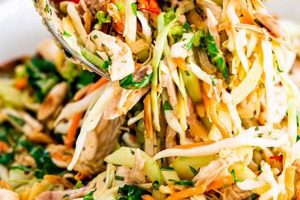
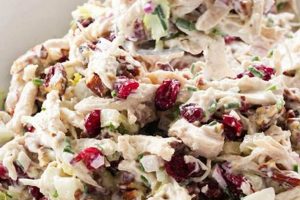
Combinations of cooked chicken, cranberries, and other ingredients like mayonnaise, nuts, celery, and onion create a versatile dish suitable for various occasions. These mixtures, often served chilled, can range from simple, everyday lunches to more elaborate preparations appropriate for festive gatherings.
This type of dish offers a balance of sweet and savory flavors, providing a refreshing and often lighter alternative to heavier meal options. The inclusion of cranberries introduces both tartness and a textural element. Historically, fruit and poultry combinations have been enjoyed across cultures, with variations adapting to locally available ingredients and evolving through time. The relative ease of preparation and the adaptability to different dietary needs by substituting ingredients contribute to the enduring appeal of this dish.
Further exploration of this culinary concept will encompass common variations, ingredient selection guidance, preparation techniques, and serving suggestions.
Tips for Chicken Cranberry Salad Preparation
Optimizing flavor and texture requires attention to ingredient selection and preparation techniques. The following tips offer guidance for creating a successful dish.
Tip 1: Chicken Selection: Rotisserie chicken offers convenience; however, poaching or grilling fresh chicken allows for greater control over seasoning and moisture content. Canned chicken can be used but requires thorough draining to prevent excess moisture.
Tip 2: Cranberry Choices: Dried cranberries are standard; however, fresh cranberries offer a brighter tartness. If using fresh cranberries, consider chopping them coarsely for easier incorporation.
Tip 3: Balancing Sweetness: The sweetness of the cranberries can be balanced with the addition of a tart apple, such as Granny Smith, or a squeeze of lemon juice.
Tip 4: Enhancing Texture: Toasted nuts, such as pecans, walnuts, or almonds, provide both flavor and textural contrast. Consider adding chopped celery or water chestnuts for additional crunch.
Tip 5: Mayonnaise Alternatives: While mayonnaise is traditional, Greek yogurt or a combination of yogurt and mayonnaise offer a lighter alternative with a tangy flavor.
Tip 6: Seasoning Considerations: Fresh herbs, such as thyme or rosemary, can complement the other flavors. A pinch of salt and freshly ground black pepper enhances the overall taste profile.
Tip 7: Chill Time: Allowing the salad to chill for at least 30 minutes before serving allows the flavors to meld and the salad to develop optimal texture.
Attention to these details will result in a more balanced and flavorful dish. From ingredient selection to chilling time, each step contributes to the final quality.
By understanding these elements, one can confidently create a satisfying and versatile dish appropriate for a variety of occasions.
1. Chicken (cooked, diced)

Cooked, diced chicken forms the foundational protein component of chicken cranberry salad recipes. The preparation method and type of chicken significantly influence the final dish’s flavor profile and overall quality. Poached or baked chicken breasts offer a leaner, milder flavor, allowing other ingredients to shine. Roasted chicken contributes a richer, more savory taste, adding depth to the salad. Using pre-cooked rotisserie chicken offers convenience, while utilizing leftover chicken provides an economical and sustainable approach. The dicing process ensures even distribution of chicken throughout the salad, facilitating a balanced blend of flavors and textures in each bite. A finer dice creates a smoother texture, while a coarser dice maintains a more substantial chicken presence.
The choice of chicken impacts not only the taste but also the nutritional value. Leaner chicken breasts contribute less fat and calories compared to dark meat options like thighs or drumsticks. Understanding this allows for tailoring the salad to specific dietary needs and preferences. For instance, individuals seeking a higher protein, lower fat option might opt for poached chicken breast. Conversely, those prioritizing flavor richness might select roasted chicken with skin intact. The choice of chicken also affects the salad’s moisture content. Overcooked chicken can result in a dry, less palatable salad, while properly cooked chicken retains moisture and contributes to a more satisfying texture. Therefore, careful attention to cooking methods and chicken selection is paramount.
Successfully integrating cooked, diced chicken relies on understanding its role within the overall recipe. It provides a neutral canvas for the other ingredients, allowing the sweet-tart cranberries, crunchy nuts, and creamy mayonnaise to contribute their distinct flavors and textures. The chicken also absorbs some of the dressing, ensuring a cohesive and flavorful experience. Failure to properly prepare or incorporate the chicken can result in a dry, bland, or unevenly textured salad. By recognizing the significance of chicken selection and preparation, one can ensure the creation of a well-balanced and flavorful chicken cranberry salad.
2. Cranberries (dried, fresh)

Cranberries represent a pivotal ingredient in chicken cranberry salad recipes, contributing a distinctive tart-sweet flavor profile and textural complexity. The choice between dried and fresh cranberries significantly influences the final dish’s character. Understanding the nuances of each option allows for informed decisions tailored to specific recipe goals and preferences.
- Flavor Profile
Dried cranberries offer a concentrated sweetness with a chewy texture, intensified by the drying process. Fresh cranberries provide a brighter, more pronounced tartness and a slightly firmer, juicier texture. This distinction affects the overall balance of sweet and savory elements within the salad. Dried cranberries lend a more pronounced sweetness, while fresh cranberries offer a more assertive tartness, necessitating adjustments in other ingredients to achieve the desired balance.
- Texture and Moisture
Dried cranberries absorb moisture from the surrounding ingredients, contributing a chewier texture and potentially impacting the overall moisture content of the salad. Fresh cranberries, due to their inherent moisture, can add juiciness to the salad but may also require careful management to prevent excessive moisture buildup. This textural contrast between the chewiness of dried cranberries and the burst of juiciness from fresh cranberries adds another layer of complexity to the salad’s mouthfeel.
- Availability and Preparation
Dried cranberries offer year-round availability and require no preparation beyond potential chopping, while fresh cranberries are typically seasonal. Using fresh cranberries might necessitate chopping or other preparation steps to ensure even distribution and integration with other ingredients. The choice between convenience and seasonality influences the preparation process and potentially the overall flavor experience.
- Recipe Adaptation
Recipes relying on dried cranberries may require adjustments when substituting fresh cranberries due to differences in moisture content and sweetness. The substitution might necessitate altering the amount of other ingredients, such as sweeteners or mayonnaise, to maintain the desired balance and consistency. Conversely, recipes designed for fresh cranberries may require modifications when using dried cranberries, often involving the addition of liquid to compensate for the lower moisture content. Understanding these adjustments ensures a successful outcome regardless of cranberry type.
The selection of cranberries, whether dried or fresh, directly influences the final character of the chicken cranberry salad. Consideration of flavor profile, texture, availability, and recipe adaptation ensures the creation of a well-balanced and satisfying dish that aligns with specific preferences and culinary goals. The interplay between these factors highlights the crucial role cranberries play in shaping the overall sensory experience of the salad.
3. Mayonnaise (or alternatives)

Mayonnaise, or its alternatives, functions as the binding agent in chicken cranberry salad recipes, contributing to texture, flavor, and overall palatability. Its emulsifying properties coat the ingredients, creating a cohesive mixture while also providing a creamy mouthfeel. The richness of mayonnaise complements the tartness of cranberries and the savory notes of chicken, creating a balanced flavor profile. Classic recipes often employ full-fat mayonnaise for its traditional flavor and texture. However, the rising popularity of lighter options has led to the increased use of alternatives like Greek yogurt, light mayonnaise, or even avocado-based dressings. These alternatives offer potential reductions in fat and calories without significantly compromising the salad’s creamy texture. For instance, Greek yogurt provides a tangy twist, while avocado adds a healthy fat component and a subtle, complementary flavor. Choosing the appropriate binding agent directly impacts the salad’s nutritional value and overall sensory experience. A salad made with full-fat mayonnaise will possess a richer flavor and creamier texture compared to one made with a lighter alternative.
The quantity of mayonnaise used influences the salad’s consistency. Too little results in a dry, crumbly mixture, while too much creates an overly rich and heavy salad. Achieving the ideal consistency involves a delicate balance, ensuring the ingredients are adequately coated without being overwhelmed by the dressing. Furthermore, the choice of mayonnaise or alternative influences the salad’s stability over time. Mayonnaise-based dressings tend to hold their form well, while some alternatives, like Greek yogurt, might release moisture as the salad sits, leading to a thinner consistency. This factor becomes particularly important when preparing the salad in advance for events or gatherings. Consider a scenario where a chicken cranberry salad is prepared for a picnic. Using full-fat mayonnaise ensures the salad maintains its desired consistency during transport and serving, while using a lower-fat alternative might result in a watery salad by the time it is consumed.
Selecting the appropriate mayonnaise or alternative requires careful consideration of desired flavor profiles, dietary restrictions, and practical aspects like make-ahead preparation. Understanding these factors ensures the creation of a chicken cranberry salad that is not only flavorful and texturally appealing but also tailored to specific needs and circumstances. The interplay between the binding agent and other ingredients underscores its importance in achieving a well-balanced and satisfying final product. Failure to choose appropriately can result in a salad that is either too dry, too rich, or lacks the desired flavor complexity. Therefore, the role of mayonnaise or its alternatives should not be underestimated in the pursuit of crafting a successful chicken cranberry salad recipe.
4. Nuts (pecans, walnuts)

Nuts, particularly pecans and walnuts, frequently complement chicken cranberry salad recipes, contributing textural contrast and nuanced flavor dimensions. Their inclusion elevates the salad beyond a simple combination of ingredients, adding complexity and enhancing the overall sensory experience. Understanding the role of nuts within these recipes allows for informed ingredient selection and optimal recipe development.
- Textural Contrast
Nuts introduce a desirable textural counterpoint to the softer elements of chicken and cranberry salads. The crisp, firm texture of pecans and walnuts provides a satisfying crunch, enhancing the overall mouthfeel. This contrast prevents the salad from becoming monotonous in texture, creating a more dynamic and enjoyable eating experience. Imagine biting into a salad where the creamy mayonnaise-coated chicken and chewy cranberries are punctuated by the satisfying crunch of a pecan. This interplay of textures adds a significant layer of enjoyment to the dish.
- Flavor Enhancement
Pecans and walnuts possess distinct flavor profiles that complement the sweet-tart cranberries and savory chicken. Pecans offer a buttery, slightly sweet flavor that harmonizes with the cranberries, while walnuts provide a more earthy, slightly bitter note that balances the overall sweetness. These nuanced flavors deepen the complexity of the salad, moving beyond a simple sweet-and-savory dichotomy. The richness of walnuts, for instance, can cut through the sweetness of the cranberries and mayonnaise, preventing the salad from becoming cloying.
- Nutritional Value
Beyond flavor and texture, pecans and walnuts contribute nutritional value to chicken cranberry salads. They are rich in healthy fats, antioxidants, and essential minerals. The inclusion of nuts aligns with health-conscious dietary choices, adding nutritional benefits to an already satisfying dish. For example, walnuts are a good source of omega-3 fatty acids, known for their anti-inflammatory properties, while pecans provide vitamin E, an antioxidant that protects cells from damage.
- Recipe Variations and Substitutions
While pecans and walnuts are commonly used, other nuts, such as almonds, cashews, or pistachios, offer viable alternatives, each contributing its unique flavor and texture. This flexibility allows for customization based on personal preference or dietary restrictions. Substituting almonds for pecans, for example, introduces a slightly sweeter, more delicate crunch, while using cashews adds a creamy texture and mild flavor. This adaptability allows for endless variations on the classic chicken cranberry salad theme.
The inclusion of nuts, specifically pecans and walnuts, elevates chicken cranberry salad recipes by introducing textural complexity, enhancing flavor profiles, and boosting nutritional value. Their presence transforms a simple mixture into a more sophisticated and satisfying culinary experience. Understanding the multifaceted contributions of these ingredients empowers culinary creativity and allows for the development of well-balanced and flavorful salads tailored to individual preferences and dietary needs. The careful consideration of nut selection, whether adhering to tradition or exploring alternatives, underscores the significant role these ingredients play in shaping the overall character of a chicken cranberry salad.
5. Celery (chopped)
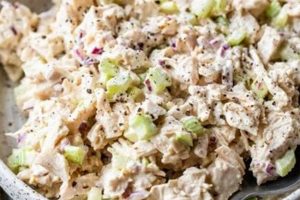
Chopped celery contributes a distinct textural and flavor dimension to chicken cranberry salad recipes. Its crisp, fibrous stalks offer a refreshing counterpoint to the softer textures of chicken and mayonnaise, introducing a satisfying crunch. Beyond texture, celery imparts a subtly herbaceous, slightly bitter flavor that balances the sweetness of cranberries and richness of mayonnaise. This balancing effect prevents the salad from becoming cloying, adding a layer of complexity to the overall flavor profile. Furthermore, the high water content of celery contributes to the salad’s overall moisture and freshness. The practical significance of incorporating chopped celery becomes evident when considering the potential consequences of its omission. A chicken cranberry salad lacking celery might exhibit a denser, less refreshing texture and an overly sweet flavor profile. For example, a holiday meal featuring a rich, heavy main course might benefit from the light, refreshing contrast provided by a celery-infused chicken cranberry salad, whereas a salad lacking celery could feel heavy and less palatable in such a context.
The size of the celery dice influences both texture and flavor release. A finer dice integrates more seamlessly with other ingredients, offering a milder celery presence, while a coarser chop provides more pronounced bursts of flavor and crunch. This adaptability allows for customization based on individual preferences. In a salad intended for a delicate tea sandwich filling, a finer dice might be preferred, whereas a coarser chop could be more suitable for a heartier salad served as a main course. Moreover, the structural integrity of celery, even when finely diced, helps prevent the salad from becoming overly mushy, maintaining a pleasant texture even after being dressed and chilled. This characteristic makes it a valuable component in recipes prepared in advance. Consider a catered event where salads are prepared hours ahead of serving. The celery helps maintain a desirable texture, preventing the salad from becoming watery or losing its structural integrity during storage.
Chopped celery’s multifaceted contribution to chicken cranberry salad recipes extends beyond mere texture and flavor. It adds a refreshing element, balances sweetness, and maintains structural integrity, contributing to a more satisfying and complex culinary experience. Understanding the practical implications of celery incorporation allows for informed decision-making during recipe development and adaptation. From influencing texture and balancing flavors to enhancing overall freshness and maintaining stability, chopped celery’s role, while sometimes understated, remains crucial in achieving a well-balanced and enjoyable chicken cranberry salad. Its absence can lead to a noticeable shift in the salad’s character, underscoring the importance of understanding its contribution to the overall composition.
6. Sweetener (optional)
Sweetener, while optional, plays a significant role in balancing the flavor profile of chicken cranberry salad recipes. Cranberries, known for their tartness, can sometimes dominate the overall taste. A sweetener modulates this tartness, creating a more harmonious blend of sweet and savory flavors. The type and amount of sweetener influence the final outcome. Granulated sugar offers a straightforward approach, readily dissolving into the dressing. Honey adds a subtle floral complexity, while maple syrup introduces a richer, more caramel-like note. The decision to incorporate a sweetener and the choice of sweetener type depends on the desired balance and overall flavor profile. For instance, a salad emphasizing the natural tartness of cranberries might use a minimal amount of sweetener, or none at all, while a salad intended for a sweeter palate might benefit from a more generous addition of honey or maple syrup. Over-sweetening, however, can mask the other flavors, resulting in an unbalanced and less nuanced dish.
The interplay between sweetener and other ingredients is crucial. A sweeter dressing might necessitate adjustments in the amount of mayonnaise or other acidic components to maintain balance. The sweetness level also influences the perceived richness of the salad. A sweeter salad can taste richer and more decadent, while a less sweet salad emphasizes the lighter, brighter flavors of the other ingredients. This interplay becomes particularly relevant when considering the context of the meal. A lighter, less sweet salad might complement a rich main course, while a sweeter, more decadent salad could serve as a satisfying light lunch on its own. Consider a summer picnic where the chicken cranberry salad is served alongside grilled meats and other savory dishes. A less sweet salad would provide a refreshing counterpoint to the richer flavors, while an overly sweet salad could feel cloying in the heat.
Careful consideration of sweetener inclusion and type contributes significantly to the final balance and complexity of chicken cranberry salad recipes. Balancing sweetness with tartness and richness is essential for a well-rounded flavor profile. The interplay between sweetener and other ingredients underscores the importance of a thoughtful approach, avoiding both over-sweetening and under-sweetening. The ultimate decision depends on the specific recipe goals and the desired overall sensory experience. Failure to properly balance sweetness can result in a salad that is either too tart, too sweet, or lacks the desired depth of flavor, highlighting the importance of understanding the role of sweetener, even in its optional capacity, in creating a successful and satisfying dish.
7. Seasoning (salt, pepper)
Seasoning, primarily with salt and pepper, forms an essential element in chicken cranberry salad recipes. Though often understated, proper seasoning elevates the dish by enhancing inherent flavors and creating a balanced flavor profile. The absence of adequate seasoning can result in a bland, uninspired salad, while excessive seasoning can overpower the delicate interplay of sweet, tart, and savory notes. Understanding the nuances of seasoning allows for precise flavor control and optimization of the overall sensory experience.
- Salt’s Role in Flavor Enhancement
Salt amplifies the inherent flavors of the individual ingredients. It reduces bitterness and enhances sweetness, creating a more balanced and nuanced flavor profile. In a chicken cranberry salad, salt not only brings out the savory notes of the chicken but also modulates the tartness of the cranberries, allowing their sweetness to shine through. Without salt, the salad can taste flat and one-dimensional, failing to showcase the full potential of its components. Consider the difference between tasting unsalted chicken versus properly salted chicken. The salted version reveals a greater depth of flavor, demonstrating salt’s ability to unlock and enhance inherent tastes. This principle applies equally to the other ingredients in the salad.
- Pepper’s Contribution to Complexity
Pepper introduces a layer of complexity, adding a subtle warmth and a gentle bite that complements the other flavors. Freshly ground black pepper offers a more vibrant and nuanced flavor compared to pre-ground pepper, which can taste dull and stale. The slight spice of pepper balances the sweetness and tartness of the other ingredients, preventing the salad from becoming cloying. In a chicken cranberry salad, a touch of black pepper adds a subtle warmth that complements the sweetness of the cranberries and the savory notes of the chicken. This interplay creates a more dynamic and interesting flavor experience. Think of the way a pinch of black pepper enhances the flavor of fresh strawberries. It adds a subtle warmth and complexity without overpowering the natural sweetness of the fruit.
- Balancing Seasoning with Other Ingredients
The amount of salt and pepper required depends on the other ingredients and the overall flavor profile desired. A sweeter salad might require less salt to prevent an overly salty-sweet combination, while a more savory salad might benefit from a more generous hand with both salt and pepper. Balancing seasoning with other ingredients, like mayonnaise, also requires careful consideration. Mayonnaise often contains salt, so over-salting the other components can result in an excessively salty final product. Consider a salad with a high proportion of salty ingredients like olives or feta cheese. In such a case, less additional salt might be needed to achieve the desired balance. Conversely, a salad with milder ingredients might require a more generous amount of seasoning.
- Seasoning Throughout the Preparation Process
Seasoning at different stages of the preparation process further refines the flavor. Seasoning the chicken before cooking ensures the flavor permeates the meat, while seasoning the dressing separately allows for precise control over the overall balance. A final seasoning adjustment after combining all ingredients fine-tunes the flavor profile before serving. This layered approach to seasoning maximizes flavor development and ensures a well-balanced and harmonious final dish. For instance, seasoning the cooked chicken before adding it to the salad ensures that the chicken itself is flavorful, contributing to the overall taste of the dish rather than relying solely on the dressing for flavor.
Careful attention to seasoning elevates chicken cranberry salad recipes from simple mixtures to well-balanced and flavorful dishes. Salt enhances inherent flavors, pepper adds complexity, and a considered approach to seasoning throughout the preparation process maximizes flavor development. Understanding these nuances allows for precise control over the final flavor profile, ensuring a satisfying and enjoyable culinary experience. The seemingly simple act of adding salt and pepper transforms the overall character of the salad, demonstrating the significant impact of proper seasoning on even the simplest of dishes.
Frequently Asked Questions
This section addresses common inquiries regarding the preparation and enjoyment of chicken cranberry salad.
Question 1: What type of chicken is best suited for this salad?
While rotisserie chicken offers convenience, cooked chicken breast (poached, baked, or grilled) allows for greater control over seasoning and moisture content, resulting in a superior flavor profile. Canned chicken can be used but requires thorough draining.
Question 2: Can fresh cranberries be substituted for dried cranberries?
Fresh cranberries offer a brighter tartness compared to the concentrated sweetness of dried cranberries. Adjustments to the sweetener may be necessary when substituting. Chopping fresh cranberries coarsely is recommended for better incorporation.
Question 3: How can the sweetness of the salad be adjusted?
The sweetness can be balanced with the addition of a tart apple (e.g., Granny Smith) or a squeeze of lemon juice. Adjusting the amount of added sweetener (honey, maple syrup, or sugar) also allows for customization.
Question 4: What can be added to enhance the texture of the salad?
Toasted nuts (pecans, walnuts, almonds), chopped celery, water chestnuts, or sunflower seeds provide textural contrast and complexity.
Question 5: What alternatives exist for mayonnaise?
Greek yogurt, plain yogurt combined with a small amount of mayonnaise, or avocado-based dressings offer lighter alternatives with varying flavor profiles.
Question 6: How long can chicken cranberry salad be stored?
Properly stored in an airtight container in the refrigerator, the salad can be safely consumed for up to three to four days. Quality may degrade over time.
Understanding these common points of inquiry enables informed recipe selection, ingredient adaptation, and successful preparation, leading to a more satisfying culinary experience.
The following sections will delve into specific recipe variations and serving suggestions.
Chicken Cranberry Salad Recipes
Exploration of chicken cranberry salad recipes reveals a versatile dish adaptable to various palates and occasions. From the foundational elements of cooked chicken and cranberries to the nuanced additions of nuts, celery, and carefully selected seasonings, each component contributes to a balanced and flavorful experience. The interplay of textures, from the tender chicken and chewy cranberries to the crisp nuts and crunchy celery, creates a dynamic mouthfeel. Adaptability extends to ingredient choices, allowing for substitutions based on dietary preferences and flavor priorities. Mayonnaise alternatives, sweetener adjustments, and varied nut selections provide avenues for personalized interpretations. Proper chilling enhances flavor melding and textural cohesion, while awareness of storage guidelines ensures safe consumption.
Chicken cranberry salad recipes represent more than a simple combination of ingredients; they embody a culinary synthesis of flavors, textures, and adaptability. This exploration encourages informed recipe selection, ingredient adaptation, and ultimately, a deeper appreciation for the versatility and enduring appeal of this dish. Further culinary experimentation promises continued discovery of nuanced variations and personalized interpretations within the realm of chicken cranberry salad recipes.