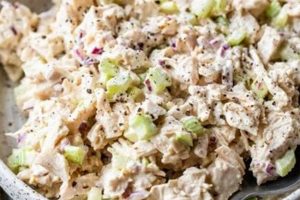
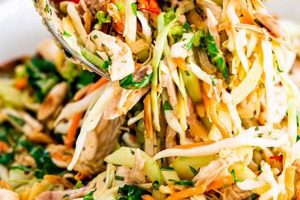
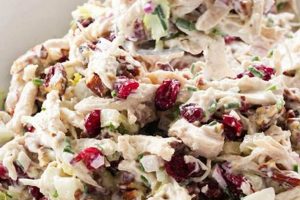
Combinations of cooked chicken, apples, and various other ingredients bound by a mayonnaise-based or vinaigrette dressing constitute a popular and versatile salad. These salads often incorporate celery, grapes, nuts, and dried cranberries, offering a balance of sweet, savory, and crunchy textures. A classic example includes diced chicken breast, chopped Granny Smith apples, celery, walnuts, and mayonnaise, seasoned with salt and pepper.
Such salads provide a good source of protein from the chicken and fiber from the apples and celery. They are adaptable to various dietary needs and preferences, allowing for substitutions like Greek yogurt for mayonnaise or the inclusion of different fruits and nuts. Historically, fruit and meat combinations have been a culinary tradition across cultures, and the modern iteration reflects this heritage, offering a refreshing and nutritionally sound meal option. The relative ease of preparation and adaptability to seasonal ingredients further contribute to their popularity.
This discussion will explore various aspects of creating these salads, including ingredient selection, preparation techniques, variations, and serving suggestions.
Tips for Creating Exceptional Chicken and Apple Salads
Achieving a well-balanced and flavorful salad requires careful consideration of ingredients and preparation techniques. The following tips offer guidance for optimal results.
Tip 1: Select Crisp Apples. Varieties such as Granny Smith, Honeycrisp, or Fuji maintain their texture and offer a contrasting tartness or sweetness. Avoid overly ripe apples, which can become mushy.
Tip 2: Employ High-Quality Cooked Chicken. Rotisserie chicken offers a convenient option, while poaching or grilling boneless, skinless breasts provides a leaner alternative. Ensure the chicken is thoroughly cooked and cooled before incorporating.
Tip 3: Balance Sweetness and Savory Elements. The inherent sweetness of apples can be complemented by savory additions such as Dijon mustard, red onion, or pecans. Taste and adjust seasonings throughout the preparation process.
Tip 4: Consider Textural Variety. Incorporate ingredients that provide contrasting textures. Toasted nuts, dried cranberries, or chopped celery offer a satisfying crunch against the softer apples and chicken.
Tip 5: Dress the Salad Lightly. Overdressing can mask the flavors of the other ingredients. Start with a small amount of dressing and add more as needed, ensuring all components are coated evenly.
Tip 6: Chill Before Serving. Allowing the salad to chill in the refrigerator for at least 30 minutes allows the flavors to meld and enhances the overall experience.
Tip 7: Explore Variations. Adapt the recipe to individual preferences by incorporating different fruits, nuts, or cheeses. Consider adding grapes, dried cherries, walnuts, or crumbled blue cheese.
By following these guidelines, one can consistently create a delightful and satisfying salad experience, emphasizing the complementary flavors and textures of the core ingredients.
These tips provide a foundation for crafting a successful dish. The following section will explore variations and serving suggestions to further enhance creativity and enjoyment.
1. Chicken (cooked, diced)

Cooked, diced chicken forms the foundational protein component of chicken apple salads. Its preparation and inclusion significantly impact the final dish’s overall quality, flavor, and texture. Choosing the right cooking method influences both the chicken’s taste and its ability to absorb the salad’s other flavors. Overcooked chicken becomes dry and stringy, detracting from the desired texture. Conversely, undercooked chicken presents food safety risks. Proper dicing ensures even distribution throughout the salad and manageable bite sizes. For instance, poaching or grilling boneless, skinless chicken breasts yields a lean protein source that readily absorbs the flavors of the dressing and other ingredients. Rotisserie chicken offers a convenient alternative but requires careful removal of skin and bones before dicing.
The choice of chicken preparation also affects the salad’s nutritional value. Grilling or baking retains more nutrients compared to frying. Furthermore, the quantity of chicken included influences the salad’s overall heartiness and protein content. A higher chicken-to-other-ingredient ratio creates a more substantial meal. For example, a salad featuring predominantly diced chicken breast alongside a smaller proportion of apples and celery provides a protein-rich lunch option. Alternatively, a salad with a smaller amount of diced chicken combined with a larger proportion of fruits and vegetables contributes a lighter meal or side dish.
Optimizing the preparation and inclusion of cooked, diced chicken is crucial for a well-balanced and palatable chicken apple salad. Careful consideration of cooking methods, dicing techniques, and proportion relative to other ingredients elevates this simple component to a key contributor to the dish’s overall success. Neglecting these considerations can result in a dry, flavorless, or unbalanced salad, highlighting the practical significance of understanding this fundamental ingredient.
2. Apples (crisp, chopped)

Apples contribute significantly to the flavor and textural complexity of chicken apple salads. Their selection and preparation influence the overall balance and palatability of the final dish. Understanding the role of apple varieties, optimal crispness, and appropriate chopping techniques are essential for creating a successful salad.
- Variety Selection
Different apple varieties offer varying levels of sweetness and tartness. Granny Smith apples provide a tart counterpoint to richer ingredients like mayonnaise, while Honeycrisp or Fuji apples contribute a milder sweetness. Choosing the right variety balances the overall flavor profile. An overly sweet apple can create an unbalanced salad, while an excessively tart apple may clash with other components.
- Crispness and Texture
Crisp apples provide a desirable textural contrast to the softer chicken and creamy dressing. Apples that are mealy or overly ripe will break down in the salad, resulting in an undesirable mushy consistency. Maintaining apple crispness is crucial for achieving a balanced and enjoyable textural experience. The structural integrity of the apple pieces contributes to the salad’s overall appeal.
- Chopping Technique and Size
Uniformly chopped apples ensure even distribution throughout the salad and create a visually appealing presentation. Overly large pieces can be difficult to eat, while excessively small pieces may become lost among other ingredients. The size of the apple pieces also affects the apple’s flavor release and its interaction with the dressing and other components. Consistent chopping ensures optimal flavor integration and a pleasant eating experience.
- Preventing Browning
Apples are prone to enzymatic browning upon exposure to air. Tossing chopped apples with a small amount of lemon juice or ascorbic acid helps prevent discoloration and maintains their fresh appearance. This step is particularly important when preparing the salad in advance. Maintaining the visual appeal of the apples enhances the overall presentation of the finished dish.
The careful selection, preparation, and handling of apples are essential for maximizing their contribution to a chicken apple salad. Attention to these details ensures the desired balance of flavor, texture, and visual appeal, ultimately elevating the overall dining experience.
3. Mayonnaise (or alternative)

Mayonnaise plays a crucial role in chicken apple salads, functioning as a binding agent, flavor enhancer, and textural contributor. Its emulsification properties coat the ingredients, creating a cohesive mixture while preventing the salad from becoming dry. The creamy texture of mayonnaise complements the crispness of the apples and the tenderness of the chicken, contributing to a balanced mouthfeel. Furthermore, mayonnaise provides a backdrop for other flavors, allowing the sweetness of the apples and the savory notes of the chicken to shine. Classic recipes often utilize mayonnaise as the primary dressing component, creating a rich and familiar flavor profile. For instance, a combination of mayonnaise, Dijon mustard, and a touch of honey creates a balanced sweet and tangy dressing that complements the other ingredients.
However, the richness and caloric density of mayonnaise can pose dietary challenges. Alternatives such as Greek yogurt, light mayonnaise, or avocado-based dressings offer healthier options without compromising the creamy texture and binding properties essential for a successful salad. Greek yogurt provides a tangy flavor and a boost of protein, while avocado adds creaminess and healthy fats. These alternatives allow for customization based on dietary preferences and health goals. Substituting Greek yogurt for mayonnaise, for example, reduces the overall fat content while maintaining a desirable consistency. Utilizing an avocado-based dressing adds a distinct flavor profile and increases the salad’s nutritional value.
The choice between mayonnaise and its alternatives directly impacts the nutritional profile and overall flavor experience of the salad. Careful consideration of these factors allows for the creation of a dish that satisfies both taste preferences and dietary requirements. Selecting the appropriate binding agent and flavor enhancer is crucial for achieving the desired balance of taste, texture, and health benefits in a chicken apple salad. Ignoring these considerations can result in a salad that is either too rich, too bland, or fails to meet specific dietary needs, demonstrating the practical significance of understanding this key ingredient.
4. Celery (optional, sliced)
Celery, while optional, offers a significant textural and flavor contribution to chicken apple salads. Its inclusion introduces a crisp, refreshing element that complements the other ingredients. Understanding celery’s role, preparation, and impact on the overall salad composition allows for informed decisions regarding its inclusion and optimization within the recipe.
- Texture and Crispness
Celery’s fibrous stalks provide a satisfying crunch, contrasting with the softer textures of the chicken and apples. This textural contrast enhances the overall eating experience, adding a refreshing element to each bite. Proper slicing ensures a pleasant texture, avoiding excessively large or stringy pieces.
- Flavor Profile
Celery’s subtly vegetal flavor adds a savory note that balances the sweetness of the apples and the richness of the mayonnaise or chosen dressing. This subtle flavor enhancement contributes to the overall complexity of the salad without overpowering other ingredients.
- Nutritional Value
Celery is a low-calorie vegetable rich in vitamins and minerals. Its inclusion in the salad increases the nutritional value without significantly impacting the overall calorie count. This makes celery a valuable addition for those seeking a healthier meal option.
- Preparation and Incorporation
Proper preparation involves removing the tough outer strings and slicing the stalks thinly to ensure even distribution and ease of consumption. Overly thick slices can detract from the salad’s overall texture and make it difficult to eat. The quantity of celery included can be adjusted to personal preference, ensuring it complements rather than overwhelms the other ingredients.
The judicious use of celery in chicken apple salads offers a nuanced enhancement of both texture and flavor. Its subtle vegetal notes and crisp texture contribute to a more balanced and enjoyable culinary experience. Understanding its role and proper preparation allows for informed customization and optimization within the broader context of the recipe.
5. Nuts/Seeds (walnuts, pecans)
Nuts and seeds represent a crucial element in many chicken apple salad recipes, contributing texture, flavor, and nutritional value. Their incorporation elevates the salad beyond a simple combination of ingredients, adding complexity and depth. Careful selection and application of these components enhance the overall sensory experience.
- Textural Contrast
Nuts and seeds provide a contrasting textural element against the softer components of chicken and apple. The crunch of walnuts, pecans, or sunflower seeds enhances the mouthfeel, creating a more dynamic and satisfying culinary experience. This textural interplay prevents the salad from becoming monotonous, adding a layer of interest with each bite.
- Flavor Enhancement
The distinct flavors of nuts and seeds complement the sweetness of apples and the savory nature of chicken. Walnuts offer a slightly bitter, earthy note, while pecans provide a buttery richness. Sunflower seeds introduce a mild nuttiness and a subtle earthiness. These flavors interact to create a balanced and complex flavor profile, elevating the overall taste experience.
- Nutritional Benefits
Nuts and seeds are nutrient-dense, offering a source of healthy fats, protein, fiber, and various vitamins and minerals. Their inclusion in the salad increases its nutritional value, contributing to a more balanced and wholesome meal. The specific nutritional contributions vary depending on the type of nut or seed incorporated. For example, walnuts are a good source of omega-3 fatty acids, while sunflower seeds are rich in vitamin E.
- Preparation and Incorporation
To maximize flavor and texture, toasting nuts and seeds before adding them to the salad is often recommended. Toasting enhances their inherent nuttiness and creates a more pronounced crunch. The quantity of nuts and seeds added should be balanced to complement, not overwhelm, the other ingredients. Overuse can lead to a dense and overly rich salad, while too little may not provide the desired textural and flavor impact.
The strategic incorporation of nuts and seeds elevates chicken apple salads from simple to sophisticated. Their contribution of texture, flavor, and nutritional value transforms the dish into a more complex and satisfying culinary creation. Understanding the role and optimal application of these ingredients allows for a nuanced approach to recipe development and a more rewarding dining experience.
6. Sweetener (honey, cranberries)

Sweeteners, such as honey or dried cranberries, play a pivotal role in balancing the flavor profile of chicken apple salads. Their strategic incorporation enhances complexity and complements the inherent sweetness of the apples, the savory notes of the chicken, and the richness of the dressing. Understanding the function and application of these sweeteners allows for a nuanced approach to recipe development and flavor optimization.
- Balancing Flavors
Sweeteners counteract the potential tartness of certain apple varieties (e.g., Granny Smith) and provide a counterpoint to savory elements like Dijon mustard or celery. This balancing act creates a more harmonious flavor profile, preventing the salad from leaning too heavily in one direction. The careful calibration of sweetness ensures a more nuanced and palatable outcome.
- Enhancing Complexity
The addition of sweeteners introduces another layer of flavor, moving beyond the basic sweet-savory dichotomy. Honey contributes floral and caramel notes, while dried cranberries offer a concentrated tart-sweet flavor with hints of fruitiness. These nuanced flavors interact with the other ingredients, creating a more complex and engaging taste experience.
- Textural Variation (for cranberries)
Dried cranberries, in addition to their sweetness, contribute a chewy texture that contrasts with the crispness of the apples and the tenderness of the chicken. This textural variation adds another dimension to the salad, making it more interesting and enjoyable to eat. The interplay of textures elevates the overall sensory experience.
- Nutritional Considerations
Honey offers potential health benefits due to its antioxidant and antimicrobial properties. Dried cranberries provide dietary fiber and vitamins. However, both honey and dried cranberries contain natural sugars, so their use should be moderated to align with dietary goals. The nutritional implications of the chosen sweetener should be considered when developing a recipe.
The strategic use of sweeteners in chicken apple salad recipes contributes significantly to flavor balance, complexity, and overall enjoyment. Understanding their function and selecting appropriate types and quantities allows for the creation of a well-rounded and satisfying culinary experience. This careful consideration of sweeteners transforms a simple salad into a more nuanced and flavorful dish.
Frequently Asked Questions
This section addresses common inquiries regarding the preparation and enjoyment of chicken apple salads.
Question 1: How can enzymatic browning of apples be prevented after they are cut?
A light coating of lemon juice or a solution of ascorbic acid (vitamin C) inhibits oxidation, preserving the apple’s appearance.
Question 2: What are suitable mayonnaise alternatives for those seeking lower-fat options?
Plain Greek yogurt or a mashed avocado offer creamy textures and reduced fat content compared to traditional mayonnaise.
Question 3: Can alternative proteins be used in place of chicken?
Cooked, diced turkey, ham, or plant-based chicken substitutes can be incorporated for varied flavor profiles and dietary accommodations.
Question 4: How long can chicken apple salad be safely stored in the refrigerator?
Properly stored in an airtight container, the salad typically remains safe for consumption for three to five days when refrigerated.
Question 5: What methods exist for enhancing the flavor profile beyond basic seasonings?
Incorporating ingredients such as toasted nuts, dried cranberries, or crumbled blue cheese adds depth and complexity.
Question 6: Can this type of salad be served as a main course, or is it strictly a side dish?
Depending on portion size and accompanying elements, the salad functions effectively as either a light main course or a complementary side dish.
Addressing these common questions provides a foundation for successful preparation and enjoyable consumption. Culinary experimentation within established food safety guidelines is encouraged.
The following section offers a collection of curated recipes for further exploration.
Conclusion
Exploration of this culinary subject has revealed the multifaceted nature of chicken apple salad recipes. From the selection of crisp apple varieties and appropriate chicken preparation methods to the nuanced incorporation of complementary ingredients such as celery, nuts, and sweeteners, each component contributes significantly to the final product. The adaptability of these recipes to accommodate dietary preferences and ingredient availability underscores their versatility. Careful consideration of ingredient interactions, textural contrasts, and flavor balances allows for the creation of a dish that transcends basic sustenance and becomes a nuanced culinary expression.
The potential for customization within this seemingly simple framework offers a canvas for culinary creativity. Adapting recipes to reflect individual tastes and seasonal ingredient availability allows for continuous exploration and refinement. Emphasis on ingredient quality and thoughtful preparation elevates the final outcome, transforming a basic salad into a memorable culinary experience. The enduring appeal of these recipes lies in their adaptability, nutritional value, and potential for creative expression, ensuring their continued presence in culinary traditions.