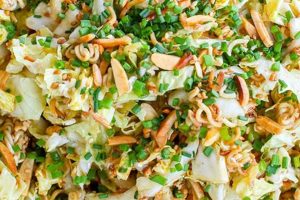
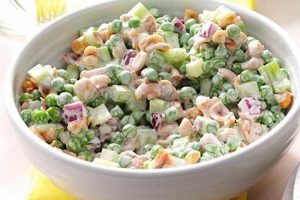
A dish featuring celery as the primary ingredient, often combined with other vegetables, fruits, nuts, or proteins, and dressed with a flavorful sauce, exemplifies this culinary concept. Variations range from simple combinations with mayonnaise and seasonings to more complex preparations involving diverse ingredients and elaborate dressings.
Such dishes offer a refreshing and healthful option, contributing valuable nutrients like fiber, vitamins K and C, and potassium to the diet. Celery’s crunchy texture provides a satisfying element, while its mild flavor serves as an excellent base for various complementary ingredients. Historically, celery’s culinary use dates back centuries, with evidence of its presence in both ancient Greek and Roman cuisine. Its versatility and adaptability have allowed it to remain a popular ingredient in salads and other dishes across cultures and throughout time.
The following sections will explore the various components involved in crafting these dishes, offering guidance on ingredient selection, preparation techniques, and dressing options. Detailed recipes will illustrate the diversity and adaptability of celery as a foundation for flavorful and healthful salads.
Tips for Celery Salad Preparation
Achieving optimal flavor and texture in a celery salad requires attention to detail throughout the preparation process. The following tips offer guidance for creating a successful and enjoyable dish.
Tip 1: Celery Selection and Storage: Opt for crisp, firm celery stalks with vibrant green leaves. Avoid stalks that appear limp, yellowed, or have brown spots. Store unwashed celery in a refrigerator’s crisper drawer, wrapped loosely in a plastic bag, to maintain freshness.
Tip 2: Knife Skills and Cutting Techniques: Employing sharp knives ensures clean cuts and prevents bruising the celery. Thinly slicing celery on the bias creates attractive pieces and enhances the overall texture of the salad. Dicing celery into small, uniform pieces provides a consistent mouthfeel.
Tip 3: Enhancing Flavor through Complementary Ingredients: Apples, grapes, walnuts, and dried cranberries offer contrasting textures and flavors that complement celery’s mild taste. Proteins such as chicken, tuna, or chickpeas can be added to create a more substantial salad.
Tip 4: Dressing Selection and Application: Mayonnaise-based dressings provide a creamy texture, while vinaigrette dressings offer a lighter, tangier option. Adding dressings just before serving prevents the salad from becoming soggy.
Tip 5: Balancing Flavors and Textures: Consider the balance of sweet, savory, acidic, and crunchy elements when combining ingredients. A well-balanced salad offers a complex and satisfying flavor profile.
Tip 6: Seasoning and Flavor Adjustment: Freshly ground black pepper, sea salt, and herbs like dill or parsley can enhance the overall flavor. Taste and adjust seasonings as needed before serving.
Tip 7: Presentation and Serving: Attractive presentation elevates the dining experience. Consider using a variety of colors and textures in the salad and serving it in an appealing bowl or platter.
By following these guidelines, one can consistently produce delicious and visually appealing celery salads. Attention to detail, from ingredient selection to final presentation, ensures a satisfying culinary outcome.
This comprehensive guide has explored the nuances of preparing a celery salad, offering practical advice and detailed instructions. The following conclusion summarizes the key takeaways and encourages readers to experiment with this versatile and healthful dish.
1. Fresh, Crisp Celery

Fresh, crisp celery forms the foundational element of a successful celery salad recipe. The quality of the celery directly impacts the overall texture and flavor of the final dish. Crisp celery provides a satisfying crunch, contrasting with other ingredients and adding a refreshing element. Limp or wilted celery, conversely, results in a less appealing texture and a muted flavor, detracting from the overall culinary experience. This cause-and-effect relationship underscores the importance of selecting high-quality celery.
Consider a classic celery salad with mayonnaise, grapes, and walnuts. Fresh, crisp celery provides a textural counterpoint to the sweetness of the grapes and the richness of the walnuts. The crunch of the celery enhances the enjoyment of each bite. If the celery were limp, the salad would lack this essential textural element, resulting in a less satisfying dish. Similarly, in a celery salad with a vinaigrette dressing, the crisp celery maintains its structural integrity, preventing the salad from becoming soggy. The fresh flavor of the celery also shines through, complementing the tanginess of the vinaigrette.
Prioritizing fresh, crisp celery ensures a superior culinary outcome. Selecting celery with firm stalks and vibrant green leaves is crucial. Proper storage techniques, such as refrigeration in a crisper drawer wrapped loosely in plastic, maintain freshness. Understanding this connection between ingredient quality and final product allows for a more informed approach to recipe preparation and guarantees a more enjoyable culinary experience.
2. Complementary Ingredients

Complementary ingredients play a crucial role in elevating a celery salad recipe from simple to exceptional. They provide contrasting textures, flavors, and colors, enhancing the overall sensory experience. Careful selection of these ingredients ensures a balanced and harmonious final dish.
- Textural Variety
Ingredients that offer textural contrast create a more dynamic and enjoyable eating experience. Nuts, such as walnuts or pecans, provide a satisfying crunch, while dried fruits, like cranberries or raisins, offer a chewy texture. Seeds, such as sunflower or pumpkin seeds, contribute a subtle crispness. These textural variations interplay with the celery’s inherent crunch, creating a multi-dimensional mouthfeel.
- Flavor Balancing
Celery’s mild flavor serves as a neutral base for a wide range of flavor combinations. Sweet ingredients, like apples or grapes, balance the savory notes of ingredients like cheese or olives. Acidic elements, such as lemon juice or vinegar, add brightness and cut through richness. The interplay of these flavors creates a complex and satisfying taste profile.
- Color Enhancement
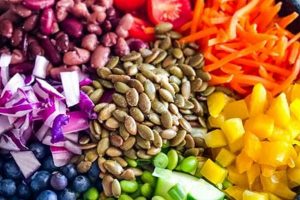
Visual appeal enhances the dining experience. Brightly colored ingredients add vibrancy and contrast to the pale green of celery. Red grapes, orange carrots, or dark purple cabbage create visual interest, making the salad more appealing. The strategic use of color elevates the presentation and adds to the overall enjoyment.
- Nutritional Value
Complementary ingredients can contribute to the nutritional value of a celery salad. Adding protein-rich ingredients, such as chicken, tuna, or beans, creates a more substantial and satisfying meal. Incorporating nutrient-dense ingredients, like leafy greens or other vegetables, further enhances the salad’s health benefits. This multifaceted approach contributes to a well-rounded and nutritious meal.
The strategic incorporation of complementary ingredients elevates the celery salad from a simple dish to a culinary creation. The interplay of textures, flavors, colors, and nutritional elements creates a balanced and harmonious composition, offering a more satisfying and enjoyable dining experience. The careful consideration of these elements ensures a successful and delicious celery salad.
3. Balanced Flavor Profile

A balanced flavor profile is essential for a successful celery salad recipe. Celery, with its mild, slightly vegetal taste, provides a neutral backdrop that requires careful balancing with other ingredients to create a harmonious and enjoyable dish. A well-balanced celery salad avoids extremes in any single flavor, ensuring that no one element dominates the overall taste experience. The following facets illustrate key components of achieving this balance.
- Sweetness
Sweetness counteracts celery’s inherent vegetal notes and adds a dimension of complexity. Ingredients like apples, grapes, dried cranberries, or a touch of honey or maple syrup introduce sweetness without overpowering other flavors. For example, the tart sweetness of Granny Smith apples complements the mild celery flavor, while the addition of dried cranberries introduces a concentrated sweetness that balances the savory notes of other ingredients. The level of sweetness should be carefully calibrated to prevent the salad from becoming overly sweet.
- Acidity
Acidity provides brightness and cuts through richness, preventing the salad from feeling heavy. Lemon juice, vinegar, or acidic fruits like grapefruit introduce a tartness that balances the other flavors. A squeeze of fresh lemon juice brightens a mayonnaise-based celery salad, while a vinaigrette dressing with apple cider vinegar adds a tangy complexity. The acidity level should complement the other ingredients without making the salad excessively sour.
- Saltiness
Salt enhances the flavors of other ingredients and provides a savory depth. A pinch of sea salt or the addition of salty ingredients like olives, feta cheese, or capers contributes to a well-rounded flavor profile. Salted nuts, such as roasted and salted almonds or pecans, provide both saltiness and textural contrast. Careful salting avoids over-salting the salad, allowing other flavors to shine.
- Umami/Savory Notes
Umami, often described as a savory, meaty flavor, adds depth and complexity to a celery salad. Ingredients like Parmesan cheese, walnuts, or nutritional yeast contribute umami notes. These savory elements balance the sweetness and acidity, creating a more nuanced and satisfying flavor profile. The inclusion of umami-rich ingredients should be judicious, avoiding an overly savory or heavy taste.
Achieving a balanced flavor profile in a celery salad involves the careful interplay of sweetness, acidity, saltiness, and umami. The harmonious integration of these elements ensures a delicious and satisfying culinary experience. A well-balanced celery salad demonstrates how seemingly simple ingredients can be combined to create a complex and nuanced dish.
4. Appropriate Dressing
The selection of an appropriate dressing significantly impacts the overall success of a celery salad recipe. Dressing is not merely an addition but an integral component that binds the ingredients, enhances flavors, and contributes to the final texture and taste experience. A thoughtfully chosen dressing complements the celery and other ingredients, creating a cohesive and harmonious culinary composition. Conversely, an ill-suited dressing can overpower delicate flavors or clash with existing tastes, detracting from the intended balance.
The relationship between the dressing and the other salad components operates on a principle of complementarity. For instance, a creamy, mayonnaise-based dressing pairs well with ingredients like grapes, apples, and walnuts, creating a classic sweet and savory profile. The richness of the mayonnaise complements the sweetness of the fruit and the nuttiness of the walnuts, while the celery provides a refreshing crunch. In contrast, a light vinaigrette, perhaps with a citrus or herb base, harmonizes with ingredients such as olives, feta cheese, and tomatoes, offering a brighter, more tangy flavor profile. Here, the celery’s subtle flavor allows the other ingredients and the vinaigrette to shine. Understanding these dynamic relationships allows for informed decision-making when crafting a celery salad recipe.
Consider the practical implications. A heavy, creamy dressing might overwhelm a salad with delicate leafy greens and thinly sliced celery, rendering the salad soggy and heavy. A light vinaigrette, however, would maintain the crispness of the greens and celery, allowing their individual flavors to be appreciated. Similarly, a sweet dressing might clash with savory ingredients, while a tangy dressing might overpower delicate flavors. The practical application of this understanding allows one to create a balanced and enjoyable culinary experience. Selecting the appropriate dressing is not simply a matter of preference but a crucial step in achieving a successful and well-balanced celery salad.
5. Proper Preparation Techniques

Proper preparation techniques are essential for maximizing the flavor, texture, and overall quality of a celery salad recipe. These techniques encompass a range of practices, from selecting and storing ingredients to employing specific cutting methods and combining components effectively. Mastery of these techniques elevates the final dish, ensuring a satisfying culinary experience. Neglecting these foundational practices can compromise the salad’s potential, resulting in a less enjoyable outcome.
- Celery Selection and Storage
Selecting crisp, firm celery stalks with vibrant green leaves is paramount. Avoiding stalks with blemishes or signs of wilting ensures optimal freshness and flavor. Proper storage, ideally in a refrigerator’s crisper drawer, wrapped loosely in a plastic bag, maintains the celery’s quality until preparation. This careful selection and storage lay the groundwork for a successful celery salad.
- Cutting Techniques
Precise cutting techniques significantly influence the final texture and presentation of the salad. Thinly slicing celery on the bias creates attractive, elongated pieces and exposes more surface area, allowing flavors to meld more effectively. Dicing celery into uniform pieces ensures even distribution throughout the salad and a consistent mouthfeel. These seemingly minor details contribute significantly to the overall dining experience. For example, thinly sliced celery offers a delicate crunch suitable for salads with lighter dressings, while diced celery integrates well into salads with chunkier ingredients and creamier dressings.
- Ingredient Combination and Order of Addition
The order in which ingredients are combined, particularly when dressings are involved, can impact the salad’s final texture and prevent sogginess. Adding more delicate ingredients, such as leafy greens or herbs, just before serving maintains their freshness and prevents them from wilting. Heartier ingredients, like celery and other vegetables, can be combined earlier. For instance, in a celery salad with a vinaigrette dressing, adding the dressing just before serving prevents the celery and other ingredients from becoming soggy. This strategic approach preserves the integrity of individual components.
- Flavor Balancing through Seasoning
Seasoning plays a crucial role in enhancing the overall flavor profile of a celery salad. Salt, pepper, and other seasonings should be added judiciously, tasting and adjusting throughout the process. Freshly ground black pepper adds a subtle spice, while a pinch of sea salt enhances the natural flavors of the ingredients. The thoughtful application of seasonings elevates the celery salad beyond its basic components, creating a more nuanced and complex flavor experience. The careful balance of seasonings complements the other ingredients without overpowering their individual flavors.
Proper preparation techniques are inextricably linked to the success of a celery salad recipe. From the initial selection and storage of ingredients to the final seasoning adjustments, each step contributes to the overall quality and enjoyment of the dish. Mastering these techniques allows for greater control over the final product, ensuring a consistently delicious and satisfying culinary experience. The careful application of these practices elevates the simple celery salad to a dish worthy of culinary appreciation.
Frequently Asked Questions
This section addresses common inquiries regarding celery salad recipes, providing concise and informative responses to clarify potential uncertainties and enhance understanding of this versatile dish.
Question 1: How can one prevent celery salad from becoming soggy?
Sogginess often results from premature dressing application. Adding dressing immediately before serving prevents the celery and other ingredients from absorbing excess moisture and maintains the desired crispness. Storing the salad components and dressing separately until serving also mitigates this issue.
Question 2: What are suitable alternatives to mayonnaise-based dressings?
Vinaigrettes offer a lighter alternative to mayonnaise-based dressings. A simple vinaigrette can be prepared with olive oil, vinegar (such as apple cider, red wine, or balsamic), and seasonings. Greek yogurt-based dressings provide a creamy texture with reduced fat content compared to mayonnaise.
Question 3: Can celery salad be prepared in advance?
While the components can be prepared and stored separately in advance, combining them, especially with the dressing, is best done immediately before serving to maintain optimal texture and prevent sogginess. Storing prepared ingredients in airtight containers in the refrigerator maximizes freshness.
Question 4: How can one enhance the flavor of celery salad?
Fresh herbs, such as dill, parsley, or chives, elevate the flavor profile of celery salad. Toasted nuts or seeds add a nutty complexity and textural contrast. Spices, such as celery seed or paprika, enhance the overall flavor. Acidity from lemon juice or vinegar brightens the taste.
Question 5: What are some protein options to add to celery salad for a more substantial meal?
Grilled chicken, shredded rotisserie chicken, flaked tuna, chickpeas, or cannellini beans complement celery salad and increase its protein content. These additions create a more satisfying and complete meal. The choice of protein should complement the other ingredients and dressing.
Question 6: How can one adapt celery salad recipes for different dietary restrictions?
Adapting recipes to accommodate dietary needs requires careful ingredient selection. Vegan options can utilize plant-based mayonnaise or dressings, while gluten-free versions require ensuring all ingredients, including dressings and seasonings, are certified gluten-free. Substitutions for common allergens, such as nuts, should be made thoughtfully, considering flavor and texture compatibility. For instance, sunflower seeds can replace nuts for those with nut allergies.
These responses offer practical guidance for preparing and enjoying celery salad. The following recipes will demonstrate the versatility of this dish and provide inspiration for culinary exploration.
The subsequent section presents a variety of celery salad recipes, demonstrating the versatility of this simple yet adaptable dish.
Celery Salad Recipe
This exploration of celery salad recipes has illuminated the essential elements that contribute to a successful and satisfying dish. From the importance of fresh, crisp celery as a foundation, to the careful selection of complementary ingredients for textural and flavor balance, the nuances of crafting a well-composed salad have been thoroughly examined. Proper preparation techniques, including precise cutting methods and strategic ingredient combination, have been highlighted as crucial steps toward achieving optimal results. The significance of selecting an appropriate dressing, whether a creamy mayonnaise-based option or a light and tangy vinaigrette, has been emphasized for its role in unifying flavors and enhancing the overall dining experience. Addressing common inquiries regarding preparation and adaptation for various dietary needs further reinforces the versatility and adaptability of this culinary staple.
Celery salad, often perceived as a simple dish, offers a canvas for culinary creativity and a testament to the potential of fresh ingredients. The principles discussed herein provide a framework for crafting not only delicious salads, but also for fostering a deeper understanding of the interplay of flavors, textures, and techniques in culinary endeavors. This exploration encourages further experimentation and a renewed appreciation for the potential of celery as a versatile and healthful ingredient.