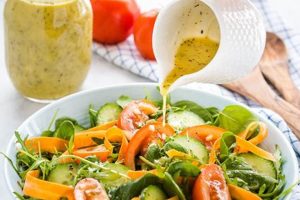
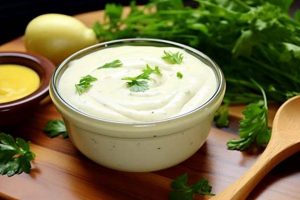
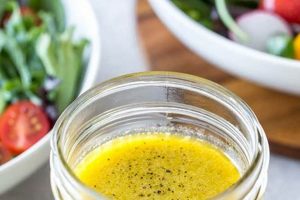
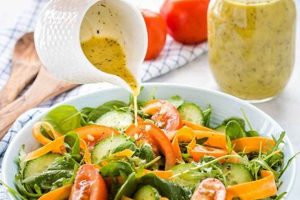
A creamy emulsion of oil, egg yolks, and an acidic element like vinegar or lemon juice forms the base for a versatile culinary condiment often used to enhance salads. Numerous variations exist, incorporating diverse ingredients such as herbs, spices, cheeses, or other flavoring agents to create unique and complementary profiles. A basic version might include just oil, egg yolk, lemon juice, and a pinch of salt, whisked together until emulsified.
Beyond its primary function as a salad dressing, this emulsion contributes richness, flavor, and a desirable textural element to a wide array of dishes. Its adaptable nature allows for both simple and complex preparations, catering to a broad range of palates and culinary applications. Historically, emulsions similar to modern mayonnaise have existed for centuries, with origins potentially tracing back to early European culinary traditions. The accessibility of ingredients and ease of preparation have contributed to its enduring popularity in modern cuisine.
This exploration will delve further into the multifaceted aspects of creating and utilizing this versatile condiment, covering topics ranging from basic techniques to innovative variations and culinary applications.
Tips for Crafting Exceptional Salad Dressings Based on Mayonnaise
Elevating a salad from simple to extraordinary often hinges on the quality of the dressing. These tips offer guidance for creating flavorful and texturally appealing emulsions suitable for a variety of salads.
Tip 1: Emulsification is Key: Achieving a stable emulsion is crucial for a smooth, creamy texture. Ensure ingredients are at a similar temperature and whisk vigorously or use a blender to thoroughly combine the oil and aqueous components. Slow, gradual addition of oil while whisking promotes a stable emulsion.
Tip 2: Fresh Ingredients Matter: The freshest eggs, high-quality oils, and freshly squeezed citrus juices contribute significantly to the overall flavor profile. Avoid using ingredients past their prime for optimal results.
Tip 3: Flavor Balancing: Achieving a harmonious balance of flavors is essential. The right amount of acidity complements the richness of the oil and egg yolks. Taste and adjust seasonings as needed, considering the specific ingredients in the salad.
Tip 4: Experiment with Flavor Profiles: A basic emulsion serves as a blank canvas for culinary creativity. Incorporate herbs, spices, cheeses, or other flavoring agents to develop unique and complementary flavor profiles. Roasted garlic, Dijon mustard, or anchovy paste can add depth and complexity.
Tip 5: Texture Considerations: Texture plays a vital role in the overall sensory experience. A smooth, creamy emulsion is traditional, but variations can be achieved by adding finely chopped ingredients or leaving some elements slightly chunky.
Tip 6: Storage and Shelf Life: Properly stored, a homemade emulsion can last for several days in the refrigerator. Use an airtight container and keep it refrigerated to maintain optimal freshness and prevent bacterial growth.
Tip 7: Consider Dietary Restrictions: When preparing dressings for others, be mindful of dietary restrictions and allergies. Offer alternatives such as vegan mayonnaise or adjust ingredients accordingly.
By following these tips, one can create flavorful, well-balanced dressings that enhance any salad. Mastering the fundamentals opens doors to endless culinary exploration and customization.
The subsequent section will explore specific recipe variations and offer practical examples for incorporating these versatile dressings into diverse culinary creations.
1. Quality Ingredients
The success of a mayonnaise-based salad dressing hinges significantly on the quality of its constituent ingredients. Substandard oils can impart undesirable flavors and compromise the emulsion’s stability. Freshly squeezed lemon juice or high-quality vinegar provides a brighter, cleaner acidity compared to processed alternatives. Likewise, fresh eggs contribute a richer flavor and aid in emulsification, while the use of fresh herbs and spices elevates the overall sensory experience. For example, using extra virgin olive oil with a robust flavor profile can create a dressing vastly different from one made with a neutral oil like canola. Similarly, fresh herbs offer a vibrancy that dried herbs often lack.
The impact of ingredient quality extends beyond immediate flavor. Fresh, high-quality ingredients generally possess a superior nutritional profile. Choosing nutrient-rich oils, like avocado or olive oil, enhances the health benefits of the dressing. Freshly squeezed citrus juices offer higher vitamin C content compared to bottled varieties. Moreover, utilizing fresh ingredients often reduces the need for added preservatives and stabilizers, resulting in a cleaner, more wholesome product. For instance, homemade dressings using fresh ingredients avoid the added sugars and preservatives often found in commercially produced dressings.
Prioritizing quality ingredients demonstrates a commitment to both flavor and nutritional value. While cost considerations may influence ingredient selection, understanding the direct impact of quality on the final product underscores the importance of thoughtful ingredient sourcing. Challenges may include sourcing certain ingredients, particularly seasonal items. However, the superior taste and health benefits derived from high-quality components ultimately justify the investment in sourcing the best possible ingredients for a truly exceptional mayonnaise-based salad dressing.
2. Emulsification Technique

Emulsification, the process of combining two immiscible liquids (like oil and water) into a stable mixture, is paramount to creating a successful mayonnaise-based salad dressing. The technique employed directly impacts the texture, stability, and overall quality of the final product. A thorough understanding of this process is crucial for achieving the desired creamy consistency and preventing separation.
- Gradual Incorporation of Oil:
The key to a stable emulsion lies in the slow, gradual addition of oil to the aqueous phase (egg yolks and acid). This allows the emulsifying agent (lecithin in the egg yolk) to effectively coat the oil droplets, preventing them from coalescing and separating. Rushing this process often results in a broken emulsion, leading to a thin, oily consistency. A classic example is whisking oil drop by drop into egg yolks at the beginning of the emulsification process, gradually increasing the flow as the emulsion stabilizes.
- Vigorous Whisking or Blending:
Whether using a whisk, food processor, or blender, the application of consistent and vigorous agitation is essential. This mechanical action breaks down the oil into smaller droplets and disperses them evenly throughout the aqueous phase, creating the desired creamy texture. The choice of tool influences the final texture; a whisk typically produces a lighter, airier emulsion compared to the denser result achieved with a blender. For example, a traditional whisk creates a lighter texture suitable for a classic French vinaigrette, while a blender yields a thicker, creamier dressing, ideal for heartier salads.
- Temperature Control:
While less critical than gradual oil incorporation and vigorous mixing, temperature plays a subtle yet important role in emulsion stability. Ingredients at similar room temperatures generally emulsify more readily. Extreme temperature differences can hinder the emulsification process and destabilize the mixture. For example, using chilled eggs straight from the refrigerator can make it more challenging to achieve a stable emulsion compared to using room-temperature eggs.
- Troubleshooting a Broken Emulsion:
Even with careful technique, emulsions can sometimes break, resulting in a separated mixture. Understanding how to rectify this situation is crucial. Adding a small amount of warm water, drop by drop, while whisking vigorously can often rescue a broken emulsion. Alternatively, starting a fresh emulsion with an egg yolk and slowly whisking in the broken mixture can also restore stability. This knowledge is vital for avoiding wasted ingredients and ensuring a consistently smooth and creamy dressing.
Mastering these facets of emulsification is fundamental to creating a high-quality mayonnaise-based salad dressing. A stable, well-emulsified dressing not only enhances the salad’s sensory appeal with its smooth, creamy texture but also contributes to a more evenly distributed flavor profile, ensuring a delightful culinary experience.
3. Flavor Balance
Flavor balance is paramount in crafting a successful mayonnaise-based salad dressing. A harmonious interplay of tastes elevates the dressing beyond a simple condiment, transforming it into a crucial component that complements and enhances the overall salad experience. Understanding the interplay of different taste elementsacidity, richness, sweetness, saltiness, and umamiallows for the creation of dressings tailored to specific salad compositions and individual preferences.
- Acidity:
Acidity, often derived from vinegar or citrus juice, provides a crucial counterpoint to the richness of mayonnaise. It brightens the flavor profile, cutting through the fattiness and adding a refreshing tang. The type of acid used contributes unique nuances; lemon juice offers a vibrant citrus note, while white wine vinegar imparts a subtle sharpness. Balancing acidity is essential; too much can make the dressing overly tart, while too little can leave it feeling heavy and cloying. For example, a delicate salad with fresh greens might benefit from a dressing with a higher acidity level, while a robust salad with roasted vegetables might require a more restrained acidic presence.
- Richness:
The inherent richness of mayonnaise, derived from oil and egg yolks, contributes a luxurious mouthfeel and a satisfying depth of flavor. This richness needs careful management to prevent the dressing from becoming overpowering. The type of oil used significantly influences the richness; extra virgin olive oil adds a robust fruitiness, while avocado oil lends a buttery smoothness. Balancing richness involves considering the other ingredients in the salad and adjusting the oil content accordingly. A salad with rich ingredients, like cheese or nuts, might benefit from a dressing with less oil, while a simpler salad might accommodate a richer dressing.
- Seasoning:
Salt and other seasonings play a vital role in enhancing and balancing the overall flavor profile. Salt enhances the perception of sweetness and mitigates bitterness, while other seasonings, like black pepper, garlic powder, or onion powder, add complexity and depth. The key is to season judiciously, allowing the other flavors to shine while avoiding an overly salty or seasoned dressing. For instance, a delicate herb dressing might require only a touch of salt, while a more robust dressing could benefit from the addition of garlic or onion powder.
- Sweetness and Umami (Optional):
While not always present, sweetness and umami can add intriguing dimensions to a mayonnaise-based dressing. A touch of honey or maple syrup can balance acidity and add a subtle sweetness, while ingredients like Dijon mustard or a small amount of anchovy paste can introduce umami, lending a savory depth. These elements should be used sparingly to avoid overwhelming the other flavors. For example, a small amount of honey might complement a dressing with apple cider vinegar, while a touch of Dijon mustard can enhance the savory notes of a dressing used for a potato salad.
Achieving flavor balance in a mayonnaise-based salad dressing requires careful consideration of these interacting elements. A well-balanced dressing not only enhances the flavor of the salad ingredients but also contributes to a more satisfying and enjoyable dining experience. The ability to adjust and fine-tune these elements allows for the creation of dressings perfectly suited to a wide variety of salads and palates.
4. Customization Options

The adaptability of mayonnaise-based salad dressings presents a significant advantage for culinary creativity. Customization allows for the creation of dressings tailored to specific salad ingredients, personal preferences, or dietary needs. This versatility transforms a basic recipe into a platform for endless flavor exploration.
- Herbs and Spices:
Fresh or dried herbs and spices offer a simple yet effective method for customizing dressings. From the classic combination of dill and chives to more adventurous blends incorporating smoked paprika or cumin, the possibilities are vast. The choice of herbs and spices should complement the other salad ingredients. For example, a Mediterranean salad might benefit from oregano and mint, while a Southwestern salad could be enhanced by chili powder and cilantro.
- Flavorful Additions:
Incorporating ingredients like roasted garlic, grated Parmesan cheese, or finely chopped olives adds depth and complexity to the dressing. These additions not only contribute unique flavors but also influence the texture. Roasted garlic imparts a mellow sweetness, while Parmesan cheese adds a salty, savory note. The choice of additions should align with the overall flavor profile of the salad. A Caesar salad, for instance, benefits from the addition of anchovy paste and Parmesan cheese.
- Acidity Adjustments:
Varying the type and amount of acid allows for fine-tuning the dressing’s brightness and tang. Lemon juice, white wine vinegar, apple cider vinegar, and even balsamic vinegar offer distinct flavor profiles. A higher acidity level might complement a salad with fresh greens, while a lower acidity might suit a creamier salad like coleslaw. For example, a light vinaigrette might use a higher proportion of lemon juice, while a creamy dressing might incorporate a smaller amount of milder white wine vinegar.
- Dietary Adaptations:
Customization extends to accommodating dietary restrictions. Substituting traditional mayonnaise with vegan alternatives, using agave nectar instead of honey, or omitting certain allergens allows for inclusivity. These adaptations ensure that everyone can enjoy a delicious and personalized salad experience. For example, using vegan mayonnaise and maple syrup creates a dressing suitable for vegan and vegetarian diets.
The ability to customize mayonnaise-based salad dressings unlocks a world of culinary possibilities. By understanding the interplay of flavors and textures, one can create dressings perfectly tailored to any salad, enhancing the overall dining experience and demonstrating the versatility of this foundational culinary element.
5. Textural Variations
Textural variation within a mayonnaise-based salad dressing contributes significantly to the overall sensory experience of a salad. A monotonous texture, regardless of flavor profile, can detract from enjoyment. Strategic manipulation of texture adds complexity and interest, elevating the dressing from a simple condiment to an integral component of the dish. Texture influences not only how the dressing feels in the mouth but also how it interacts with the other salad components.
Several techniques offer avenues for textural manipulation. Incorporating coarsely chopped ingredients, such as chives, cornichons, or hard-boiled eggs, introduces pockets of contrasting texture within the creamy emulsion. Pureeing roasted red peppers or other vegetables creates a smoother, more integrated textural variation, adding depth without distinct pieces. Leaving some ingredients, like herbs, largely whole provides a textural counterpoint to the smooth base. The degree of emulsification itself also plays a role; a less vigorously whisked dressing retains a slightly looser, less homogenous texture compared to a thoroughly emulsified dressing. These choices must be considered in relation to the other salad components. A salad with crunchy elements might benefit from a smoother dressing, while a salad with softer ingredients might be enhanced by a dressing with more textural contrast.
Understanding the impact of textural variation enables informed decision-making during recipe development and preparation. A smooth, homogenous dressing might suit a delicate salad with leafy greens, ensuring the dressing coats the leaves evenly without overwhelming them. A chunkier dressing, incorporating ingredients like chopped nuts or croutons, could complement a more robust salad with heartier components. The goal is to create a balanced and harmonious textural profile that enhances the overall enjoyment of the salad. Challenges in achieving desired textural outcomes can arise from ingredient selection or improper technique. However, careful consideration of these elements and thoughtful experimentation allow for the creation of dressings with textural complexity, adding another layer of enjoyment to any salad.
6. Storage Practices

Proper storage practices are crucial for maintaining the quality, safety, and flavor of mayonnaise-based salad dressings. Improper storage can lead to spoilage, bacterial growth, and undesirable changes in texture and taste, compromising both the sensory appeal and the safety of the dressing. Understanding and implementing appropriate storage techniques ensures the longevity and enjoyment of homemade dressings.
- Container Selection:
Choosing the right container is the first step in proper storage. An airtight container is essential for preventing oxidation and minimizing exposure to airborne contaminants. Glass or high-quality food-grade plastic containers are suitable choices. Avoid using reactive metals, which can interact with the acidic components of the dressing. A well-sealed container also helps to maintain the dressing’s moisture content, preventing it from drying out or becoming overly thick.
- Refrigeration:
Refrigeration is fundamental for preserving mayonnaise-based dressings. Low temperatures inhibit bacterial growth and slow down enzymatic activity that can lead to spoilage. Dressings should be stored at or below 40F (4C). Prompt refrigeration after preparation is essential, particularly for dressings containing fresh ingredients like herbs or eggs. Avoid leaving dressings at room temperature for extended periods, especially in warm environments.
- Shelf Life:
Even with proper refrigeration, mayonnaise-based dressings have a limited shelf life. Homemade dressings typically last for 3-5 days in the refrigerator. Factors influencing shelf life include the freshness of the ingredients used, the presence of preservatives (if any), and the storage temperature. Always check for signs of spoilage, such as off-odors, mold growth, or changes in texture, before consuming. Discard any dressing that shows signs of spoilage.
- Freezing (Not Recommended):
Freezing mayonnaise-based dressings is generally not recommended. The emulsion can break upon thawing, resulting in a separated and undesirable texture. While some commercially produced dressings may contain stabilizers that allow for freezing, homemade dressings typically lack these additives. If freezing is unavoidable, consider freezing individual portions in ice cube trays and then transferring the frozen cubes to an airtight container. This minimizes the impact of thawing on the entire batch.
Adhering to these storage practices ensures the quality and safety of mayonnaise-based salad dressings, maximizing their flavor and extending their usability. Proper storage minimizes waste and allows for enjoyment of homemade dressings throughout their optimal lifespan. Neglecting these practices can compromise the dressing’s quality and potentially pose health risks. Therefore, careful attention to storage is an essential aspect of responsible food handling and contributes significantly to a positive culinary experience.
7. Dietary Considerations

Dietary considerations play a crucial role in recipe development, particularly when creating mayonnaise-based salad dressings. Adapting recipes to accommodate specific dietary needs ensures inclusivity and allows individuals with restrictions to enjoy flavorful and satisfying meals. Understanding common dietary restrictions and their implications for ingredient selection and preparation methods is essential for creating versatile and accessible recipes.
- Egg Allergies:
Traditional mayonnaise relies on raw egg yolks as an emulsifying agent. This poses a significant challenge for individuals with egg allergies. Fortunately, several alternatives exist. Commercial egg-free mayonnaise products offer a convenient substitute, while homemade versions using ingredients like aquafaba (chickpea brine) or silken tofu can replicate the creamy texture and emulsifying properties of eggs. Recipes must clearly indicate the presence of eggs and offer suitable substitutions when possible.
- Vegan and Vegetarian Diets:
Vegan diets exclude all animal products, including eggs and dairy, while vegetarian diets often permit eggs and dairy. For vegan diets, egg-free mayonnaise alternatives, as mentioned above, are crucial. Additionally, ingredients like honey or certain cheeses might need substituting with plant-based options like maple syrup or nutritional yeast. Clear labeling of ingredients and offering vegan alternatives allows individuals following these diets to easily identify suitable recipes.
- Dairy Restrictions:
While traditional mayonnaise does not contain dairy, some variations incorporate ingredients like buttermilk, yogurt, or cheese. Individuals with lactose intolerance or dairy allergies must avoid these additions. Alternatives like plant-based milk or yogurt can provide similar flavor profiles and textures. Clearly specifying the presence of dairy ingredients in recipes and suggesting suitable alternatives facilitates informed choices for individuals with dairy restrictions.
- Gluten-Free Diets:
Gluten, a protein found in wheat, barley, and rye, is typically not present in mayonnaise itself. However, some commercially produced mayonnaise products may contain gluten as a stabilizer or thickener. Additionally, cross-contamination can occur during manufacturing or preparation. Individuals with celiac disease or gluten sensitivity must select certified gluten-free mayonnaise and ensure other ingredients, such as croutons or seasonings, are also gluten-free. Recipes should clearly indicate the use of gluten-free ingredients and emphasize the importance of avoiding cross-contamination.
By addressing these dietary considerations, recipe developers can create mayonnaise-based salad dressings accessible to a wider audience. Careful ingredient selection, clear labeling, and thoughtful consideration of potential allergens and dietary restrictions demonstrate inclusivity and ensure that everyone can enjoy delicious and safe culinary creations. This attention to dietary needs enhances the overall dining experience and promotes a more inclusive and enjoyable culinary landscape.
Frequently Asked Questions
This section addresses common inquiries regarding the preparation and utilization of mayonnaise-based dressings for salads.
Question 1: What is the optimal ratio of oil to egg yolk when preparing a basic emulsion?
Generally, a ratio of 6-8 parts oil to 1 part egg yolk yields a stable and desirable consistency. However, this ratio can be adjusted slightly based on personal preference and the specific type of oil used.
Question 2: Can pasteurized egg yolks be used instead of fresh yolks?
Pasteurized egg yolks offer a safer alternative, particularly for individuals concerned about salmonella. While they may produce a slightly less rich emulsion, the difference is often negligible, especially when using high-quality oils and flavorful additions.
Question 3: How can one prevent a mayonnaise-based dressing from separating?
Gradual incorporation of oil while whisking vigorously is crucial for preventing separation. Ensuring all ingredients are at a similar temperature also promotes a stable emulsion. If separation occurs, adding a small amount of warm water drop by drop while whisking can often rectify the issue.
Question 4: What are the best storage practices for maximizing the shelf life of a homemade dressing?
Storing the dressing in an airtight container in the refrigerator at or below 40F (4C) is essential. Homemade dressings typically last for 3-5 days when properly refrigerated. Always check for signs of spoilage before consumption.
Question 5: Are there suitable alternatives for individuals with egg allergies?
Commercial egg-free mayonnaise products offer a convenient substitute. Additionally, homemade versions utilizing ingredients like aquafaba (chickpea brine) or silken tofu can replicate the creamy texture and emulsifying properties of traditional mayonnaise.
Question 6: Can mayonnaise-based dressings be frozen?
Freezing is generally not recommended, as the emulsion can break upon thawing, resulting in a separated texture. However, small portions frozen in ice cube trays and then transferred to an airtight container can be a viable option for long-term storage if necessary, though some texture changes should be expected upon thawing.
Understanding these fundamental aspects of preparation and storage allows for the creation of high-quality, flavorful, and safe mayonnaise-based salad dressings tailored to individual preferences and dietary needs.
The subsequent section will offer a collection of diverse recipes exemplifying the versatility and adaptability of mayonnaise-based dressings.
Mayonnaise Dressing Recipe for Salad
This exploration has provided a comprehensive overview of crafting and utilizing mayonnaise-based salad dressings. Key aspects, from ingredient selection and emulsification techniques to flavor balancing and customization options, have been thoroughly examined. Proper storage practices and dietary considerations, essential for ensuring both quality and inclusivity, have also been addressed. The versatility of this culinary staple, adaptable to diverse flavor profiles and dietary needs, has been clearly demonstrated. From classic emulsions to innovative variations, the potential for customization allows for a truly personalized culinary experience.
Ultimately, the creation of a superior salad dressing transcends mere ingredient combination; it represents a nuanced understanding of flavor dynamics, textural interplay, and culinary technique. This knowledge empowers culinary exploration and elevates the simple act of dressing a salad to an art form. Continued experimentation and refinement of technique will undoubtedly unveil further possibilities and solidify the enduring relevance of mayonnaise-based dressings in the culinary landscape.