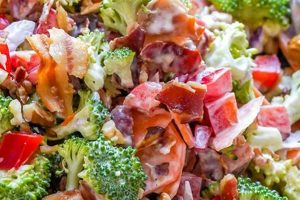
A dish composed of shredded or halved Brussels sprouts, combined with various complementary ingredients, creates a nutritious and flavorful salad. These additions can include dried fruits like cranberries or raisins, nuts such as pecans or walnuts, cheeses like Parmesan or goat cheese, and other vegetables like carrots or red onion. A variety of dressings, from vinaigrettes to creamy emulsions, enhance the flavor profile.
This culinary creation offers a compelling way to enjoy this cruciferous vegetable, often presenting it in a more palatable format for those who might otherwise find its strong flavor challenging. The inclusion of Brussels sprouts provides a rich source of vitamins, minerals, and fiber, contributing to a healthy diet. Variations on this salad have increased in popularity in recent decades as culinary trends emphasize fresh, seasonal ingredients and creative flavor combinations.
Exploring specific recipes and variations allows for a deeper understanding of the versatility and adaptability of this dish, offering numerous possibilities for customization based on individual preferences and dietary needs.
Tips for Creating Exceptional Brussels Sprouts Salads
Achieving optimal flavor and texture requires attention to several key aspects of preparation and ingredient selection.
Tip 1: Proper Brussels Sprouts Preparation: Trim the ends and remove any discolored outer leaves. Halving or thinly slicing sprouts ensures even cooking and optimal flavor distribution. For a smoother texture, consider shaving the sprouts using a mandoline or sharp knife.
Tip 2: Balancing Flavors: The inherent bitterness of Brussels sprouts benefits from complementary ingredients. Sweet elements, such as dried fruit or roasted root vegetables, balance the flavor profile. Tangy additions, like citrus segments or a vinaigrette, further enhance the overall taste.
Tip 3: Enhancing Texture: A variety of textures creates a more appealing salad. Toasted nuts or seeds provide satisfying crunch, while crumbled cheese adds creaminess. Incorporating other vegetables, like shredded carrots or thinly sliced red onion, contributes further textural interest.
Tip 4: Dressing Selection: The dressing serves as a unifying element. Consider the other ingredients when selecting a dressing. A light vinaigrette complements simpler salads, while a creamy dressing pairs well with richer ingredients like cheese and nuts.
Tip 5: Proper Ingredient Incorporation: Add the dressing shortly before serving to prevent the salad from becoming soggy. Gently toss all ingredients to ensure even coating and distribution.
Tip 6: Seasoning Considerations: Freshly ground black pepper and salt enhance the overall flavor profile. Experimenting with other spices, such as garlic powder or paprika, can add complexity and depth.
Tip 7: Storage Recommendations: Store prepared Brussels sprouts salad in an airtight container in the refrigerator. Consume within two to three days for optimal freshness and quality.
Attention to these details elevates this simple salad to a culinary experience, maximizing flavor and nutritional value.
By understanding these principles, one can create a diverse range of flavorful and satisfying salads featuring this versatile vegetable.
1. Fresh Brussels Sprouts

Fresh Brussels sprouts are essential for a high-quality salad. Their firm texture and vibrant green color contribute significantly to the final dish’s appeal. Using fresh sprouts ensures a pleasant, slightly bitter flavor that balances well with other ingredients. Conversely, older sprouts can develop a strong, sulfurous odor and a mushy texture, negatively impacting the salad’s overall quality. Consider a salad with fresh sprouts, toasted pecans, and cranberries dressed in a light vinaigrette. The sprouts offer a crisp, slightly bitter counterpoint to the sweet cranberries and crunchy pecans. Using wilted or older sprouts would diminish this contrast, resulting in a less appealing and potentially unpleasant salad.
The importance of fresh Brussels sprouts extends beyond flavor and texture. Their nutritional value is maximized when fresh, offering optimal levels of vitamins, minerals, and antioxidants. Freshness also impacts food safety. Older sprouts are more susceptible to spoilage and bacterial growth, posing potential health risks. Purchasing sprouts from reputable sources and storing them properly maintains freshness and minimizes these risks. For instance, storing sprouts unwashed in a perforated plastic bag in the refrigerator extends their shelf life and preserves their quality for optimal salad preparation.
Selecting fresh Brussels sprouts is paramount for creating a flavorful, nutritious, and visually appealing salad. Prioritizing freshness ensures the best possible flavor, texture, and nutritional value, maximizing the culinary potential of this versatile vegetable. This emphasis on quality ingredients contributes significantly to the overall success of the recipe.
2. Complementary Flavors

Balancing the distinct, sometimes assertive, flavor profile of Brussels sprouts is crucial for creating a palatable and enjoyable salad. Complementary flavors play a vital role in achieving this balance, transforming a potentially overpowering ingredient into a star component of a well-rounded dish. Understanding these flavor interactions allows for strategic ingredient selection and enhances the overall culinary experience.
- Sweetness as a Counterpoint
Incorporating sweet elements mitigates the inherent bitterness of Brussels sprouts. Dried fruits like cranberries, raisins, or chopped dates provide a concentrated sweetness that contrasts beautifully with the sprouts. Roasted root vegetables, such as sweet potatoes or butternut squash, offer a more subtle sweetness and contribute a creamy texture. This interplay of flavors creates a dynamic and appealing taste experience. Honey or maple syrup in the dressing can also achieve a similar effect.
- Acidity for Brightness
Acidity introduces brightness and cuts through the richness of the other ingredients, preventing the salad from feeling heavy. A vinaigrette with lemon juice, vinegar, or even a splash of orange juice adds a refreshing tang that complements the sprouts. This acidic element also helps to balance the sweetness of any added fruits or vegetables, creating a harmonious flavor profile. Pickled red onions offer both acidity and a textural element.
- Umami for Depth
Umami, a savory, almost meaty flavor, adds depth and complexity to Brussels sprouts salad. Ingredients like grated Parmesan cheese, toasted nuts, or crumbled bacon contribute umami notes that enhance the overall taste experience. These elements create a more robust and satisfying salad, appealing to a broader range of palates. A dressing incorporating fish sauce or Worcestershire sauce, used sparingly, can also provide a subtle umami boost.
- Spice for Complexity
While not always necessary, a touch of spice can elevate a Brussels sprouts salad. A pinch of red pepper flakes adds a subtle heat that contrasts nicely with the other flavors. Alternatively, incorporating spices like cumin or coriander into the dressing can provide warmth and complexity. The level of spice should be carefully considered to avoid overpowering the delicate balance of flavors.
By carefully considering these complementary flavors, one can create a Brussels sprouts salad that showcases the vegetable’s versatility and transforms it into a truly enjoyable dish. The strategic combination of these elements elevates the salad beyond a simple side dish to a complex and satisfying culinary creation.
3. Varied Textures

Textural diversity significantly enhances the sensory experience of a Brussels sprouts salad, elevating it from a simple dish to a more complex and satisfying culinary creation. The inherent texture of Brussels sprouts, whether raw and crunchy or cooked and tender, provides a foundation upon which to build textural contrast. This contrast stimulates the palate and adds interest, making each bite a multi-sensory experience.
Consider the interplay of textures achievable through the incorporation of common salad additions. Toasted nuts, such as pecans, walnuts, or almonds, offer a satisfying crunch that complements the softer texture of the sprouts. Seeds, like sunflower or pumpkin, provide a similar effect. Crumbled cheese, whether a hard cheese like Parmesan or a softer option like goat cheese, introduces a creamy element. These contrasting textures prevent the salad from becoming monotonous, ensuring an engaging dining experience.
Furthermore, the preparation method of the Brussels sprouts themselves influences the overall textural profile. Shaved or thinly sliced sprouts offer a delicate texture, while halved or quartered sprouts retain a more substantial bite. Roasting the sprouts before adding them to the salad creates a tender interior and slightly crispy edges, adding another layer of textural complexity. This versatility allows for customization based on individual preferences and desired outcomes. A salad featuring shaved raw Brussels sprouts, toasted pecans, and crumbled goat cheese offers a compelling example of textural interplay. The delicate sprouts contrast with the crunchy pecans and creamy goat cheese, creating a harmonious balance.
Understanding the importance of varied textures enables the creation of more dynamic and appealing Brussels sprouts salads. Thoughtful consideration of ingredient selection and preparation methods allows one to achieve optimal textural balance, maximizing enjoyment and culinary satisfaction. This principle applies not only to Brussels sprouts salads but to a wide range of culinary creations where textural diversity elevates the overall sensory experience.
4. Balanced Dressing

A balanced dressing is paramount in a Brussels sprouts salad recipe. The dressing serves not merely as a coating but as a unifying element, harmonizing the diverse flavors and textures within the salad. An overly acidic dressing can overwhelm the delicate flavors of the sprouts and other ingredients, while a dressing lacking acidity can result in a bland and uninspiring salad. The balance extends beyond acidity; sweetness, saltiness, and richness must also be carefully considered. For example, a vinaigrette with a high proportion of vinegar may clash with the inherent bitterness of the sprouts, creating an unpleasant sharpness. Conversely, a dressing overly reliant on sweetness can mask the nuanced flavors of the salad’s components. A balanced dressing, such as a maple-mustard vinaigrette, provides a touch of sweetness to complement the sprouts while incorporating the tang of mustard and acidity of vinegar to brighten the overall flavor profile.
The importance of a balanced dressing becomes particularly apparent when considering the other ingredients in the salad. If the salad includes sweet elements like dried fruit or roasted root vegetables, the dressing should offer a counterpoint of acidity or a savory element. Similarly, if the salad incorporates rich ingredients like cheese or nuts, the dressing should provide a lighter, brighter touch to avoid an overly heavy or cloying result. Consider a salad with Brussels sprouts, toasted walnuts, and crumbled blue cheese. A heavy, creamy dressing would overwhelm the other ingredients, while a light lemon vinaigrette with a touch of Dijon mustard offers a bright, acidic counterpoint to the rich cheese and nuts, allowing the flavors of the sprouts to shine through. Furthermore, the dressing’s consistency should be appropriate for the salad’s components. A light vinaigrette is ideal for a salad with delicate, shaved Brussels sprouts, while a slightly thicker dressing may be more suitable for a salad with heartier, roasted sprouts.
Achieving a balanced dressing is essential for a successful Brussels sprouts salad recipe. This balance ensures that the dressing complements rather than competes with the other ingredients, enhancing the overall flavor profile and creating a harmonious and satisfying culinary experience. The consideration of acidity, sweetness, saltiness, richness, and consistency are all critical factors in achieving this balance. Mastering this element of salad preparation elevates the dish from a simple combination of ingredients to a carefully crafted culinary composition.
5. Proper Seasoning

Proper seasoning is fundamental to a successful Brussels sprouts salad recipe. It elevates the inherent flavors of the ingredients, creating a balanced and harmonious dish. More than just salt and pepper, proper seasoning involves understanding the nuances of flavor profiles and how they interact to create a cohesive and delicious final product. This involves considering the existing flavors of the Brussels sprouts, other vegetables, fruits, nuts, cheeses, and the dressing, then enhancing them with appropriate seasonings.
- Salt’s Foundational Role
Salt is the cornerstone of seasoning, enhancing the natural flavors of the Brussels sprouts and other ingredients. It tempers bitterness and amplifies sweetness, creating a balanced flavor profile. However, over-salting can easily mask delicate flavors, making precise application crucial. Adding salt in stages throughout the preparation process, from seasoning the sprouts before roasting or sauting to adjusting the final seasoning just before serving, ensures even distribution and optimal flavor enhancement. The type of salt used also matters; coarse kosher salt or sea salt offer a cleaner flavor than table salt. For example, lightly salting shredded Brussels sprouts before adding a dressing helps to soften them and draw out excess moisture, preventing a watery salad and ensuring the dressing adheres evenly.
- Black Pepper’s Complexity
Freshly ground black pepper adds depth and complexity to the salad. Its subtle heat and earthy notes complement the slight bitterness of Brussels sprouts. The type of peppercorn used can also influence the flavor profile. Black peppercorns offer a classic, robust flavor, while white peppercorns provide a milder, earthier taste. Grinding peppercorns just before use releases their aromatic oils, maximizing their flavor impact. Freshly ground black pepper added to a lemon vinaigrette enhances the brightness of the citrus while providing a subtle heat that balances the sweetness of any dried fruit in the salad.
- Acidity’s Balancing Act
While often considered a component of the dressing, acidity also plays a crucial role in overall seasoning. A squeeze of lemon or a splash of vinegar can brighten the flavors of the salad, balancing richness and cutting through any residual bitterness from the Brussels sprouts. This acidic element also enhances the effectiveness of salt and pepper, allowing their flavors to shine through. A balsamic glaze drizzled over roasted Brussels sprouts adds a tangy sweetness that complements the charred flavor of the sprouts while balancing the richness of toasted walnuts or pecans.
- Herbs and Spices’ Nuances
Herbs and spices add nuanced layers of flavor to a Brussels sprouts salad. Fresh herbs like parsley, thyme, or chives provide a bright, herbaceous counterpoint to the earthiness of the sprouts. Dried spices, used sparingly, can introduce warmth and complexity. For example, a pinch of red pepper flakes adds a subtle heat, while a dusting of smoked paprika provides a smoky depth. Incorporating fresh or dried herbs directly into the dressing allows their flavors to infuse the entire salad. A sprinkle of chopped fresh thyme complements the earthy notes of roasted Brussels sprouts, while a pinch of red pepper flakes adds a touch of heat to a salad with a creamy dressing.
Proper seasoning elevates a Brussels sprouts salad from a simple combination of ingredients to a well-balanced and flavorful dish. By understanding the role of each element salt, pepper, acidity, herbs, and spices one can create a salad that showcases the versatility of Brussels sprouts while delivering a complex and satisfying culinary experience. Careful consideration of these factors ensures that the seasoning enhances, rather than masks, the natural flavors of the ingredients, resulting in a truly exceptional salad.
Frequently Asked Questions
This section addresses common inquiries regarding the preparation and enjoyment of Brussels sprouts salads.
Question 1: How can bitterness in Brussels sprouts be mitigated in a salad?
Bitterness, a natural characteristic of Brussels sprouts, can be balanced through several culinary techniques. Roasting or sauting reduces bitterness and develops a sweeter flavor profile. Pairing with complementary ingredients, such as sweet dried fruits, acidic dressings, or rich cheeses, also offsets the bitterness. Proper seasoning with salt further enhances sweetness and balances the overall flavor.
Question 2: What are optimal storage methods for maximizing Brussels sprouts freshness?
Unwashed Brussels sprouts should be stored in a perforated plastic bag within the refrigerator’s crisper drawer. This method maintains optimal humidity levels, preventing premature wilting and preserving freshness for up to a week. Washing sprouts before storage promotes spoilage and should be avoided.
Question 3: Can frozen Brussels sprouts be used in salads, and if so, how should they be prepared?
While fresh Brussels sprouts are generally preferred, frozen sprouts can be utilized. Thawing and thoroughly drying them before incorporating them into a salad is essential to prevent excess moisture. Roasting or sauting frozen sprouts after thawing further enhances their flavor and texture.
Question 4: What dressings best complement a Brussels sprouts salad?
Dressings that balance the sprouts’ flavor profile are ideal. Vinaigrettes with acidic components, such as lemon juice or vinegar, provide brightness and cut through richness. Creamy dressings incorporating ingredients like mayonnaise or yogurt offer a richer counterpoint but should be used judiciously to avoid overpowering the salad.
Question 5: How can one prevent a Brussels sprouts salad from becoming soggy?
Sogginess can be avoided by adding the dressing immediately before serving. Ensuring that all ingredients, including the Brussels sprouts, are thoroughly dry before combining them further mitigates this issue. Storing dressed and undressed salad components separately allows for optimal texture retention until serving.
Question 6: Beyond raw, what other preparation methods can enhance Brussels sprouts in a salad?
Roasting, sauting, or grilling Brussels sprouts before adding them to a salad enhances their flavor profile and adds textural complexity. These methods caramelize the sprouts’ sugars, imparting a subtle sweetness and creating crispy outer leaves. Thinly shaving raw sprouts also offers a delicate texture and maximizes surface area for absorbing dressing flavors.
Understanding these key aspects of Brussels sprouts salad preparation ensures a satisfying culinary experience. Addressing these common concerns facilitates recipe customization and successful integration of this versatile vegetable into a diverse range of salads.
Further exploration of specific recipe variations and ingredient combinations provides additional opportunities for culinary creativity and personalized flavor experiences.
Brussels Sprouts Salad Recipe
Exploration of the multifaceted nature of Brussels sprouts salad recipes reveals the potential of this cruciferous vegetable beyond its traditional preparations. Emphasis on ingredient selection, complementary flavor pairings, textural diversity, and balanced dressings underscores the ability to create culinary compositions that showcase the versatility of Brussels sprouts. Proper seasoning techniques further elevate these salads, transforming them into sophisticated and satisfying dishes.
The adaptability of Brussels sprouts salad recipes provides a canvas for culinary creativity. From the selection of fresh, vibrant sprouts to the nuanced interplay of flavors and textures, each element contributes to the overall dining experience. This exploration encourages continued experimentation and appreciation for the potential of this often-underestimated vegetable within the culinary landscape.