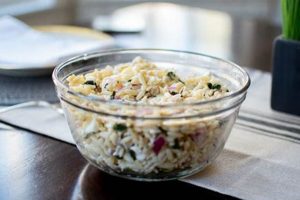
This classic American dish features distinct layers of iceberg lettuce, tomatoes, onions, green peas, shredded cheddar cheese, bacon bits, and a creamy mayonnaise-based dressing. Variations sometimes include hard-boiled eggs, black olives, or different types of cheese. Its construction creates visually appealing strata, making it a popular choice for potlucks, picnics, and holiday gatherings.
The layered approach offers several advantages. Each ingredient retains its individual flavor and texture, contributing to a satisfyingly complex experience. The salad can be prepared ahead of time, allowing the flavors to meld and the components to chill thoroughly, a benefit for busy hosts. Its enduring popularity speaks to its accessible ingredients, simple assembly, and refreshing taste. This layered salad’s roots are in the mid-20th century, a time when convenience foods were gaining popularity. Its simple yet elegant presentation made it a festive addition to social gatherings and family meals.
The following sections will delve into ingredient selection, step-by-step assembly instructions, variations on the classic recipe, and tips for successful presentation and storage.
Tips for a Successful Layered Salad
Achieving optimal results with this layered salad requires attention to a few key details. The following tips offer guidance for ingredient selection, assembly, and presentation.
Tip 1: Ingredient Quality Matters: Utilizing fresh, high-quality ingredients significantly impacts the final flavor. Opt for crisp lettuce, ripe tomatoes, and finely diced onions.
Tip 2: Proper Drainage is Essential: Excess moisture can lead to a soggy salad. Thoroughly drain canned peas and ensure tomatoes are adequately dried before layering. Consider salting diced tomatoes and allowing them to drain in a colander to remove excess moisture.
Tip 3: Consistent Layer Thickness: Aim for relatively even layers to ensure a balanced distribution of flavors and an aesthetically pleasing presentation.
Tip 4: Chilling Enhances Flavor: Allowing the salad to chill for at least two hours, or preferably overnight, allows the flavors to meld and the ingredients to become more cohesive.
Tip 5: Dressing Application: The mayonnaise-based dressing should be spread evenly over each layer to ensure optimal flavor distribution and prevent dryness.
Tip 6: Ingredient Variation: While the traditional recipe provides a solid foundation, experimentation with ingredients can add a personal touch. Consider incorporating different cheeses, such as crumbled blue cheese or Monterey Jack, or adding a layer of hard-boiled eggs.
Tip 7: Presentation Considerations: Serving the salad in a clear glass bowl showcases the distinct layers and adds visual appeal. Garnishing with fresh herbs or a sprinkle of paprika can further enhance the presentation.
By following these guidelines, one can elevate this classic dish from simple to exceptional, ensuring a delightful culinary experience.
This comprehensive approach to ingredient selection, preparation, and presentation will guarantee a flavorful and visually appealing layered salad, perfect for any occasion.
1. Layered Construction

The defining characteristic of the traditional seven layer salad is its layered construction. This method is not merely for aesthetics; it significantly impacts the flavor profile, texture, and overall dining experience. Understanding the nuances of this construction is crucial for successful replication and appreciation of this classic dish.
- Ingredient Integrity:
Layering prevents the ingredients from becoming a homogenous mixture, allowing each component to retain its distinct flavor and texture. This is particularly important for maintaining the crispness of the lettuce and preventing the other vegetables from becoming soggy. Imagine biting into a crisp piece of lettuce followed by the burst of a juicy tomato and the satisfying crunch of bacon; this distinct experience is a direct result of the layered construction.
- Flavor Progression:
The layered approach creates a dynamic flavor progression with each bite. The palate encounters different combinations of ingredients depending on the forkful, offering a complex and engaging culinary experience. The top layer of dressing, for instance, provides an initial creamy taste, followed by the savory bacon, the sweetness of peas, and finally, the refreshing crunch of lettuce.
- Visual Presentation:
The distinct layers create a visually appealing presentation, making the salad an attractive centerpiece for any meal. The vibrant colors of the vegetables, the white of the dressing, and the contrasting textures create a feast for the eyes. This visual appeal adds to the overall enjoyment of the dish.
- Make-Ahead Convenience:
The layered construction lends itself well to make-ahead preparation. The salad can be assembled hours in advance and chilled, allowing the flavors to meld without compromising the texture of individual ingredients. This convenience is a key factor in the salad’s popularity for potlucks and gatherings.
In conclusion, the layered construction is integral to the identity and success of the traditional seven layer salad. It is this meticulous layering that contributes to the salad’s unique flavor profile, pleasing texture, and visual appeal, while also offering the convenience of advanced preparation. This structural approach elevates a simple combination of ingredients into a cohesive and satisfying dish.
2. Classic Ingredients

The traditional seven layer salad’s enduring appeal stems partly from its reliance on readily available, classic ingredients. These components, while simple individually, contribute collectively to a complex and satisfying flavor profile. The selection and interplay of these ingredients are crucial for replicating the authentic experience of this classic dish. Iceberg lettuce provides a crisp foundation, its neutral flavor balancing the more assertive tastes of other components. Tomatoes introduce a juicy sweetness and vibrant color. The sharp bite of onions offers a pungent counterpoint, while sweet peas add a touch of freshness. Shredded cheddar cheese contributes a creamy, savory element, complemented by the salty, smoky flavor of bacon bits. Finally, the mayonnaise-based dressing binds the layers together, adding a rich, tangy finish. This specific combination creates a balanced interplay of textures and tastes, a hallmark of the traditional recipe.
Consider the impact of ingredient substitution. Replacing iceberg lettuce with romaine, while seemingly minor, alters the texture and overall balance. Romaine’s stronger flavor can overpower the more delicate sweetness of the peas. Similarly, substituting a different cheese, such as pepper jack, introduces a spiciness that deviates significantly from the traditional profile. These examples demonstrate the importance of adhering to the classic ingredient list for an authentic experience. This understanding allows for informed decisions when adapting the recipe while preserving its essential character. For instance, substituting turkey bacon for traditional bacon caters to dietary restrictions while maintaining a similar smoky flavor profile. This approach allows for customization without compromising the fundamental balance of the dish.
The classic ingredients of the traditional seven layer salad represent more than just a list of components; they are essential to the dish’s identity. Understanding their individual contributions and interplay is crucial for successful preparation and appreciation of this classic American salad. Careful ingredient selection, informed substitutions, and an appreciation for the traditional composition are key to preserving the authentic flavor and experience of this timeless dish. This knowledge empowers both novice and experienced cooks to replicate the classic salad or adapt it thoughtfully to individual preferences and dietary needs.
3. Mayonnaise-based Dressing

The mayonnaise-based dressing in a traditional seven-layer salad provides more than just a creamy texture; it acts as a unifying element, binding the diverse ingredients and contributing significantly to the overall flavor profile. Its role extends beyond mere condiment, influencing the salad’s structural integrity, flavor balance, and overall sensory experience.
- Binding Agent:
The dressing’s viscosity helps adhere the layers together, preventing them from shifting and maintaining the salad’s distinct structure. This cohesive property allows for clean slicing and serving, preserving the layered presentation. Without a sufficiently thick dressing, the salad’s structural integrity would be compromised, resulting in a less visually appealing and potentially messy dish.
- Flavor Balance:
The tangy, rich flavor of mayonnaise complements the other ingredients, balancing the sweetness of the peas, the sharpness of the onions, and the saltiness of the bacon. This balance prevents any single flavor from dominating, creating a harmonious blend. The creamy richness also tempers the crispness of the lettuce and the acidity of the tomatoes, contributing to a more rounded flavor experience.
- Moisture and Texture:
The dressing adds moisture, preventing the salad from drying out, especially during refrigeration. This moisture also contributes to the creamy mouthfeel, contrasting with the crisp vegetables and crunchy bacon. The interplay of textures, from creamy to crisp, is a key element of the salad’s appeal.
- Customization and Variation:
While traditional recipes call for plain mayonnaise, the dressing offers opportunities for customization. Incorporating ingredients like sour cream, buttermilk, or herbs can add complexity and personalize the flavor profile. These variations allow for adjustments to the dressing’s tanginess, richness, and overall flavor intensity, catering to individual preferences.
The mayonnaise-based dressing is integral to the traditional seven-layer salad, contributing to its structure, flavor balance, and overall appeal. Its function extends beyond a simple topping; it’s a key component that binds the ingredients and enhances the sensory experience. From its role as a unifying agent to its potential for customization, the dressing plays a crucial role in defining the character of this classic dish.
4. Make-Ahead Convenience

The make-ahead nature of the traditional seven-layer salad significantly contributes to its enduring popularity, particularly for social gatherings and busy schedules. This convenience factor differentiates it from salads requiring last-minute assembly, offering hosts valuable flexibility and reducing stress associated with meal preparation. Examining the facets of this convenience reveals its impact on both practical logistics and the overall dining experience.
- Reduced Preparation Time on the Day of Serving:
Assembling the salad the day before an event frees up valuable time for other tasks. This is especially beneficial for large gatherings or when multiple dishes are being prepared. Rather than rushing through salad assembly at the last minute, hosts can focus on other elements of the meal or simply enjoy the company of their guests. This pre-preparation transforms the salad from a potential time constraint into a convenient, stress-free element of the menu.
- Enhanced Flavor Development:
Chilling the salad for several hours, or even overnight, allows the flavors to meld and deepen. The mayonnaise-based dressing subtly infuses the other ingredients, creating a more cohesive and flavorful experience. This chilling period enhances the overall taste, transforming individual components into a unified, flavorful dish.
- Simplified Serving Logistics:
A pre-assembled salad simplifies serving logistics. The dish can be easily transported to potlucks or picnics without the risk of spills or ingredient separation. This portability makes it a practical and convenient choice for gatherings outside the home, eliminating the need for on-site assembly.
- Optimized Ingredient Temperature:
Chilling ensures that all ingredients are served at the optimal temperature. This is particularly important for mayonnaise-based dressings, which should be kept cold for food safety reasons. The cool, refreshing temperature also enhances the salad’s palatability, particularly during warmer months. This controlled temperature contributes both to food safety and a more enjoyable dining experience.
The make-ahead convenience of the traditional seven-layer salad significantly enhances its appeal, offering practical advantages and contributing to a more relaxed and enjoyable dining experience. From reduced preparation time to enhanced flavor development, this characteristic simplifies logistics and elevates the overall culinary experience, solidifying its status as a popular choice for gatherings of all sizes. This inherent practicality, combined with its appealing presentation and flavor profile, explains the enduring presence of this classic salad on tables across generations.
5. Visual Appeal
The visual appeal of the traditional seven-layer salad is a defining characteristic, contributing significantly to its popularity and perceived value. This aesthetic quality is not merely superficial; it enhances the dining experience, stimulating appetite and creating a sense of anticipation. The distinct layers, vibrant colors, and textural contrasts contribute to this visual appeal, transforming a simple combination of ingredients into an eye-catching culinary creation.
- Layered Presentation:
The clearly defined layers showcase the individual ingredients, creating a visually engaging presentation. This layered structure, readily visible through a clear glass serving dish, offers a preview of the flavors and textures within, stimulating appetite and adding an element of anticipation to the dining experience. This visual stratification distinguishes the salad from other, more homogenous dishes, elevating its perceived value and aesthetic appeal.
- Color Contrast:
The vibrant colors of the ingredientsthe deep red of tomatoes, the bright green of peas and lettuce, the white of the onions and dressing, and the rich orange of cheddar cheesecreate a striking visual contrast. This colorful composition enhances the salad’s attractiveness, making it a visually appealing centerpiece for any meal. The contrast between these vibrant hues stimulates visual interest and contributes to the perception of freshness and quality.
- Textural Variation:
The variety of textures, from the crisp lettuce and crunchy bacon to the creamy dressing and soft tomatoes, adds another dimension to the visual appeal. This interplay of textures is visually apparent, further enhancing the salad’s attractiveness and suggesting a multi-sensory dining experience. The visual cues of different textures create anticipation for the contrasting mouthfeel, adding another layer of enjoyment.
- Serving Vessel:
The traditional choice of a clear glass bowl or trifle dish maximizes the visual impact of the layered salad. The transparency of the vessel allows for full appreciation of the colorful layers and distinct ingredients, enhancing the presentation and overall aesthetic. This deliberate choice of servingware further emphasizes the visual aspect of the dish, elevating it from a simple salad to a visually striking centerpiece.
The visual appeal of the traditional seven-layer salad is integral to its identity and enduring popularity. The strategic layering, vibrant colors, textural variations, and thoughtful presentation combine to create a dish that is as visually satisfying as it is delicious. This emphasis on aesthetics elevates the dining experience, transforming a simple combination of ingredients into a visually captivating and appetizing culinary creation. The visual appeal, therefore, plays a crucial role in the perceived value and enjoyment of this classic American dish.
Frequently Asked Questions
This section addresses common inquiries regarding the traditional seven-layer salad, providing clarity on preparation methods, ingredient selection, and variations.
Question 1: Can iceberg lettuce be substituted with other types of lettuce?
While other lettuces can be used, iceberg lettuce is preferred for its neutral flavor and crisp texture, which provides a sturdy base and contrasts well with the other ingredients. Substitutions may alter the salad’s traditional flavor profile and structural integrity.
Question 2: What can be used in place of bacon for vegetarian variations?
To maintain a similar smoky flavor and textural element, vegetarian bacon bits or crumbled, cooked tempeh can be substituted. Roasted, chopped nuts or seeds can also provide a satisfying crunch.
Question 3: How long can the salad be stored in the refrigerator?
Properly stored in an airtight container, the salad can be refrigerated for up to three days. However, optimal quality and freshness are best within the first 24 hours.
Question 4: Is it necessary to drain the canned peas?
Thoroughly draining the peas is crucial to prevent excess moisture from accumulating in the salad, which can lead to a soggy texture and diluted flavors.
Question 5: Can the layers be assembled in a different order?
While variations exist, the traditional order is designed for optimal flavor and texture. Altering the order may impact the overall balance and structural integrity of the salad.
Question 6: What are some common variations on the traditional dressing?
Adding sour cream or buttermilk to the mayonnaise base creates a lighter, tangier dressing. Incorporating herbs, such as dill or chives, can further enhance the flavor profile.
Understanding these frequently asked questions provides a comprehensive foundation for successful preparation and enjoyment of the traditional seven-layer salad. Careful consideration of these points ensures a flavorful and visually appealing culinary experience.
The following section will explore various adaptations and modern interpretations of this classic dish, showcasing its versatility and enduring appeal.
Traditional Seven Layer Salad Recipe
This exploration of the traditional seven-layer salad recipe has illuminated its enduring appeal, stemming from a combination of accessible ingredients, straightforward assembly, and a visually striking presentation. The layered approach preserves the distinct flavors and textures of individual components, from crisp lettuce and juicy tomatoes to savory bacon and creamy dressing. Furthermore, the make-ahead convenience makes this salad an ideal choice for gatherings, while its adaptability allows for personalized variations. The historical context reveals its emergence during a period of evolving culinary trends, highlighting its adaptation and enduring relevance in contemporary cuisine.
The traditional seven-layer salad recipe represents more than a simple combination of ingredients; it embodies a culinary tradition that continues to resonate with individuals across generations. Its adaptability ensures its continued evolution, while its core elements remain a testament to the enduring appeal of classic American cuisine. Further exploration of regional variations and modern interpretations promises to uncover new dimensions of this timeless dish, solidifying its place as a staple in culinary repertoire.