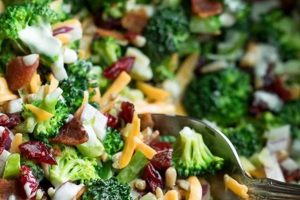
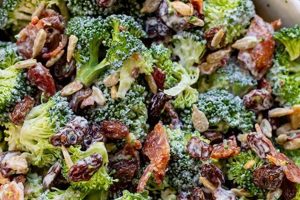
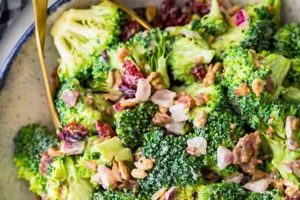
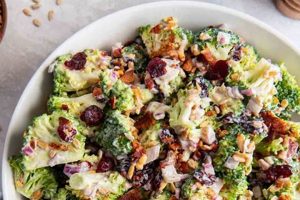
A combination of cooked broccoli florets, cheddar cheese, and a creamy dressing often featuring mayonnaise forms the foundation of this popular side dish. Variations may include additions like dried cranberries, sunflower seeds, red onion, or bacon. A simple vinaigrette-based dressing can be substituted for mayonnaise for a lighter version.
This dish offers a palatable way to incorporate cruciferous vegetables into one’s diet. Broccoli provides essential vitamins, minerals, and fiber. The addition of cheese offers calcium and protein. While the classic version is often associated with potlucks and family gatherings, its adaptable nature allows for modifications catering to various dietary needs and preferences. Healthier versions can be achieved through ingredient substitutions and portion control.
Further exploration will cover variations on the basic formula, tips for achieving optimal texture and flavor, and suggestions for complementary dishes.
Tips for a Successful Broccoli Cheddar Salad
Achieving a well-balanced and flavorful broccoli cheddar salad requires attention to several key details. The following tips offer guidance for optimal results.
Tip 1: Blanch the Broccoli: Briefly submerging broccoli florets in boiling water, followed by an immediate ice bath, ensures vibrant color and tender-crisp texture. Overcooking results in a mushy, less appealing salad.
Tip 2: Cheese Selection Matters: Sharp or extra-sharp cheddar provides the most pronounced flavor. Consider using a combination of shredded and cubed cheese for textural variation.
Tip 3: Dressing Consistency: The dressing should be thick enough to coat the broccoli and other ingredients without being overly heavy. Adjust the mayonnaise or vinaigrette quantity as needed.
Tip 4: Flavorful Enhancements: Red onion adds a pungent bite, while dried cranberries or raisins offer sweetness. Toasted sunflower seeds or nuts contribute satisfying crunch. Bacon bits provide a savory, smoky element.
Tip 5: Seasoning is Key: Salt and freshly ground black pepper are essential. A touch of garlic powder or onion powder can enhance the overall flavor profile.
Tip 6: Chilling Time: Allowing the salad to chill for at least 30 minutes before serving allows the flavors to meld and enhances the overall experience.
Tip 7: Proper Storage: Store leftover salad in an airtight container in the refrigerator for up to three days.
By following these guidelines, one can create a broccoli cheddar salad that is both visually appealing and delicious. Attention to detail, from ingredient selection to chilling time, contributes significantly to the final product.
With these tips in mind, one is well-equipped to explore various recipe variations and make this classic dish their own.
1. Fresh Broccoli

Fresh broccoli plays a crucial role in a successful broccoli cheddar salad recipe. Its quality significantly impacts the final dish’s flavor, texture, and visual appeal. Selecting and preparing fresh broccoli correctly elevates this simple salad from ordinary to exceptional.
- Visual Appeal
Vibrant green color signifies freshness. Dull or yellowing florets indicate aging and potential bitterness. The visual appeal of the salad relies heavily on the broccoli’s fresh appearance, contributing to a more appetizing dish.
- Texture
Fresh broccoli offers a crisp, tender texture when properly cooked. Staleness leads to a softer, less desirable texture, detracting from the salad’s overall appeal. Blanching fresh broccoli preserves its desirable texture, contrasting nicely with the creamy dressing and other ingredients.
- Flavor
Fresh broccoli possesses a mild, slightly sweet flavor. Staleness introduces bitterness, negatively impacting the overall taste. The subtle sweetness of fresh broccoli balances the sharpness of the cheddar and the richness of the dressing.
- Nutritional Value
Fresh broccoli provides optimal nutritional benefits, including vitamins, minerals, and antioxidants. These benefits diminish with age. Incorporating fresh broccoli maximizes the nutritional value of the salad.
The quality and freshness of broccoli directly influence the overall success of a broccoli cheddar salad. Careful selection and proper handling ensure the dish reaches its full potential in terms of flavor, texture, and nutritional value. Choosing fresh broccoli contributes significantly to a more vibrant, flavorful, and nutritious salad.
2. Sharp Cheddar

Sharp cheddar contributes significantly to the overall success of a broccoli cheddar salad recipe. Its distinct characteristics offer a crucial balance to other ingredients, impacting the final dish in several key ways.
The pronounced sharpness of aged cheddar provides a robust counterpoint to the relatively mild flavor of broccoli. This contrast creates a more complex and interesting flavor profile. A milder cheese would be easily overwhelmed by the other components, particularly the creamy dressing, resulting in a less satisfying experience. For example, a salad made with mild cheddar might taste predominantly of mayonnaise, whereas the sharp cheddar asserts its presence without overpowering the other flavors.
Sharp cheddar’s firm texture holds its shape well in the salad, preventing it from becoming mushy or clumping together. This textural integrity provides a pleasant contrast to the tender-crisp broccoli and the creamy dressing. Imagine biting into a salad where the cheese has softened and melded into the dressing the distinct textures would be lost, diminishing the overall enjoyment. Sharp cheddar maintains its distinct identity within the salad, enhancing the textural experience.
The robust flavor and firm texture of sharp cheddar are essential for achieving a well-balanced and enjoyable broccoli cheddar salad. The choice of cheese significantly influences the final product, impacting both the overall flavor profile and the textural complexity. Selecting sharp cheddar ensures a more satisfying and complete culinary experience, enhancing the inherent qualities of the other ingredients.
3. Creamy Dressing
Creamy dressing forms an integral part of the broccoli cheddar salad, serving as a unifying element that binds the ingredients and contributes significantly to the overall sensory experience. Its presence influences the salad’s texture, flavor, and perceived freshness.
The dressing’s creaminess, typically achieved through mayonnaise, provides a textural counterpoint to the crisp-tender broccoli and firm cheddar cheese. This textural interplay creates a more dynamic and enjoyable eating experience. A thinner, less viscous dressing would fail to adequately coat the ingredients, resulting in a less cohesive and potentially dry salad. For example, a vinaigrette, while suitable for some salads, lacks the necessary body to effectively bind the components of a broccoli cheddar salad. Mayonnaise-based dressings, on the other hand, provide the right level of richness and cling, ensuring each bite delivers a balanced combination of textures.
Beyond texture, the creamy dressing contributes to the salad’s flavor profile. Mayonnaise, often the base of such dressings, provides a tangy, slightly sweet backdrop that complements the sharpness of the cheddar and the subtle sweetness of the broccoli. Furthermore, the dressing provides a medium for incorporating additional flavors. Ingredients such as apple cider vinegar, Dijon mustard, or garlic powder can be seamlessly integrated into the dressing, enhancing the overall complexity of the salad. These additions can balance the richness of the mayonnaise and cheese, adding depth and intrigue to each bite.
Finally, the creamy dressing contributes to the perception of freshness. Its moisture helps prevent the broccoli from drying out, maintaining the salad’s appeal over time. This is particularly important for potlucks or gatherings where the salad might sit out for extended periods. A well-made creamy dressing helps preserve the broccolis vibrant color and crisp-tender texture, ensuring the salad remains appetizing and enjoyable even after some time has passed.
In conclusion, the creamy dressing is not merely a condiment but an essential component of a successful broccoli cheddar salad. Its role extends beyond simply adding moisture; it contributes significantly to the salad’s texture, flavor complexity, and perceived freshness. Careful consideration of the dressing’s consistency and flavor profile is crucial for achieving a well-balanced and satisfying final product.
4. Balanced Sweetness
Balanced sweetness plays a crucial role in a successful broccoli cheddar salad recipe. While not the dominant flavor, its presence is essential for creating a harmonious and nuanced flavor profile. The sweetness tempers the sharpness of the cheddar and the potential bitterness of the broccoli, preventing the salad from being overly savory. Understanding how to achieve this balance elevates the dish from simple to sophisticated.
- Dried Fruit
Dried cranberries or raisins are common additions that provide a concentrated sweetness. The chewy texture of dried fruit also offers a pleasant contrast to the crisp broccoli and creamy dressing. The quantity of dried fruit must be carefully considered; too much can overpower the other flavors, while too little fails to provide the necessary balance. For example, a handful of dried cranberries might be ideal for a standard-sized salad, whereas a larger quantity could make the salad taste excessively sweet.
- Sweeteners in the Dressing
A touch of sugar or honey in the dressing can subtly enhance the overall sweetness. This approach allows for more precise control compared to adding dried fruit. A small amount of sweetener can round out the flavor profile without introducing a distinct sweetness. A teaspoon of honey in a mayonnaise-based dressing, for instance, can subtly enhance the other flavors without making the dressing taste overtly sweet.
- Other Sweet Ingredients
Ingredients like chopped apples or red grapes can contribute sweetness while also adding textural variety. These options provide a different type of sweetness compared to dried fruit, often milder and less concentrated. Apples, for instance, offer a crisp, juicy sweetness that contrasts with the other ingredients. However, these additions can introduce more moisture, potentially affecting the salad’s overall texture and shelf life. Careful consideration of these factors is necessary when incorporating such ingredients.
- Balancing Acidity
The perceived sweetness can be further modulated by incorporating acidity. A splash of apple cider vinegar or lemon juice in the dressing can balance the sweetness, preventing it from becoming cloying. This interplay of sweet and sour adds depth and complexity to the flavor profile. For instance, a dressing with a touch of honey and a splash of apple cider vinegar creates a more balanced and nuanced flavor than a dressing with honey alone.
Achieving balanced sweetness requires careful consideration of the various contributing factors, including the type and quantity of sweet ingredients, the presence of acidity, and the overall flavor profile of the dressing. Successfully integrating these elements elevates the broccoli cheddar salad, creating a more harmonious and satisfying culinary experience.
5. Textural Contrast
Textural contrast contributes significantly to the enjoyment of a broccoli cheddar salad. The interplay of different textures creates a more dynamic and engaging sensory experience. A successful broccoli cheddar salad features a combination of crisp, creamy, and potentially crunchy elements, each playing a specific role in the overall composition. The absence of textural variety can result in a monotonous and less satisfying dish. Imagine a salad composed solely of soft ingredients the experience would lack the dynamism and interest provided by contrasting textures. Therefore, a well-executed broccoli cheddar salad leverages textural contrast to enhance its appeal.
Several ingredients contribute to the textural complexity of this salad. The broccoli, when properly blanched, provides a tender-crisp foundation. Sharp cheddar cheese offers a firm, slightly crumbly texture. The creamy dressing, typically mayonnaise-based, adds a smooth, rich element. Further textural contrast can be achieved through the incorporation of ingredients like toasted nuts, seeds, or dried cranberries. Sunflower seeds, for instance, introduce a satisfying crunch, while dried cranberries offer a chewy counterpoint to the other ingredients. Each element contributes a distinct textural note, creating a multi-faceted sensory experience.
The interplay of these textures elevates the broccoli cheddar salad beyond a simple combination of ingredients. It transforms the eating experience into something more engaging and memorable. The contrast between the crisp broccoli, the creamy dressing, and the firm cheese creates a dynamic interplay in the mouth. Additional textural elements, like crunchy nuts or chewy dried fruit, further amplify this effect. A well-balanced broccoli cheddar salad demonstrates a thoughtful consideration of texture, demonstrating an understanding of how these elements interact to create a more satisfying and enjoyable dish. The practical application of this understanding allows for the creation of a salad that is not only flavorful but also texturally stimulating, enhancing the overall dining experience.
6. Proper Chilling

Proper chilling is an essential step in preparing a broccoli cheddar salad, significantly impacting the final dish’s flavor, texture, and overall quality. Chilling allows the flavors to meld and develop fully, resulting in a more harmonious and enjoyable culinary experience. Furthermore, proper chilling enhances food safety by inhibiting bacterial growth.
- Flavor Development
Chilling allows the individual flavors of the ingredientsbroccoli, cheddar cheese, dressing componentsto meld and harmonize. This process creates a more cohesive and nuanced flavor profile. Immediately after mixing, the flavors may taste distinct and somewhat disjointed. Chilling allows these individual notes to blend, resulting in a more balanced and integrated flavor experience.
- Texture Enhancement
Chilling firms the broccoli and stabilizes the dressing, improving the salad’s overall texture. Warm broccoli tends to be slightly softer, and the dressing may be thinner. Chilling enhances the crispness of the broccoli and allows the dressing to thicken, creating a more pleasing textural contrast.
- Food Safety
Chilling inhibits the growth of bacteria that can cause foodborne illness. Mayonnaise-based dressings, in particular, are susceptible to bacterial growth at room temperature. Proper chilling minimizes this risk, ensuring the salad remains safe to consume. Maintaining the salad at a safe temperature is crucial, especially if it will be served at a potluck or other gathering where it might sit out for an extended period.
- Enhanced Presentation
Chilling allows the colors of the ingredients to become more vibrant. The bright green of the broccoli and the deep yellow of the cheddar become more visually appealing after chilling. A chilled salad generally looks more refreshing and appetizing than one that is at room temperature.
Proper chilling is not merely a final step but an integral part of the broccoli cheddar salad preparation process. It influences the final dish in several key ways, impacting flavor development, texture, food safety, and overall presentation. By understanding the importance of chilling and implementing it correctly, one ensures a more enjoyable and safer culinary experience.
7. Flavorful Additions

Flavorful additions represent a crucial element within a broccoli cheddar salad recipe, transforming a simple combination of ingredients into a complex and nuanced culinary experience. These additions contribute depth, texture, and visual appeal, elevating the salad beyond its basic components. The strategic incorporation of flavorful additions allows for customization and personalization, catering to individual preferences and dietary needs. A deeper understanding of these additions and their impact on the overall composition of the salad is essential for achieving optimal results.
Several categories of flavorful additions can enhance a broccoli cheddar salad. Nuts and seeds, such as sunflower seeds, slivered almonds, or toasted pecans, introduce a satisfying crunch and contribute healthy fats. Dried fruits, like cranberries or raisins, offer a touch of sweetness and chewy texture, contrasting with the crisp broccoli and creamy dressing. Red onion adds a pungent bite, while bacon bits provide a smoky, savory element. Fresh herbs, such as chopped chives or parsley, introduce a bright, herbaceous note. The choice of additions depends on desired flavor profiles and dietary considerations. For example, a vegan version might incorporate toasted pepitas and dried cranberries, while a more traditional version might include bacon bits and red onion.
The quantity of flavorful additions must be carefully calibrated. Overabundance can overwhelm the core flavors of broccoli and cheddar, while too little fails to make a noticeable impact. A balanced approach ensures each addition contributes to the overall composition without dominating the flavor profile. Consider the intensity of each addition’s flavor when determining the appropriate amount. For instance, a small amount of red onion can provide ample pungency, whereas a larger quantity might overpower the other ingredients. Careful consideration of these factors ensures a harmonious blend of flavors and textures.
The strategic use of flavorful additions allows for the creation of a broccoli cheddar salad that is not only delicious but also reflects individual preferences and creativity. Understanding the role of these additions within the overall composition of the salad empowers one to craft a dish that is both satisfying and personalized. The thoughtful incorporation of flavorful additions transforms a simple side dish into a culinary expression, demonstrating an appreciation for the nuances of flavor and texture.
Frequently Asked Questions
This section addresses common inquiries regarding broccoli cheddar salad preparation and variations.
Question 1: Can frozen broccoli be used?
While fresh broccoli is recommended for optimal texture and flavor, frozen broccoli can be substituted. Ensure it is thoroughly thawed and drained before incorporating it into the salad. Excess moisture can dilute the dressing and compromise the final product.
Question 2: How can the salad be made healthier?
A lighter version can be achieved by using a reduced-fat mayonnaise or substituting a vinaigrette-based dressing. Greek yogurt can also be incorporated into the dressing to boost protein and reduce fat content. Portion control is crucial, regardless of ingredient choices.
Question 3: How long can the salad be stored?
Properly stored in an airtight container in the refrigerator, broccoli cheddar salad can be enjoyed for up to three days. However, its quality, particularly the texture of the broccoli, may begin to deteriorate after the first day. Consume it as fresh as possible for the best experience.
Question 4: Can the recipe be adapted for different dietary restrictions?
The recipe can be adapted for various dietary needs. Vegan versions can be created using plant-based mayonnaise and cheese alternatives. Gluten-free variations require ensuring all added ingredients, such as croutons or seasonings, are certified gluten-free.
Question 5: What can be substituted for cheddar cheese?
While cheddar provides the classic flavor profile, other cheeses, such as Colby, Monterey Jack, or a blend, can be substituted. The choice of cheese will influence the final flavor, so select a cheese that complements the other ingredients and desired taste.
Question 6: How can one prevent the salad from becoming watery?
Excess moisture can result from several factors, including not thoroughly draining thawed frozen broccoli or adding overly juicy additions like tomatoes or cucumbers. Properly draining all ingredients and using a thicker dressing can minimize this issue.
Understanding these common concerns allows for a more informed and successful approach to broccoli cheddar salad preparation.
The following section will offer variations on the classic recipe, providing inspiration for customization and experimentation.
Broccoli Cheddar Salad Recipe
Exploration of the broccoli cheddar salad recipe reveals a dish offering more complexity than its seemingly simple ingredient list suggests. Careful consideration of each componentfrom the freshness of the broccoli to the sharpness of the cheddar, the creaminess of the dressing, and the judicious inclusion of balanced sweetness and textural contrastsdemonstrates the potential for culinary refinement. Proper chilling techniques further enhance the final product, allowing flavors to meld and textures to optimize. The adaptability of this recipe, evidenced by the numerous variations possible through flavorful additions and ingredient substitutions, solidifies its place as a versatile and adaptable culinary staple.
This exploration encourages a deeper appreciation for the nuances achievable within seemingly straightforward dishes. Attention to detail, an understanding of ingredient interactions, and a willingness to experiment with flavors and textures elevate the broccoli cheddar salad from a simple side dish to a culinary creation worthy of thoughtful preparation and enjoyment. The potential for customization invites further exploration and personal interpretations, ensuring the continued evolution and enjoyment of this classic recipe.