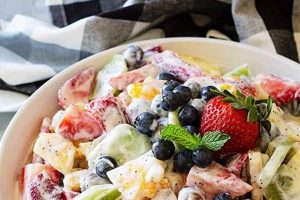
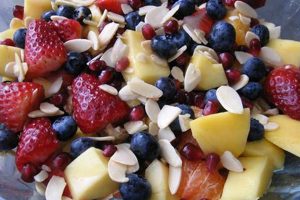
A dish composed primarily of blueberries combined with other fruits creates a refreshing and nutritious meal or snack. Variations can include a simple mix of berries or incorporate a wider array of fruits such as melon, citrus segments, or grapes. Often, a light dressing or syrup enhances the natural sweetness and complements the combined flavors. An example might feature blueberries, strawberries, and raspberries tossed with a honey-lime vinaigrette.
Fruit salads offer a significant source of vitamins, minerals, and antioxidants, contributing to overall well-being. The inclusion of blueberries, specifically, adds a potent dose of antioxidants and fiber. Historically, fruit salads have evolved from simple combinations of readily available seasonal fruits to more elaborate creations featuring diverse ingredients and intricate presentations. This evolution reflects a growing appreciation for both the nutritional and aesthetic value of fresh produce.
The following sections will explore optimal fruit pairings for blueberries, recommended dressings and flavor enhancements, and techniques for preparing and presenting this vibrant culinary creation.
Tips for Crafting the Perfect Blueberry Fruit Salad
Creating a vibrant and flavorful blueberry fruit salad requires attention to detail. These tips offer guidance for selecting ingredients, balancing flavors, and achieving optimal presentation.
Tip 1: Select ripe, but firm blueberries. Peak ripeness ensures optimal sweetness and flavor. Avoid overly soft or bruised berries.
Tip 2: Incorporate a variety of textures and flavors. Consider adding fruits like sliced strawberries, segmented oranges, or diced kiwi to create a dynamic sensory experience.
Tip 3: Balance sweetness and acidity. Tart fruits like raspberries or blackberries can offset the sweetness of blueberries and other mild fruits. A squeeze of lemon or lime juice can further enhance the flavor profile.
Tip 4: Prepare fruit close to serving time. This prevents oxidation and maintains the fresh appearance and flavor of the ingredients. Delicate fruits like bananas or apples should be added immediately before serving.
Tip 5: Choose a complementary dressing. A light vinaigrette, a honey-citrus glaze, or a simple dusting of powdered sugar can enhance the natural sweetness of the fruit. Avoid heavy or creamy dressings that might mask the delicate flavors.
Tip 6: Consider adding a touch of herbs. Fresh mint, basil, or even a sprig of rosemary can provide an unexpected aromatic dimension.
Tip 7: Pay attention to presentation. Arrange the fruit attractively in a bowl or on a platter. Garnishing with edible flowers or a dusting of spices can elevate the visual appeal.
By following these guidelines, one can create a fruit salad that is not only visually appealing but also delivers a burst of fresh, balanced flavors.
The culmination of these tips ensures a delightful culinary experience, highlighting the versatility and nutritional benefits of incorporating fresh fruit into one’s diet.
1. Fresh Blueberries

Fresh blueberries constitute a crucial element within a blueberry fruit salad recipe. Their quality directly impacts the overall flavor profile, texture, and visual appeal of the final dish. Utilizing fresh, as opposed to frozen or dried, blueberries offers a superior sensory experience. The plumpness and juiciness of fresh berries contribute significantly to the salad’s textural complexity. Furthermore, their vibrant color enhances the aesthetic presentation. A fruit salad incorporating fresh blueberries offers a burst of flavor unmatched by alternatives. For instance, a salad featuring fresh blueberries alongside other seasonal fruits and a light citrus vinaigrette provides a refreshing and flavorful summer dish.
The choice of fresh blueberries influences not only the taste but also the nutritional value of the fruit salad. Fresh berries retain a higher concentration of vitamins and antioxidants, contributing to a healthier meal. This nutritional advantage underscores the importance of prioritizing fresh blueberries in the recipe. Moreover, the natural sweetness of fresh blueberries allows for a reduction in added sugars, further enhancing the health benefits. Consider a fruit salad composed of fresh blueberries, raspberries, and sliced almondsa combination offering both flavor and nutritional value.
Selecting high-quality, fresh blueberries remains paramount for a successful blueberry fruit salad. Challenges such as sourcing out-of-season berries can be addressed by utilizing frozen blueberries as a viable alternative, though recognizing the subtle differences in texture and flavor they may introduce. Ultimately, prioritizing fresh blueberries elevates the culinary experience, offering a superior combination of flavor, texture, and nutritional benefit within the fruit salad. The choice directly affects the sensory and nutritional qualities of the dish.
2. Complementary Fruits
The success of a blueberry fruit salad hinges significantly on the thoughtful selection of complementary fruits. These additions contribute not only to a diverse flavor profile but also to textural complexity and visual appeal. Strategic pairings elevate the blueberry from a simple ingredient to the star of a balanced and nuanced culinary creation.
- Balancing Sweetness and Acidity
Blueberries possess a naturally sweet flavor profile. Incorporating fruits with a tart or acidic character creates a more balanced and refreshing palate experience. Examples include raspberries, blackberries, or segments of citrus fruits like oranges or grapefruits. This counterpoint prevents the salad from becoming overly sweet and allows the natural blueberry flavor to shine. The interplay of these contrasting flavors contributes to a more dynamic and satisfying culinary experience.
- Textural Variety
While blueberries offer a pleasingly firm yet juicy texture, incorporating fruits with varying textures creates a more engaging mouthfeel. Crisp fruits like apples or pears provide a contrasting crunch, while softer fruits like bananas or peaches contribute a creamy element. This interplay of textures elevates the salad beyond a simple mix of ingredients to a more sophisticated and satisfying dish. Consider the contrast between the pop of a blueberry and the satisfying crunch of a diced apple.
- Color and Visual Appeal
The deep blue of blueberries provides a visually striking base. Adding fruits of different colors creates a vibrant and appealing presentation. Strawberries contribute a bright red, while kiwi offers a contrasting green, and mango a sunny yellow. This colorful medley transforms a simple fruit salad into a feast for the eyes, enhancing the overall dining experience. Visual appeal plays a crucial role in enjoyment and often stimulates appetite.
- Seasonal Considerations
Utilizing seasonal fruits not only guarantees optimal ripeness and flavor but also allows for creative exploration throughout the year. In spring, pairings with strawberries and rhubarb offer a vibrant taste of the season. Summer brings opportunities to incorporate stone fruits like peaches and nectarines. Autumnal combinations might include apples and pears, while winter citrus fruits provide a refreshing contrast to the colder months. This approach ensures a dynamic and ever-evolving culinary experience. A fruit salad can be a reflection of the time of year, capturing the essence of seasonal flavors.
By carefully considering these factorsbalancing flavors, varying textures, enhancing visual appeal, and embracing seasonalityone can elevate a simple blueberry fruit salad into a truly exceptional culinary creation. The strategic inclusion of complementary fruits unlocks the full potential of the blueberry, transforming it from a single ingredient into the centerpiece of a complex and satisfying dish.
3. Balanced Sweetness
Balanced sweetness represents a critical factor in a successful blueberry fruit salad recipe. Blueberries, while naturally sweet, can become cloying if their sweetness isn’t tempered by other flavor components. An overabundance of sweetness can mask the nuanced flavors of the blueberries and other fruits within the salad, resulting in a less satisfying culinary experience. This underscores the importance of incorporating ingredients and techniques that contribute to a balanced flavor profile.
Several strategies can be employed to achieve balanced sweetness. Incorporating fruits with a tart or acidic profile, such as raspberries, green apples, or citrus segments, provides a counterpoint to the sweetness of the blueberries. A splash of lemon or lime juice can further enhance this balance. Additionally, herbs like mint or basil can introduce savory notes that complement the sweetness of the fruit. For example, a blueberry fruit salad featuring raspberries, sliced oranges, and a hint of mint achieves a harmonious balance, preventing excessive sweetness and allowing the individual flavors to shine. Another example could involve combining blueberries with tart green apples and a light dressing of honey and lemon juice. The tartness of the apples and the acidity of the lemon juice offset the sweetness of the blueberries and honey, resulting in a more complex and refreshing flavor profile.
Failure to achieve balanced sweetness can result in a one-dimensional flavor profile, limiting the overall enjoyment of the dish. The interplay of sweet, tart, and other complementary flavors elevates the sensory experience, creating a more nuanced and satisfying result. Understanding the role of balanced sweetness and employing appropriate techniques ensures a blueberry fruit salad that is both refreshing and flavorful. This principle extends beyond specific recipes, highlighting the importance of balanced flavor profiles in culinary arts generally. This careful orchestration of flavors transforms a simple fruit salad into a more sophisticated culinary experience.
4. Appropriate Dressing

The selection of an appropriate dressing significantly impacts the overall flavor profile and enjoyment of a blueberry fruit salad recipe. A well-chosen dressing complements the natural sweetness and delicate flavors of the fruit, while an unsuitable dressing can overpower or mask these nuances. Understanding the role and characteristics of various dressings allows for informed decision-making, ensuring a harmonious balance of flavors.
- Flavor Compatibility
The dressing’s flavor should harmonize with the fruits in the salad. Light vinaigrettes with citrus or honey notes often complement blueberries well. A balsamic vinaigrette, for instance, can provide a subtle tang that contrasts the sweetness of the berries, while a honey-lime dressing offers a bright, refreshing counterpoint. Heavier, cream-based dressings are generally less suitable, as they can mask the delicate flavors of the fruit. The goal is to enhance, not overpower, the natural fruit flavors.
- Texture and Consistency
The dressing’s texture should also be considered. A light and pourable vinaigrette coats the fruit evenly without weighing it down, allowing the individual pieces to maintain their texture and integrity. A thicker dressing might cling excessively, creating a heavy or soggy salad. For example, a thin honey-lemon vinaigrette allows the blueberries and other fruits to retain their individual textures, while a thick, creamy dressing could make the salad heavy and less appealing. The desired outcome is a light, refreshing salad where each fruit’s texture contributes to the overall sensory experience.
- Sweetness Level
The dressing’s sweetness should complement the existing sweetness of the fruit, not exacerbate it. A dressing that is overly sweet can overwhelm the natural sugars in the blueberries and other fruits. A less sweet dressing, or one with a hint of acidity, balances the overall sweetness and prevents the salad from becoming cloying. A light honey vinaigrette offers a subtle sweetness that complements the berries, while a sugary syrup might make the salad overly sweet and less refreshing.
- Ingredient Quality
Using high-quality ingredients in the dressing, such as fresh herbs, good quality oils, and freshly squeezed citrus juice, elevates the overall flavor profile of the fruit salad. Freshly squeezed lemon juice provides a brighter, more vibrant flavor than bottled lemon juice, and high-quality olive oil contributes a more nuanced flavor than a generic vegetable oil. These small details can significantly enhance the final result, emphasizing the importance of ingredient selection in even a simple fruit salad dressing.
By carefully considering these facets of dressing selectionflavor compatibility, texture and consistency, sweetness level, and ingredient qualityone can create a blueberry fruit salad that is not only visually appealing but also offers a harmonious and delightful balance of flavors. The appropriate dressing enhances the natural characteristics of the fruit, resulting in a more satisfying and enjoyable culinary experience. A well-dressed fruit salad offers a sophisticated interplay of flavors and textures, transforming a simple dish into a culinary delight.
5. Proper Storage
Proper storage plays a vital role in preserving the quality and extending the lifespan of a blueberry fruit salad. Neglecting appropriate storage techniques can lead to undesirable consequences, including premature spoilage, flavor degradation, and textural changes. These outcomes detract from the intended sensory experience and can compromise food safety. Effective storage maintains the freshness, vibrancy, and overall appeal of the salad, ensuring optimal enjoyment and minimizing food waste. For instance, a freshly prepared fruit salad containing blueberries, if left at room temperature for an extended period, can become susceptible to bacterial growth and enzymatic browning, diminishing its quality and potentially posing health risks. Conversely, proper refrigeration in an airtight container can preserve its freshness for several days.
Several factors influence optimal storage. Temperature control is paramount; refrigeration at temperatures between 34F and 40F (1C and 4C) inhibits microbial growth and slows down enzymatic reactions that lead to spoilage. Air exposure accelerates oxidation and browning, particularly in fruits like apples and bananas. Storing the fruit salad in an airtight container or covering it tightly with plastic wrap minimizes air contact and preserves freshness. Furthermore, delaying the addition of highly perishable fruits like bananas until just before serving can prevent premature softening and browning within the mixed salad. Consider a fruit salad prepared for a picnic: storing the salad components separately and combining them just before serving, along with keeping the salad chilled in a cooler, demonstrates a practical application of these principles.
Understanding proper storage techniques is essential for maximizing the shelf life and maintaining the quality of a blueberry fruit salad. Implementing these practices not only ensures a more enjoyable culinary experience but also contributes to responsible food consumption by minimizing waste. Proper storage safeguards the investment of time and resources involved in preparing the salad, preserving its intended flavors, textures, and visual appeal. This careful attention to detail elevates the simple act of fruit salad preparation to a more mindful and rewarding culinary endeavor.
6. Creative Presentation

Creative presentation elevates a blueberry fruit salad from a simple dish to a visually appealing culinary experience. Visual appeal significantly influences perceived enjoyment and can even enhance perceived flavor. Consider the impact of color arrangement: a medley of blueberries, raspberries, and sliced kiwi, arranged in a radial pattern, offers a more engaging presentation than a haphazard mix of the same ingredients. Similarly, the choice of serving vessel contributes to the overall aesthetic; a rustic wooden bowl conveys a different feel than a sleek glass platter. Garnishing with fresh mint sprigs or a light dusting of powdered sugar adds a touch of elegance and further enhances visual appeal. These seemingly small details contribute significantly to the overall dining experience, transforming a basic fruit salad into a more memorable and satisfying culinary creation.
Several factors contribute to creative presentation. Color plays a crucial role; the deep blue of blueberries provides a striking base, and incorporating a variety of colorsreds from strawberries, greens from kiwi or honeydew, oranges from mandarin segmentscreates a visually dynamic composition. Texture also plays a significant role; contrasting the smooth surface of blueberries with the rough texture of raspberries or the segmented texture of an orange adds visual interest. The arrangement of ingredients influences perception; a carefully arranged salad appears more intentional and appealing than a carelessly tossed one. Finally, the choice of serving dish and garnishes further enhances the overall presentation. For instance, serving a blueberry fruit salad in hollowed-out pineapple halves creates a tropical and visually striking presentation. Garnishing with toasted coconut flakes further complements this theme. Alternatively, a simple arrangement in a clear glass bowl emphasizes the vibrant colors of the fruit itself. These examples demonstrate how creative presentation can transform a simple fruit salad into a visually captivating dish.
The practical significance of creative presentation extends beyond mere aesthetics. An appealing presentation enhances the perceived value and enjoyment of the dish, encouraging consumption and appreciation of fresh, healthy ingredients. This is particularly relevant in contexts such as encouraging children to eat more fruit or creating an impressive dish for a special occasion. While nutritional value remains paramount, presentation plays a crucial role in influencing perceptions and behaviors related to food consumption. Therefore, incorporating creative presentation techniques enhances not only the sensory experience but also promotes healthier eating habits. Understanding this connection allows for a more holistic approach to food preparation, recognizing the interplay between visual appeal, flavor, and overall enjoyment.
7. Nutritional Value

Nutritional value represents a significant aspect of a blueberry fruit salad recipe, extending beyond mere enjoyment to encompass tangible health benefits. Blueberries themselves offer a dense concentration of antioxidants, particularly anthocyanins, which contribute to cellular health and protect against oxidative stress. Furthermore, they provide dietary fiber, promoting digestive health and satiety. When combined with other fruits in a salad, the nutritional profile expands. For instance, incorporating strawberries adds vitamin C, an essential nutrient for immune function, while the addition of oranges contributes folate, crucial for cell growth and development. A well-composed blueberry fruit salad, therefore, offers a synergistic blend of vitamins, minerals, and antioxidants, contributing to overall well-being. This nutritional synergy distinguishes a fruit salad from consumption of individual fruits, offering a more comprehensive nutritional package.
The practical implications of this nutritional density are substantial. Regular consumption of nutrient-rich foods, such as a blueberry fruit salad, supports long-term health and reduces the risk of chronic diseases. The antioxidants present in blueberries, for example, have been linked to improved cognitive function and cardiovascular health. Dietary fiber contributes to healthy weight management and regulates blood sugar levels. Furthermore, the diverse array of vitamins and minerals present in a mixed fruit salad supports various bodily functions, from immune response to bone health. Consider the difference between a breakfast of processed cereal and a blueberry fruit salad: the latter provides significantly more nutrients, contributing to sustained energy levels and overall health throughout the day. This contrast highlights the importance of prioritizing nutrient-rich foods for optimal well-being. Selecting a variety of colorful fruits maximizes the range of nutrients consumed.
Optimizing the nutritional value of a blueberry fruit salad requires careful consideration of ingredient selection and preparation methods. Prioritizing fresh, ripe fruits ensures maximum nutrient retention. Minimizing added sugars, such as in heavy syrups or dressings, further enhances the nutritional profile. Additionally, incorporating a variety of fruits maximizes the range of vitamins and minerals consumed. While challenges such as seasonality and availability can influence ingredient choices, understanding the nutritional contributions of different fruits allows for informed substitutions and adaptations. Ultimately, a well-crafted blueberry fruit salad offers a delicious and convenient way to incorporate a potent dose of essential nutrients into one’s diet, contributing to both immediate and long-term health benefits. This understanding transforms the perception of a fruit salad from a simple treat to a valuable component of a health-conscious dietary strategy.
Frequently Asked Questions
This section addresses common inquiries regarding blueberry fruit salad preparation and storage, offering practical guidance for optimal results.
Question 1: How long can a blueberry fruit salad be stored in the refrigerator?
Properly stored in an airtight container, a blueberry fruit salad typically maintains optimal quality for three to five days in a refrigerator set between 34F and 40F (1C and 4C). However, variations in storage conditions and the specific fruits included can influence this timeframe.
Question 2: Can frozen blueberries be used in a fruit salad?
While fresh blueberries are generally preferred for their superior texture and flavor, frozen blueberries can be substituted. Thawing them completely before adding them to the salad prevents excess moisture and maintains the salad’s structural integrity. Be aware that thawed blueberries may exhibit a slightly softer texture than fresh berries.
Question 3: What are the best fruits to pair with blueberries in a salad?
Optimal pairings complement and enhance the flavor profile of blueberries. Fruits with contrasting sweetness and acidity, such as strawberries, raspberries, oranges, and kiwi, create a balanced and refreshing flavor combination. Textural variety can also be achieved by incorporating fruits like apples or grapes.
Question 4: How can browning be prevented in a fruit salad?
Enzymatic browning, a natural oxidation process, can affect certain fruits like apples and bananas. Minimizing air exposure by storing the salad in an airtight container or coating susceptible fruits with a thin layer of lemon juice helps prevent browning. Adding these fruits immediately before serving also mitigates this issue.
Question 5: What type of dressing is most suitable for a blueberry fruit salad?
Light vinaigrettes with complementary flavors, such as citrus or honey, generally enhance the natural sweetness of the fruit without overpowering it. Heavy or creamy dressings are typically less suitable, as they can mask the delicate flavors of the berries and other fruits.
Question 6: Can a blueberry fruit salad be frozen?
Freezing a fruit salad is generally not recommended, as the texture of many fruits changes significantly upon thawing, resulting in a less appealing consistency. It is preferable to prepare and consume the salad within a few days for optimal quality.
Addressing these frequently asked questions provides a foundation for successful blueberry fruit salad preparation and enjoyment. Careful attention to ingredient selection, preparation techniques, and storage practices ensures a delightful culinary experience.
This concludes the frequently asked questions section. The next section will offer a variety of specific blueberry fruit salad recipes.
Conclusion
Exploration of the elements contributing to a successful blueberry fruit salad recipe reveals the importance of careful ingredient selection, balanced flavor profiles, appropriate dressing choices, proper storage techniques, and creative presentation. From the foundational role of fresh, high-quality blueberries to the strategic incorporation of complementary fruits and the nuanced selection of dressings, each component contributes to the overall sensory experience. Furthermore, proper storage practices ensure the preservation of flavor and texture, while creative presentation elevates the dish from simple sustenance to a visually appealing culinary creation. The synthesis of these elements transforms a basic mix of ingredients into a complex and rewarding culinary endeavor.
The enduring appeal of a blueberry fruit salad lies not only in its refreshing flavor and versatility but also in its nutritional value. As a source of essential vitamins, minerals, and antioxidants, it offers tangible health benefits alongside culinary enjoyment. Continued exploration of flavor combinations, presentation techniques, and nutritional enhancements promises further evolution and refinement of this classic dish, solidifying its place as a versatile and healthful culinary staple. Ultimately, understanding the underlying principles of flavor balance, ingredient selection, and presentation allows for adaptation and personalization, ensuring a consistently satisfying and enriching culinary experience.