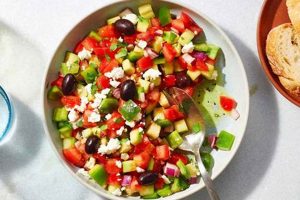
High-quality beef salads combine flavorful, tender steak with fresh, vibrant ingredients and a complementary dressing. Examples include salads featuring grilled flank steak with chimichurri and mixed greens, seared sirloin with blue cheese and candied pecans, or sliced filet mignon with balsamic vinaigrette and roasted vegetables. The specific composition of these dishes varies greatly, offering a wide range of flavor profiles and nutritional values.
A well-executed steak salad provides a balanced and satisfying meal. Lean protein from the steak contributes to satiety and muscle maintenance, while the vegetables and other additions offer essential vitamins, minerals, and fiber. Historically, composed salads featuring meat have evolved from simple combinations of greens and protein to more elaborate and nuanced dishes reflecting culinary trends and regional influences.
Exploring specific recipes further reveals the key elements that contribute to a successful dish, from selecting the right cut of meat to balancing flavors and textures within the salad.
Tips for Exceptional Steak Salads
Creating a truly exceptional steak salad requires attention to detail and a thoughtful approach to flavor combinations. The following tips offer guidance on achieving optimal results.
Tip 1: Select the Right Cut: Opt for cuts like flank steak, skirt steak, or sirloin, known for their flavor and relatively quick cooking times. These cuts also tend to slice easily, making them ideal for salads.
Tip 2: Marinate Strategically: Marinades tenderize and infuse flavor. A simple marinade of olive oil, garlic, herbs, and acid (like lemon juice or vinegar) works wonders. Marinate for at least 30 minutes, or up to overnight.
Tip 3: Achieve the Perfect Sear: A hot grill or cast-iron skillet is key to achieving a flavorful crust. Pat the steak dry before searing to ensure proper browning. Allow the steak to rest before slicing against the grain.
Tip 4: Balance Flavors and Textures: Consider the interplay of ingredients. Pair robust steak with bold cheeses like blue cheese or gorgonzola. Add crunch with toasted nuts, croutons, or raw vegetables.
Tip 5: Dress Wisely: The dressing should complement the steak and other ingredients. A vinaigrette with a touch of sweetness or acidity often works well. Avoid heavy, creamy dressings that can overpower the salad.
Tip 6: Don’t Overcrowd the Plate: Leave space between ingredients to allow each component to shine. This also makes the salad more visually appealing.
Tip 7: Consider Seasonal Ingredients: Utilize fresh, seasonal produce to maximize flavor and nutritional value. Summer tomatoes, autumn squash, or spring greens can elevate the salad.
By focusing on these key elements, one can elevate a simple steak salad to a culinary masterpiece. Careful consideration of each component ensures a balanced, flavorful, and satisfying meal.
By incorporating these tips, a delicious and well-balanced steak salad can be consistently achieved.
1. High-Quality Steak

The foundation of any exceptional steak salad lies in the quality of the beef itself. High-quality steak contributes significantly to the overall flavor, texture, and satisfaction derived from the dish. Understanding the nuances of steak selection is crucial for achieving optimal results in a steak salad.
- Cut Selection
Different cuts offer varying levels of tenderness and flavor. Tenderloin, known for its buttery texture, provides a luxurious experience. Strip steak, with its rich marbling, delivers robust flavor. Flank steak, though leaner, offers excellent flavor when properly marinated and cooked. Choosing the right cut influences the final taste and texture of the salad.
- Grading and Marbling
The USDA grading system (Prime, Choice, Select) indicates the level of marbling, which directly impacts flavor and tenderness. Higher grades, like Prime, typically possess more marbling, resulting in a more flavorful and juicy steak. Adequate marbling ensures a pleasurable eating experience, even when the steak is sliced and served cold or at room temperature in a salad.
- Sourcing and Freshness
Sourcing steak from reputable butchers or markets that prioritize quality and freshness is essential. Freshly cut steak exhibits a vibrant color and lacks any off-putting odors. Prioritizing freshness ensures optimal flavor and minimizes the risk of spoilage.
- Proper Storage and Handling
Proper storage and handling maintain the steak’s quality until preparation. Storing the steak in the coldest part of the refrigerator, ideally wrapped in butcher paper, preserves its freshness. Allowing the steak to reach room temperature before cooking ensures even cooking and maximizes tenderness.
By prioritizing these aspects of steak selection, one ensures a superior foundation for a truly exceptional steak salad. The quality of the steak directly influences the final dish’s overall enjoyment and satisfaction, making it a crucial element in crafting the best possible steak salad.
2. Complementary Greens

The selection of greens significantly impacts the overall balance and flavor profile of a steak salad. Complementary greens enhance, rather than overpower, the richness of the steak and other components. Consideration must be given to the greens’ texture, flavor, and ability to hold up to the weight and richness of the other ingredients. Arugula, with its peppery bite, provides a counterpoint to the savory steak. Spinach offers a mild, slightly sweet flavor that complements bolder dressings. Romaine provides a crisp, refreshing crunch, adding textural contrast. Watercress, with its delicate, slightly bitter taste, balances richer elements like blue cheese or candied nuts. The choice of greens directly influences the final taste and texture of the entire salad.
A successful steak salad balances robust flavors with lighter, refreshing elements. Hearty greens, like kale or radicchio, can stand up to richer steak cuts and dressings. Delicate greens, like butter lettuce or mesclun, provide a refreshing contrast to heavier components but may become wilted under heavier ingredients or dressings. The interaction between the greens and the dressing is also critical. A robust vinaigrette may pair well with bitter greens like radicchio, while a lighter vinaigrette might be preferred with more delicate greens. Understanding these interactions allows for a harmonious blend of flavors and textures.
Selecting complementary greens elevates a steak salad from simply a combination of ingredients to a cohesive and balanced dish. The right greens provide textural contrast, flavor balance, and visual appeal. Thoughtful green selection ensures that each element of the salad contributes positively to the overall culinary experience, resulting in a more enjoyable and satisfying meal. Ignoring this crucial component can lead to a disjointed and less satisfying outcome, highlighting the importance of complementary greens in creating the best steak salad recipes.
3. Flavorful Dressings

Flavorful dressings are integral to best steak salad recipes, serving as a unifying element that harmonizes the disparate components. Dressings contribute not only flavor but also texture and moisture, significantly impacting the overall dining experience. A thoughtfully chosen dressing elevates the salad beyond a simple sum of its parts, creating a cohesive and satisfying dish. The interplay between the dressing and other ingredients is crucial; the dressing should complement the steak’s richness and the greens’ freshness without overpowering either. For example, a classic vinaigrette with a touch of Dijon mustard provides acidity to cut through the richness of the steak, while a creamy blue cheese dressing adds a salty, tangy counterpoint to peppery greens like arugula.
The choice of dressing influences the perceived flavor profile of the entire salad. A bright, citrus-based vinaigrette lends a refreshing quality, particularly suitable for summer salads with lighter cuts of steak. Conversely, a richer, creamier dressing, like a horseradish-based dressing, complements heartier steak cuts and winter vegetables. Consider a steak salad featuring grilled flank steak, crumbled blue cheese, candied pecans, and mixed greens. A balsamic vinaigrette with a touch of honey complements the steak’s savory notes, the cheese’s tang, and the pecans’ sweetness. The interplay of sweet, savory, tangy, and acidic flavors exemplifies how a well-chosen dressing enhances the overall flavor profile.
Understanding the role of flavorful dressings is essential for crafting exceptional steak salads. The dressing should not merely coat the ingredients but actively contribute to the overall flavor composition. Careful consideration of flavor profiles, textures, and the interplay between ingredients ensures a balanced and harmonious culinary experience. Successfully integrating a flavorful dressing distinguishes a mediocre steak salad from a truly outstanding one, solidifying its place among the best steak salad recipes.
4. Textural Variety

Textural variety is a hallmark of exceptional steak salads, elevating them beyond basic combinations of ingredients. A dynamic interplay of textures creates a more engaging and satisfying dining experience. The strategic incorporation of contrasting textures transforms a simple salad into a culinary delight, adding depth and complexity to each bite.
- Crunchy Elements
Crunchy elements provide a counterpoint to the tender steak and often softer greens. Examples include toasted nuts (such as almonds, pecans, or walnuts), croutons, crispy onions, or raw vegetables like carrots, bell peppers, or jicama. These elements contribute a satisfying bite, preventing the salad from feeling monotonous. The contrast between the tender steak and the crunchy additions enhances the overall sensory experience.
- Soft Components
Soft components, often in the form of cheeses or avocado, provide a creamy texture that complements the steak and other ingredients. Crumbled blue cheese, goat cheese, or feta offer distinct flavors and textures that enhance the salad’s complexity. Avocado adds a smooth, buttery richness. These soft elements create a textural bridge between the steak and the other components.
- Steak Texture: Seared vs. Grilled
The steak’s texture also contributes to the overall textural variety. A seared steak offers a crisp exterior and a tender interior, while a grilled steak may have a slightly charcoaled exterior and a more yielding interior. The cooking method influences the steak’s texture, providing options for customization and variety.
- Balancing Textures
Achieving textural balance prevents any single texture from dominating the salad. A salad with too many crunchy elements can feel overwhelming, while a salad lacking crunch can feel one-dimensional. Balancing textures ensures a harmonious and enjoyable eating experience. A well-balanced steak salad offers a delightful interplay of textures in every bite.
The strategic incorporation of diverse textures distinguishes exceptional steak salads. A well-composed steak salad offers a symphony of textures, from the tender steak to the crisp vegetables and creamy cheese, creating a dynamic and satisfying culinary experience. This attention to textural detail elevates the dish from simple to sophisticated, securing its place among the best steak salad recipes.
5. Proper Steak Cooking
Proper steak cooking is paramount in achieving best steak salad recipes. The steak’s doneness directly impacts its tenderness, flavor, and overall contribution to the salad. Undercooked steak can be tough and chewy, while overcooked steak becomes dry and loses its nuanced flavor. Achieving the desired level of doneness ensures the steak complements, rather than detracts from, the other salad components. For instance, a medium-rare flank steak, tender and flavorful, pairs harmoniously with peppery arugula and a sharp vinaigrette. In contrast, a well-done flank steak, likely dry and tough, would negatively impact the salad’s overall quality.
Several factors influence proper steak cooking. Thickness, cut, and desired doneness dictate cooking time and method. A thicker ribeye steak requires a longer cooking time than a thinner flank steak. Furthermore, different cooking methods, such as grilling, pan-searing, or broiling, impart distinct flavors and textures to the steak. Grilling imparts a smoky char, while pan-searing creates a flavorful crust. Understanding these nuances allows for precise control over the final product. Employing a meat thermometer ensures accuracy, eliminating guesswork and ensuring the steak reaches the desired internal temperature. Resting the steak after cooking allows the juices to redistribute, resulting in a more tender and flavorful final product.
Mastering proper steak cooking techniques is essential for creating truly exceptional steak salads. A perfectly cooked steak provides the foundation for a balanced and flavorful salad, elevating the dish beyond a simple combination of ingredients. Failure to cook the steak properly can compromise the entire salad, highlighting the crucial connection between proper steak cooking and best steak salad recipes. Attention to detail in this crucial step distinguishes an average steak salad from a truly outstanding one.
6. Balanced Composition

Balanced composition distinguishes exceptional steak salads from mere aggregations of ingredients. It represents a thoughtful approach to combining flavors, textures, and colors, ensuring each element contributes harmoniously to the overall dish. A well-composed steak salad offers a cohesive and satisfying culinary experience, where no single ingredient overwhelms the others. This balance is crucial for achieving “best steak salad recipes” status.
- Flavor Balancing
Flavor balancing involves the strategic combination of contrasting and complementary tastes. The richness of the steak, often enhanced by grilling or searing, requires counterpoints. Acidity, from ingredients like vinegars or citrus fruits, cuts through the richness. Bitterness, from greens like arugula or radicchio, provides a contrasting flavor dimension. Sweetness, from components like dried fruit or caramelized onions, adds depth and complexity. A successful steak salad balances these flavors, preventing any single taste from dominating.
- Textural Contrast
Textural contrast adds another layer of complexity to a steak salad. The tender steak benefits from the inclusion of crunchy elements like toasted nuts, croutons, or raw vegetables. Soft elements, like crumbled cheese or avocado, provide a creamy counterpoint. This interplay of textures creates a more dynamic and engaging eating experience, making the salad more enjoyable and memorable.
- Visual Appeal
Visual appeal contributes significantly to the overall dining experience. A well-composed steak salad is not only delicious but also visually attractive. The arrangement of ingredients, the use of contrasting colors, and the attention to plating details create a more enticing and appetizing presentation. Visual appeal enhances the perceived value and enjoyment of the dish.
- Portion Control
Portion control ensures that each ingredient contributes appropriately to the overall composition. Too much of any single ingredient, even a desirable one, can throw off the balance of the salad. For example, an excessive amount of steak can overpower the other components, while too much dressing can make the salad soggy. Proper portioning allows each ingredient to shine while contributing to the harmonious whole.
Balanced composition is the hallmark of best steak salad recipes. It signifies a thoughtful and deliberate approach to combining ingredients, resulting in a cohesive and satisfying culinary experience. A well-balanced steak salad offers not just sustenance but a multi-sensory experience that engages the palate and delights the eye. This attention to detail elevates the dish from a simple combination of ingredients to a truly memorable culinary creation.
Frequently Asked Questions
Addressing common inquiries regarding optimal steak salad preparation clarifies techniques and ingredient selection for achieving superior results.
Question 1: What is the best cut of beef for steak salad?
While various cuts can be utilized, flank steak, skirt steak, and sirloin are often preferred for their balance of flavor, tenderness, and ease of slicing. These cuts also tend to hold their shape well in a salad.
Question 2: How can steak be cooked to optimal tenderness for a salad?
Marinating the steak prior to cooking helps tenderize the meat. Additionally, achieving the proper internal temperature, typically medium-rare to medium, ensures tenderness without dryness. Allowing the steak to rest before slicing further enhances juiciness.
Question 3: What types of greens complement steak in a salad?
Heartier greens like arugula, spinach, or romaine hold up well to the weight of the steak and dressing. These greens also offer flavor profiles that complement the richness of the beef.
Question 4: How can one prevent a steak salad from becoming soggy?
Adding the dressing just before serving prevents the greens from wilting. Ensuring the steak is adequately rested and not overly juicy also helps maintain the salad’s crispness. One can also consider serving the dressing on the side.
Question 5: What are some complementary ingredients that enhance steak salads?
Toasted nuts, crumbled cheese (such as blue cheese or feta), dried cranberries, cherry tomatoes, red onion, and avocado are popular additions that provide flavor and textural contrast.
Question 6: Can steak salad be prepared in advance?
While some components can be prepared ahead of time, it is generally recommended to assemble the salad just before serving to maintain optimal freshness and prevent the greens from wilting. The steak can be cooked and sliced in advance, but should be stored separately until serving.
Understanding these key elements contributes significantly to the creation of exceptional steak salads. Attention to detail in each step ensures a flavorful and satisfying dining experience.
Exploring specific recipes further illustrates the practical application of these principles.
Best Steak Salad Recipes
Optimal steak salad recipes represent a carefully orchestrated balance of flavors, textures, and temperatures. From the selection of a premium cut of beef to the nuanced interplay of complementary greens, flavorful dressings, and textural variety, each element contributes significantly to the final dish. Proper steak cooking techniques ensure the beef remains tender and flavorful, while a balanced composition harmonizes all components into a cohesive and satisfying whole. Addressing frequently asked questions further clarifies essential techniques and ingredient selections, providing a comprehensive understanding of what constitutes excellence in this culinary domain.
Ultimately, successful steak salad preparation hinges on a thorough understanding of these interconnected elements. By embracing these principles, culinary enthusiasts can elevate a simple steak salad to an extraordinary dining experience, demonstrating the potential for culinary artistry within the seemingly straightforward realm of salad creation.