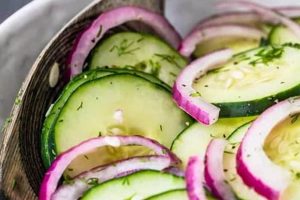
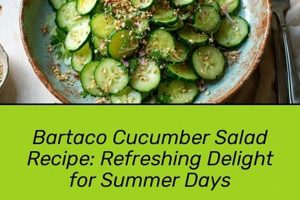
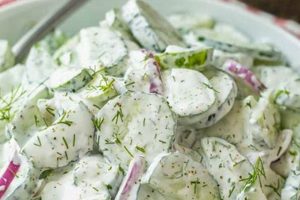
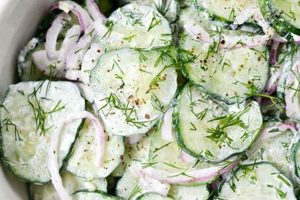
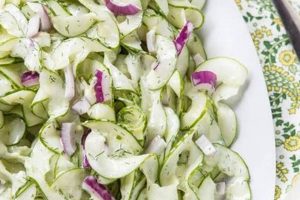
A superlative Korean cucumber salad, often called oi muchim (), typically features thinly sliced cucumbers dressed in a vibrant, spicy, and tangy sauce. Common ingredients include gochugaru (Korean chili flakes), rice vinegar, sesame oil, garlic, ginger, and sometimes a touch of sweetness from sugar or gochujang (Korean chili paste). Variations might incorporate scallions, onions, or sesame seeds. This dish embodies the balance of spicy, sour, salty, and sweet flavors characteristic of Korean cuisine.
This refreshing and flavorful salad serves as a versatile side dish in Korean meals. Its light and crisp nature offers a counterpoint to richer, heavier dishes, while the spicy and tangy flavors stimulate the appetite. Historically, cucumber preservation techniques like pickling and fermenting played an essential role in Korean cuisine, especially during winter months. Fresh cucumber salads, readily prepared with seasonal produce, offer a lighter counterpart to these preserved forms and exemplify the resourcefulness of Korean culinary traditions.
This exploration will delve further into various aspects of preparing exceptional Korean cucumber salads, including ingredient selection, technique variations, and complementary dishes. The subsequent sections will provide detailed recipes and offer insights into balancing flavors for optimal culinary results.
Tips for an Exceptional Korean Cucumber Salad
Achieving optimal flavor and texture in Korean cucumber salad requires attention to detail. These tips offer guidance for creating a truly remarkable dish.
Tip 1: Cucumber Selection and Preparation: Opt for firm, unwaxed cucumbers. English cucumbers or Korean cucumbers offer a desirable texture. Thinly slicing the cucumbers ensures optimal flavor absorption and a pleasant crunch. Salting the sliced cucumbers draws out excess moisture, preventing a watery salad and enhancing the crispness.
Tip 2: Balancing Flavors: The hallmark of Korean cuisine lies in the balance of flavors. Achieve this by carefully adjusting the proportions of gochugaru, vinegar, and sweetener. Start with smaller amounts and gradually increase to preference.
Tip 3: Gochugaru Selection: Gochugaru contributes both flavor and color. Fine gochugaru integrates seamlessly into the dressing, while coarser flakes provide a more textured appearance. Experiment with different types to achieve desired results.
Tip 4: Enhancing Aromatics: Freshly minced garlic and ginger amplify the salad’s flavor profile. Briefly sauting these aromatics in sesame oil before incorporating them into the dressing can further enhance their complexity.
Tip 5: Sesame Oil Quality: High-quality toasted sesame oil imparts a rich, nutty flavor that significantly elevates the salad. Avoid using untoasted sesame oil, as it lacks the desired depth.
Tip 6: Marinating Time: While the salad can be enjoyed immediately, allowing it to marinate for at least 30 minutes in the refrigerator intensifies the flavors and allows the cucumbers to absorb the dressing thoroughly.
Tip 7: Garnishes and Additions: Toasted sesame seeds, thinly sliced scallions, or a sprinkle of toasted seaweed flakes add visual appeal and complementary flavors. Incorporating finely julienned carrots or onions introduces additional textures and nutrients.
By following these tips, one can create a Korean cucumber salad that embodies authentic flavors and delivers a delightful culinary experience.
The following section will provide a step-by-step recipe incorporating these tips, guiding the reader toward creating their own exceptional Korean cucumber salad.
1. Fresh, Crisp Cucumbers
The foundation of any exceptional Korean cucumber salad lies in the quality of the cucumbers themselves. Fresh, crisp cucumbers provide the necessary textural contrast to the bold flavors of the dressing, offering a refreshing counterpoint to the spice and tang. Selecting and preparing the cucumbers correctly is paramount to achieving the desired result.
- Cucumber Variety:
While various cucumber types can be utilized, certain varieties offer superior characteristics for Korean cucumber salad. English cucumbers, known for their thin skin and minimal seeds, provide a delicate crunch. Korean cucumbers, similarly, offer a crisp texture and refreshing flavor. Persian cucumbers are another suitable option. Conversely, thicker-skinned varieties with large seed cavities may detract from the overall experience.
- Crispness and Texture:
The ideal cucumber exhibits a firm texture and a satisfying snap when bitten. Avoid cucumbers that appear soft, wrinkled, or have blemishes, as these indicate age and diminished quality. The crispness of the cucumber contributes significantly to the enjoyment of the salad, providing a textural element that complements the flavorful dressing.
- Preparation Techniques:
Proper preparation enhances both the flavor and texture of the cucumbers. Thinly slicing the cucumbers ensures they readily absorb the dressing and offer a pleasant mouthfeel. Lightly salting the sliced cucumbers draws out excess moisture, further enhancing their crispness and preventing a watery salad. This step is crucial for maintaining the desired texture and preventing the dressing from becoming diluted.
- Storage and Handling:
Storing cucumbers correctly maintains their freshness and crispness. Refrigeration in a crisper drawer helps preserve their quality. Avoid storing cucumbers near ethylene-producing fruits like bananas or apples, as this can accelerate spoilage. Handling cucumbers gently minimizes bruising and maintains their structural integrity.
The selection, preparation, and handling of fresh, crisp cucumbers directly impact the final quality of a Korean cucumber salad. Attention to these details elevates the dish from simple to exceptional, ensuring a delightful balance of flavor and texture. The crispness of the cucumber provides a refreshing contrast to the richness of the sauce, creating a harmonious and satisfying culinary experience.
2. Balanced, vibrant sauce

The defining characteristic of a superlative Korean cucumber salad rests within its sauce. A balanced, vibrant sauce elevates the simple cucumber to a complex and flavorful dish. This balance, achieved through a harmonious blend of spicy, sweet, sour, and salty notes, is crucial to the overall sensory experience.
- The Role of Gochugaru:
Gochugaru, Korean chili flakes, provides the foundational heat and vibrant color. Its nuanced flavor profile, ranging from smoky to subtly sweet, distinguishes it from other chili varieties. The level of spiciness can be adjusted to preference, impacting both the taste and visual appeal of the finished dish. The quality of the gochugaru directly influences the overall flavor complexity; coarser flakes offer a more robust texture while finer flakes blend seamlessly into the sauce.
- Balancing Acidity:
Rice vinegar introduces a bright, acidic note that cuts through the richness of the sesame oil and complements the heat of the gochugaru. This acidity is crucial for achieving balance and preventing the salad from becoming overly sweet or oily. Other vinegars, such as apple cider vinegar or white vinegar, can be substituted, though they may subtly alter the final flavor profile.
- Sweetness and Umami:
A touch of sweetness balances the spicy and sour elements. Sugar is commonly used, but alternatives like honey or maple syrup can introduce subtle flavor variations. Gochujang, Korean chili paste, adds a layer of umami and depth, further enhancing the complexity of the sauce. The level of sweetness should be carefully calibrated to avoid overpowering the other flavor components.
- Aromatic Enhancement:
Garlic and ginger, essential aromatics in Korean cuisine, provide pungent, savory notes that complement the other ingredients. Freshly minced garlic and ginger are preferred for their vibrant flavor. Briefly sauting these aromatics in sesame oil before adding other ingredients can further enhance their aromatic contribution and create a more complex flavor profile.
The interplay of these elements within the sauce dictates the final character of the Korean cucumber salad. Careful consideration of ingredient quality and proportions allows for precise flavor calibration, ultimately determining the dish’s success. A well-balanced, vibrant sauce transforms simple cucumbers into a refreshing, flavorful, and complex culinary experience.
3. Authentic Gochugaru

Authentic gochugaru stands as a cornerstone of genuine Korean flavor profiles, profoundly influencing the quality of a Korean cucumber salad. The distinction between authentic gochugaru and generic chili flakes lies in the nuanced flavor profile derived from sun-dried Korean chili peppers. This process imparts a unique depth, ranging from smoky undertones to subtle sweetness, entirely absent in generic chili flakes. Utilizing authentic gochugaru elevates the salad beyond a simple combination of ingredients, infusing it with a complexity characteristic of traditional Korean cuisine. For instance, a salad made with authentic gochugaru exhibits a depth of flavor and vibrant red hue unattainable with generic substitutes. This distinction impacts not only the taste but also the overall sensory experience, contributing to the visual appeal and aromatic complexity of the dish.
The importance of authentic gochugaru extends beyond mere flavor enhancement. It reflects a commitment to culinary authenticity, respecting the traditional methods and ingredients integral to Korean culinary heritage. The choice of gochugaru directly impacts the final dish; coarser flakes impart a rustic texture and bolder flavor, while finer flakes offer a smoother, more integrated heat. Consider a scenario where two identical cucumber salad recipes are prepared, differing only in the type of chili used. The salad utilizing authentic gochugaru will possess a discernible depth and complexity, showcasing the crucial role this ingredient plays in achieving an authentic flavor profile. This understanding empowers culinary enthusiasts to make informed ingredient choices, ensuring optimal flavor and cultural appreciation.
The pursuit of a “best Korean cucumber salad recipe” necessitates an understanding of authentic ingredients. Gochugaru exemplifies this principle, highlighting the significant impact seemingly small choices can have on the overall culinary outcome. Substituting generic chili flakes may yield a palatable salad, but it compromises the authenticity and depth of flavor achievable with genuine gochugaru. Embracing authentic ingredients ensures not only a superior culinary experience but also a deeper appreciation for the cultural nuances embedded within Korean cuisine. Recognizing the crucial role of authentic gochugaru allows for a more informed approach to recipe development and ingredient selection, ultimately contributing to a truly exceptional and authentic culinary creation.
4. Aromatic Garlic and Ginger

Aromatic garlic and ginger form integral components of a best Korean cucumber salad recipe, contributing significantly to the overall flavor profile. Their pungent, savory notes enhance the refreshing qualities of the cucumber and complement the other ingredients, creating a more complex and balanced dish.
- Flavor Enhancement:
Garlic and ginger infuse the salad with pungent, slightly spicy, and earthy undertones. These flavors contrast and complement the coolness of the cucumber and the tanginess of the vinegar, creating a multi-dimensional taste experience. The sharpness of these aromatics cuts through the richness of the sesame oil, preventing the salad from tasting overly heavy. For example, the slight sweetness of sauteed garlic complements the subtle heat of the gochugaru, creating a balanced flavor profile.
- Digestive Benefits:
Beyond their flavor contributions, garlic and ginger offer potential digestive benefits. Traditionally, these ingredients are recognized for their ability to aid digestion and reduce bloating. Incorporating them into the salad not only enhances the flavor but also potentially contributes to a more comfortable post-meal experience. This aligns with the broader principles of Korean cuisine, which often incorporates ingredients believed to promote well-being.
- Preparation Methods:
The preparation method of garlic and ginger impacts their influence on the final dish. Mincing creates a more assertive flavor, while grating yields a milder, more integrated taste. Lightly sauteing minced garlic and ginger in sesame oil before adding them to the salad enhances their aromatic complexity and mellows their sharpness. These nuances allow for customization based on individual preferences.
- Balancing Act:
The quantity of garlic and ginger used requires careful consideration. Too much can overpower the delicate flavor of the cucumbers, while too little may render their contribution imperceptible. The ideal balance allows the aromatics to enhance the overall flavor profile without dominating it. This balance is key to achieving a harmonious blend of flavors characteristic of a well-executed Korean cucumber salad.
The synergistic relationship between aromatic garlic and ginger and the other components of a best Korean cucumber salad recipe is essential for achieving an authentic and balanced flavor profile. These ingredients not only contribute distinct flavor notes but also offer potential digestive benefits, aligning with the holistic approach of Korean cuisine. Careful consideration of preparation methods and quantities ensures these aromatics enhance, rather than overpower, the refreshing and vibrant nature of this classic dish. Their presence elevates the salad from a simple side dish to a more complex and satisfying culinary experience.
5. Quality Sesame Oil

Quality sesame oil plays a pivotal role in achieving the authentic flavor profile of a best Korean cucumber salad recipe. This oil is not merely a neutral carrier of other flavors but a crucial component that contributes significantly to the overall sensory experience. Its distinctive nutty aroma and rich flavor enhance the other ingredients, creating a depth and complexity essential for an exceptional salad.
- Flavor Profile:
High-quality toasted sesame oil possesses a deep, nutty aroma and rich flavor derived from roasted sesame seeds. This distinct flavor profile distinguishes it from other oils and is crucial for imparting the characteristic flavor of Korean cuisine. Untoasted or lower-quality sesame oils lack this depth and can negatively impact the overall taste of the salad.
- Aromatic Enhancement:
Sesame oil acts as a flavor enhancer, amplifying the other aromatics in the salad, such as garlic and ginger. Its richness complements the spiciness of the gochugaru and the tanginess of the vinegar, creating a harmonious balance of flavors. The aromatic properties of quality sesame oil contribute significantly to the overall sensory experience.
- Textural Contribution:
Beyond flavor, quality sesame oil contributes to the textural experience of the salad. It provides a subtle richness and a smooth mouthfeel that complements the crispness of the cucumbers. This textural element adds another layer of complexity to the dish, enhancing the overall enjoyment.
- Cultural Significance:
Sesame oil holds cultural significance in Korean cuisine, representing a traditional ingredient used for generations. Utilizing quality sesame oil demonstrates an appreciation for authentic ingredients and methods, contributing to a more genuine culinary experience. Its presence signifies a commitment to respecting the traditional elements that define Korean culinary heritage.
The pursuit of a best Korean cucumber salad recipe necessitates an understanding of the crucial role played by quality sesame oil. Its unique flavor profile, aromatic enhancement properties, and textural contribution distinguish it from other oils, making it an indispensable ingredient. The choice of sesame oil directly impacts the authenticity and overall quality of the final dish, underscoring the importance of selecting a high-quality toasted sesame oil for an exceptional culinary result. A best Korean cucumber salad recipe relies on this key ingredient to achieve the desired depth of flavor and authentic cultural representation, showcasing its importance in the broader context of Korean cuisine.
6. Appropriate Marinating Time
Appropriate marinating time represents a critical factor in achieving the optimal flavor profile of a best Korean cucumber salad recipe. The duration of marination directly influences the balance and intensity of flavors, impacting the overall culinary experience. Insufficient marinating time may result in a salad where the flavors remain disjointed, the cucumbers retaining their raw taste while the sauce sits superficially. Conversely, excessive marination can lead to an overly saturated, mushy texture, compromising the desirable crispness of the cucumbers. This delicate balance necessitates an understanding of the cause-and-effect relationship between marinating time and the final product.
The importance of appropriate marinating time stems from the osmotic process that occurs when the cucumbers are submerged in the sauce. This process allows the flavors of the gochugaru, vinegar, garlic, ginger, and sesame oil to permeate the cucumber slices, transforming their flavor and texture. For instance, a 30-minute marination allows for sufficient flavor infusion without compromising the cucumber’s crispness, while an hour enhances the intensity of the spicy and tangy notes. A salad marinated overnight, however, might lose its desired texture, becoming overly soft and saturated. These examples illustrate the practical significance of understanding marinating time as a key variable influencing the final quality of the salad.
Optimizing marinating time requires consideration of several factors, including the thickness of the cucumber slices, the desired intensity of flavor, and the ambient temperature. Thinner slices require less time to absorb the flavors, while thicker slices benefit from longer marinating periods. A preference for a milder flavor profile suggests a shorter marination, while a desire for a more intense experience necessitates a longer duration. Higher ambient temperatures can accelerate the marinating process, requiring adjustments to prevent over-marination. Therefore, a “best” marinating time is not a fixed value but rather a variable dependent on these interacting factors. Mastering this variable allows for precise control over the final flavor and texture, distinguishing a truly exceptional Korean cucumber salad from a merely adequate one.
7. Optional garnishes
Optional garnishes, while not strictly essential to a Korean cucumber salad, contribute significantly to the overall sensory experience and can elevate a simple salad to a visually appealing and texturally complex dish. These additions, carefully chosen and applied, provide a finishing touch that enhances the flavors already present and introduces subtle nuances, ultimately distinguishing a “best” recipe from a merely satisfactory one. The impact of garnishes extends beyond mere aesthetics, affecting the overall perception of flavor and texture.
Consider toasted sesame seeds, a common garnish. Their nutty aroma complements the sesame oil in the dressing, while their subtle crunch provides a textural contrast to the softened cucumbers. Similarly, thinly sliced scallions contribute a mild onion flavor and a pop of fresh green color, enhancing both the visual appeal and the flavor profile. A sprinkle of gochugaru flakes intensifies the visual impact and adds another layer of heat, while a scattering of toasted seaweed flakes introduces a subtle umami note and a delicate crispness. These examples demonstrate how seemingly minor additions can significantly impact the final product, elevating the sensory experience.
The practical significance of understanding the role of optional garnishes lies in the ability to tailor the salad to specific preferences and occasions. A simple weeknight meal might benefit from a minimalist approach, focusing on the core flavors of the cucumber and dressing. A more elaborate presentation, however, could incorporate a variety of garnishes, enhancing the visual appeal and creating a more complex flavor profile. The judicious use of garnishes allows for customization and demonstrates an attention to detail that characterizes a truly exceptional Korean cucumber salad. Understanding the interplay between these optional elements and the core components of the salad empowers culinary enthusiasts to create a dish that is not only flavorful but also visually appealing and texturally dynamic.
Frequently Asked Questions
This section addresses common inquiries regarding the preparation and nuances of Korean cucumber salad, aiming to provide clear and concise information for optimal culinary results.
Question 1: Can other types of vinegar be substituted for rice vinegar?
While rice vinegar is traditional, apple cider vinegar or white vinegar can be substituted. However, these alternatives may subtly alter the flavor profile. Adjusting the amount of sweetener may be necessary to compensate for differences in acidity.
Question 2: What is the best way to store leftover Korean cucumber salad?
Store leftover salad in an airtight container in the refrigerator for up to 2 days. The texture of the cucumbers will soften over time. Consume within 48 hours for optimal quality.
Question 3: How can the spiciness level be adjusted?
The amount of gochugaru directly controls the spiciness. Start with a smaller amount and gradually increase to the desired level of heat. Taste-testing during preparation is crucial for achieving the preferred spiciness.
Question 4: Can this salad be made ahead of time?
Yes, the salad can be prepared several hours in advance. However, for optimal crispness, it’s best to add the dressing just before serving. Store the cucumbers and dressing separately and combine them just prior to consumption.
Question 5: What are some common dishes that pair well with Korean cucumber salad?
Korean cucumber salad complements a wide range of dishes, including grilled meats, bibimbap, and Korean barbecue. Its refreshing qualities offer a counterpoint to richer, heavier dishes.
Question 6: Where can authentic gochugaru be purchased?
Authentic gochugaru can be found in Korean grocery stores, Asian markets, or online retailers specializing in Korean ingredients. Look for gochugaru labeled as “Korean chili flakes” or “Korean chili powder.”
Understanding these nuances enables the creation of a truly exceptional Korean cucumber salad. Careful consideration of ingredient selection, preparation techniques, and marinating time ensures optimal flavor and texture.
The next section will explore regional variations and adaptations of this versatile dish, showcasing the adaptability of Korean cucumber salad within a wider culinary context.
Best Korean Cucumber Salad Recipe
Achieving a truly exceptional Korean cucumber salad hinges on a nuanced understanding of its core components. From the selection of fresh, crisp cucumbers to the careful balance of flavors within the vibrant sauce, each element contributes to the final culinary outcome. The utilization of authentic gochugaru, the aromatic interplay of garlic and ginger, the richness of quality sesame oil, and the appropriate marinating time all play crucial roles in achieving an authentic and flavorful dish. Furthermore, the judicious use of optional garnishes elevates the sensory experience, adding visual appeal and textural complexity. This exploration has highlighted the importance of each component, demonstrating how seemingly minor details can significantly impact the final result. The pursuit of a “best” recipe necessitates a holistic approach, considering not only the individual ingredients but also their synergistic relationships within the dish.
Mastery of this seemingly simple salad reflects a deeper appreciation for the nuances of Korean cuisine. The balance of spicy, sweet, sour, and salty flavors, a hallmark of Korean culinary tradition, finds perfect expression in this refreshing and versatile dish. Further exploration of regional variations and individual adaptations promises to unlock even greater culinary potential, highlighting the adaptability of this classic dish and its enduring appeal within a global culinary landscape. The pursuit of the “best Korean cucumber salad recipe” represents not an end point but rather a continuous journey of culinary discovery and appreciation.