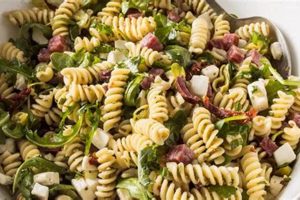
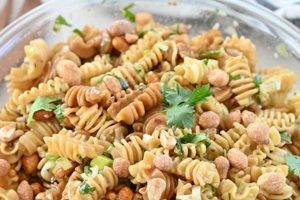
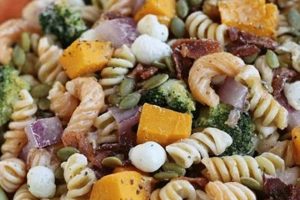
A dish featuring cooked pasta, typically a smaller shape like rotini or farfalle, combined with blanched or roasted asparagus and other complementary ingredients. These additions often include fresh vegetables such as cherry tomatoes, bell peppers, and red onion, as well as cheeses like feta or Parmesan. A vinaigrette, often lemon-based, or a creamy dressing binds the ingredients together. Variations exist, incorporating proteins like grilled chicken or shrimp, or utilizing different herbs and spices for unique flavor profiles.
This type of dish offers a refreshing and nutritious meal option, suitable for various occasions from light lunches to potlucks and barbecues. The combination of pasta, vegetables, and a flavorful dressing provides a balanced nutritional profile, incorporating carbohydrates, vitamins, and minerals. Historically, pasta salads have evolved as a convenient and versatile way to utilize leftover pasta, transforming it into a new culinary creation. The inclusion of seasonal vegetables like asparagus adds a touch of elegance and enhances the dish’s overall appeal.
The following sections will delve into specific variations, offering detailed instructions and helpful tips for creating a perfect version of this culinary delight. Topics covered will include ingredient selection, preparation techniques, dressing options, and suggestions for presentation and serving.
Tips for Creating a Delicious Asparagus Pasta Salad
Achieving optimal flavor and texture requires attention to several key aspects of preparation. The following tips offer guidance for creating a truly exceptional dish.
Tip 1: Asparagus Preparation: Asparagus should be blanched or roasted to tender-crisp perfection. Overcooked asparagus will become mushy, while undercooked asparagus can be tough. Blanching involves briefly submerging the asparagus in boiling water, then immediately transferring it to an ice bath to stop the cooking process. Roasting enhances the asparagus’s natural sweetness and adds a subtle char.
Tip 2: Pasta Selection: Smaller pasta shapes, such as rotini, farfalle, or penne, work best as they hold the dressing well and pair nicely with the asparagus pieces. Avoid long, thin pasta like spaghetti or linguine.
Tip 3: Dressing Considerations: A vibrant, flavorful dressing is essential. A lemon vinaigrette complements the asparagus beautifully, while a creamy dressing made with Greek yogurt or mayonnaise offers a richer alternative. Ensure the dressing complements the other ingredients.
Tip 4: Ingredient Balance: Strive for a balance of flavors and textures. Incorporate a variety of fresh vegetables, such as cherry tomatoes, bell peppers, and red onion, for added color, flavor, and nutritional value.
Tip 5: Cheese Selection: Feta cheese crumbles offer a salty, tangy counterpoint to the asparagus, while Parmesan provides a nutty, savory depth. Other options include goat cheese or ricotta salata.
Tip 6: Optimal Timing: For best results, allow the salad to chill for at least 30 minutes before serving. This allows the flavors to meld and the pasta to absorb the dressing.
Tip 7: Herb and Spice Integration: Fresh herbs, such as dill, parsley, or mint, add a burst of freshness. Consider incorporating spices like red pepper flakes for a touch of heat.
By following these tips, one can elevate a simple pasta salad to a culinary masterpiece, maximizing flavor and presentation.
The concluding section will summarize key takeaways and offer final recommendations for enjoying this versatile and delicious dish.
1. Fresh Asparagus

Fresh asparagus plays a crucial role in an asparagus pasta salad recipe, contributing significantly to the dish’s overall quality and flavor profile. The selection and preparation of this key ingredient directly influence the final outcome.
- Selection
Choosing fresh, high-quality asparagus is paramount. Look for firm stalks with tightly closed tips and a vibrant green color. Avoid asparagus with limp, discolored, or open tips, as these indicate aging or improper handling. Selecting the freshest produce ensures optimal flavor and texture in the final dish.
- Preparation
Proper preparation techniques maximize the asparagus’s culinary potential. Snapping off the tough ends and either blanching or roasting the spears until tender-crisp preserves the vegetable’s delicate flavor and texture while ensuring it integrates well with the other salad components. Overcooked asparagus will become mushy, detracting from the salad’s overall appeal.
- Flavor Profile
Fresh asparagus offers a unique flavor profile, characterized by a subtle sweetness and a slightly grassy note. This delicate flavor complements other common pasta salad ingredients, such as lemon, tomatoes, and cheese. Proper cooking methods preserve and enhance these natural flavors, creating a well-balanced and palatable dish.
- Nutritional Value
Beyond its culinary contributions, fresh asparagus provides significant nutritional value. It’s a good source of vitamins, minerals, and fiber, adding a healthy dimension to the pasta salad. Incorporating fresh, nutritious ingredients elevates the dish from a simple side to a more complete and wholesome meal option.
The careful selection and preparation of fresh asparagus directly impacts the overall success of an asparagus pasta salad recipe. By prioritizing freshness and utilizing proper cooking techniques, one can maximize the vegetables flavor, texture, and nutritional contributions, resulting in a more satisfying and wholesome dish. The vibrant green color of fresh asparagus also enhances the visual appeal of the salad, making it even more enticing.
2. Proper Pasta Choice
Pasta selection significantly influences the overall success of an asparagus pasta salad. The pasta’s shape, size, and texture interact with the other ingredients, affecting the dish’s final flavor, appearance, and enjoyment. Choosing the right pasta is crucial for achieving a harmonious balance and a satisfying culinary experience.
- Shape and Size
Smaller pasta shapes, such as rotini, farfalle (bowties), or fusilli (spirals), are generally preferred for asparagus pasta salad. These shapes offer crevices and pockets that effectively capture the dressing and smaller ingredients, ensuring each bite delivers a well-balanced combination of flavors and textures. Conversely, long, thin pasta like spaghetti or linguine tends to tangle and become unwieldy in a salad setting, making it difficult to achieve an even distribution of ingredients.
- Texture and Cooking Method
The pasta’s texture should complement the asparagus and other vegetables. Cooking the pasta al dente, meaning firm to the bite, is essential. Overcooked pasta becomes mushy and absorbs too much dressing, resulting in a heavy, less appealing salad. The slightly firm texture of al dente pasta provides a pleasant contrast to the tender-crisp asparagus.
- Pairing with Dressing
The chosen pasta should also pair well with the intended dressing. Ridged pasta shapes hold onto thicker, creamier dressings more effectively, while smoother shapes might be better suited for lighter vinaigrettes. Consider the dressing’s viscosity and flavor profile when selecting the pasta to ensure a harmonious blend of ingredients.
- Visual Appeal
The pasta’s shape and color contribute to the salad’s visual appeal. A variety of shapes and colors can create a more visually interesting and appetizing dish. While traditional pasta offers a neutral backdrop, colorful pasta options can add a vibrant touch, particularly for themed or festive occasions.
Careful pasta selection elevates asparagus pasta salad from a simple combination of ingredients to a well-balanced and enjoyable dish. By considering shape, texture, and how the pasta interacts with the other components, one can create a salad that is both flavorful and aesthetically pleasing. The right pasta choice ensures that the asparagus, dressing, and other ingredients combine harmoniously, resulting in a satisfying culinary experience.
3. Complementary Dressing

Dressing selection significantly impacts the overall flavor profile of an asparagus pasta salad. A complementary dressing enhances the natural flavors of the asparagus and other ingredients without overpowering them. The interplay between the dressing and the other components creates a balanced and harmonious culinary experience. A mismatch can result in a dish where the dressing masks the delicate flavors of the asparagus or clashes with the other ingredients.
Several factors influence dressing selection. The asparagus’s inherent sweetness and slightly grassy notes pair well with bright, acidic dressings, such as a lemon vinaigrette or a light balsamic glaze. Creamy dressings, like those based on Greek yogurt or mayonnaise, offer a richer, more decadent counterpoint but should complement rather than overwhelm the asparagus. For example, a lemon-herb vinaigrette with fresh dill and a touch of Dijon mustard accentuates the asparagus’s fresh flavor, while a creamy dressing incorporating roasted red peppers and feta cheese provides a more robust and savory complement. The chosen dressing should also harmonize with other ingredients in the salad, such as tomatoes, olives, or cheese.
Achieving a harmonious flavor profile requires careful consideration of the dressing’s ingredients and their interaction with the asparagus and other salad components. The dressing should enhance, not mask, the individual flavors, resulting in a well-balanced and enjoyable culinary experience. Overly acidic dressings can overwhelm the delicate asparagus, while heavy, creamy dressings might obscure its fresh, green notes. A successful asparagus pasta salad balances the inherent flavors of the asparagus with a complementary dressing that unifies all ingredients into a cohesive and flavorful whole.
4. Balanced Ingredients

Balance within an asparagus pasta salad recipe refers to the harmonious interplay of flavors, textures, and colors, creating a cohesive and satisfying culinary experience. This balance is achieved through careful consideration of ingredient proportions and their complementary characteristics. A well-balanced salad offers a dynamic range of sensory experiences, where no single element dominates but rather contributes to a unified whole. An excess of any one ingredient, whether asparagus, pasta, or a particular flavor component within the dressing, can disrupt this equilibrium and detract from the overall enjoyment.
Consider, for example, a salad with an overabundance of asparagus. While asparagus offers desirable nutritional benefits and a distinct flavor, too much can lead to a monotonous taste and texture. Similarly, an excess of salty cheese or a highly acidic dressing can overpower the subtle flavors of the other ingredients. Conversely, insufficient amounts of certain components, such as complementary vegetables or a flavorful dressing, can result in a bland and uninspired dish. A successful recipe hinges on the careful calibration of each ingredient, ensuring that flavors and textures complement and enhance one another. The vibrant green of the asparagus can be visually balanced by the addition of colorful vegetables like red bell peppers or yellow cherry tomatoes. Textural contrast can be achieved through the inclusion of crunchy elements like toasted nuts or croutons alongside the tender asparagus and pasta.
Achieving balance requires not only careful ingredient selection but also attention to preparation techniques. Properly cooked pasta, tender-crisp asparagus, and a well-emulsified dressing contribute to the overall textural harmony. The balance of ingredients extends beyond mere quantity to encompass the interplay of flavors, textures, and colors. This multifaceted approach elevates the asparagus pasta salad from a simple combination of ingredients to a well-rounded and satisfying dish that engages the palate on multiple levels. Understanding these principles allows for adaptation and customization of recipes while maintaining the essential element of balance.
5. Flavorful Cheese
Cheese selection plays a crucial role in elevating asparagus pasta salad from agreeable to exceptional. The right cheese contributes not only a distinct flavor profile but also textural complexity and visual appeal. Consideration of how specific cheeses interact with the asparagus, other vegetables, and the chosen dressing is paramount. The goal is to achieve a harmonious balance where the cheese complements and enhances the other ingredients rather than dominating the overall flavor profile.
Several cheese varieties offer compelling pairings with asparagus. Feta, with its salty, tangy character, provides a classic counterpoint to the asparagus’s subtle sweetness. Crumbled feta distributes well throughout the salad, offering bursts of flavor in each bite. Parmesan, known for its nutty, savory notes, adds depth and complexity, particularly when shaved or grated over the finished salad. Hard cheeses like Parmesan also introduce a pleasing textural contrast to the softer asparagus and pasta. Goat cheese, with its characteristic tang, offers another excellent option, especially when paired with a lemon vinaigrette. Its creamy texture blends well with the other ingredients, creating a cohesive and satisfying mouthfeel. Other cheeses, such as ricotta salata or a mild cheddar, can also contribute positively to the flavor profile, depending on the overall composition of the salad.
The quantity of cheese used also warrants consideration. Too much cheese can overwhelm the delicate flavors of the asparagus and other vegetables, while too little may leave the salad lacking a crucial dimension of flavor and texture. The appropriate amount depends on the intensity of the cheese’s flavor and the overall balance of the salad’s components. Ultimately, the choice of cheese and its proportion within the salad contribute significantly to the final culinary outcome. A judicious selection, informed by an understanding of flavor profiles and textural interplay, elevates the asparagus pasta salad to a more sophisticated and satisfying dish.
6. Chilling Time
Chilling time is a crucial, yet often overlooked, element in maximizing the flavor and texture of asparagus pasta salad. This period of refrigeration allows the flavors of the various componentsthe asparagus, pasta, other vegetables, cheese, and dressingto meld and harmonize, creating a more cohesive and enjoyable culinary experience. Furthermore, chilling firms the pasta and enhances the crispness of the vegetables, contributing to a more satisfying textural profile.
- Flavor Development
Chilling allows the dressing to permeate the pasta and vegetables, distributing flavors evenly throughout the salad. This infusion process deepens the overall taste and prevents individual components from tasting isolated. The flavors of acidic vinaigrettes mellow, while the nuances of creamy dressings become more pronounced. The subtle sweetness of the asparagus and the savory notes of the cheese and other vegetables integrate more fully, creating a complex and well-rounded flavor profile.
- Texture Enhancement
Refrigeration improves the texture of both the pasta and the vegetables. The pasta firms up, preventing a mushy consistency, while the asparagus and other vegetables retain their desirable crispness. This contrast in textures adds to the overall enjoyment of the salad. Without sufficient chilling time, the pasta may absorb too much dressing and become soft, while the vegetables may lose their desirable crunch.
- Food Safety
Chilling is essential for food safety, especially with pasta salads containing mayonnaise-based dressings or other perishable ingredients. Maintaining a safe temperature below 40F (4C) inhibits the growth of harmful bacteria, ensuring the salad remains safe for consumption. This is particularly important for salads prepared in advance or served at outdoor events where temperature control can be challenging.
- Optimal Serving Temperature
A chilled pasta salad offers a refreshing and palatable culinary experience, especially during warmer months. Serving the salad cold enhances the crispness of the vegetables and the brightness of the dressing. A chilled salad provides a welcome contrast to hot weather and complements grilled meats or other barbecue fare.
Chilling time is therefore not merely a matter of convenience but a fundamental step in creating a truly exceptional asparagus pasta salad. Allowing sufficient time for flavors to meld, textures to develop, and the salad to reach a safe and palatable temperature elevates the dish from a simple combination of ingredients to a well-balanced and satisfying culinary creation. The optimal chilling time varies depending on the specific recipe and ingredients, but a minimum of 30 minutes is generally recommended.
7. Seasoning
Seasoning is essential for maximizing the flavor profile of an asparagus pasta salad. It elevates the dish beyond the individual tastes of its components, creating a cohesive and harmonious culinary experience. Careful seasoning enhances the natural flavors of the asparagus, pasta, and other ingredients, adding depth and complexity.
- Salt and Pepper:
These fundamental seasonings provide the foundation upon which other flavors build. Salt enhances the inherent sweetness of the asparagus and other vegetables, while freshly ground black pepper adds a subtle bite and complexity. The proper balance of salt and pepper is crucial, as too much can overwhelm the delicate flavors, while too little can result in a bland dish. Tasting and adjusting throughout the preparation process is key to achieving optimal seasoning.
- Fresh Herbs:
Fresh herbs introduce brightness and aromatic complexity. Dill, parsley, mint, and chives all pair well with asparagus, offering distinct yet complementary flavor profiles. Dill’s slightly tangy, anise-like flavor complements the asparagus’s natural sweetness, while parsley provides a fresh, herbaceous note. Mint adds a cooling element, and chives offer a subtle onion flavor. Incorporating fresh herbs elevates the salad’s overall freshness and complexity.
- Spices:
Spices contribute warmth and depth. Red pepper flakes offer a touch of heat, while a pinch of smoked paprika adds a smoky dimension. Garlic powder or onion powder can enhance the savory notes of the dish. The selection and quantity of spices should complement the other ingredients and the overall flavor profile of the salad. Overuse of spices can easily overpower the delicate flavors of the asparagus and other vegetables.
- Acidity:
A touch of acidity brightens the flavors and balances the richness of the other ingredients. A squeeze of lemon juice or a splash of red wine vinegar enhances the asparagus’s natural sweetness and adds a refreshing tang. The acidity also helps to balance the flavors of the dressing and other components, creating a more harmonious overall taste. The amount of acid should be carefully calibrated to complement, not overpower, the other flavors.
Effective seasoning elevates asparagus pasta salad by harmonizing flavors, adding complexity, and enhancing the overall sensory experience. The thoughtful combination of salt, pepper, fresh herbs, spices, and acidity transforms individual ingredients into a unified and delicious dish. The key lies in understanding the interplay of these elements and adjusting them to create a balanced and flavorful final product. A well-seasoned asparagus pasta salad offers a dynamic and satisfying culinary experience that engages the palate on multiple levels.
Frequently Asked Questions
This section addresses common inquiries regarding the preparation and enjoyment of asparagus pasta salad.
Question 1: What is the best way to prevent asparagus from becoming overcooked in a pasta salad?
Blanching asparagus briefly in boiling water, then immediately transferring it to an ice bath, ensures a tender-crisp texture and vibrant green color. This method halts the cooking process, preventing overcooking and preserving the asparagus’s delicate flavor.
Question 2: Can frozen asparagus be used in this type of salad?
While fresh asparagus is generally preferred for its superior flavor and texture, frozen asparagus can be substituted. Thaw and drain the asparagus thoroughly before incorporating it into the salad. Be mindful that frozen asparagus may have a slightly softer texture than fresh.
Question 3: What type of dressing best complements asparagus in a pasta salad?
Light, bright vinaigrettes, such as lemon-herb or balsamic, enhance the asparagus’s natural sweetness. Creamy dressings, like those based on Greek yogurt or a light mayonnaise, offer a richer alternative, but should complement rather than overwhelm the asparagus’s delicate flavor. The choice depends on personal preference and the other ingredients in the salad.
Question 4: How long can asparagus pasta salad be stored in the refrigerator?
Properly stored in an airtight container, asparagus pasta salad can typically be refrigerated for up to three days. However, the quality and safety of the salad may diminish over time, especially if it contains mayonnaise-based dressings or other perishable ingredients.
Question 5: Can other vegetables be added to asparagus pasta salad?
A variety of vegetables complement asparagus in a pasta salad. Cherry tomatoes, bell peppers, red onion, cucumbers, and olives are popular choices. These additions contribute color, texture, and flavor, enhancing the salad’s overall appeal and nutritional value.
Question 6: How can one prevent the pasta salad from becoming dry?
Ensuring the pasta is cooked al dente prevents it from absorbing excessive dressing and becoming dry. Adding a sufficient amount of dressing and chilling the salad allows the pasta to absorb moisture and flavors without becoming overly saturated. If the salad does become dry, adding a small amount of additional dressing before serving can restore moisture.
Careful consideration of these frequently asked questions facilitates the creation of a delicious and enjoyable asparagus pasta salad.
The following section provides a complete recipe with detailed instructions.
Asparagus Pasta Salad Recipe
This exploration of asparagus pasta salad recipes has highlighted the multifaceted nature of this seemingly simple dish. From the careful selection and preparation of fresh asparagus to the nuanced interplay of complementary ingredients and dressings, each element contributes to the final culinary outcome. Proper pasta selection, balanced flavors, textural contrasts, and appropriate chilling times all play crucial roles in achieving a harmonious and satisfying result. Emphasis has been placed on the importance of freshness, quality ingredients, and thoughtful preparation techniques in maximizing flavor and enjoyment.
Asparagus pasta salad offers a versatile canvas for culinary creativity. The principles outlined herein provide a foundation for both classic interpretations and innovative variations. An understanding of these fundamental elements empowers culinary exploration, allowing for personalized adaptations while ensuring a consistently delicious and satisfying dish. This adaptable recipe provides a framework for incorporating seasonal ingredients and exploring diverse flavor profiles, ensuring continued enjoyment and culinary discovery.