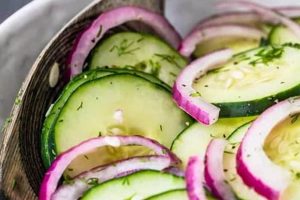
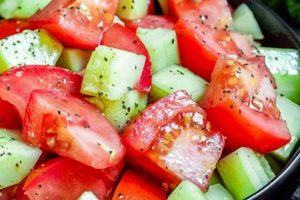
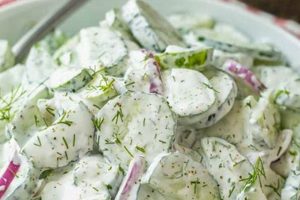
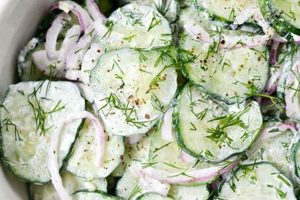
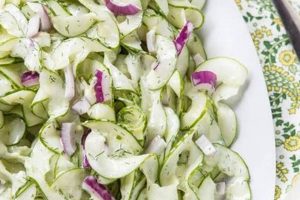
Crisp, refreshing, and often subtly spiced, these salads highlight the versatility of cucumbers, a staple in many Asian cuisines. Variations range from simple preparations with rice vinegar and sesame oil to more complex versions incorporating ingredients like chili peppers, garlic, fish sauce, and peanuts. A classic example involves thinly sliced cucumbers marinated in a blend of rice vinegar, soy sauce, sugar, and sesame seeds.
Such salads offer a light and healthy accompaniment to richer dishes, functioning as a palate cleanser. Their refreshing qualities make them particularly appealing in warmer climates. Historically, cucumbers have held a place in Asian culinary traditions for centuries, appreciated for their cooling properties and ability to balance flavors. The evolution of diverse cucumber salad recipes reflects the unique ingredients and culinary philosophies of different Asian regions.
Further exploration of this topic will cover specific regional variations, including Japanese, Korean, and Chinese cucumber salads, highlighting the diverse ingredients and techniques employed. Nutritional information and practical tips for preparation and storage will also be provided.
Tips for Preparing Exceptional Cucumber Salads
Achieving optimal flavor and texture in cucumber salads requires attention to detail. These tips offer guidance for creating dishes that showcase the refreshing qualities of cucumbers while incorporating authentic Asian flavors.
Tip 1: Salt and Drain Excess Moisture: Salting cucumbers before preparing the salad draws out excess water, preventing a watery final product. After salting, allow the cucumbers to sit for 15-20 minutes, then gently pat them dry with a clean cloth or paper towel.
Tip 2: Choose the Right Cucumber: English or Persian cucumbers, with their thinner skins and fewer seeds, are ideal for salads. For a more robust flavor, standard cucumbers can be used, but peeling and seeding are recommended.
Tip 3: Balance Flavors: A successful Asian cucumber salad balances salty, sweet, sour, and spicy elements. Experiment with ingredients like rice vinegar, soy sauce, sesame oil, chili garlic sauce, and sugar to achieve the desired balance.
Tip 4: Enhance with Aromatics: Incorporating aromatics such as garlic, ginger, and fresh herbs elevates the flavor profile. Finely mince or grate these ingredients to maximize their impact.
Tip 5: Toast Sesame Seeds: Toasting sesame seeds before adding them to the salad enhances their nutty flavor and adds a pleasant crunch. Toast lightly in a dry pan over medium heat until fragrant.
Tip 6: Chill Before Serving: Chilling the salad for at least 30 minutes allows the flavors to meld and enhances the refreshing qualities of the cucumbers.
Tip 7: Consider Texture: Varying the texture adds interest. Try incorporating thinly sliced red onion, chopped peanuts, or crispy fried shallots.
By following these guidelines, one can create flavorful, refreshing, and texturally appealing cucumber salads that complement a variety of dishes.
These insights provide a foundation for exploring the diverse world of Asian cucumber salad recipes, from classic preparations to innovative variations.
1. Refreshing

The refreshing quality is a defining characteristic of Asian cucumber salads. This characteristic stems from the cucumber itself, a vegetable known for its high water content and cooling properties. The effect is amplified by preparation methods, such as chilling and the incorporation of acidic ingredients like vinegar. These elements create a sensory experience that cleanses the palate and provides a welcome contrast to richer, heavier dishes, particularly beneficial in warmer climates. For example, a spicy Thai beef salad is often balanced by a side of cool, vinegar-dressed cucumber salad, offering respite from the heat.
The emphasis on freshness extends beyond the cucumber. Many recipes incorporate fresh herbs like mint, cilantro, or dill, further enhancing the refreshing quality. The crispness of the cucumber, combined with the bright, herbaceous notes, creates a synergistic effect that invigorates the senses. Consider a Vietnamese salad with thinly sliced cucumbers, shredded carrots, fresh mint, and a light lime dressing the combination of textures and flavors contributes to the overall refreshing experience.
Understanding the importance of “refreshing” within the context of Asian cucumber salads allows for informed recipe selection and preparation. Achieving this quality requires attention to detail, such as choosing crisp cucumbers, employing proper chilling techniques, and balancing flavors effectively. Failure to prioritize freshness can result in a bland, watery, or less satisfying dish. The refreshing element is integral to the appeal and function of these salads, contributing to their role as a palate cleanser and a light, healthy accompaniment to a meal.
2. Versatile
Versatility stands as a defining characteristic of Asian cucumber salads, encompassing adaptability in ingredients, preparation methods, and serving occasions. This adaptability contributes significantly to the widespread popularity and culinary relevance of these salads across diverse Asian cuisines. Understanding this versatility provides a framework for appreciating the breadth and depth of possibilities within this seemingly simple dish.
- Ingredient Adaptability
Asian cucumber salads demonstrate remarkable flexibility in ingredient incorporation. While cucumbers serve as the foundation, a wide array of complementary components can be included. Examples include various alliums (onions, shallots, garlic), herbs (mint, cilantro, dill), spices (chili flakes, ginger), and proteins (shredded chicken, shrimp, tofu). This adaptability allows for customization based on regional preferences, seasonal availability, and dietary restrictions. A Korean cucumber salad might feature gochujang (chili paste) and sesame oil, while a Japanese version might incorporate seaweed and mirin.
- Method Variability
Preparation methods also exhibit considerable variation. Cucumbers can be thinly sliced, julienned, smashed, or even quick-pickled. Dressing styles range from light and tangy vinegar-based mixtures to richer, creamier dressings incorporating sesame paste or yogurt. This flexibility extends to techniques like salting and draining cucumbers to optimize texture, or incorporating toasted sesame seeds for added flavor and crunch. The choice of method influences the final texture and flavor profile of the salad.
- Serving Versatility
Asian cucumber salads seamlessly integrate into various meal contexts. They can function as a refreshing side dish, a light appetizer, or a component within larger, more complex dishes. They pair well with grilled meats, stir-fries, noodle dishes, and rice bowls. This versatility makes them suitable for casual meals, festive occasions, and even packed lunches. A simple cucumber and sesame salad can complement a weeknight dinner, while a more elaborate version with shrimp and peanuts can be served at a celebratory gathering.
- Cultural Adaptations
The core concept of a cucumber salad adapts across numerous Asian culinary traditions. Each region imparts its unique signature through specific ingredient combinations and flavor profiles. This adaptability speaks to the enduring appeal of the dish and its capacity to reflect local culinary nuances. The presence of fish sauce in a Thai cucumber salad distinguishes it from a Chinese version that might emphasize soy sauce and vinegar, showcasing regional flavor preferences and culinary traditions.
The versatility inherent in Asian cucumber salads contributes to their enduring presence in diverse culinary landscapes. This adaptability extends beyond ingredients and methods to encompass various serving occasions and cultural interpretations. By understanding the multifaceted nature of this versatility, one can appreciate the breadth and depth of possibilities within this seemingly simple dish and adapt it to suit individual preferences and culinary contexts. The ability to personalize these salads ensures their continued relevance and enjoyment across generations and cultures.
3. Flavorful

Flavor complexity distinguishes Asian cucumber salads from simpler preparations. While refreshment plays a crucial role, the strategic layering of flavors elevates these salads beyond mere palate cleansers, transforming them into culinary experiences. A balanced interplay of sweet, sour, salty, spicy, and umami elements characterizes successful recipes. This balance is achieved through careful selection and proportioning of ingredients, reflecting the nuanced approach to flavor characteristic of many Asian cuisines.
The foundation of flavor often lies in a combination of vinegar (rice vinegar, black vinegar, or white vinegar), providing sourness, and a sweetener like sugar or mirin, contributing sweetness. Soy sauce or fish sauce introduces saltiness and umami, while elements like ginger, garlic, and chili peppers contribute pungent notes and varying degrees of heat. Fresh herbs like cilantro, mint, and Thai basil introduce aromatic complexity. The synergistic interaction of these components creates a dynamic flavor profile that engages the palate on multiple levels. For example, a classic Sichuan cucumber salad balances the heat of chili oil with the tang of vinegar, the saltiness of soy sauce, and the numbing sensation of Sichuan peppercorns.
Achieving a flavorful outcome necessitates an understanding of the interplay between these core taste elements. Over-reliance on any single element can disrupt the balance. Too much vinegar can make the salad overly sour, while excessive sugar can mask the other flavors. The careful calibration of these elements, combined with the judicious use of aromatics and spices, is essential for creating a harmonious and flavorful experience. This understanding allows for both appreciation of existing recipes and creative adaptation. Mastering the art of flavor balancing empowers individuals to craft unique and delicious cucumber salads tailored to individual preferences and culinary contexts. It underscores the importance of “flavorful” as not just a desirable attribute, but a defining characteristic of successful Asian cucumber salads.
4. Simple Ingredients
The accessibility of Asian cucumber salads often stems from the simplicity of their ingredients. These recipes typically rely on readily available components found in most kitchens or easily sourced from local markets. This reliance on common ingredients contributes to the widespread appeal and adaptability of these salads across various culinary contexts. Cucumbers, vinegar, soy sauce, sesame oil, garlic, ginger, and chili peppers represent common foundational elements. Such accessibility empowers individuals to create flavorful dishes without requiring specialized ingredients or extensive culinary expertise.
The emphasis on simple ingredients does not equate to simplicity in flavor. The strategic combination and balancing of these basic components create complex flavor profiles. For example, a Vietnamese cucumber salad might combine just a few ingredients thinly sliced cucumbers, rice vinegar, sugar, fish sauce, and a sprinkle of chili flakes to create a vibrant, balanced dish that is simultaneously sweet, sour, salty, and spicy. Similarly, a Japanese sunomono cucumber salad might utilize cucumbers, rice vinegar, sugar, and a touch of salt, showcasing the inherent flavors of the cucumber itself while adding subtle sweetness and acidity. These examples demonstrate how readily accessible ingredients can be transformed into flavorful dishes through considered combinations.
Understanding the role of simple ingredients in Asian cucumber salads has practical implications. This simplicity allows for flexibility and adaptability in recipe creation. Individuals can easily adjust recipes based on personal preferences or available ingredients. Furthermore, the reliance on readily available components makes these salads a budget-friendly option for everyday meals or larger gatherings. This accessibility contributes to the enduring popularity and cultural significance of these salads across diverse Asian cuisines, highlighting the power of simple ingredients to create flavorful and satisfying dishes. The focus on accessibility, combined with the potential for complex flavors, underscores the value and appeal of these salads within various culinary contexts.
5. Regional Variations
Regional variations in Asian cucumber salads demonstrate the adaptability of a core concept across diverse culinary landscapes. These variations reflect unique local ingredients, flavor preferences, and cultural traditions, enriching the broader category of Asian cucumber salads and offering a compelling lens through which to explore the diverse culinary heritage of different Asian regions. Examining these regional adaptations provides valuable insights into the interplay between local resources and culinary creativity.
- Southeast Asia (e.g., Thailand, Vietnam)
Southeast Asian variations often incorporate fresh herbs like mint, cilantro, and Thai basil, contributing bright, herbaceous notes. Fish sauce frequently features as a key seasoning, lending a savory umami depth. The prevalence of lime juice adds a citrusy tang, complementing the other flavors. Spice levels tend to be higher, with the inclusion of chili peppers or chili garlic sauce. A Thai cucumber salad, for instance, might combine cucumbers, red onion, peanuts, chilies, fish sauce, lime juice, and sugar, resulting in a complex interplay of sweet, sour, salty, and spicy flavors.
- East Asia (e.g., China, Japan, Korea)
East Asian cucumber salads frequently showcase the use of sesame oil, imparting a nutty aroma and richness. Rice vinegar is a common acidic component, providing a milder tang compared to other vinegars. Soy sauce often serves as the primary source of saltiness and umami. Ginger and garlic are frequent aromatic additions. A classic Japanese sunomono cucumber salad typically involves cucumbers marinated in rice vinegar, sugar, and salt, emphasizing simplicity and the natural flavor of the cucumber.
- South Asia (e.g., India, Pakistan)
South Asian variations frequently feature yogurt or raita as a base, creating a creamy, cooling salad. Spices like cumin, coriander, and turmeric contribute warm, earthy notes. Chilies and ginger add heat and pungency. Fresh herbs like cilantro and mint provide freshness. A cucumber raita, for example, might combine yogurt, grated cucumber, chopped mint, cumin powder, and a pinch of salt, offering a cooling and refreshing counterpoint to spicier dishes.
- West Asia (e.g., Turkey, Lebanon)
While not strictly classified within the “Asian” culinary sphere, West Asian cucumber salads offer interesting parallels and influences. These salads often incorporate ingredients like tomatoes, onions, and parsley. Lemon juice or sumac provides acidity, while olive oil adds richness. A simple Turkish cucumber salad might combine diced cucumbers, tomatoes, red onion, parsley, lemon juice, and olive oil, showcasing a Mediterranean influence. While differing in specific ingredients, the emphasis on fresh, vibrant flavors resonates with broader Asian cucumber salad traditions.
Examining these regional variations provides a deeper understanding of how a simple dish adapts to diverse culinary traditions. The core concept of a refreshing cucumber salad remains constant, yet the specific expressions vary significantly, reflecting the unique flavors and ingredients characteristic of each region. These variations underscore the adaptability of the cucumber salad concept and highlight the rich culinary tapestry of Asia and its surrounding regions. By understanding these regional nuances, one can appreciate the breadth and depth of this seemingly simple dish and gain valuable insights into the diverse culinary landscape of the region.
6. Textural Contrast
Textural contrast contributes significantly to the sensory appeal of Asian cucumber salads. Beyond the refreshing flavors, the interplay of textures elevates these salads from simple to complex culinary experiences. A well-composed cucumber salad offers a combination of crisp, crunchy, and sometimes even creamy elements, creating a dynamic and satisfying mouthfeel. Understanding the role of textural contrast provides insights into the nuanced approach to culinary construction characteristic of many Asian cuisines.
- Crisp Cucumber Base
The inherent crispness of cucumbers forms the foundational texture. Preparation methods, such as slicing, dicing, or smashing, influence the specific expression of this crispness. Thinly sliced cucumbers offer a delicate crispness, while smashed cucumbers present a more substantial, fractured texture. Maintaining this crispness is crucial; over-marinating can result in a loss of texture, diminishing the overall sensory experience.
- Crunchy Counterpoints
Crunchy elements provide a textural counterpoint to the crisp cucumber base. Common examples include toasted sesame seeds, chopped peanuts, fried shallots, or crispy noodles. These additions introduce a contrasting textural dimension, adding complexity and interest to each bite. The interplay between crisp cucumber and crunchy toppings elevates the sensory experience, preventing monotony and enhancing enjoyment.
- Silky or Creamy Components (Optional)
Some Asian cucumber salads incorporate creamy or silky components, further diversifying the textural profile. Examples include the addition of avocado, shredded coconut, or a dressing incorporating yogurt or sesame paste. These elements introduce a contrasting smoothness, rounding out the overall textural experience and complementing the crisp and crunchy elements. This addition, while not universally present, provides an additional layer of complexity when employed.
- Impact of Fresh Herbs
Fresh herbs like mint, cilantro, and basil contribute not only flavor but also textural nuance. Their tender leaves offer a subtle contrast to the firmer cucumber and any crunchy additions. This interplay of textures further enhances the sensory experience, contributing to a more dynamic and engaging mouthfeel. The choice of herbs can significantly influence the overall textural profile.
The strategic combination of these textural elements contributes significantly to the overall enjoyment of Asian cucumber salads. The interplay of crisp, crunchy, and sometimes creamy or silky components creates a dynamic and satisfying mouthfeel that complements the refreshing flavors. This attention to textural contrast distinguishes thoughtfully prepared cucumber salads, highlighting the nuanced understanding of sensory experience characteristic of many Asian culinary traditions. The balance of textures elevates these salads from simple accompaniments to more complex and engaging culinary creations.
7. Healthy Option
The designation of Asian cucumber salads as a “healthy option” stems from the nutritional profile of cucumbers and the typically light preparation methods employed. Cucumbers are low in calories and rich in water, contributing to hydration and promoting a sense of fullness. They also provide essential vitamins and minerals, including vitamin K, vitamin C, and potassium. The minimal use of oil in many recipes further reduces caloric intake. Furthermore, the inclusion of fresh herbs and vegetables adds nutritional value without significantly increasing caloric density. For example, a simple cucumber and seaweed salad provides vitamins, minerals, and fiber with minimal calories and fat. This nutritional profile aligns with dietary guidelines emphasizing whole, unprocessed foods and reduced calorie consumption. Therefore, the “healthy option” attribute is not merely a marketing label but a reflection of the inherent nutritional benefits.
The health benefits extend beyond basic nutrition. The high water content of cucumbers aids in digestion and can contribute to improved skin health. The inclusion of ingredients like garlic and ginger provides potential anti-inflammatory and immune-boosting benefits. Furthermore, opting for a cucumber salad as a side dish over higher-calorie alternatives like fried foods or creamy dressings contributes to overall calorie control and promotes a balanced diet. Replacing a fried side with a cucumber salad when consuming a higher-calorie main dish, like Korean BBQ, contributes to portion control and overall nutritional balance.
While generally considered healthy, variations in ingredients and preparation methods can influence the overall nutritional value. Adding excessive amounts of sugar or sodium-rich sauces can diminish the health benefits. Similarly, incorporating fried toppings like crispy noodles or large quantities of nuts can increase calorie and fat content. Mindful ingredient selection and portion control are essential for maximizing the nutritional benefits. Opting for low-sodium soy sauce and limiting added sugar preserves the healthy attributes. Awareness of these factors allows individuals to make informed choices and fully appreciate the potential of Asian cucumber salads as a nutritious and flavorful component of a balanced diet.
Frequently Asked Questions
This section addresses common inquiries regarding Asian cucumber salads, providing concise and informative responses to clarify potential uncertainties and enhance understanding of these versatile dishes.
Question 1: How can excess moisture be prevented in cucumber salads?
Salting cucumbers prior to preparation draws out excess water. After salting, allow the cucumbers to rest for approximately 15-20 minutes, then gently pat them dry with a clean cloth or paper towel. This process prevents a watery final product and maintains a desirable texture.
Question 2: What type of cucumber is best suited for these salads?
English or Persian cucumbers, known for thinner skins and fewer seeds, are generally preferred. Standard cucumbers can be used, but peeling and seeding are recommended for optimal texture and flavor.
Question 3: How can the flavors in an Asian cucumber salad be balanced effectively?
Balancing sweet, sour, salty, and spicy elements is key. Rice vinegar, soy sauce, sesame oil, chili garlic sauce, and sugar are commonly used to achieve this balance. Experimentation and adjustment based on personal preference are encouraged.
Question 4: How long can a prepared cucumber salad be stored?
Properly stored in an airtight container in the refrigerator, most cucumber salads can last for 2-3 days. However, salads with added proteins or fresh herbs may have a shorter shelf life.
Question 5: Can these salads be adapted for different dietary needs?
Adaptability is a hallmark of these salads. Substituting ingredients or omitting certain components allows for customization to accommodate various dietary restrictions, including gluten-free, vegan, and low-sodium diets.
Question 6: What are some common accompaniments for Asian cucumber salads?
These salads complement a wide array of dishes. They pair well with grilled meats, stir-fries, noodle dishes, rice bowls, and curries, acting as a refreshing counterpoint to richer flavors.
This FAQ section offers practical guidance for preparing and enjoying Asian cucumber salads. Addressing these common inquiries enhances understanding and empowers individuals to create delicious and satisfying dishes.
The following section provides a collection of popular Asian cucumber salad recipes, showcasing the diversity and versatility of this refreshing dish.
Asian Cucumber Salad Recipes
This exploration of Asian cucumber salad recipes has highlighted their versatility, flavor complexity, and cultural significance. From simple preparations emphasizing fresh ingredients to more elaborate variations incorporating diverse spices and textures, these salads offer a refreshing counterpoint to a wide range of dishes. Key aspects discussed include the importance of balancing flavors, achieving optimal textural contrast, regional variations reflecting unique culinary traditions, and the inherent health benefits of incorporating these salads into one’s diet. The accessibility of ingredients and the adaptability of methods empower culinary exploration and customization based on individual preferences and dietary needs.
The continued evolution of Asian cucumber salad recipes promises further innovation and adaptation within the culinary landscape. Exploration of regional variations offers a deeper understanding of cultural influences and ingredient utilization. Whether served as a simple side dish or a complex culinary creation, these salads represent a vibrant and enduring element within the rich tapestry of Asian cuisine, offering a refreshing and flavorful experience for both novice cooks and seasoned chefs alike. Further exploration and experimentation are encouraged to fully appreciate the breadth and depth of this culinary tradition.