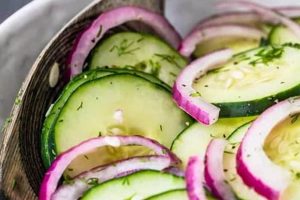
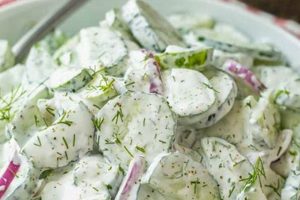
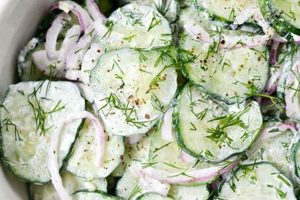
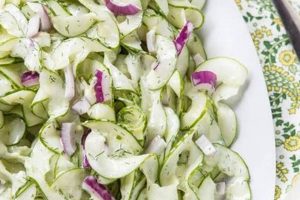
A simple cucumber salad with Asian-inspired flavors typically features thinly sliced cucumbers dressed in a light, flavorful sauce. Common ingredients include rice vinegar, sesame oil, soy sauce, ginger, garlic, and chili. Variations may incorporate ingredients like sugar, fish sauce, or cilantro. An example could be thinly sliced cucumbers marinated in rice vinegar, sesame oil, soy sauce, minced garlic, and a pinch of red pepper flakes.
Such salads offer a refreshing and healthy side dish or light meal, often low in calories and rich in hydrating electrolytes. The blend of sweet, sour, salty, and sometimes spicy flavors is characteristic of many Asian cuisines. Historically, cucumbers have been cultivated and consumed in Asia for centuries, and simple preparations like these likely evolved alongside more complex culinary traditions. The accessibility of ingredients and ease of preparation have contributed to the enduring popularity of these salads across various cultures.
Exploring specific regional variations, discussing optimal ingredient selection, and outlining best practices for preparation will further illuminate the art of crafting a delicious and authentic cucumber salad with an Asian flair.
Tips for Creating a Flavorful and Refreshing Asian-Inspired Cucumber Salad
Achieving optimal flavor and texture requires attention to detail throughout the preparation process. The following tips will guide culinary enthusiasts in crafting a truly exceptional cucumber salad.
Tip 1: Selecting Cucumbers: Opt for firm, unwaxed cucumbers, such as Persian or English varieties, for optimal flavor and texture. These varieties tend to have thinner skins and fewer seeds, reducing the need for peeling or seeding.
Tip 2: Consistent Slicing: Uniformly thin slices ensure even marinating and a pleasant mouthfeel. A mandoline slicer or sharp knife can be employed to achieve consistent results.
Tip 3: Salting and Draining: Salting the cucumber slices and allowing them to drain for a short period removes excess moisture, preventing a watery salad and concentrating the cucumber flavor.
Tip 4: Balancing Flavors: Carefully balance the sweet, sour, salty, and spicy elements in the dressing. A touch of sugar can complement the acidity of rice vinegar, while ginger and garlic provide aromatic depth.
Tip 5: Enhancing with Aromatics: Toasted sesame oil adds a nutty fragrance, while freshly chopped cilantro or mint provides a bright, herbaceous note. Experimentation with different aromatics allows for personalized flavor profiles.
Tip 6: Marinating Time: Allowing sufficient marinating time, even just 15-30 minutes, enhances flavor development and allows the cucumbers to absorb the dressing thoroughly.
Tip 7: Garnishing for Visual Appeal: A sprinkle of toasted sesame seeds, a scattering of chopped scallions, or a few red pepper flakes can elevate the visual presentation and add an extra layer of flavor.
By following these guidelines, one can consistently create a vibrant and flavorful cucumber salad that embodies the essence of refreshing Asian cuisine.
Understanding these key elements ensures a consistently satisfying culinary experience, highlighting the simplicity and elegance of this versatile dish.
1. Fresh Cucumbers
Fresh cucumbers are fundamental to an easy Asian cucumber salad, impacting both flavor and texture. The choice of cucumber variety influences the final dish. For instance, Persian cucumbers, known for their thin skin and minimal seeds, require less preparation and offer a delicate, crisp texture. Conversely, standard slicing cucumbers, while readily available, might need peeling and seeding to prevent bitterness and excessive water content. This choice directly affects the easy aspect of the recipe, influencing preparation time and complexity. A salad made with wilted or less-than-fresh cucumbers will lack the vibrant crunch and refreshing quality characteristic of this dish. The freshness of the cucumber directly correlates to the overall success and enjoyment of the final product.
Cucumber freshness also plays a significant role in flavor absorption. The porous nature of fresh cucumber flesh allows for optimal absorption of the dressing’s flavors, creating a harmonious blend of sweet, sour, salty, and spicy notes. Older cucumbers, having lost some water content, become less receptive to the marinade, resulting in a less flavorful salad. Consider a scenario where the dressing consists of rice vinegar, soy sauce, sesame oil, and ginger. Fresh cucumbers readily absorb these flavors, creating a balanced and flavorful experience. In contrast, using less fresh cucumbers results in a less vibrant, potentially blander salad where the dressing’s nuances are less pronounced.
In conclusion, selecting fresh, crisp cucumbers is paramount for a successful easy Asian cucumber salad. The cucumber’s freshness influences not only the textural appeal but also the absorption of the dressings flavors. Prioritizing cucumber quality ensures a simple, refreshing, and flavorful dish, underscoring the importance of fresh ingredients in achieving culinary excellence. This understanding allows for informed decisions regarding cucumber selection and preparation, ultimately contributing to a more satisfying culinary outcome.
2. Balanced Dressing
A balanced dressing is crucial for an easy Asian cucumber salad, elevating the simple ingredients into a harmonious and flavorful dish. The delicate flavor of cucumbers requires a dressing that complements rather than overpowers. A well-balanced dressing enhances the refreshing nature of the salad, contributing significantly to its appeal and ease of preparation.
- Acidity
Acidity, primarily from rice vinegar, provides a bright, tangy note that cuts through the cucumber’s subtle sweetness. The level of acidity should be noticeable but not overpowering. Too much vinegar can make the salad unpleasantly sour, while too little can leave it bland. Authentic Asian cucumber salads often use rice vinegar for its mild and slightly sweet flavor profile, contrasting beautifully with the cucumber. For example, a dressing with 2 tablespoons of rice vinegar for every medium cucumber generally achieves a pleasant balance.
- Saltiness
Saltiness, typically from soy sauce or salt, enhances the other flavors and seasons the cucumbers. Soy sauce adds a layer of umami, while salt provides a clean, straightforward saline taste. The goal is to complement the inherent flavors, not create a salty dish. A light soy sauce, or a reduced-sodium version, often works best, preventing the salad from becoming overly salty. Consider using 1 tablespoon of light soy sauce per cucumber as a starting point, adjusting to taste.
- Sweetness
A touch of sweetness balances the acidity and saltiness, creating a more complex and nuanced flavor profile. A small amount of sugar, honey, or even a sweeter rice vinegar can achieve this balance. The sweetness should be subtle, enhancing the other flavors rather than dominating them. For example, a half teaspoon of sugar per cucumber often suffices. Over-sweetening can mask the delicate cucumber flavor and create an unbalanced profile.
- Aromatics
Aromatics like ginger, garlic, and chili flakes introduce complexity and depth of flavor. These ingredients enhance the sensory experience, adding pungent, spicy, or savory notes. Freshly grated ginger or minced garlic offers a more vibrant flavor compared to powdered versions. A small amount, such as a teaspoon of minced ginger or garlic per cucumber, often creates a noticeable difference. Similarly, a pinch of chili flakes adds a subtle heat without overpowering the other flavors. These additions contribute significantly to the overall balance and complexity, making the salad more interesting and palatable.
The interplay of these elements acidity, saltiness, sweetness, and aromatics determines the overall success of an easy Asian cucumber salad. The balance achieved allows the refreshing qualities of the cucumber to shine while enhancing its subtle flavors. A well-executed dressing transforms a simple preparation into a delightful culinary experience, demonstrating the importance of balanced flavors in achieving culinary simplicity and excellence.
3. Quick Preparation
The “easy” aspect of an Asian cucumber salad recipe hinges significantly on its quick preparation. Minimal processing and readily available ingredients contribute to the convenience of this dish, making it an appealing choice for quick meals or side dishes. Examining the facets of quick preparation reveals its crucial role in the overall simplicity and appeal of this culinary creation.
- Minimal Processing
Minimal processing reduces preparation time significantly. Cucumbers often require only slicing, eliminating elaborate chopping or other time-consuming techniques. For instance, Persian cucumbers, with their thin skins and minimal seeds, often require no peeling or seeding, further streamlining the process. This ease of preparation contributes directly to the “easy” and “quick” nature of the recipe, making it an ideal choice for time-constrained cooks.
- Readily Available Ingredients
Common pantry staples like rice vinegar, soy sauce, and sesame oil typically comprise the dressing. These ingredients are readily available in most grocery stores, eliminating the need for specialized or hard-to-find components. This accessibility further simplifies the recipe, making it easy to prepare with ingredients on hand. For example, a basic Asian cucumber salad can be made with ingredients commonly found in any well-stocked kitchen, eliminating the need for special trips to the grocery store.
- Short Marinating Time
While marinating enhances flavor, even a short marinating time, such as 15-30 minutes, yields a flavorful and refreshing salad. This short duration contributes to the quick preparation aspect, allowing for a relatively fast turnaround from preparation to serving. The quick marinating time does not compromise the flavor profile, allowing for a delicious salad even when time is limited.
- Simple Techniques
The techniques involved are straightforward: slicing cucumbers, whisking together a dressing, and combining the two. No specialized culinary skills or equipment are required. This simplicity ensures that even novice cooks can easily create a delicious and authentic Asian cucumber salad. The straightforward nature of the preparation contributes to the overall ease and accessibility of the recipe.
The convergence of minimal processing, readily available ingredients, short marinating time, and simple techniques epitomizes the “quick preparation” aspect of an easy Asian cucumber salad recipe. This confluence of factors contributes significantly to the dish’s appeal, making it a practical and flavorful choice for both casual and time-conscious cooks. The quick preparation not only saves time but also ensures a consistently delicious and refreshing outcome, reinforcing the connection between simplicity and culinary excellence.
4. Minimal Ingredients
The “easy” attribute of an Asian cucumber salad recipe is intrinsically linked to the minimal ingredients required. This characteristic contributes significantly to the recipe’s accessibility and convenience. A smaller number of ingredients simplifies the shopping list, reduces preparation time, and decreases the likelihood of ingredient wastage. Furthermore, fewer ingredients often translate to lower overall costs, making the recipe budget-friendly.
Consider a basic Asian cucumber salad. Essential ingredients typically include cucumbers, rice vinegar, soy sauce, sesame oil, and optional additions like ginger, garlic, or chili flakes. This limited list contrasts with more complex recipes requiring numerous specialized components. This simplicity facilitates quicker shopping trips and reduces the chances of overlooking an ingredient. For example, a simple dressing of rice vinegar, soy sauce, and sesame oil requires only three pantry staples, compared to more elaborate dressings involving numerous herbs, spices, and other flavorings.
The practical significance of minimal ingredients extends beyond convenience. With fewer components, the inherent flavors of each ingredient become more pronounced. The delicate flavor of the cucumber isn’t masked by a complex array of spices or sauces. The tanginess of rice vinegar, the saltiness of soy sauce, and the nuttiness of sesame oil each contribute distinct notes, creating a harmonious balance. This minimalist approach allows for a clean, refreshing taste profile that highlights the cucumber’s natural flavor. Moreover, a recipe with minimal ingredients offers greater flexibility for customization. Individual preferences can be easily accommodated by adjusting the proportions of key ingredients or adding small amounts of other preferred flavorings.
In summary, the minimal ingredient requirement in easy Asian cucumber salad recipes directly contributes to their accessibility, affordability, and flavor profile. This simplicity allows the inherent flavors of each component to shine, resulting in a refreshing and balanced dish. Furthermore, the minimalist nature of these recipes offers cooks the flexibility to personalize flavors while minimizing shopping and preparation time, ultimately enhancing the overall culinary experience.
5. Refreshing Taste

The “refreshing taste” of an easy Asian cucumber salad is a defining characteristic, directly influencing its appeal and suitability for various culinary contexts. This refreshing quality stems from a combination of factors, including the inherent properties of cucumbers, the balance of flavors in the dressing, and the overall simplicity of the preparation. Exploring these facets provides a deeper understanding of the refreshing nature of this dish and its significance within the broader culinary landscape.
- Hydration and Cooling Effect
Cucumbers possess high water content, contributing to the salad’s hydrating and cooling effect. This inherent characteristic makes the salad particularly appealing in warmer climates or as a refreshing counterpoint to richer, heavier meals. The cooling sensation experienced when consuming the salad enhances its refreshing quality. For instance, serving this salad alongside spicy dishes provides a cooling contrast, balancing the overall meal experience.
- Balancing Flavors: Acidity and Sweetness
The balance of acidity and sweetness in the dressing plays a pivotal role in the refreshing taste. The acidity, usually from rice vinegar, provides a tartness that awakens the palate, while a touch of sweetness balances the acidity and adds a dimension of complexity. This interplay creates a bright, invigorating flavor profile that enhances the refreshing experience. A dressing that is overly acidic or sweet can detract from the refreshing quality, highlighting the importance of balance.
- Aromatic Herbs and Spices: Enhancement, Not Domination
Aromatic herbs and spices, such as ginger, garlic, and chili, can further enhance the refreshing quality. These ingredients add complexity and depth without overpowering the delicate cucumber flavor. The subtle heat from chili, for example, can create a stimulating contrast to the cooling cucumber, further enhancing the refreshing experience. However, excessive use of strong aromatics can mask the cucumber’s refreshing qualities, underscoring the importance of restraint.
- Light and Crisp Texture: Enhancing Palatability
The light and crisp texture of the cucumber contributes significantly to the refreshing sensation. The crispness provides a satisfying contrast to other textures within a meal, adding to the overall enjoyment and refreshing experience. A salad made with wilted or over-marinated cucumbers loses this desirable crispness, diminishing its refreshing quality. Maintaining the cucumber’s crispness is therefore essential for achieving the desired refreshing taste.
The refreshing taste of an easy Asian cucumber salad results from a carefully orchestrated interplay of hydration, balanced flavors, aromatic enhancements, and textural appeal. These factors combine to create a dish that is not only easy to prepare but also offers a revitalizing and palate-cleansing experience. This refreshing quality makes the salad a versatile accompaniment to a wide range of cuisines and occasions, solidifying its position as a popular and enduring culinary choice.
6. Versatile Side Dish

The versatility of easy Asian cucumber salad as a side dish stems from its refreshing qualities, adaptability to various flavor profiles, and ease of preparation. These characteristics allow it to complement a wide array of main courses, from grilled meats and fish to spicy curries and stir-fries. The salad’s cooling properties provide a welcome contrast to rich or spicy dishes, cleansing the palate and balancing the overall meal. For example, the bright, acidic notes of a cucumber salad with rice vinegar dressing cut through the richness of grilled pork belly, while its crisp texture complements the soft texture of steamed rice. Similarly, the subtle heat of a ginger and chili-infused cucumber salad balances the intense flavors of a Thai green curry. This adaptability makes the salad a valuable component in diverse culinary contexts, enhancing the dining experience by providing a refreshing counterpoint to a variety of flavors and textures.
The ease of preparation further amplifies the salad’s versatility. Its simple ingredient list and quick preparation time make it a practical choice for both casual weeknight meals and more elaborate gatherings. This convenience allows cooks to focus on preparing the main course without sacrificing the quality or complexity of the accompanying side dish. For instance, while a complex main dish like Peking duck requires considerable preparation, a simple cucumber salad can be assembled quickly, ensuring a balanced and complete meal without adding significant time or effort. This ease of preparation enhances the salad’s practical value, making it a reliable and versatile side dish option for a variety of culinary situations.
The versatility of easy Asian cucumber salad as a side dish derives from the interplay of refreshing flavors, adaptability to diverse cuisines, and ease of preparation. Its ability to complement a wide spectrum of main courses, from rich and savory to spicy and aromatic, positions it as a valuable asset in any culinary repertoire. This understanding allows for strategic menu planning, ensuring balanced and flavorful meals across various cuisines and occasions. The salad’s simplicity and adaptability ultimately enhance the overall dining experience, making it a consistently appealing and practical choice as a versatile side dish.
Frequently Asked Questions
This section addresses common inquiries regarding the preparation and variations of easy Asian cucumber salads.
Question 1: Can different types of cucumbers be used?
While Persian cucumbers are often preferred for their thin skin and minimal seeds, other varieties like English or Japanese cucumbers also work well. Standard slicing cucumbers can be used, but peeling and seeding might be necessary to reduce bitterness and excess water content.
Question 2: How long can the salad be stored?
Refrigeration in an airtight container is recommended. The salad is best consumed within 2-3 days for optimal texture and flavor. Extended storage might lead to a loss of crispness and dilution of flavors due to moisture release.
Question 3: Can the dressing be adjusted for different flavor profiles?
The dressing is highly adaptable. Increasing the amount of rice vinegar enhances the tartness, while adding more sugar or honey increases sweetness. Adjusting the amount of soy sauce modifies the saltiness. Experimentation is encouraged to achieve personalized preferences.
Question 4: What are some common variations of the salad?
Variations include adding different aromatics like minced garlic, grated ginger, or chili flakes. Incorporating toasted sesame seeds, chopped cilantro, or a sprinkle of red pepper flakes provides additional flavor and visual appeal. Some recipes include a small amount of fish sauce for a more savory depth.
Question 5: Can this salad be served as a main dish?
While typically served as a side dish, the salad can be a light and refreshing main course, particularly during warmer months. Adding protein like grilled chicken, shrimp, or tofu enhances its nutritional value and makes it a more substantial meal.
Question 6: What are the health benefits associated with this salad?
Cucumbers are low in calories and a good source of hydration. They also contain beneficial nutrients like vitamin K and antioxidants. The dressing, typically made with rice vinegar, soy sauce, and sesame oil, provides additional health benefits associated with these ingredients, such as improved digestion and potential anti-inflammatory effects.
Understanding these frequently asked questions should assist in the successful preparation and enjoyment of various easy Asian cucumber salad iterations.
This concludes the FAQ section. Further exploration of specific regional variations and advanced preparation techniques is encouraged for culinary enthusiasts seeking to expand their knowledge and expertise.
Asian Cucumber Salad Recipe Easy
Exploration of “asian cucumber salad recipe easy” reveals a dish characterized by simplicity, freshness, and adaptability. Key elements highlighted include the importance of fresh cucumbers, the balance of flavors within the dressing, and the quick preparation achieved through minimal ingredients and straightforward techniques. The refreshing taste, derived from the cucumber’s inherent qualities and the balanced dressing, contributes to its versatility as a side dish complementing diverse cuisines. Discussion of common variations and practical tips provides a comprehensive understanding of this culinary staple.
The enduring appeal of the “asian cucumber salad recipe easy” lies in its ability to deliver a flavorful and refreshing experience with minimal effort. This balance of simplicity and culinary satisfaction positions the dish as a valuable addition to any repertoire, encouraging further exploration of its regional variations and creative adaptations. Continued appreciation for fresh, simple cuisine ensures the enduring relevance of this culinary classic.