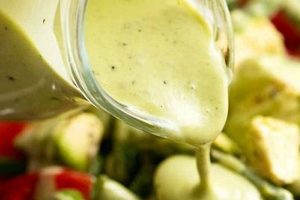
A Caesar salad dressing traditionally relies on raw egg yolks for its characteristic creamy texture and rich flavor. Eliminating this ingredient creates a suitable option for individuals with dietary restrictions, such as egg allergies or veganism, or those seeking to avoid potential food safety concerns associated with raw eggs. This variation retains the savory and tangy essence of classic Caesar dressing through ingredients like olive oil, lemon juice, garlic, Worcestershire sauce, and Parmesan cheese.
Plant-based alternatives, such as mashed avocado, silken tofu, or cashew cream, often contribute creaminess and body in place of egg yolks. Nutritional yeast can provide a cheesy, umami flavor profile similar to Parmesan. The adaptation caters to a wider audience while also aligning with modern culinary trends emphasizing health-consciousness and dietary inclusivity. Historically, Caesar Cardini’s original recipe did not include anchovies, and some modern interpretations omit them, further expanding the recipe’s adaptability.
The following sections will delve into specific ingredient choices, preparation methods, and variations for crafting this versatile dressing. Nutritional information, tips for achieving optimal flavor, and suggested salad pairings will also be explored.
Tips for Crafting Exceptional Eggless Caesar Dressing
Achieving a delicious eggless Caesar dressing requires attention to detail and a balance of flavors. The following tips offer guidance for optimal results.
Tip 1: Emulsification is Key: Proper emulsification creates a smooth, stable dressing. Whisking ingredients vigorously or using a blender ensures the oil and acidic components combine thoroughly, preventing separation.
Tip 2: Flavor Balancing: The interplay of tangy, salty, and savory notes defines Caesar dressing. Adjust lemon juice, Worcestershire sauce, and salt to achieve the desired balance. Taste and adjust throughout the process.
Tip 3: Creamy Texture Alternatives: Consider various options for achieving a creamy consistency without eggs. Blended silken tofu, ripe avocado, or soaked cashews offer distinct textures and flavor profiles. Experiment to find a preferred substitute.
Tip 4: Fresh Garlic Nuances: Freshly minced or grated garlic delivers a pungent flavor. Adjust the amount according to preference. Roasting the garlic mellows its intensity and adds a subtle sweetness.
Tip 5: Quality Parmesan Matters: Grated Parmesan cheese contributes significantly to the dressing’s savory depth. Opt for high-quality Parmesan for the best flavor.
Tip 6: Nutritional Yeast for Umami: Nutritional yeast provides a cheesy, umami note that complements the other flavors. It also adds a nutritional boost to the dressing.
Tip 7: Adjusting Consistency: If the dressing becomes too thick, thin it with additional lemon juice or water. Conversely, if too thin, blend in more of the chosen creamy base.
By following these tips, one can create a flavorful and satisfying eggless Caesar dressing that rivals traditional versions.
The following section concludes with suggestions for serving and variations to further enhance the culinary experience.
1. Vegan Alternative

Vegan alternatives play a crucial role in formulating eggless Caesar salad dressings, providing the necessary emulsification, texture, and flavor traditionally imparted by raw egg yolks. Exploring specific vegan alternatives reveals their diverse functionalities and contributions to the overall composition of the dressing.
- Emulsification and Binding:
Vegan alternatives act as emulsifiers, binding the oil and aqueous components of the dressing together. This prevents separation and creates a stable, creamy consistency. Silken tofu, due to its high protein content, excels in this role, effectively mimicking the emulsifying properties of egg yolks. Other options, such as soaked cashews or sunflower seeds, also contribute to a cohesive emulsion.
- Texture and Body:
The chosen vegan alternative significantly influences the dressing’s texture. Avocado creates a rich, smooth texture, while silken tofu provides a lighter, more delicate creaminess. The texture of cashew-based dressings can range from smooth to slightly grainy, depending on blending techniques. Selecting the appropriate alternative allows for customization of the final product’s mouthfeel.
- Flavor Contribution:
While primarily providing texture and emulsification, some vegan alternatives contribute subtle flavor notes. Avocado imparts a mild, buttery flavor, while cashew cream can offer a slightly nutty undertone. These subtle flavors complement the traditional Caesar dressing profile without overpowering other ingredients.
- Nutritional Considerations:
Vegan alternatives offer potential nutritional advantages compared to egg-based dressings. For example, avocado contributes healthy fats and fiber, while tofu is a source of plant-based protein. Nutritional yeast, often incorporated for its cheesy flavor, is a good source of B vitamins. These additions enhance the nutritional value of the dressing.
Careful selection and utilization of vegan alternatives enable the creation of eggless Caesar dressings that are both flavorful and texturally satisfying. By understanding the functional properties and flavor profiles of each alternative, one can tailor the dressing to specific preferences and dietary needs, achieving a result that rivals traditional egg-based versions.
2. Creamy Texture

Creamy texture is a defining characteristic of traditional Caesar salad dressing, typically achieved through the emulsification of raw egg yolks with oil. In eggless variations, replicating this creaminess requires careful consideration of alternative ingredients and techniques. Achieving the desired texture is crucial for delivering a satisfying sensory experience and overall culinary success.
- Emulsifying Agents:
Effective emulsification is essential for creating a stable and creamy dressing that doesn’t separate. While egg yolks naturally emulsify, eggless versions rely on substitutes like silken tofu, mashed avocado, or soaked cashews. These ingredients possess properties that allow them to bind oil and water-based components, creating a homogenous mixture. The emulsification process, often aided by vigorous whisking or blending, ensures a smooth, consistent texture.
- Viscosity and Body:
The chosen emulsifying agent directly impacts the viscosity and body of the dressing. Silken tofu creates a lighter, more delicate creaminess, whereas avocado yields a richer, denser texture. Soaked cashews can provide a texture ranging from smooth to slightly grainy depending on blending time. Understanding these variations allows for tailored results based on desired consistency.
- Flavor Interaction:
While texture is paramount, the chosen ingredient also influences flavor. Avocado adds a subtle buttery note, while cashews might impart a slightly nutty undertone. These nuances interact with other dressing components like garlic, lemon juice, and spices, contributing to the overall flavor profile. Balancing flavor and texture is critical for a well-rounded dressing.
- Ingredient Ratios:
The ratio of emulsifying agent to other ingredients significantly impacts the final texture. Too little can result in a thin, watery dressing, while too much may create an overly thick, heavy consistency. Precise measurements and careful adjustments during preparation are crucial for achieving the desired creamy texture. Experimentation is often necessary to fine-tune the balance for optimal results.
Successfully emulating the creamy texture of traditional Caesar dressing in eggless variations hinges on selecting the appropriate emulsifying agent and understanding its impact on viscosity, flavor, and overall balance. Careful consideration of these factors ensures a delicious and satisfying culinary experience that caters to dietary restrictions without compromising on texture or taste.
3. Tangy Flavor

Tangy flavor is a hallmark of Caesar salad dressing, contributing brightness and complexity that balances the richness of other ingredients. In eggless versions, achieving this characteristic tanginess requires careful consideration of acidic components and their interplay with other flavors. Understanding the sources and impact of tanginess is crucial for replicating the classic Caesar profile.
- Lemon Juice:
Lemon juice serves as the primary source of tanginess in most eggless Caesar dressings. Its bright, citrusy acidity cuts through the richness of the creamy base and other savory elements. Freshly squeezed lemon juice is preferred for its vibrant flavor, although bottled juice can be substituted in a pinch. The amount of lemon juice used influences the overall intensity of the tang, allowing for adjustments based on preference. For example, using Meyer lemons offers a sweeter, less acidic tang compared to traditional lemons.
- Vinegar:
While lemon juice is typical, some recipes incorporate vinegar for additional tang and complexity. White wine vinegar or apple cider vinegar can provide a subtle sharpness that complements the lemon juice. The type of vinegar chosen introduces unique flavor nuances, such as the fruity notes of apple cider vinegar or the dry, crisp character of white wine vinegar. Using a combination of lemon juice and vinegar offers a layered tangy profile.
- Worcestershire Sauce:
Worcestershire sauce contributes a complex umami and tangy element to Caesar dressing. Its fermented base provides depth of flavor and a subtle tang that enhances the overall profile. The Worcestershire sauce also interacts with other ingredients, amplifying their savory notes. Adjusting the amount of Worcestershire sauce can fine-tune the tanginess and complexity of the dressing.
- Balance with Other Flavors:
Tanginess should be balanced with other flavor components in the dressing. The richness of the creamy base, the saltiness of Parmesan cheese (or nutritional yeast in vegan versions), and the pungency of garlic all interact with the acidic elements. Achieving a harmonious balance between these flavors is crucial for a well-rounded and enjoyable dressing. For example, a dressing with too much tang might overpower the other flavors, while too little might result in a bland or flat profile.
Crafting a successful eggless Caesar dressing requires a nuanced approach to tanginess. By understanding the interplay of acidic components like lemon juice, vinegar, and Worcestershire sauce, and balancing them with other flavors, one can achieve a vibrant and delicious dressing that captures the essence of a classic Caesar.
4. Umami Richness

Umami, often described as the fifth taste, plays a crucial role in the overall flavor profile of Caesar salad dressing. Traditionally, this savory depth comes from ingredients like anchovies and Parmesan cheese. In eggless variations, achieving a comparable umami richness requires careful consideration of alternative ingredients and their synergistic effects.
- Nutritional Yeast:
Nutritional yeast is a deactivated yeast with a naturally cheesy, nutty flavor profile. It serves as an excellent source of umami in eggless Caesar dressings, effectively replacing the savory notes of Parmesan cheese. Its deactivated nature makes it suitable for raw applications, retaining its nutritional value. The addition of nutritional yeast contributes to both the flavor complexity and nutritional content of the dressing.
- Mushrooms:
Certain mushroom varieties, particularly dried shiitake or porcini, possess concentrated umami flavors. Incorporating these mushrooms, either rehydrated and finely chopped or as a powder, adds depth and complexity to the dressing. Mushroom-derived umami complements other savory ingredients, creating a well-rounded flavor profile reminiscent of traditional Caesar dressings.
- Miso Paste:
Miso paste, a fermented soybean product, is another potent source of umami. While often associated with Asian cuisine, its savory depth translates well to eggless Caesar dressings. A small amount of miso paste, typically white or yellow varieties for a milder flavor, can significantly enhance the umami richness without overpowering other ingredients. Careful balancing is essential, as miso can be quite salty.
- Worcestershire Sauce:
Worcestershire sauce, while contributing tanginess, also provides a noticeable umami element due to its fermented ingredients. It enhances the savory complexity of the dressing and interacts synergistically with other umami-rich components. Its versatility makes it a valuable addition to eggless Caesar recipes, further enriching the flavor profile.
By strategically incorporating these umami-rich ingredients, eggless Caesar salad dressings can achieve a depth of flavor comparable to traditional versions. The interplay of these components creates a savory and satisfying experience that complements the creamy texture and tangy notes, resulting in a well-balanced and flavorful dressing.
5. Ingredient Balance

Ingredient balance is paramount in crafting a successful eggless Caesar salad dressing. The interplay of creamy, tangy, savory, and umami elements defines this dressing, and achieving harmony among these flavors is essential for a satisfying culinary experience. Careful consideration of ingredient proportions and their individual contributions ensures a well-rounded and flavorful outcome.
- Creamy Base:
The creamy base, often derived from silken tofu, avocado, or cashews, provides the foundation of the dressing’s texture and mouthfeel. Its proportion relative to other ingredients determines the overall richness and viscosity. Too much can result in a heavy, overpowering dressing, while too little may yield a thin, watery consistency. Balancing the creamy base with other components is crucial for achieving the desired texture and preventing it from dominating the flavor profile.
- Acidity:
Acidity, primarily from lemon juice or vinegar, provides the essential tangy counterpoint to the richness of the creamy base. The correct balance of acidity brightens the flavor profile and prevents the dressing from becoming overly heavy or cloying. Insufficient acidity can result in a bland dressing, while excessive acidity can make it overly tart. Careful adjustment is crucial for achieving the desired level of tanginess.
- Savory and Umami:
Savory and umami notes, derived from ingredients like Worcestershire sauce, nutritional yeast, or miso paste, contribute depth and complexity to the dressing. These elements balance the tanginess and richness, creating a more nuanced flavor profile. The proportion of savory and umami components should be carefully considered to avoid overpowering the other flavors. Overuse can result in a salty or overly intense dressing, while underuse can lead to a lack of depth.
- Aromatics and Seasoning:
Aromatics, such as garlic and black pepper, add pungency and complexity to the dressing. These elements enhance the overall flavor profile but should be used judiciously. Too much garlic can overpower the other flavors, while insufficient seasoning can result in a bland dressing. Careful balancing ensures that the aromatics complement the other ingredients without dominating the flavor profile.
Mastering ingredient balance in an eggless Caesar dressing involves a nuanced understanding of each component’s contribution and its interaction with other elements. Careful adjustments and attention to detail ensure a harmonious blend of flavors, resulting in a dressing that is both delicious and well-balanced. The final product should showcase a cohesive interplay of creamy, tangy, savory, and aromatic notes, creating a truly satisfying culinary experience.
6. Dietary Needs

Dietary needs significantly influence recipe adaptations, particularly regarding eggless Caesar salad dressing. This connection arises primarily from egg allergies, veganism, and health-conscious choices, necessitating ingredient substitutions without compromising the dressing’s characteristic flavor profile. Understanding these needs is crucial for developing inclusive and palatable alternatives.
- Egg Allergies:
Egg allergies represent a primary reason for seeking eggless alternatives in various recipes, including Caesar salad dressing. Reactions to egg proteins can range from mild discomfort to severe, life-threatening anaphylaxis. An eggless Caesar dressing eliminates this risk, enabling individuals with egg allergies to enjoy the dish safely. This highlights the importance of clearly labeling and preparing egg-free versions to prevent accidental exposure.
- Veganism:
Vegan diets exclude all animal products, including eggs. For those adhering to a vegan lifestyle, an eggless Caesar dressing is essential. Traditional Caesar dressing relies on raw egg yolks for its creamy texture and richness. Therefore, vegan versions require plant-based alternatives like blended cashews, silken tofu, or avocado to replicate these qualities while aligning with vegan principles.
- Health-Conscious Choices:
Concerns about cholesterol and saturated fat content in egg yolks motivate some individuals to opt for eggless alternatives. While eggs offer nutritional benefits, some individuals may prefer to limit their consumption. Eggless Caesar dressing, often utilizing healthier fats from plant-based sources, provides a suitable option for those managing cholesterol intake or seeking lower-fat alternatives. This caters to a broader range of dietary preferences and health goals.
- Religious Observances:
Certain religious practices involve dietary restrictions that may exclude eggs. Eggless recipes, including Caesar salad dressing, cater to these specific needs, ensuring inclusivity and allowing individuals to participate in shared meals and cultural traditions without compromising their religious beliefs. This highlights the importance of dietary adaptability in diverse communities.
Eggless Caesar salad dressing offers a versatile solution for various dietary needs, expanding accessibility to this classic dish. By understanding the motivations behind these needs, recipe developers can create inclusive and delicious alternatives that cater to a wider audience without compromising on flavor or texture. This adaptability exemplifies the evolving nature of culinary practices to accommodate diverse dietary requirements and preferences.
Frequently Asked Questions
This section addresses common inquiries regarding eggless Caesar salad dressing, providing concise and informative responses to clarify potential uncertainties.
Question 1: Why choose an eggless Caesar dressing?
Several factors motivate the choice. Dietary restrictions, such as egg allergies or veganism, necessitate eliminating eggs. Health concerns regarding raw egg consumption or cholesterol intake also contribute to this preference. Furthermore, some individuals simply prefer the flavor profile achieved with eggless alternatives.
Question 2: Can eggless Caesar dressing achieve the same creamy texture as traditional versions?
Yes, various plant-based ingredients effectively replicate the creamy texture. Silken tofu, avocado, and soaked cashews, when properly blended, create smooth and emulsified dressings that mimic the richness of egg-based versions.
Question 3: How can the characteristic tangy flavor be achieved without eggs?
Lemon juice provides the primary source of tanginess. Other acidic elements, such as vinegar, can complement the lemon juice. Balancing this acidity with other ingredients ensures a harmonious flavor profile.
Question 4: What replaces the umami richness typically derived from anchovies and Parmesan in traditional Caesar dressing?
Nutritional yeast offers a significant umami contribution, often mimicking the savory notes of Parmesan. Other ingredients like mushrooms, miso paste, or Worcestershire sauce can further enhance the umami depth.
Question 5: How does one prevent an eggless Caesar dressing from separating?
Proper emulsification is key. Vigorous whisking or blending creates a stable emulsion between the oil and water-based ingredients, preventing separation. Using a high-speed blender can further enhance emulsion stability.
Question 6: Are there specific storage recommendations for eggless Caesar dressing?
Refrigeration in an airtight container is recommended. Eggless versions, lacking the preservative properties of raw egg yolks, typically have a shorter shelf life than traditional Caesar dressings. Consume within a few days for optimal quality.
Addressing these common questions provides a comprehensive understanding of eggless Caesar salad dressing, enabling informed choices and successful preparation.
The following section offers a selection of varied recipes for practical application of these principles.
Conclusion
Exploration of eggless Caesar salad dressing recipes reveals a versatile and adaptable approach to this classic culinary creation. Achieving the characteristic creamy texture, tangy flavor, and umami richness without the use of eggs relies on a careful selection of plant-based alternatives and a nuanced understanding of ingredient interactions. From silken tofu and avocado providing emulsification and body to nutritional yeast and miso paste contributing savory depth, the possibilities for crafting delicious and satisfying eggless versions are extensive. Addressing dietary restrictions, health concerns, and ethical choices, these adaptations expand the accessibility and inclusivity of Caesar salad, demonstrating the evolving nature of culinary practices.
The adaptability of eggless Caesar salad dressing signifies a broader trend in culinary innovation: the reimagining of traditional recipes to meet diverse dietary needs and preferences. This evolution underscores the dynamic relationship between food and culture, demonstrating how culinary creativity can bridge tradition and modernity. Further exploration and experimentation within this realm promise continued development of flavorful and inclusive culinary experiences.