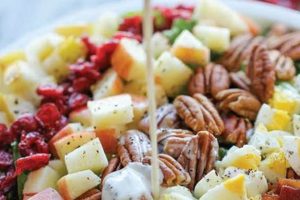
A combination of sweet, ripe pears, pungent gorgonzola cheese, and crisp greens forms the foundation of this classic salad. Often enhanced with crunchy nuts like walnuts or pecans, and a lightly sweet vinaigrette, it offers a balanced flavor profile, showcasing contrasting textures and tastes. Variations may include dried cranberries or other fruits, caramelized onions, or different types of nuts. A simple balsamic vinaigrette complements the pears and gorgonzola exceptionally well.
The interplay of flavors and textures is key to this salad’s appeal. The sweetness of the pears offsets the sharp, salty gorgonzola, while the nuts add a welcome crunch. This dish is a versatile option, suitable as a light lunch, a starter course, or a side dish to accompany grilled meats or poultry. Its popularity stems from its relative ease of preparation and the readily available ingredients. Furthermore, the salad’s inherent balance makes it adaptable to various dietary preferences; the vinaigrette can be adjusted to cater to specific needs, and the nuts can be substituted or omitted.
Discussions regarding this type of salad frequently delve into ingredient selection, vinaigrette recipes, and optimal pear varieties. Exploring these aspects provides valuable insight into creating a truly exceptional culinary experience. Further areas of exploration might include variations on the basic recipe, wine pairings, and nutritional information.
Tips for Crafting an Exceptional Pear and Gorgonzola Salad
Achieving optimal flavor and texture requires careful consideration of ingredients and techniques. These tips offer guidance for elevating this classic combination.
Tip 1: Pear Selection: Choose ripe, but firm pears. Bartlett, Bosc, and Anjou varieties are recommended for their flavor profiles and texture. Avoid overripe pears, as they may become mushy.
Tip 2: Cheese Quality: Opt for high-quality gorgonzola. Italian gorgonzola dolce offers a milder, creamier flavor, while gorgonzola piccante provides a more pungent, sharper taste. Consider the desired intensity when selecting.
Tip 3: Nut Enhancement: Toasted walnuts or pecans complement the other ingredients. Toasting enhances their flavor and adds a satisfying crunch. Candied nuts can also provide an interesting contrast in sweetness and texture.
Tip 4: Vinaigrette Balance: A simple balsamic vinaigrette enhances the salad. Balance the sweetness and acidity of the vinaigrette to complement the pear and gorgonzola. A touch of honey or maple syrup can add subtle sweetness.
Tip 5: Green Selection: Baby spinach, arugula, or mixed greens provide a suitable base. Consider the flavor profile of the greens and how they will interact with the other ingredients.
Tip 6: Proper Assembly: Assemble the salad just before serving. This prevents the greens from wilting and maintains the crispness of the pears and nuts.
Tip 7: Ingredient Proportion: Maintain balance among the ingredients. Avoid overwhelming the delicate pear flavor with an excessive amount of gorgonzola or nuts.
By following these guidelines, one can create a well-balanced and flavorful salad showcasing the harmonious combination of pear and gorgonzola. Attention to detail and quality ingredients elevate this simple dish to a truly exceptional culinary experience.
These insights into ingredient selection and preparation techniques contribute to a deeper understanding of the art of composing a perfect pear and gorgonzola salad.
1. Fresh, Ripe Pears

Pear selection is paramount in a pear and gorgonzola salad. The pear’s flavor and texture significantly influence the overall composition. Choosing the right pear ensures a balanced and enjoyable salad.
- Ripeness and Firmness:
Pears should be ripe but retain some firmness. Ripe pears offer optimal sweetness and juiciness. However, overly ripe pears become mushy and detract from the salad’s texture. A gentle press near the stem indicates ripeness it should yield slightly. Firmness ensures the pear slices hold their shape and provide textural contrast to the other ingredients.
- Variety Selection:
Different pear varieties offer unique flavor profiles and textures. Bartlett pears provide a classic sweet flavor and smooth texture. Bosc pears offer a slightly firmer texture and a more complex, spiced flavor. Anjou pears possess a mild sweetness and dense flesh, holding their shape well in the salad. Choosing the appropriate variety contributes to the overall balance of flavors.
- Preparation and Handling:
Proper handling maintains the pear’s quality. Wash pears gently before slicing. To prevent browning, a light coating of lemon juice can be applied to the exposed flesh. Slicing pears just before assembling the salad ensures optimal freshness and minimizes oxidation. Proper preparation preserves the pear’s visual appeal and flavor integrity.
- Flavor Contribution:
The pear’s sweetness plays a crucial role in balancing the other ingredients. It offsets the sharpness of the gorgonzola and complements the richness of the nuts and vinaigrette. The pear’s subtle flavor nuances interact with the other components, creating a complex and harmonious flavor profile. The right pear provides a refreshing counterpoint to the richer elements of the salad.
The careful selection and handling of fresh, ripe pears are essential for a successful pear and gorgonzola salad. The pear contributes not only sweetness and texture but also elevates the overall flavor profile, creating a balanced and enjoyable culinary experience.
2. Quality Gorgonzola

Gorgonzola cheese, a key component of the pear and gorgonzola salad, significantly influences the dish’s overall flavor profile. Quality considerations are essential for achieving the desired balance and complexity. Selecting the appropriate type and ensuring its freshness are crucial for a successful culinary outcome.
- Gorgonzola Types:
Two primary types of gorgonzola exist: Gorgonzola Dolce and Gorgonzola Piccante. Dolce, meaning “sweet,” offers a milder, creamier texture and flavor. Piccante, meaning “piquant” or “spicy,” presents a more pungent, sharper taste and a firmer texture. The chosen type directly impacts the salad’s character. Dolce complements the sweetness of the pears, creating a harmonious balance, while piccante adds a bold contrast, enhancing the interplay of flavors. Recipe variations often specify the preferred type depending on the desired intensity.
- Freshness and Appearance:
Fresh gorgonzola exhibits a vibrant appearance. Dolce presents a creamy, ivory color with blue-green veining, while piccante displays a more intense blue veining and a slightly drier texture. Avoid gorgonzola with a dried-out appearance or an ammonia-like odor, which indicate age or improper storage. Freshness ensures optimal flavor and contributes to the overall quality of the salad. Inspecting the cheese before purchase is crucial for a satisfactory result.
- Texture and Crumbliness:
Gorgonzola’s texture contributes to the salad’s sensory experience. Dolce tends to be softer and creamier, providing a smooth counterpoint to the crisp pears and nuts. Piccante offers a more crumbly texture, adding another layer of complexity. The texture impacts how the cheese interacts with the other ingredients and influences the overall mouthfeel. The desired texture depends on individual preferences and the overall composition of the salad.
- Flavor Pairing with Pears:
Gorgonzola’s distinctive flavor profile plays a crucial role in its pairing with pears. The sharp, salty notes of the cheese contrast with the sweetness of the pears, creating a dynamic interplay. This balance is essential for the salad’s appeal. The intensity of the gorgonzola should complement, not overpower, the delicate pear flavor. Achieving this balance requires careful consideration of the chosen gorgonzola type and its proportion in relation to the other ingredients. A harmonious flavor pairing is key to a successful pear and gorgonzola salad.
Careful consideration of these factors contributes significantly to the overall success of a pear and gorgonzola salad. Selecting high-quality gorgonzola, appropriate to the desired flavor profile, enhances the interplay of textures and tastes, creating a balanced and enjoyable dish. The interplay between the gorgonzola and the other ingredients elevates this simple salad to a sophisticated culinary experience.
3. Crunchy Nuts
Nuts play a crucial role in a pear and gorgonzola salad, contributing texture, flavor, and visual appeal. Their inclusion elevates the salad from a simple combination of ingredients to a more complex and satisfying culinary experience. The textural contrast provided by crunchy nuts enhances the overall sensory experience. The smooth, creamy gorgonzola, the soft, sweet pear, and the crisp greens benefit from the addition of a crunchy element. This interplay of textures creates a more dynamic and enjoyable dish.
Walnuts and pecans are frequently chosen for this salad due to their complementary flavor profiles and desirable crunch. Walnuts offer a slightly earthy and bitter note that balances the sweetness of the pears and the sharpness of the gorgonzola. Pecans provide a buttery, sweeter flavor that enhances the richness of the other ingredients. Other nuts, such as toasted almonds or hazelnuts, can also be incorporated, offering variations in flavor and texture. The choice of nut depends on the desired flavor profile and the overall balance of the salad.
Beyond flavor and texture, nuts contribute nutritional value to the salad. They are a source of healthy fats, protein, and fiber. The inclusion of nuts aligns with dietary preferences emphasizing whole foods and nutrient-dense ingredients. Furthermore, the visual appeal of the salad is enhanced by the presence of nuts. Their varied shapes and colors add visual interest and create a more appealing presentation. Careful consideration of nut selection, toasting techniques, and portion size ensures that the nuts enhance, rather than overpower, the other components of the salad.
4. Balanced Vinaigrette

A balanced vinaigrette is crucial to a successful pear and gorgonzola salad. It provides a unifying element, binding the individual components into a cohesive whole. The vinaigrette’s acidity cuts through the richness of the gorgonzola and complements the sweetness of the pears. Furthermore, it adds moisture and enhances the overall flavor profile of the salad. An overly acidic vinaigrette can overwhelm the delicate flavors of the pears and greens, while a vinaigrette lacking acidity fails to provide the necessary balance. A classic example is a balsamic vinaigrette. Its inherent sweetness complements the pears, while its acidity contrasts with the gorgonzola. The balance is achievable through careful adjustment of the vinegar-to-oil ratio and the addition of sweeteners like honey or maple syrup.
Several factors contribute to vinaigrette balance. The type of oil influences the vinaigrette’s flavor and mouthfeel. Extra virgin olive oil offers a robust flavor, while lighter oils like grapeseed or avocado oil provide a more neutral base. Vinegar selection is equally important. Balsamic, red wine, and apple cider vinegars each possess unique characteristics. Balsamic offers sweetness and depth, red wine vinegar contributes a tartness, and apple cider vinegar provides a lighter, fruitier acidity. The ratio of oil to vinegar determines the vinaigrette’s overall intensity. A typical ratio is 3:1, but adjustments are possible depending on the desired outcome. Additional ingredients, such as Dijon mustard, honey, or shallots, further enhance complexity and balance. Emulsification, achieved by whisking or blending, creates a stable and cohesive vinaigrette.
Understanding the impact of vinaigrette balance on a pear and gorgonzola salad enables informed decisions regarding ingredient selection and preparation. A properly balanced vinaigrette elevates the salad beyond a simple combination of ingredients, creating a harmonious and flavorful dish. The interplay of sweet, salty, acidic, and rich elements, orchestrated by the vinaigrette, exemplifies the importance of balance in culinary endeavors. This careful orchestration of flavors transforms individual components into a unified and satisfying culinary creation. It is the bridge that connects the distinct elements of the salad, creating a cohesive and enjoyable experience.
5. Crisp Greens

Crisp greens provide the foundation of a pear and gorgonzola salad, offering a refreshing counterpoint to the richness of the cheese and the sweetness of the pear. The choice of greens significantly influences the salad’s overall texture, flavor, and visual appeal. Selecting appropriate greens and maintaining their crispness are essential for a successful culinary outcome.
- Variety Selection:
Various greens offer unique flavor profiles and textures suitable for this salad. Baby spinach provides a mild, slightly sweet flavor and a delicate texture. Arugula offers a peppery bite that contrasts with the other ingredients. Mixed greens provide a combination of flavors and textures, adding complexity. Butter lettuce contributes a delicate, buttery flavor and a soft texture. The choice of greens should complement, not overpower, the primary flavors of pear and gorgonzola.
- Texture and Crispness:
Maintaining crispness is paramount. Wilted or soggy greens detract from the salad’s appeal. Proper storage and handling are essential. Storing greens in a cool, dry environment, preferably in a perforated container or wrapped in a damp paper towel, helps preserve their freshness. Washing and drying greens thoroughly just before assembly prevents them from becoming soggy. Maintaining crispness ensures a pleasant textural contrast with the other ingredients.
- Flavor Balancing:
The flavor of the greens should balance, not compete with, the pear and gorgonzola. Mild greens like baby spinach or butter lettuce provide a neutral backdrop, allowing the primary flavors to shine. More assertive greens, such as arugula, add a peppery dimension that can enhance the overall complexity of the salad. The interplay of flavors between the greens and the other ingredients contributes to a well-balanced and satisfying culinary experience.
- Visual Presentation:
Greens contribute significantly to the salad’s visual appeal. Vibrant, fresh greens create an attractive foundation. Tearing larger leaves into bite-sized pieces enhances the presentation and makes the salad easier to eat. Arranging the greens artfully on the plate, with the pear slices, gorgonzola crumbles, and nuts strategically placed, elevates the visual presentation. A visually appealing salad enhances the overall dining experience.
The careful selection and preparation of crisp greens are essential for a successful pear and gorgonzola salad. The greens provide not only a foundation but also contribute to the salad’s overall texture, flavor, and visual appeal. Their freshness and quality significantly impact the final culinary result, highlighting the importance of this seemingly simple ingredient.
6. Proper Assembly

Proper assembly is the crucial final step in creating a successful pear and gorgonzola salad. It directly impacts the final presentation, texture, and overall enjoyment of the dish. While seemingly straightforward, attention to detail during assembly ensures the harmonious blending of flavors and textures, preventing a disjointed or less satisfying culinary experience. The order of assembly and the timing relative to serving are critical considerations.
- Timing is Key:
Assembling the salad close to serving time prevents the greens from wilting and the pears from oxidizing. The delicate nature of these ingredients necessitates prompt assembly. Prematurely combining ingredients can lead to a less appealing and less flavorful salad. This timing consideration preserves the intended textures and flavors, optimizing the dining experience. Delaying the addition of the vinaigrette until just before serving further safeguards against premature wilting.
- Ingredient Distribution:
Even distribution of ingredients ensures each bite contains a balanced combination of flavors and textures. Carefully dispersing the gorgonzola crumbles, pear slices, and nuts across the bed of greens creates a harmonious blend in every mouthful. Uneven distribution can lead to some bites being overly rich or lacking key components, diminishing the overall enjoyment. This attention to detail elevates the salad beyond a mere collection of ingredients to a carefully composed dish.
- Vinaigrette Application:
The method of vinaigrette application affects flavor distribution and the salad’s overall texture. Lightly drizzling the vinaigrette over the assembled salad, rather than tossing the ingredients directly in the dressing, prevents the greens from becoming soggy and allows for greater control over the intensity of the vinaigrette’s flavor. This approach ensures that each component is lightly coated, enhancing the interplay of flavors without overwhelming the delicate ingredients.
- Visual Presentation:
Visual appeal enhances the dining experience. Thoughtful arrangement of ingredients creates a more enticing and appetizing presentation. Consider the placement of pear slices, gorgonzola crumbles, and nuts to create visual interest. A well-composed salad, where elements are strategically placed rather than haphazardly tossed together, demonstrates attention to detail and elevates the dish from simple fare to a more refined culinary creation. This final visual flourish contributes to a more satisfying overall dining experience.
Proper assembly is the culmination of ingredient selection and preparation, bringing all elements together to create a cohesive and enjoyable culinary experience. Attention to these seemingly minor details significantly impacts the final result. A well-assembled pear and gorgonzola salad, with its balanced flavors, varied textures, and appealing presentation, showcases the importance of careful execution in every step of the culinary process.
Frequently Asked Questions
This section addresses common inquiries regarding the preparation and enjoyment of pear and gorgonzola salad.
Question 1: What type of pear is best suited for this salad?
Firm, ripe pears such as Bartlett, Bosc, or Anjou varieties are recommended. Overripe pears should be avoided as they tend to become mushy.
Question 2: Can other cheeses be substituted for gorgonzola?
While gorgonzola provides a distinct flavor profile, blue cheese or Roquefort can be substituted for those who prefer a different intensity. However, this substitution will alter the overall flavor profile.
Question 3: What type of dressing complements this salad best?
A balsamic vinaigrette is a classic pairing, complementing both the sweetness of the pears and the sharpness of the gorgonzola. Honey or maple syrup can be added for additional sweetness.
Question 4: Should the nuts be toasted before adding them to the salad?
Toasting nuts enhances their flavor and adds a desirable crunch. It is recommended but not essential.
Question 5: How long can this salad be stored?
This salad is best consumed immediately after preparation. Storing the salad can result in wilted greens and oxidized pears. If storage is necessary, store the components separately and assemble just before serving.
Question 6: Can other fruits be added to this salad?
Dried cranberries or apples can complement the pears and add textural variety. However, consider how additional fruits might affect the overall flavor balance.
Understanding these frequently asked questions facilitates successful preparation and enjoyment of this classic combination. Attention to these details enhances the culinary experience.
Beyond these frequently asked questions, further exploration into variations, wine pairings, and dietary adaptations offers opportunities for deeper understanding and culinary experimentation.
Pear Gorgonzola Salad Recipe
Exploration of this classic salad recipe reveals a delicate balance of flavors and textures. Careful selection of ripe pears, quality gorgonzola, and complementary nuts contributes significantly to the overall experience. Proper vinaigrette preparation, incorporating balanced acidity and sweetness, further enhances the interplay of these key ingredients. Attention to detail, including the selection of crisp greens and proper assembly techniques, ensures a visually appealing and flavorful dish. From ingredient selection to final presentation, each step contributes to a harmonious culinary composition.
This exploration underscores the potential for culinary artistry within seemingly simple recipes. A deeper understanding of ingredient interactions and preparation techniques allows for informed experimentation and personalized variations. The pear gorgonzola salad recipe serves as a compelling example of how culinary expertise elevates individual components into a cohesive and memorable whole. Further exploration of culinary traditions and ingredient pairings promises continued discovery and enjoyment within the realm of gastronomy.