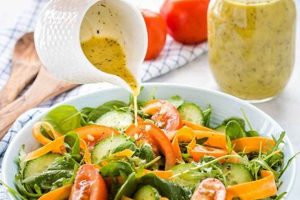
A vibrant, flavorful blend of oil, vinegar, and herbs, often enhanced with ingredients like garlic, onion, or peppers, forms the foundation of a classic dressing for pasta salads inspired by Italian cuisine. A simple example includes olive oil, red wine vinegar, oregano, basil, and a pinch of red pepper flakes.
This type of dressing offers several advantages. Its emulsified nature coats the pasta evenly, distributing flavor throughout the dish. The acidic component of the dressing balances the starchiness of the pasta, creating a harmonious flavor profile. Furthermore, the use of fresh herbs provides a bright, refreshing element. Historically, these dressings have evolved from simple combinations of oil and vinegar, reflecting the readily available ingredients in Italian regional cuisines. Over time, these dressings have become more complex and diverse, reflecting the global exchange of culinary ideas.
The following sections will explore various regional variations, offer guidance on ingredient selection and preparation techniques, and provide inspiration for crafting customized versions to complement diverse palates and dietary preferences.
Tips for Crafting Exceptional Italian-Inspired Pasta Salad Dressings
Achieving a well-balanced and flavorful dressing is crucial for a successful pasta salad. These tips offer guidance on enhancing flavor profiles and optimizing the overall culinary experience.
Tip 1: Embrace High-Quality Olive Oil. The foundation of any Italian-inspired dressing lies in the quality of the olive oil. Extra virgin olive oil, with its robust flavor and rich texture, contributes significantly to the overall taste.
Tip 2: Balance Acidity Carefully. While red wine vinegar is traditional, experimentation with white wine vinegar, balsamic vinegar, or even lemon juice can yield unique flavor profiles. Careful balancing of acidity prevents the dressing from overpowering the other ingredients.
Tip 3: Harness the Power of Fresh Herbs. Freshly chopped herbs like basil, oregano, parsley, and thyme elevate the dressing’s aroma and taste. Dried herbs can be substituted in a pinch, but fresh herbs offer a superior sensory experience.
Tip 4: Infuse with Garlic and Aromatics. Minced garlic, finely chopped shallots, or a touch of red pepper flakes introduce depth and complexity. These aromatics can be incorporated directly into the dressing or infused into the oil beforehand.
Tip 5: Emulsify for Texture and Flavor Distribution. Whisking the oil and vinegar vigorously creates an emulsion, preventing separation and ensuring the dressing coats the pasta evenly. A small amount of Dijon mustard can aid in emulsification and add a subtle tang.
Tip 6: Season Judiciously. Salt and freshly ground black pepper are essential for enhancing the flavors of the dressing and the pasta salad as a whole. Start with a small amount and adjust to taste.
Tip 7: Allow Time for Marinating. The flavors of the dressing meld and deepen when allowed to rest. Preparing the dressing in advance and allowing it to marinate briefly enhances the final result.
By following these tips, one can create a dressing that elevates the pasta salad from simple to extraordinary. A thoughtful approach to ingredient selection and preparation techniques ensures a flavorful and memorable culinary experience.
This foundation of dressing knowledge serves as a springboard for exploring more complex recipes and variations, which will be discussed in the concluding sections.
1. High-quality olive oil
High-quality olive oil plays a crucial role in Italian pasta salad dressing recipes. It serves as the foundation, contributing significantly to the overall flavor, texture, and aroma. The choice of olive oil directly impacts the final result. Opting for extra virgin olive oil, characterized by its low acidity and robust flavor profile derived from the first cold-pressing of olives, ensures a superior sensory experience. This type of olive oil possesses fruity, peppery notes that complement the other ingredients in the dressing, enhancing their individual characteristics while adding a distinct depth. Using a lower-quality olive oil can result in a bland or even unpleasant taste, diminishing the overall quality of the pasta salad.
Consider the example of a classic vinaigrette. A high-quality extra virgin olive oil, with its pronounced fruity and peppery notes, elevates the simple combination of oil and vinegar. The oil’s richness coats the palate, creating a luxurious mouthfeel, while its distinct flavor harmonizes with the acidity of the vinegar. In contrast, using a refined or blended olive oil, often lacking the complex flavor profile of extra virgin, results in a flat, less nuanced dressing. The difference is palpable, impacting the overall enjoyment of the pasta salad.
Understanding the importance of high-quality olive oil in Italian pasta salad dressings allows for informed ingredient selection. Prioritizing extra virgin olive oil ensures a richer, more flavorful dressing that enhances the overall culinary experience. While other oils might seem like suitable substitutes, they often lack the nuanced flavor profile and textural richness that extra virgin olive oil provides. This distinction highlights the practical significance of selecting high-quality ingredients, particularly when crafting a dish where simplicity and freshness are paramount.
2. Balanced Acidity

Balanced acidity is a cornerstone of a successful Italian pasta salad dressing. Acidity, primarily derived from vinegar or citrus juice, provides a crucial counterpoint to the richness of the olive oil and the starchiness of the pasta. This balance prevents the dressing from being overly heavy or cloying, creating a refreshing and harmonious flavor profile. The specific type of acid used influences the overall taste. Red wine vinegar contributes a robust, fruity tang, while white wine vinegar offers a lighter, brighter acidity. Lemon juice provides a zesty, citrusy note, and balsamic vinegar adds a touch of sweetness and complexity. The quantity of acid must be carefully calibrated to complement the other ingredients and achieve the desired balance. Too much acid can make the dressing overly tart, while too little can result in a bland, uninspired flavor.
Consider a classic Italian pasta salad featuring roasted vegetables and fresh mozzarella. A dressing made with extra virgin olive oil and red wine vinegar provides the necessary acidity to cut through the richness of the roasted vegetables and the creaminess of the mozzarella. The vinegar’s bright, tangy notes enhance the sweetness of the vegetables and prevent the dish from feeling heavy. In contrast, a dressing lacking sufficient acidity might allow the flavors of the oil and cheese to dominate, resulting in a less balanced and ultimately less satisfying experience. A different scenario might involve a pasta salad with seafood. In this case, a lighter acid like lemon juice might be preferred, complementing the delicate flavor of the seafood without overpowering it. The lemon’s bright, citrusy notes provide a refreshing counterpoint to the richness of the seafood, creating a harmonious and balanced flavor profile.
Understanding the role of balanced acidity is crucial for crafting exceptional Italian pasta salad dressings. The judicious use of acid enhances the overall flavor profile, creating a harmonious balance between richness and brightness. The specific type and quantity of acid used should be tailored to the other ingredients in the salad, ensuring a cohesive and satisfying culinary experience. Mastering this balance unlocks the potential for a truly delicious and well-rounded pasta salad, transforming it from a simple side dish to a star attraction.
3. Fresh Herbs
Fresh herbs are essential for authentic Italian pasta salad dressings, contributing significantly to their vibrant flavor and aromatic complexity. They provide a bright, refreshing counterpoint to the richness of the olive oil and the tanginess of the vinegar, elevating the dressing beyond a simple emulsion. The selection and application of fresh herbs distinguish a truly exceptional dressing.
- Aromatic Foundation:
Fresh herbs form the aromatic foundation of the dressing. Basil, with its sweet, slightly peppery flavor, is a classic choice, while oregano offers a more pungent, earthy aroma. Parsley contributes a fresh, grassy note, and thyme provides a subtle, lemony hint. These herbs, when combined judiciously, create a complex and layered aromatic profile that enhances the overall sensory experience.
- Seasonality and Regional Variations:
The use of fresh herbs often reflects regional and seasonal variations in Italian cuisine. For example, basil is prominent in Ligurian cuisine, while oregano is frequently used in Southern Italian dishes. Using herbs that are in season guarantees optimal flavor and freshness. A summer pasta salad might feature fresh basil and mint, while a winter version might incorporate rosemary or sage.
- Preparation Techniques:
Proper preparation techniques are crucial for maximizing the flavor of fresh herbs. Gentle tearing or chopping preserves the delicate leaves and prevents bruising, which can release bitter compounds. Adding the herbs towards the end of the dressing preparation prevents them from wilting and losing their vibrancy. In some cases, herbs can be infused into the olive oil to create a flavorful base for the dressing.
- Balancing Flavors:
The selection of herbs should complement the other ingredients in the pasta salad. A salad featuring tomatoes and mozzarella might benefit from the addition of fresh basil and oregano, while a salad with grilled vegetables might be enhanced by rosemary or thyme. Careful consideration of flavor pairings ensures a harmonious and balanced final product.
The strategic use of fresh herbs elevates Italian pasta salad dressings from simple to extraordinary. Their aromatic complexity, combined with careful consideration of seasonality, regional variations, and preparation techniques, contributes significantly to the overall culinary experience. Fresh herbs are an integral part of what defines an authentic and flavorful Italian pasta salad dressing.
4. Aromatic Additions

Aromatic additions play a crucial role in shaping the complexity and depth of flavor in Italian pasta salad dressings. These additions, often in small quantities, contribute significantly to the overall sensory experience, transforming a simple dressing into something truly memorable. Common aromatic additions include garlic, shallots, onions, red pepper flakes, and black pepper. These ingredients introduce pungent, savory, and sometimes spicy notes that complement the other components of the dressing, such as the olive oil, vinegar, and herbs.
The impact of aromatic additions can be observed through specific examples. Consider the addition of minced garlic to a classic vinaigrette. The garlic’s pungent aroma and flavor enhance the brightness of the vinegar and the richness of the olive oil, creating a more complex and layered flavor profile. Similarly, a pinch of red pepper flakes introduces a subtle heat that complements the other ingredients without overpowering them. In a dressing featuring fresh basil and tomatoes, a finely chopped shallot can add a delicate sweetness and a subtle sharpness, further enhancing the overall balance of flavors. The absence of these aromatic additions would result in a simpler, less nuanced dressing, highlighting their importance in achieving a truly exceptional result.
Understanding the role of aromatic additions provides practical guidance for crafting Italian pasta salad dressings. The careful selection and application of these ingredients allow for customization and fine-tuning of the flavor profile. The quantity used should be carefully considered; too much can overwhelm the other flavors, while too little might not provide the desired impact. The method of incorporation also matters. Garlic can be minced and added directly to the dressing, or it can be roasted or infused into the olive oil to create a more mellow and complex flavor. By considering these nuances, one can create a dressing that perfectly complements the other ingredients in the pasta salad, resulting in a harmonious and satisfying culinary experience. The strategic use of aromatic additions elevates the pasta salad from a simple side dish to a truly memorable culinary creation.
5. Proper Emulsification

Proper emulsification is crucial for the texture and flavor distribution of an Italian pasta salad dressing. It transforms the disparate elementsoil, vinegar, and other flavoring agentsinto a cohesive and stable mixture that evenly coats the pasta, ensuring a harmonious blend of flavors in every bite. Without proper emulsification, the dressing separates, leaving a layer of oil on top and a watery layer beneath, resulting in uneven flavor distribution and a less satisfying culinary experience. This section explores the key facets of achieving proper emulsification in Italian pasta salad dressings.
- The Science of Emulsification
Emulsification involves combining two immiscible liquids, such as oil and vinegar, into a stable mixture. One liquid (the dispersed phase) is broken down into tiny droplets and suspended within the other liquid (the continuous phase). In a vinaigrette, the oil is typically the dispersed phase, and the vinegar is the continuous phase. The stability of this emulsion depends on the presence of an emulsifying agent, which reduces the surface tension between the two liquids and prevents them from separating. Common emulsifying agents include mustard, honey, and egg yolks.
- Techniques for Achieving Emulsification
Several techniques facilitate proper emulsification. Vigorous whisking is the most common method, creating shear forces that break down the oil into smaller droplets. A blender or food processor can also be used for larger batches. Slow, steady addition of the oil to the vinegar while whisking continuously allows the emulsion to form gradually and remain stable. Adding the emulsifying agent at the beginning of the process helps create a more stable emulsion.
- The Role of Emulsifying Agents
Emulsifying agents contain molecules with both hydrophilic (water-loving) and lipophilic (oil-loving) ends. These molecules position themselves at the interface between the oil and vinegar, reducing surface tension and preventing the droplets from coalescing and separating. Different emulsifying agents have different properties and impact the final texture and flavor of the dressing. Dijon mustard, for instance, adds a subtle tang, while honey contributes a touch of sweetness.
- Impact on Flavor and Texture
Proper emulsification ensures the even distribution of flavors throughout the pasta salad. The emulsified dressing coats the pasta thoroughly, allowing every bite to benefit from the harmonious blend of oil, vinegar, herbs, and other flavoring components. Furthermore, emulsification affects the texture of the dressing, creating a creamy consistency that clings to the pasta rather than pooling at the bottom of the bowl. A properly emulsified dressing enhances the overall sensory experience of the pasta salad.
Achieving proper emulsification is a critical step in creating a high-quality Italian pasta salad dressing. It ensures a harmonious blend of flavors, a pleasing texture, and an overall more satisfying culinary experience. By understanding the science behind emulsification and employing the appropriate techniques, one can consistently create dressings that elevate the pasta salad to a new level of culinary excellence.
Frequently Asked Questions
This section addresses common inquiries regarding the preparation and utilization of Italian-inspired pasta salad dressings.
Question 1: What is the ideal ratio of oil to vinegar in a classic Italian pasta salad dressing?
A standard ratio is 3 parts oil to 1 part vinegar. However, this can be adjusted based on personal preference and the specific types of oil and vinegar used. A milder vinegar might allow for a 2:1 ratio, while a more robust vinegar might require a 4:1 ratio.
Question 2: Can other types of oil be substituted for olive oil?
While olive oil is traditional, other oils like avocado oil or grapeseed oil can be used. However, these substitutions will alter the flavor profile of the dressing. The distinct flavor of olive oil contributes significantly to the authentic Italian character of the dressing, and substitutions should be made mindfully.
Question 3: How can one prevent the dressing from separating?
Vigorous whisking creates a temporary emulsion. For a more stable emulsion, incorporate an emulsifying agent like Dijon mustard or a small amount of honey. These agents help bind the oil and vinegar together, preventing separation.
Question 4: How long can the dressing be stored?
If stored in an airtight container in the refrigerator, the dressing can typically last for up to a week. However, the quality of fresh herbs might degrade over time. It is generally recommended to use the dressing within a few days for optimal flavor.
Question 5: Can the dressing be made ahead of time?
Preparing the dressing in advance allows the flavors to meld and deepen. However, if using fresh herbs, it’s best to add them just before serving to maintain their vibrancy and prevent them from wilting.
Question 6: How can the flavor of the dressing be adjusted?
Adjusting the proportions of oil, vinegar, and seasonings allows for customization. Additional ingredients like minced garlic, red pepper flakes, or lemon zest can further enhance the flavor profile. Taste and adjust seasonings as needed to achieve the desired balance.
Understanding these fundamental aspects of Italian pasta salad dressings enables informed decision-making regarding ingredient selection, preparation techniques, and storage. This knowledge empowers one to craft dressings tailored to individual preferences and specific culinary needs.
The following section will explore specific recipe variations, offering further inspiration and guidance for creating exceptional Italian-inspired pasta salads.
Italian Pasta Salad Dressing Recipe
Exploration of Italian pasta salad dressing recipes reveals a foundation built upon the careful balance of high-quality olive oil, balanced acidity, fresh herbs, aromatic additions, and proper emulsification. Each component contributes significantly to the overall sensory experience, transforming simple ingredients into a cohesive and flavorful dressing. An understanding of these elements allows for informed ingredient selection, technique application, and flavor customization, enabling the creation of dressings tailored to individual preferences and specific culinary contexts. From the robust tang of red wine vinegar to the delicate sweetness of fresh basil, the interplay of these components defines the essence of an authentic Italian-inspired dressing.
Mastery of Italian pasta salad dressing recipes offers a pathway to culinary creativity and elevated dining experiences. The potential for customization, utilizing seasonal ingredients and regional variations, ensures ongoing exploration and discovery within this seemingly simple yet profoundly impactful culinary domain. Continued experimentation and refinement of technique promise further enhancement of flavor profiles and textural nuances, solidifying the role of Italian pasta salad dressing as a cornerstone of culinary artistry.