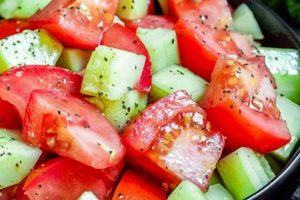
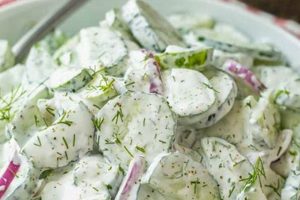
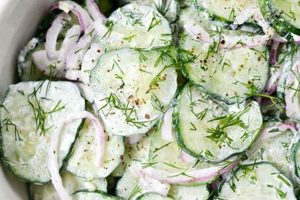
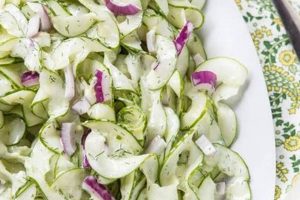
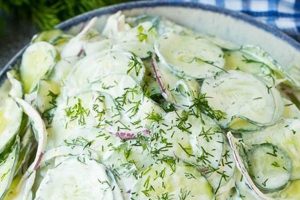
A refreshing and simple dish, this type of salad typically combines thinly sliced cucumbers and onions, often with a vinegar-based dressing. Variations can include additional ingredients such as herbs, spices, or other vegetables like tomatoes or bell peppers. A basic version might involve sliced cucumbers, red onion, white vinegar, sugar, salt, and pepper.
This salad offers several culinary advantages. Its cool, crisp nature makes it an ideal accompaniment to rich or spicy meals, providing a palate-cleansing contrast. The ingredients are readily available and inexpensive, making it an economical choice. Furthermore, the dish is inherently low in calories and fat, aligning with health-conscious dietary preferences. Historically, such salads have been enjoyed across various cultures, often serving as a simple, refreshing side dish during warmer months. The precise origins are difficult to pinpoint, but the combination of readily available vegetables and simple preservation methods like vinegar suggests a long history.
The following sections will explore diverse approaches to preparing this salad, ranging from classic recipes to innovative variations. Guidance on ingredient selection, preparation techniques, and dressing options will be provided.
Tips for a Perfect Cucumber and Onion Salad
Achieving optimal flavor and texture requires attention to detail throughout the preparation process. The following tips offer guidance for creating a truly exceptional salad.
Tip 1: Salt the cucumbers. Salting sliced cucumbers draws out excess moisture, preventing a watery salad. Place the cucumber slices in a colander, sprinkle with salt, and let them sit for approximately 15 minutes before rinsing and drying.
Tip 2: Thinly slice the vegetables. Thin slices ensure even flavor distribution and a pleasant texture. A mandoline slicer offers the best consistency, but a sharp knife can also achieve excellent results.
Tip 3: Soak the onions. Soaking sliced red onions in cold water for 10-15 minutes mellows their pungent flavor, resulting in a sweeter, more palatable taste.
Tip 4: Balance the dressing. A well-balanced dressing is crucial. The right ratio of vinegar, sugar, and salt creates a harmonious blend of tartness and sweetness. Taste and adjust as needed.
Tip 5: Use fresh herbs. Fresh herbs elevate the salad’s flavor profile. Dill, parsley, and mint are popular choices, adding an aromatic complexity.
Tip 6: Chill before serving. Chilling the salad for at least 30 minutes allows the flavors to meld and enhances the refreshing quality of the dish.
Tip 7: Consider textural variety. Toasted sesame seeds, chopped nuts, or crumbled feta cheese can add interesting textural contrasts.
By following these tips, one can consistently create a delicious and refreshing cucumber and onion salad that complements a wide array of dishes. Attention to these details significantly impacts the final result.
These techniques demonstrate the simplicity and versatility of this classic salad. The concluding section offers further insights and variations for continued exploration of this culinary staple.
1. Fresh, High-Quality Ingredients

The success of a cucumber and onion salad hinges directly on the quality of its ingredients. Cucumbers should be firm and vibrant in color, free from blemishes or soft spots. Their flavor should be crisp and clean, not bitter or overly watery. Opting for smaller cucumbers often yields a more tender texture and a sweeter taste. Onions, whether red, white, or yellow, should be crisp and pungent, with no signs of sprouting or bruising. Red onions are generally preferred for their milder flavor and vibrant color, contributing visual appeal.
The impact of ingredient quality is readily apparent in the final dish. Fresh, well-chosen cucumbers and onions create a salad that is both refreshing and flavorful. Conversely, using subpar ingredients results in a bland, watery, or even unpleasant experience. For instance, a cucumber past its prime can impart a bitter taste to the entire salad, while a soft, bruised onion lacks the desired sharpness and texture. The difference between a salad made with peak-season produce and one made with out-of-season vegetables is striking, highlighting the significance of sourcing the best possible ingredients.
Prioritizing fresh, high-quality produce elevates this simple salad from ordinary to exceptional. The crispness of the cucumbers, the pungency of the onions, and the vibrancy of the colors all contribute to a more satisfying sensory experience. Investing in top-tier ingredients not only enhances flavor and texture but also demonstrates a commitment to culinary excellence, even in seemingly basic preparations. This principle extends beyond cucumber and onion salads to encompass a broader culinary philosophy emphasizing the foundational role of superior ingredients in achieving optimal results.
2. Precise slicing techniques
Precise slicing techniques are integral to a successful cucumber and onion salad recipe. Uniformly thin slices ensure even marinating in the dressing, resulting in consistent flavor distribution throughout the salad. Thin slices also contribute to a desirable textural experience, offering a delicate crispness rather than a dense or fibrous bite. Conversely, unevenly sliced vegetables lead to an inconsistent final product. Thick pieces may remain under-marinated and retain a raw onion flavor, while overly thin pieces can become mushy. For example, if a cucumber is sliced too thickly, the center may retain a bland, watery taste, while the thinner edges become overly saturated with dressing. This disparity in flavor and texture diminishes the overall enjoyment of the salad.
The method employed for slicing influences the final result. A sharp knife, while effective, requires practice to achieve consistently thin slices. A mandoline slicer offers greater precision and speed, ensuring uniformity across all ingredients. However, regardless of the tool used, attention to detail remains crucial. Consistent pressure and controlled movements are essential for achieving the desired thinness and evenness. Beyond mere aesthetics, precise slicing affects the salad’s flavor profile and textural appeal, contributing to a more harmonious and enjoyable culinary experience. For instance, paper-thin slices of red onion allow their subtle sweetness to shine through, while thicker slices tend to emphasize their pungent bite.
Mastery of precise slicing techniques elevates the cucumber and onion salad from a simple side dish to a carefully crafted culinary creation. The difference between a haphazardly chopped salad and one with precisely sliced ingredients is readily apparent in both flavor and texture. This attention to detail demonstrates a commitment to culinary excellence, even in seemingly basic preparations. While a sharp knife or mandoline slicer can aid in this process, the true key lies in the deliberate and controlled application of these tools. Ultimately, the goal is to create a salad where each bite offers a balanced and harmonious blend of flavors and textures, highlighting the inherent qualities of the fresh ingredients.
3. Balanced Vinegar-Based Dressing
A balanced vinegar-based dressing is paramount to a successful cucumber and onion salad recipe. It provides the essential acidic element that complements the inherent flavors of the vegetables, enhancing their sweetness and adding a refreshing tang. The dressing acts as a unifying component, binding the individual ingredients into a cohesive whole. Achieving this balance requires careful consideration of acidity, sweetness, and saltiness.
- Acidity Level
The acidity level determines the dressing’s overall tartness. Different types of vinegar offer varying levels of acidity, from the sharp bite of white vinegar to the mellower notes of apple cider vinegar. The choice of vinegar significantly impacts the final flavor profile. For example, white vinegar provides a clean, crisp acidity that cuts through the richness of the cucumbers, while red wine vinegar lends a more complex, slightly fruity note. The appropriate acidity level depends on personal preference and the desired balance within the salad.
- Sweetness Element
Sweetness tempers the acidity of the vinegar, creating a more harmonious flavor profile. Granulated sugar is commonly used, but alternatives like honey or maple syrup can add nuanced sweetness and complexity. The amount of sweetener used dictates the final balance of the dressing. Too much sugar can mask the fresh flavors of the vegetables, while too little can result in an overly sharp dressing. For instance, a touch of honey can complement the subtle sweetness of Vidalia onions, while a pinch of sugar enhances the crispness of English cucumbers.
- Salt Concentration
Salt enhances the flavors of both the vegetables and the dressing. It amplifies the sweetness of the cucumbers and onions while also balancing the acidity of the vinegar. The correct salt concentration is essential. Too much salt overpowers the delicate flavors, while too little leaves the salad tasting bland. Kosher salt is generally preferred for its clean flavor and ease of dissolving. Sea salt or Himalayan pink salt can also be used, offering subtle mineral nuances.
- Additional Flavor Components
Beyond the core elements of vinegar, sweetener, and salt, additional flavor components can elevate the dressing and add complexity to the salad. Freshly ground black pepper adds a subtle spice, while a pinch of red pepper flakes introduces a touch of heat. Fresh herbs, such as dill, parsley, or mint, contribute aromatic complexity. Minced garlic or shallots add pungent notes. For example, a sprinkle of fresh dill complements the cool crispness of the cucumbers, while a dash of sesame oil adds a nutty richness. These additions, used judiciously, create a more nuanced and sophisticated flavor profile.
The interplay of these elementsacidity, sweetness, saltiness, and additional flavor componentsdefines the character of the vinegar-based dressing and ultimately determines the success of the cucumber and onion salad. A well-balanced dressing enhances the natural flavors of the vegetables, creating a refreshing, harmonious, and flavorful culinary experience. The precise balance of these elements can be adjusted to complement specific cucumber and onion varieties and personal preferences, demonstrating the versatility of this seemingly simple dressing.
4. Proper Chilling Duration
Proper chilling duration is a critical factor influencing the final quality of a cucumber and onion salad recipe. Chilling allows the flavors of the vegetables and the dressing to meld, resulting in a more cohesive and balanced flavor profile. Furthermore, chilling enhances the refreshing quality of the salad, making it a particularly appealing dish in warmer weather. Understanding the optimal chilling time is essential for maximizing the sensory experience.
- Flavor Development
Chilling allows the flavors of the cucumbers, onions, and dressing to harmonize. The acidic components of the dressing mellow, while the subtle sweetness of the vegetables intensifies. This fusion of flavors creates a more complex and balanced taste. For instance, the sharp bite of raw onions softens after chilling, allowing their inherent sweetness to emerge. Similarly, the vinegar in the dressing loses its initial harshness and integrates more seamlessly with the other ingredients. This melding of flavors is crucial for achieving a well-rounded and nuanced taste profile.
- Texture Enhancement
Chilling firms the cucumbers and onions, enhancing their crispness. This textural improvement contributes to a more enjoyable eating experience. Over-chilling, however, can have the opposite effect, making the vegetables mushy. The ideal chilling time strikes a balance between maximizing crispness and avoiding undesirable softening. For example, chilling a salad with thinly sliced Persian cucumbers for 30 minutes enhances their delicate crunch, while chilling them overnight might result in a less appealing, limp texture.
- Temperature and Palatability
Serving the salad chilled heightens its refreshing quality. A cool, crisp salad offers a welcome contrast to richer or spicier dishes, cleansing the palate. The temperature of the salad significantly impacts its overall palatability, particularly during hot weather. A room-temperature cucumber and onion salad can taste flat and unappealing, while a chilled salad provides a revitalizing and invigorating culinary experience. This refreshing quality is a key attribute of the dish, making it a popular choice during summer months or as an accompaniment to heavier meals.
- Recommended Chilling Time
A general guideline for chilling cucumber and onion salad is 30 minutes to an hour. This duration allows sufficient time for flavor development and texture enhancement without compromising the integrity of the vegetables. However, the optimal chilling time may vary depending on the specific ingredients and the desired outcome. A salad with thicker slices of cucumber may benefit from a slightly longer chilling time, while a salad with delicate herbs might be best served after a shorter chill. Adjustments to the chilling duration can be made based on individual preferences and the specific components of the salad.
Proper chilling duration is essential for optimizing the flavor, texture, and overall palatability of a cucumber and onion salad. Attention to this seemingly minor detail elevates the dish from a simple combination of ingredients to a carefully crafted culinary experience. The interplay of flavor development, texture enhancement, and temperature control contributes to a truly refreshing and satisfying salad. Understanding and applying the principles of proper chilling ensures a consistently delicious and enjoyable outcome, showcasing the importance of this often-overlooked step in the recipe.
5. Optional additions for complexity
While a basic cucumber and onion salad offers refreshing simplicity, optional additions can elevate the dish, introducing layers of flavor and texture. These additions, ranging from herbs and spices to nuts and cheeses, transform the salad from a simple side dish into a more complex and nuanced culinary creation. Strategic incorporation of these elements expands the flavor profile and adds visual appeal.
- Fresh Herbs
Fresh herbs contribute aromatic complexity and visual appeal. Dill, parsley, mint, and chives are popular choices, each offering a distinct flavor profile. Dill adds a slightly tangy, anise-like note, while parsley provides a clean, fresh taste. Mint introduces a cooling element, and chives offer a subtle onion flavor. The choice of herbs depends on the desired flavor profile and can be tailored to complement specific ingredients in the salad. For instance, dill pairs well with cucumbers, while mint complements feta cheese, a potential additional ingredient.
- Spices
Spices introduce warmth and depth. A pinch of red pepper flakes adds a touch of heat, while black pepper provides a subtle bite. Ground cumin or coriander can introduce earthy notes. Paprika adds a smoky sweetness. The choice of spices can be adjusted to complement the overall flavor profile of the salad. For example, a pinch of red pepper flakes enhances the sweetness of the onions, while a dash of smoked paprika complements a vinegar-based dressing.
- Nuts and Seeds
Nuts and seeds provide textural contrast and nutty or earthy flavors. Toasted sesame seeds, chopped walnuts, or slivered almonds add a satisfying crunch. Sunflower seeds or pumpkin seeds offer a milder flavor and a different textural element. The choice of nuts or seeds can complement the overall flavor profile and add visual interest. For example, toasted sesame seeds pair well with an Asian-inspired dressing, while chopped walnuts complement the sweetness of the cucumbers.
- Cheese
Cheese introduces creamy or salty notes and a different textural dimension. Crumbled feta cheese adds a salty, tangy flavor, while goat cheese provides a creamy, slightly earthy taste. The choice of cheese depends on the desired flavor profile and can complement the other ingredients. For example, feta cheese pairs well with cucumbers and a lemon-herb dressing, while goat cheese complements the sweetness of the onions and a balsamic vinaigrette. The quantity of cheese should be carefully considered, as too much can overpower the delicate flavors of the vegetables.
These optional additions, used judiciously, elevate the cucumber and onion salad from a simple accompaniment to a more complex and satisfying dish. They demonstrate the versatility of this seemingly basic recipe and the potential for culinary creativity. The choice of additions should be guided by the desired flavor profile and the overall balance of the salad. By carefully considering these elements, one can create a cucumber and onion salad that is both refreshing and nuanced, showcasing the transformative power of thoughtful ingredient combinations.
Frequently Asked Questions
This section addresses common inquiries regarding cucumber and onion salad preparation, offering practical guidance for optimal results.
Question 1: How can one prevent a watery cucumber and onion salad?
Salting the cucumbers before adding them to the salad draws out excess moisture. Place thinly sliced cucumbers in a colander, sprinkle generously with salt, and let them sit for 15-20 minutes. Rinse thoroughly and pat dry before combining with other ingredients. This process significantly reduces water content, preventing a diluted dressing and maintaining a desirable texture.
Question 2: What type of onion is best suited for this salad?
Red onions are generally preferred for their milder flavor and vibrant color, which adds visual appeal. However, white or yellow onions can be substituted if desired. Soaking sliced onions in cold water for 10-15 minutes helps mellow their pungency, resulting in a sweeter taste.
Question 3: What type of vinegar is recommended for the dressing?
White vinegar, apple cider vinegar, and red wine vinegar are all suitable options, each imparting a distinct flavor profile. White vinegar offers a clean, crisp acidity, while apple cider vinegar contributes a slightly sweet and fruity note. Red wine vinegar provides a more complex, slightly tangy flavor. The choice depends on personal preference and the desired balance within the salad.
Question 4: How long should the salad be chilled before serving?
Chilling for at least 30 minutes allows the flavors to meld and enhances the refreshing quality of the salad. However, avoid chilling for extended periods, as this can cause the vegetables to become mushy. Optimal chilling time depends on the specific ingredients and desired texture.
Question 5: Can other vegetables be added to this salad?
While the focus remains on cucumbers and onions, other vegetables can complement the salad. Chopped bell peppers, tomatoes, or radishes add color, texture, and flavor complexity. However, consider the moisture content of additional vegetables and adjust the salting process accordingly to maintain a desirable texture.
Question 6: How long can cucumber and onion salad be stored?
Properly stored in an airtight container in the refrigerator, the salad can last for 2-3 days. However, the texture may soften over time. For optimal quality, it is recommended to consume the salad within 24 hours of preparation.
Understanding these key aspects of preparation ensures a consistently delicious and refreshing cucumber and onion salad. Attention to detail, from ingredient selection to chilling time, significantly impacts the final result.
This comprehensive guide provides a solid foundation for creating a delightful cucumber and onion salad. Experimentation with different ingredients and flavor combinations allows for personalized variations and a deeper appreciation of this versatile dish.
Cucumber Onion Salad Recipe
This exploration of cucumber onion salad recipes has highlighted the essential elements contributing to a successful preparation. From the selection of fresh, high-quality ingredients to the precise slicing techniques and the delicate balance of the vinegar-based dressing, each step plays a crucial role in the final outcome. Proper chilling duration further enhances the melding of flavors and the refreshing quality of the salad. The potential for customization through the addition of herbs, spices, nuts, cheeses, or other vegetables allows for a diverse range of flavor profiles and textural experiences, catering to individual preferences. Addressing common preparation challenges, such as preventing excess moisture and selecting the appropriate vinegar type, ensures consistent results.
Cucumber onion salad recipes, while seemingly simple, offer a canvas for culinary creativity. Emphasis on fresh ingredients, precise techniques, and balanced flavors elevates this dish beyond a basic side to a refreshing and nuanced culinary creation. Further exploration and experimentation with diverse ingredients and flavor combinations promise continued enjoyment and discovery within this versatile culinary landscape.