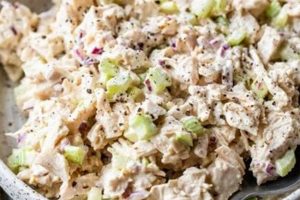
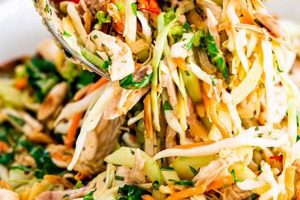
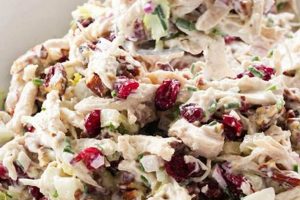
A dish combining cooked chicken, typically shredded or diced, with mayonnaise as a base, is enhanced with the sweetness of grapes and the textural complexity of walnuts. Variations may include other ingredients such as celery, onion, or seasonings like tarragon or paprika. This blend offers a balanced flavor profile encompassing savory, sweet, and subtly nutty notes.
This combination provides a nutritious and satisfying meal or snack. The chicken offers protein, grapes contribute antioxidants and natural sweetness, and walnuts deliver healthy fats and fiber. The adaptable nature of this dish allows for customization to individual preferences and dietary needs, making it a versatile option for picnics, potlucks, or light lunches. Its historical roots likely stem from combining readily available ingredients into a flavorful and convenient meal.
Further exploration will delve into specific ingredient selections, preparation techniques, and serving suggestions for creating a delightful culinary experience.
Tips for Preparing Chicken Salad with Grapes and Walnuts
Optimizing ingredient selection and preparation techniques elevates this classic dish. Attention to detail ensures a balanced flavor profile and pleasing texture.
Tip 1: Chicken Selection: Using pre-cooked rotisserie chicken offers convenience. Alternatively, poaching or baking chicken breasts yields a tender, flavorful result. Avoid overcooking to prevent dryness.
Tip 2: Grape Variety: Seedless red or green grapes offer sweetness and visual appeal. Halving larger grapes ensures even distribution and prevents overwhelming bites.
Tip 3: Walnut Preparation: Toasting walnuts enhances their flavor and adds a satisfying crunch. Chopping them coarsely ensures a pleasant texture without becoming overly fine.
Tip 4: Mayonnaise Selection: High-quality mayonnaise forms the base of the salad. Consider using a lighter variety for a reduced-fat version, or experiment with Greek yogurt for a tangier flavor.
Tip 5: Balancing Flavors: Fresh herbs like tarragon or chives add complexity. A touch of Dijon mustard or lemon juice provides a bright counterpoint to the richness of the mayonnaise.
Tip 6: Seasoning: Salt and freshly ground black pepper are essential. A pinch of celery seed or paprika can add depth of flavor. Adjust seasoning to personal preference.
Tip 7: Chilling: Allowing the salad to chill for at least 30 minutes before serving allows the flavors to meld and enhances the overall experience.
Careful consideration of these elements guarantees a delicious and satisfying culinary outcome. These tips provide a foundation for crafting a personalized version of this versatile dish.
By applying these techniques, one can confidently create a chicken salad that is both flavorful and visually appealing.
1. Ingredients

Ingredient selection significantly impacts the final quality and character of a chicken salad incorporating grapes and walnuts. Each component contributes specific flavor and textural elements, creating a complex interplay that defines the overall culinary experience. The quality, freshness, and preparation of these ingredients directly influence the outcome. For example, using fresh, tender chicken breast versus pre-cooked, processed chicken will result in a noticeable difference in both taste and texture. Similarly, plump, sweet grapes versus tart or underripe ones significantly alter the flavor profile.
The interplay between ingredients extends beyond individual contributions. The sweetness of grapes balances the savory chicken and creamy mayonnaise, while the walnuts introduce a contrasting crunch and subtle earthiness. These interactions highlight the importance of considering the recipe as a whole rather than a simple sum of its parts. Using stale walnuts, for instance, detracts from the desired texture and introduces an off-flavor that compromises the overall balance. Careful selection and proper handling of each ingredient are essential for achieving the intended result.
Understanding the role of each ingredient allows for informed substitutions and adjustments based on dietary needs or personal preferences. Greek yogurt can replace mayonnaise for a lighter, tangier option, while different nut varieties, such as pecans or almonds, offer alternative flavor profiles. These choices demonstrate the flexibility of the recipe and the potential for customization. However, substitutions should be made thoughtfully, considering their impact on the overall balance of flavors and textures. Achieving a successful outcome relies on a comprehensive understanding of how individual components contribute to the final product.
2. Preparation
Preparation significantly influences the final quality of chicken salad incorporating grapes and walnuts. Methodical procedures ensure optimal flavor development and textural balance. Consider the impact of chicken preparation: cubing cooked chicken breast offers clean, distinct bites, while shredding creates a softer, more integrated texture. Each technique yields a nuanced difference affecting the overall sensory experience. Similarly, grape preparation plays a crucial role. Halving or quartering larger grapes ensures even distribution and prevents overwhelming individual bites, contributing to a harmonious blend of flavors and textures. Neglecting this step can result in an uneven distribution of sweetness and a less refined mouthfeel. Walnut preparation further exemplifies the importance of proper technique. Toasting walnuts intensifies their inherent nutty flavor and adds a desirable crunch, enhancing textural complexity. Omitting this step results in a blander, less satisfying experience.
The interplay between these preparatory steps underscores their collective importance. For instance, combining properly diced chicken with evenly sized grapes and toasted walnuts creates a symphony of textures and flavors. However, using roughly chopped chicken with whole grapes and untoasted walnuts produces a less harmonious result. Imagine encountering an excessively large grape within a delicate bite or experiencing a soft, untoasted walnut against a backdrop of otherwise crisp ingredients. Such inconsistencies detract from the intended culinary experience. Real-world examples abound. Consider the difference between a hastily assembled chicken salad using pre-shredded chicken and a thoughtfully crafted version using carefully diced, freshly cooked chicken. The latter demonstrates the attention to detail that elevates the dish from simple sustenance to a culinary delight.
Understanding the significance of preparation empowers informed decision-making and elevates the final product. Challenges may arise, such as time constraints or ingredient availability, but prioritizing key preparatory stepslike ensuring even grape size and toasting walnutsconsistently improves the outcome. This knowledge translates to a more satisfying and enjoyable culinary experience, reinforcing the practical significance of preparation within the overall “chicken salad with grapes and walnuts recipe” framework.
3. Flavor Balance

Flavor balance represents a critical element within a successful chicken salad incorporating grapes and walnuts. This balance hinges on the interplay of sweet, savory, acidic, and fatty components. The inherent sweetness of grapes offsets the savory notes of chicken, preventing an overly one-dimensional profile. Mayonnaise contributes a creamy richness, while the walnuts introduce subtle earthy undertones and textural contrast. Disrupting this balance can result in a dish that is either excessively sweet, bland, or dominated by a single flavor. For instance, an overabundance of mayonnaise might overwhelm the other ingredients, while insufficient grapes could leave the salad lacking in brightness and complexity. The objective is to create a harmonious blend where each element complements the others, resulting in a nuanced and satisfying overall taste. Achieving this balance requires careful consideration of ingredient proportions and the potential impact of additional seasonings.
Real-world examples illustrate the practical significance of flavor balance. Consider the difference between a commercially produced chicken salad, often characterized by an over-reliance on mayonnaise and a lack of textural diversity, and a homemade version crafted with attention to ingredient ratios and flavor nuances. The latter typically exhibits a more complex and satisfying flavor profile due to the careful balancing of individual components. Furthermore, adjusting the balance allows for customization based on individual preferences. Adding a touch of Dijon mustard introduces a subtle tanginess that complements the sweetness of the grapes, while incorporating fresh herbs like tarragon or chives contributes an additional layer of complexity. These adjustments demonstrate the dynamic nature of flavor balance and its role in creating a personalized culinary experience.
Challenges in achieving optimal flavor balance can arise from variations in ingredient quality, personal preferences, and the potential impact of storage on flavor profiles. Over time, the flavors within the salad can meld and shift, potentially altering the initial balance. Addressing these challenges requires ongoing assessment and adjustments, highlighting the dynamic nature of flavor within the context of this specific recipe. Ultimately, a well-balanced chicken salad featuring grapes and walnuts exemplifies the culinary principle of synergy, where the combined effect of individual ingredients transcends their individual contributions, creating a dish that is greater than the sum of its parts.
4. Texture
Textural complexity distinguishes a well-executed chicken salad incorporating grapes and walnuts from a less satisfying rendition. The interplay of contrasting texturescreamy, crunchy, and tenderelevates the sensory experience. Understanding these textural nuances and their impact on the overall perception of the dish proves crucial for achieving a desirable outcome. This exploration delves into the key textural elements within this specific recipe context.
- Chicken Texture
Chicken, as the foundational ingredient, establishes a textural baseline. Shredded chicken contributes a softer, more yielding texture, integrating seamlessly with the other ingredients. Cubed chicken, conversely, provides more substantial, distinct bites. Overcooked chicken, regardless of preparation, introduces an undesirable dryness and stringiness, detracting from the overall experience. Consider the difference between the delicate texture of poached chicken breast versus the firmer consistency of roasted chicken. The chosen cooking method directly influences the final textural profile.
- Grape Texture
Grapes introduce a burst of juiciness and a subtle pop, counterbalancing the richness of the mayonnaise and the crunch of the walnuts. The firmness of the grapes plays a role. Overly ripe grapes can become mushy, while underripe grapes lack the desired sweetness and juiciness. The size of the grapes also matters. Larger grapes, if left whole, can disrupt the textural balance, while halved or quartered grapes integrate more harmoniously. Imagine biting into a whole grape within a predominantly finely textured salad; the textural disparity can be jarring.
- Walnut Texture
Walnuts provide the primary textural contrast within the salad. Toasted walnuts offer a satisfying crunch and heightened flavor, while untoasted walnuts contribute a softer, less pronounced texture. The size of the walnut pieces also influences the experience. Coarsely chopped walnuts deliver a pleasing crunch, while finely chopped or pulverized walnuts integrate more seamlessly, diminishing their textural impact. Consider the difference between the assertive crunch of coarsely chopped toasted walnuts and the muted texture of finely ground walnuts.
- Mayonnaise Influence
Mayonnaise serves as the textural binder, contributing a creamy, cohesive element. The type of mayonnaise influences the final result. A thicker mayonnaise creates a denser, richer texture, while a lighter mayonnaise produces a more delicate, less substantial mouthfeel. Overuse of mayonnaise can lead to an excessively creamy, heavy salad, masking the other textural nuances. The choice of mayonnaise should complement, not overwhelm, the other ingredients. Think of the difference between a full-fat mayonnaise and a lighter, whipped variety; the former coats the palate more heavily, while the latter offers a less intrusive presence.
The interplay of these textural elements defines the overall sensory experience. Achieving textural balance requires careful consideration of ingredient preparation and proportion. A successful chicken salad with grapes and walnuts offers a harmonious blend of textures, engaging the palate with a combination of creamy, crunchy, and tender elements. This symphony of textures enhances the overall enjoyment of the dish, highlighting the significance of texture within this specific culinary context.
5. Freshness
Freshness significantly impacts the quality, flavor, and safety of chicken salad incorporating grapes and walnuts. Ingredient quality directly correlates with the overall dining experience. Freshly cooked or rotisserie chicken offers optimal flavor and texture compared to pre-packaged or processed alternatives. The chicken’s freshness influences not only taste but also food safety. Spoiled chicken poses significant health risks, emphasizing the importance of proper storage and handling. Similarly, the freshness of grapes contributes to the salad’s flavor profile and overall appeal. Plump, recently harvested grapes offer a burst of sweetness and juiciness, while older grapes may be mushy, tart, or even moldy. Fresh walnuts provide a crisp texture and delicate nutty flavor. Stale walnuts, conversely, develop an unpleasant rancidity that detracts from the desired flavor profile. Rancidity stems from the oxidation of fats within the walnuts, leading to off-flavors and diminished quality. Therefore, sourcing fresh, high-quality ingredients represents a critical step in preparing a palatable and safe chicken salad. For example, using freshly roasted chicken, crisp grapes, and recently purchased walnuts ensures optimal flavor and minimizes the risk of spoilage.
Maintaining freshness throughout the preparation process is equally crucial. Prompt refrigeration of ingredients, especially cooked chicken, helps prevent bacterial growth and preserves quality. Proper storage of the finished salad is also essential. Storing the salad in an airtight container in the refrigerator limits exposure to air and moisture, extending its shelf life and preserving its flavor. The shelf life of chicken salad is generally limited to a few days, even under optimal refrigeration. Consuming the salad within this timeframe minimizes the risk of spoilage and ensures optimal quality. Furthermore, attention to freshness extends beyond the core ingredients. Using fresh herbs, like chives or tarragon, enhances the flavor profile, while incorporating crisp vegetables, such as celery or red onion, adds textural complexity. These additions, however, introduce further considerations regarding their freshness and storage. Wilted herbs or softened vegetables detract from the overall sensory experience, emphasizing the importance of consistent freshness across all components.
Prioritizing freshness contributes significantly to a superior culinary outcome. Challenges in maintaining freshness can arise due to factors such as ingredient availability, storage limitations, and time constraints. However, recognizing the impact of freshness on flavor, texture, and food safety underscores its importance within the “chicken salad with grapes and walnuts recipe” framework. Implementing practices that prioritize freshness, such as sourcing high-quality ingredients and practicing proper storage techniques, ultimately elevates the dish and safeguards against potential health risks. Freshness, therefore, represents a non-negotiable element in crafting a truly delightful and safe chicken salad experience.
6. Presentation
Presentation elevates chicken salad with grapes and walnuts from a simple mixture to a visually appealing dish. Thoughtful presentation enhances the dining experience, stimulating appetite and conveying care in preparation. While flavor and texture remain paramount, visual appeal adds another dimension of enjoyment. Consider the impact of serving the salad on a bed of crisp lettuce leaves rather than directly from a container. The contrast in colors and textures immediately elevates the perceived value of the dish. Similarly, garnishing with fresh herbs, such as sprigs of parsley or dill, adds a touch of elegance and reinforces the freshness of the ingredients. Even the choice of serving vessel contributes to the overall presentation. A simple, elegant bowl enhances the salad’s visual appeal more effectively than a plain plastic container. These seemingly minor details contribute significantly to the overall perception and enjoyment of the dish.
Practical applications of presentation principles vary depending on the context. For a casual lunch, arranging the salad on a croissant or within a scooped-out tomato adds a touch of creativity and visual interest. For a more formal setting, plating individual portions on chilled plates with carefully arranged garnishes demonstrates attention to detail. Consider the difference between serving the salad at a picnic versus a catered event. The context dictates the appropriate level of formality and presentation style. Challenges in presentation can arise from time constraints or limited resources. However, even simple adjustments, such as using a decorative serving spoon or adding a sprinkle of chopped walnuts as a garnish, can significantly enhance the visual appeal without requiring extensive effort. Recognizing the interplay between presentation and perceived value allows for strategic choices that elevate the dining experience.
Presentation, therefore, plays a crucial role in maximizing the enjoyment of chicken salad with grapes and walnuts. Thoughtful presentation enhances the perceived quality and value of the dish, transforming it from a basic meal into a more engaging culinary experience. While taste and texture remain primary considerations, neglecting the visual aspect diminishes the overall potential of this versatile dish. By understanding the impact of presentation, one can consistently elevate the dining experience, regardless of the context.
7. Nutritional Value

Nutritional value represents a key consideration within the context of a chicken salad recipe incorporating grapes and walnuts. This analysis explores the nutritional contributions of individual ingredients and their combined impact on dietary intake. Understanding these nutritional components allows for informed choices regarding ingredient selection, portion sizes, and overall dietary planning. Nutritional value extends beyond simple calorie counts, encompassing macro and micronutrients, vitamins, minerals, and the potential health benefits associated with specific ingredients.
- Protein Contribution
Chicken, as the primary protein source, contributes significantly to satiety and muscle maintenance. The protein content varies depending on the chicken preparation method and whether skin is included. Lean chicken breast offers a higher protein-to-fat ratio compared to darker meat or skin-on portions. This protein content plays a vital role in supporting various bodily functions, including tissue repair and enzyme production. Real-world implications include the potential for this salad to contribute to daily protein requirements, especially for individuals following higher-protein diets. For example, a serving of chicken salad could represent a substantial portion of an individual’s recommended daily protein intake.
- Healthy Fats from Walnuts
Walnuts provide a source of healthy fats, specifically omega-3 fatty acids, known for their potential benefits in reducing inflammation and supporting cardiovascular health. These unsaturated fats contrast with less healthy saturated and trans fats often found in processed foods. The quantity of walnuts within the salad directly influences the overall fat content and the associated health implications. Consuming walnuts in moderation as part of a balanced diet aligns with dietary guidelines promoting heart health. For instance, the walnut content in this salad could contribute to an individual’s daily intake of healthy fats, potentially displacing less healthy fat sources.
- Micronutrients from Grapes
Grapes contribute micronutrients, including antioxidants and vitamins like vitamin K and potassium. These micronutrients play essential roles in various bodily functions, supporting immune health and overall well-being. The variety of grape influences the specific micronutrient profile. Red grapes, for instance, contain resveratrol, an antioxidant linked to potential health benefits. Incorporating grapes into this salad provides a source of these beneficial micronutrients, contributing to a more balanced nutritional intake. This contribution, however, represents a small fraction of the overall nutritional profile and should be considered alongside other dietary sources of these micronutrients.
- Mayonnaise Considerations
Mayonnaise, as the binding agent, contributes primarily fat and calories. The type of mayonnaise significantly influences the nutritional profile. Full-fat mayonnaise contains significantly more saturated fat compared to low-fat or light varieties. This fat content contributes to the overall calorie density of the salad. Choosing a lower-fat mayonnaise can reduce the overall calorie and saturated fat content without significantly compromising flavor or texture. This choice represents a practical application of nutritional awareness within the recipe context. For example, substituting Greek yogurt for mayonnaise offers a lower-fat, higher-protein alternative, further modifying the nutritional profile.
The combined nutritional value of chicken salad with grapes and walnuts presents a complex interplay of macronutrients, micronutrients, and potential health benefits. Understanding these nutritional components allows for informed choices regarding ingredient selection and portion control. Modifying the recipe by using leaner chicken, incorporating a variety of grapes, adjusting walnut quantities, and selecting lower-fat mayonnaise allows for customization based on individual dietary needs and preferences. Ultimately, this nutritional awareness empowers individuals to align this dish with their broader health and wellness goals, maximizing both enjoyment and nutritional benefit.
Frequently Asked Questions
This section addresses common inquiries regarding chicken salad incorporating grapes and walnuts, providing concise and informative responses.
Question 1: How long can chicken salad with grapes and walnuts be stored safely?
Refrigeration at or below 40F (4C) is crucial. Consume within 3-5 days for optimal quality and safety. Spoilage signs include discoloration, off-odors, or sliminess.
Question 2: Can alternative ingredients be substituted for walnuts or grapes?
Substitutions are possible. Pecans or almonds offer similar textural and flavor profiles to walnuts. Apples or dried cranberries can replace grapes, adjusting sweetness accordingly. Consider the impact on overall flavor balance and nutritional content.
Question 3: What methods optimize chicken preparation for this recipe?
Poaching, baking, or using rotisserie chicken yields optimal results. Avoid overcooking, which results in dry, stringy chicken. Dicing or shredding the chicken offers textural variation. The chosen method influences both flavor and texture.
Question 4: How does one prevent the salad from becoming watery?
Thoroughly patting dry the chicken and grapes after washing helps reduce excess moisture. Avoid overdressing the salad with mayonnaise. Draining excess liquid released by the grapes before incorporating them into the salad is advisable. These steps maintain optimal texture and prevent dilution of flavor.
Question 5: Can this salad be frozen for extended storage?
Freezing is not recommended. Mayonnaise-based salads do not freeze well due to emulsion breakdown, resulting in an undesirable texture upon thawing. Freezing also negatively impacts the texture of grapes and walnuts. Prioritize fresh consumption for optimal quality.
Question 6: What serving suggestions complement chicken salad with grapes and walnuts?
Serving options include sandwiches, wraps, lettuce cups, or crackers. Presentation on a bed of greens enhances visual appeal. Consider the context and desired level of formality. Serving chilled maximizes flavor and enjoyment.
Addressing these common inquiries provides clarity regarding preparation, storage, and variations for this versatile dish. Careful consideration of these aspects ensures a safe and enjoyable culinary experience.
This information provides a comprehensive understanding of chicken salad with grapes and walnuts, addressing key aspects from ingredient selection to nutritional value.
Conclusion
Exploration of this culinary combination reveals a dish offering versatility and nutritional value. Careful ingredient selection, including fresh chicken, ripe grapes, and quality walnuts, contributes significantly to the final product. Proper preparation techniques, such as toasting walnuts and evenly sizing grapes, enhance both flavor and texture. Balancing the sweetness of grapes with the savory chicken and creamy mayonnaise, complemented by the subtle nuttiness of walnuts, achieves a harmonious flavor profile. Attention to freshness ensures both optimal taste and food safety. Thoughtful presentation elevates the dining experience, while understanding the nutritional composition empowers informed dietary choices.
This adaptable recipe provides a foundation for culinary creativity. Exploration of variations, informed by an understanding of core principles, allows for personalized interpretations. Emphasis on quality ingredients and mindful preparation consistently yields a satisfying and nutritious result. This dish represents more than a simple combination of ingredients; it embodies a culinary experience enriched by attention to detail and an appreciation for balanced flavors and textures.