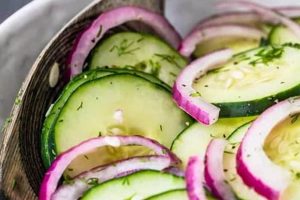
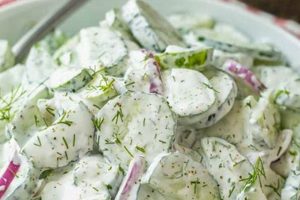
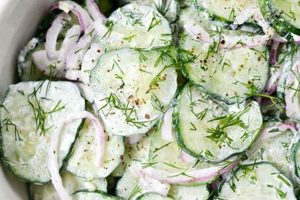
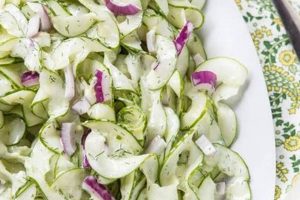
A dish featuring a California roll, typically composed of crab stick, avocado, and cucumber, served alongside a refreshing cucumber salad. This salad might include variations with ingredients like rice vinegar, sesame oil, seaweed, or other vegetables, complementing the roll’s flavors. An example would be a California roll presented with thinly sliced cucumbers marinated in a sweet and tangy dressing, sprinkled with sesame seeds.
This combination offers a light and flavorful meal, appealing to those seeking a healthy and satisfying option. The cool, crisp cucumber salad provides a textural and gustatory counterpoint to the richness of the avocado and crab stick within the roll. This pairing potentially emerged with the growing popularity of sushi in Western cultures, adapting traditional elements with lighter accompaniments suited to diverse palates. The refreshing qualities of the salad contribute to a more balanced and enjoyable dining experience.
Further exploration could delve into specific recipe variations, nutritional information, the origins and evolution of California rolls, techniques for preparing optimal cucumber salads, and the broader culinary context of sushi’s global adaptation.
Tips for Preparing a California Roll with Cucumber Salad
Optimizing the preparation of a California roll served with cucumber salad involves attention to detail in both components. The following tips provide guidance for achieving a balanced and flavorful meal.
Tip 1: Rice Preparation: Use short-grain Japanese rice, rinsing thoroughly before cooking. Properly cooked rice is essential for the roll’s structure and texture. Cool the rice completely before assembling the rolls.
Tip 2: High-Quality Ingredients: Select ripe avocados and fresh crab (or imitation crab) for optimal flavor. Choose firm, unwaxed cucumbers for both the roll and the salad.
Tip 3: Nori Handling: Keep nori sheets dry and crisp until use. Use a sharp knife or kitchen shears to cut the nori cleanly for even roll formation.
Tip 4: Rolling Technique: Utilize a bamboo rolling mat for tight, uniform rolls. Evenly distribute the filling and apply gentle pressure while rolling to prevent breakage.
Tip 5: Cucumber Salad Preparation: Thinly slice the cucumbers for the salad, preferably using a mandoline for consistent thickness. Marinate the cucumbers briefly to enhance their flavor.
Tip 6: Flavor Balancing: Achieve a balance of sweet, salty, and acidic flavors in the cucumber salad dressing. Consider incorporating ingredients like rice vinegar, mirin, soy sauce, and sesame oil.
Tip 7: Presentation: Arrange the California rolls and cucumber salad attractively on a serving platter. Garnish with sesame seeds, black tobiko, or finely chopped chives for visual appeal.
By following these tips, one can create a visually appealing and delicious California roll and cucumber salad combination. The focus on fresh ingredients and proper techniques ensures a satisfying culinary experience.
This careful preparation leads to a dish that is not only flavorful but also offers a balanced nutritional profile.
1. Fresh Ingredients

Ingredient freshness is paramount in a cucumber salad California roll recipe, directly impacting the overall flavor, texture, and aesthetic appeal of the dish. The delicate nature of the components, particularly the vegetables and seafood (or substitutes), necessitates careful selection and handling to ensure a satisfying culinary experience.
- Produce Quality
Crisp cucumbers, ripe avocados, and any additional vegetables (like carrots or sprouts) should exhibit vibrant color and firm texture, free from blemishes or bruising. These qualities not only enhance the visual presentation but also contribute to a more enjoyable textural experience. A wilted cucumber or overripe avocado can significantly detract from the intended freshness of the dish.
- Seafood (or Substitute) Selection
If using real crab, its freshness is crucial for both flavor and food safety. Imitation crab sticks should also be checked for quality, opting for those with a firm texture and fresh aroma. Proper storage and handling are vital to prevent spoilage and maintain optimal flavor profiles. Choosing high-quality seafood or substitutes contributes significantly to the overall taste and safety of the dish.
- Rice Selection and Preparation
Properly cooked sushi rice is essential. The grains should be cooked until tender but retain a slight firmness, avoiding a mushy consistency. Using high-quality short-grain Japanese rice is recommended. Freshly cooked and properly cooled rice enhances the structural integrity of the roll and contributes to a balanced flavor profile.
- Nori Freshness
Nori seaweed sheets should be dry and crisp, free from any signs of dampness or discoloration. Fresh nori is essential for the proper construction of the roll and adds a subtle, savory flavor. Maintaining its crispness until use is key to preventing soggy rolls and ensuring the nori adheres properly.
The emphasis on fresh ingredients elevates this seemingly simple dish. The delicate balance of flavors and textures inherent in a cucumber salad California roll relies heavily on the quality of each component. By prioritizing freshness, one ensures a vibrant and satisfying culinary experience that highlights the subtle nuances of each ingredient.
2. Proper Rice Preparation

Proper rice preparation is fundamental to a successful cucumber salad California roll recipe. The rice serves as the foundation of the roll, influencing its texture, structural integrity, and overall enjoyment. Suboptimal rice preparation can result in rolls that are too dry, too sticky, or fall apart easily, diminishing the dining experience. Understanding the nuances of rice preparation ensures a harmonious balance between the roll’s components and the accompanying cucumber salad.
- Rice Selection
Utilizing the correct type of rice is the first crucial step. Short-grain Japanese rice, sometimes labeled “sushi rice,” possesses the necessary starch content for achieving the desired stickiness essential for roll formation. Long-grain varieties lack this characteristic and will result in loose, crumbly rolls. Selecting the appropriate rice establishes the groundwork for a successful outcome. For instance, using Calrose rice, a medium-grain variety, can yield a slightly less sticky result compared to traditional sushi rice but is often more readily available.
- Rinsing
Thoroughly rinsing the rice removes excess starch, preventing an overly sticky or gummy texture. Rinsing until the water runs clear ensures the grains cook evenly and achieve the desired consistency. This step is crucial for achieving the ideal balance between stickiness and individual grain definition. Neglecting this step can lead to a less appealing texture and potentially affect the flavor of the rice.
- Cooking Method
Precise cooking, whether on the stovetop or in a rice cooker, ensures the grains are cooked through but retain a slight firmness. Overcooked rice becomes mushy, while undercooked rice remains hard and unpleasant to eat. Following established cooking guidelines for sushi rice guarantees optimal results. Using a rice cooker simplifies the process and typically yields consistent results, while stovetop cooking requires more attention to timing and heat control. Both methods, when executed correctly, produce perfectly cooked sushi rice.
- Seasoning
Seasoning the cooked rice with a mixture of rice vinegar, sugar, and salt enhances its flavor and contributes to the characteristic tanginess of sushi rice. The precise balance of these ingredients is crucial for achieving an authentic flavor profile that complements the other ingredients in the California roll. This seasoning also further enhances the rice’s ability to bind together, contributing to the roll’s structural integrity. Variations in seasoning can be explored to suit individual preferences, though traditional ratios provide a balanced starting point. The seasoned rice interacts with the nori seaweed, creating a cohesive and flavorful foundation for the roll.
Proper rice preparation is inextricably linked to the success of a cucumber salad California roll recipe. The careful selection, rinsing, cooking, and seasoning of the rice contribute significantly to the texture, flavor, and overall enjoyment of the dish. By mastering these fundamental steps, one creates a harmonious foundation for the delicate flavors and textures of the California roll and its refreshing cucumber salad accompaniment. The quality of the rice directly impacts how well the roll holds its shape, how the flavors meld together, and the overall sensory experience of the meal.
3. Balanced Flavors
Balanced flavors are essential to a successful cucumber salad California roll recipe. The interplay of sweet, salty, sour, and umami creates a harmonious flavor profile that elevates the dish beyond a simple combination of ingredients. A well-balanced flavor profile enhances the enjoyment of each bite, complementing the diverse textures and aromas present in both the California roll and the accompanying cucumber salad.
- The Role of the Cucumber Salad
The cucumber salad plays a crucial role in balancing the richer flavors of the California roll. Its refreshing, light, and often slightly acidic nature cuts through the fattiness of the avocado and the richness of the crab (or imitation crab). A simple vinaigrette, often based on rice vinegar, provides a sour counterpoint and can be subtly sweetened to complement the other flavors. For example, a dressing with rice vinegar, a touch of sugar, and a pinch of salt provides a clean, bright contrast to the umami notes of the roll. This contrast prevents the palate from becoming overwhelmed by richness and adds a refreshing element to each bite.
- Umami in the California Roll
Umami, the savory “fifth taste,” is a key component in the California roll, primarily derived from the crab or imitation crab. This savory depth is balanced by the other ingredients and the accompanying cucumber salad. The avocado contributes a creamy texture and subtle nuttiness, while the nori seaweed provides a slightly salty, oceanic flavor. These umami notes are further enhanced by the addition of soy sauce or wasabi as condiments. This interplay of umami with other flavors creates a complex and satisfying taste experience, enhancing the overall appeal of the dish. For instance, using real crab meat adds a more pronounced umami flavor compared to imitation crab, requiring careful balancing of the other ingredients and the salad dressing.
- Sweet and Sour Notes
The subtle sweetness in the sushi rice, often achieved through the addition of sugar and rice vinegar during preparation, interacts with the sourness of the cucumber salad dressing. This interplay of sweet and sour adds depth and complexity, preventing the dish from becoming one-dimensional. The sweetness of the rice is often understated, allowing the other flavors to shine through. This delicate sweetness complements the inherent sweetness of the crab and the creamy avocado. The level of sourness in the salad dressing can be adjusted to personal preference, though it should remain balanced enough to complement rather than overpower the other components. The right balance enhances the overall enjoyment and prevents palate fatigue.
- Textural Considerations
Texture also plays a role in perceived flavor balance. The soft, creamy avocado, the slightly chewy rice, the crisp cucumber, and the delicate nori seaweed create a varied textural experience that complements the balanced flavor profile. The refreshing crispness of the cucumber salad, in particular, provides a welcome contrast to the softer textures of the roll. This variety in texture adds another dimension to the dining experience, preventing the meal from feeling monotonous. For example, adding toasted sesame seeds to the cucumber salad introduces a crunchy element that further enhances the textural contrast and contributes to a more satisfying mouthfeel.
The careful consideration of balanced flavors is integral to the success of a cucumber salad California roll recipe. The interplay of tastes and textures creates a harmonious and satisfying culinary experience, highlighting the unique characteristics of each ingredient while ensuring that no single flavor dominates. This balance allows for a more nuanced appreciation of the dish, transforming a simple combination of ingredients into a complex and enjoyable meal. The refreshing cucumber salad plays a vital role in this balance, providing a counterpoint to the richness of the California roll and ensuring a delightful culinary experience.
4. Precise Rolling Technique
Precise rolling technique is crucial for constructing aesthetically pleasing and structurally sound California rolls, a key component of the cucumber salad California roll recipe. A well-rolled California roll holds its shape, showcasing the ingredients within and providing a satisfying textural experience. This technique contributes significantly to the overall presentation and enjoyment of the dish, complementing the refreshing qualities of the cucumber salad.
- Even Ingredient Distribution
Evenly distributing the filling across the nori sheet ensures a consistent flavor profile and prevents structural imbalances. Uneven distribution can lead to rolls that are too thick in some areas and too thin in others, impacting both aesthetics and the eating experience. For example, concentrating the avocado in one area might create a bulge, while sparse filling elsewhere can cause the roll to collapse. Consistent ingredient distribution ensures every bite contains a balanced proportion of rice, crab, avocado, and cucumber.
- Tight Rolling with a Bamboo Mat
Utilizing a bamboo rolling mat (makisu) is essential for achieving tight, uniform rolls. The mat provides the necessary leverage and control to shape the roll effectively. Applying gentle, even pressure while rolling ensures a compact structure that holds together when sliced. Attempting to roll without a mat often results in loose, uneven rolls that are prone to falling apart. The makisu aids in creating a cylindrical shape with even layers, enhancing the roll’s visual appeal and structural integrity. This tight structure also ensures that the dipping sauces adhere evenly and do not soak into the rice excessively.
- Proper Nori Placement and Moistening
Correct nori placement and moistening are crucial for achieving a proper seal. The shiny side of the nori sheet should face down, and the rice should be spread evenly across the rough side, leaving a small edge at the top for sealing. Lightly moistening this edge with water activates the starch in the rice, creating a natural adhesive. Insufficient moisture can result in the roll unraveling, while excessive moisture can make the nori soggy. Proper sealing ensures the roll remains intact during slicing and handling. This careful attention to detail contributes to the overall presentation and enjoyment of the dish.
- Clean Slicing
Clean slicing, using a sharp, wet knife, is essential for showcasing the roll’s interior and maintaining its structural integrity. A dull knife can crush the roll, compressing the filling and creating an uneven appearance. Wiping the knife between each cut prevents rice from sticking and ensures clean, attractive slices. Cleanly sliced rolls are visually appealing and enhance the dining experience. For example, a sharp knife will reveal the vibrant colors of the avocado, crab, and cucumber, creating an appetizing presentation. Clean slices also contribute to a more satisfying textural experience.
Mastering precise rolling technique is essential for creating visually appealing and structurally sound California rolls. These techniques, when combined with fresh ingredients and a well-balanced cucumber salad, elevate the cucumber salad California roll recipe from a simple combination of components into a cohesive and satisfying culinary experience. The attention to detail in rolling enhances both the aesthetic presentation and the enjoyment of the dish, reflecting a commitment to quality and precision in preparation.
5. Thin Cucumber Slices
Thin cucumber slices play a crucial role in the cucumber salad California roll recipe, impacting both the salad’s palatability and its complementary function alongside the California roll. Slice thickness influences texture, flavor absorption, and overall aesthetic presentation, contributing significantly to the dish’s success. Thinly sliced cucumbers offer a delicate, crisp texture that contrasts pleasantly with the softness of the California roll. Thicker slices, conversely, can be perceived as unwieldy and detract from the desired textural balance. Moreover, thin slices maximize surface area, allowing the marinade to penetrate more effectively, resulting in a more flavorful salad. This enhanced flavor absorption contributes to a more vibrant and refreshing counterpoint to the richness of the California roll. For instance, a thinly sliced cucumber salad marinated in rice vinegar, soy sauce, and sesame oil offers a bright, tangy, and subtly savory complement to the California roll’s creamy avocado and crab filling. A salad with thick cucumber slices, however, might lack the same depth of flavor and textural contrast.
Beyond flavor and texture, thin cucumber slices also contribute to a more visually appealing presentation. The delicate, translucent nature of thinly sliced cucumbers adds an element of elegance to the salad, enhancing its overall aesthetic appeal. This visual appeal extends to the overall dish, making the combination of the California roll and cucumber salad more enticing. Thinly sliced cucumbers also allow for more efficient packing and arrangement within the salad, preventing a cluttered appearance and ensuring the dressing is evenly distributed. This attention to detail elevates the dish, showcasing the care taken in its preparation. In contrast, thickly sliced cucumbers can appear bulky and less refined, potentially diminishing the overall presentation. The practical significance of this understanding lies in the ability to create a cucumber salad that complements the California roll in flavor, texture, and presentation, enhancing the overall dining experience.
In summary, the thickness of cucumber slices significantly influences the success of the cucumber salad component within the cucumber salad California roll recipe. Thin slices optimize texture, flavor absorption, and visual appeal, creating a harmonious balance with the California roll. This understanding allows for a more informed approach to preparation, ensuring the cucumber salad enhances the overall dining experience rather than detracting from it. Achieving the appropriate cucumber slice thickness demonstrates an attention to detail that elevates the dish and reflects culinary expertise. This seemingly minor detail contributes significantly to the overall success and enjoyment of the cucumber salad California roll recipe.
6. Complementary Dressing
A complementary dressing is essential to the cucumber salad California roll recipe, serving to enhance the cucumber salad’s flavor profile and provide a counterpoint to the richness of the California roll. The dressing’s characteristics significantly influence the overall balance and enjoyment of the dish. A well-chosen dressing elevates the simple combination of cucumbers into a vibrant and refreshing component that complements the California roll’s flavors and textures.
- Balancing Acidity
The dressing’s acidity, often derived from rice vinegar, plays a crucial role in balancing the flavors within the dish. The acidity cuts through the richness of the avocado and crab (or imitation crab) in the California roll, providing a refreshing contrast. The level of acidity should be carefully calibrated to complement rather than overpower the other flavors. For example, a dressing with too much rice vinegar can make the salad excessively sour, while insufficient acidity might not provide the necessary contrast to the roll’s richness. A properly balanced acidity enhances the overall palate experience, preventing the richness of the roll from becoming overwhelming.
- Sweet and Savory Elements
Incorporating sweet and savory elements into the dressing adds complexity and depth to the cucumber salad. A touch of sugar or mirin can balance the acidity, while a dash of soy sauce or sesame oil contributes a savory dimension. These elements should be used judiciously to create a harmonious flavor profile that complements the other components of the dish. For example, a dressing with a balanced combination of rice vinegar, sugar, soy sauce, and sesame oil creates a complex flavor profile that enhances the cucumbers’ subtle flavor while providing a counterpoint to the California roll’s umami notes. This balance of sweet and savory notes prevents the salad from being one-dimensional and contributes to a more satisfying overall meal.
- Textural Influence
The dressing can also influence the texture of the cucumber salad. A thicker dressing, perhaps incorporating a small amount of sesame paste or grated ginger, can add a creamy element that contrasts with the crispness of the cucumbers. A thinner, more vinaigrette-style dressing maintains the cucumbers’ refreshing crispness. The choice of dressing texture depends on the desired overall textural balance of the dish. For instance, a creamy dressing might complement a California roll with a softer texture, while a lighter vinaigrette might be preferred with a firmer roll. Consideration of textural interplay enhances the dining experience and demonstrates attention to detail.
- Visual Appeal
The dressing’s color and viscosity contribute to the visual appeal of the cucumber salad. A vibrant dressing, perhaps incorporating finely chopped herbs or spices, adds visual interest. The dressing should also coat the cucumber slices evenly, enhancing their appearance and ensuring consistent flavor distribution. For example, a dressing with a hint of chili oil adds a reddish hue and a touch of spice, while a sprinkle of black sesame seeds enhances visual contrast. These visual elements elevate the dish’s presentation, making it more appetizing and contributing to a more enjoyable dining experience. A well-presented cucumber salad enhances the overall appeal of the cucumber salad California roll recipe.
The complementary dressing’s careful consideration elevates the cucumber salad from a simple side dish to an integral component of the cucumber salad California roll recipe. By balancing acidity, incorporating sweet and savory elements, considering textural influence, and enhancing visual appeal, the dressing creates a harmonious interplay of flavors and textures that complements the California roll and provides a satisfying and refreshing counterpoint to its richness. This attention to detail transforms the dish into a more complete and enjoyable culinary experience.
7. Attractive Presentation
Attractive presentation elevates the cucumber salad California roll recipe from a simple meal to a visually engaging dining experience. Visual appeal stimulates appetite and enhances enjoyment, transforming the act of eating into a more sensory and satisfying experience. Presentation considerations demonstrate care and attention to detail, enhancing perceived value and enjoyment.
- Color Contrast and Harmony
The interplay of colors contributes significantly to visual appeal. The vibrant green of the cucumber salad, the creamy white of the avocado, the orange-pink of the crab (or imitation crab), and the dark green of the nori seaweed create a naturally appealing color palette. Further enhancing color contrast through garnishes, such as black sesame seeds or bright orange tobiko, adds visual interest. A considered approach to color arrangement enhances the dish’s aesthetic appeal and can stimulate appetite before the first bite. For example, arranging the California rolls on a white plate accentuates the colors of the ingredients and creates a clean, appetizing presentation. Incorporating edible flowers or colorful microgreens can further enhance the visual appeal and add subtle flavor nuances.
- Plating Techniques
Thoughtful plating techniques further enhance the presentation. Arranging the California rolls neatly on a plate, accompanied by a strategically placed mound of cucumber salad, creates a sense of order and balance. Avoid overcrowding the plate, allowing each element to stand out. Consider the negative space on the plate as part of the overall composition. The use of appropriate serving dishes also contributes to the aesthetic appeal. For instance, serving the cucumber salad in a small, elegant bowl separate from the main plate can add a touch of sophistication. Using chopsticks and small dipping bowls for soy sauce and wasabi further enhances the dining experience, adding an element of authenticity and visual interest. These details contribute to a more refined and enjoyable dining experience.
- Garnishing and Detailing
Garnishes add a finishing touch and enhance visual appeal. A sprinkle of sesame seeds, a scattering of finely chopped chives, or a few strategically placed microgreens can elevate the dish’s presentation. These details demonstrate attention to detail and add subtle flavor and textural nuances. Avoid over-garnishing, which can detract from the main elements. Garnishes should complement the dish, not overpower it. For example, a light dusting of black sesame seeds on the cucumber salad adds a touch of visual contrast and a subtle nutty flavor. A small sprig of fresh dill or mint can add a touch of freshness and aroma. These small details contribute significantly to the overall presentation and perceived quality of the dish.
- Contextual Considerations
The dining context also influences presentation choices. A casual meal might call for a simpler presentation, while a more formal setting might warrant greater attention to detail. Consider the occasion and the overall dining experience when making presentation decisions. For instance, a casual weeknight dinner might involve serving the California rolls and cucumber salad directly on individual plates. A more formal occasion, however, might warrant a more elaborate presentation on a larger platter, allowing diners to serve themselves. The use of appropriate tableware, lighting, and even background music can further enhance the dining ambiance and contribute to a more memorable experience.
Attractive presentation enhances the enjoyment of the cucumber salad California roll recipe by engaging multiple senses. Visual appeal stimulates appetite and elevates the dining experience, transforming a simple meal into something more special. By considering color contrast, plating techniques, garnishing details, and contextual factors, one can create a presentation that complements the flavors and textures of the dish, enhancing the overall culinary experience. The care taken in presentation reflects a respect for the ingredients and a desire to create a truly enjoyable and memorable meal. This attention to detail transforms the act of eating into a more mindful and satisfying experience.
Frequently Asked Questions
This section addresses common inquiries regarding the preparation and enjoyment of California rolls served with cucumber salad.
Question 1: What type of rice is best suited for California rolls?
Short-grain Japanese rice, often labeled “sushi rice,” is ideal due to its stickiness when cooked, essential for holding the roll together. Medium-grain California rice, such as Calrose, can be substituted if sushi rice is unavailable, though the result will be slightly less sticky.
Question 2: Can brown rice be used instead of white rice?
While brown rice offers nutritional benefits, its texture is less suitable for sushi. The lower starch content results in a less sticky consistency, making it challenging to achieve a firm, cohesive roll. If using brown rice, slightly less water may be used during cooking to achieve a firmer texture.
Question 3: What can be used as a substitute for crab stick?
Cooked shrimp, smoked salmon, or even grilled tofu can serve as alternatives to imitation crab stick. These alternatives offer different flavor profiles and textures, allowing for variations on the traditional California roll. Avocado can also be used as a primary filling for a vegetarian option.
Question 4: How can one prevent the nori seaweed from becoming soggy?
Keeping the nori sheets away from moisture until use is crucial. Only moisten the edge needed for sealing the roll during assembly. Consume the California rolls shortly after preparation for optimal texture and flavor.
Question 5: What are common variations for the cucumber salad dressing?
Rice vinegar, sesame oil, soy sauce, mirin, ginger, and garlic can be combined in various proportions to create different flavor profiles. A touch of sugar or honey can balance the acidity, while chili flakes or sriracha can add spice. Experimentation with these ingredients allows for customization based on individual preferences.
Question 6: How should California rolls and cucumber salad be stored?
For optimal quality, consume California rolls immediately after preparation. If storage is necessary, refrigerate the rolls separately from the cucumber salad in an airtight container for up to 24 hours. The cucumber salad can also be stored separately in an airtight container for up to 2 days, though some moisture loss may occur. Avoid storing the rolls and salad together, as the moisture from the salad can make the nori soggy.
Understanding these key points ensures optimal preparation and enjoyment of the dish. Attention to detail in each step, from ingredient selection to presentation, elevates the California roll with cucumber salad experience.
Further exploration can include variations on the basic recipe, adapting ingredients and techniques to suit individual preferences and dietary needs.
Cucumber Salad California Roll Recipe
Exploration of the cucumber salad California roll recipe reveals the importance of balanced flavors, textures, and presentation. Fresh, high-quality ingredients form the foundation of this dish. Proper rice preparation is crucial for achieving the desired texture and structural integrity of the California roll. The thinness of the cucumber slices affects both flavor absorption and textural contrast within the salad. A complementary dressing, balancing acidity, sweetness, and savory notes, enhances the refreshing qualities of the cucumber salad and provides a counterpoint to the richness of the roll. Precise rolling technique ensures aesthetically pleasing and structurally sound California rolls. Finally, attractive presentation elevates the dish, engaging multiple senses and enhancing overall enjoyment. Each component contributes to a harmonious and satisfying culinary experience.
The cucumber salad California roll recipe offers a versatile platform for culinary exploration. Adaptation and refinement of techniques, ingredient selection, and presentation offer opportunities for personalized expression and enhanced culinary experiences. Continued exploration of this seemingly simple dish promises further insights into the delicate interplay of flavors, textures, and aesthetics that define culinary excellence.