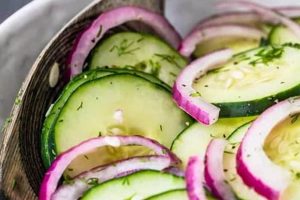
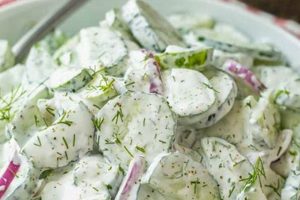
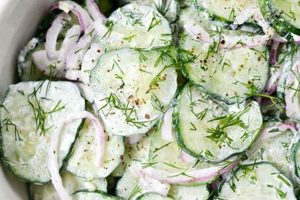
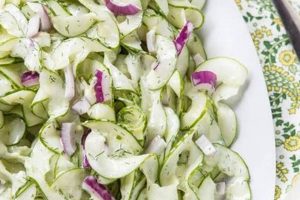
A refreshing and creamy side dish, this culinary creation typically combines thinly sliced cucumbers with a sour cream-based dressing. Variations often include additions such as dill, onion, garlic, or vinegar for enhanced flavor complexity. A simple preparation makes it a popular choice for picnics, barbecues, and everyday meals.
The cool, crisp nature of this dish offers a welcome counterpoint to richer, heavier meals. Its straightforward preparation requires minimal time and ingredients, making it an accessible and convenient option for home cooks of all skill levels. Historically, cucumbers and dairy-based dressings have been paired in various culinary traditions, showcasing the enduring appeal of this flavor combination. The adaptability of the recipe allows for customization based on dietary preferences and available ingredients, contributing to its widespread popularity.
This exploration will delve further into variations on this classic dish, covering topics such as ingredient selection, preparation techniques, and complementary flavor pairings. Nutritional information and tips for optimal storage will also be provided.
Tips for Preparing an Excellent Cucumber Salad with a Sour Cream Base
Achieving optimal flavor and texture requires attention to detail throughout the preparation process. The following tips offer guidance for creating a superior culinary experience.
Tip 1: Salt the cucumbers and allow them to drain. This process draws out excess moisture, preventing a watery salad and concentrating the cucumber flavor. Place the sliced cucumbers in a colander with a sprinkle of salt and let them sit for at least 15 minutes before incorporating them into the dressing.
Tip 2: Use high-quality sour cream. Full-fat sour cream provides a richer, creamier texture and a tangier flavor, which enhances the overall quality of the dish.
Tip 3: Add fresh herbs. Dill, chives, and parsley complement the cool cucumbers and creamy dressing. Finely chop the herbs to distribute their flavor evenly.
Tip 4: Consider a touch of acidity. A small amount of white wine vinegar or lemon juice brightens the flavors and adds a refreshing tang. Start with a small amount and adjust to taste.
Tip 5: Thinly slice the cucumbers. Uniformly thin slices ensure even coating with the dressing and provide a pleasant texture. A mandoline slicer can achieve consistent thinness.
Tip 6: Chill before serving. Chilling allows the flavors to meld and enhances the refreshing qualities of the salad. Refrigerate for at least 30 minutes before serving.
Tip 7: Season to taste. Adjust salt and pepper levels after the salad has chilled. The chilling process can sometimes mute the flavors, so final seasoning is essential.
By following these tips, one can elevate a simple cucumber salad to a truly delightful culinary experience. Attention to these details ensures optimal flavor, texture, and overall enjoyment.
Through careful ingredient selection and proper technique, this seemingly simple dish can become a standout accompaniment to any meal.
1. Fresh Cucumbers

Fresh cucumbers serve as the foundational ingredient, providing crucial textural and flavor components. Their crispness contrasts with the creamy dressing, creating a balanced sensory experience. Cucumber flavor, while subtle, offers a refreshing counterpoint to the richness of the sour cream. The quality of the cucumbers directly impacts the overall success of the dish. Wilted or overly mature cucumbers lack the necessary crispness and can introduce undesirable bitterness. Selecting firm, vibrantly colored cucumbers ensures optimal flavor and texture. For instance, using freshly harvested cucumbers from a local market often results in a noticeably superior salad compared to using cucumbers that have been stored for extended periods.
Beyond textural and flavor contributions, fresh cucumbers offer nutritional value, adding vitamins and hydration to the dish. Their high water content contributes to a light and refreshing culinary experience, particularly desirable in warmer weather. The choice of cucumber variety can also influence the final product. English cucumbers, known for their thinner skin and fewer seeds, require less preparation and contribute a milder flavor. Alternatively, garden cucumbers, with their thicker skin and more pronounced flavor, offer a more robust taste experience. Understanding these nuances allows for informed selection based on desired flavor profiles and preparation preferences. For example, Persian cucumbers, smaller and less watery than standard cucumbers, hold their shape well in salads and offer a slightly sweeter flavor.
Optimizing cucumber selection elevates this simple salad. Prioritizing freshness and considering varietal characteristics ensures a delightful culinary outcome. The interplay between cucumber freshness and the creamy dressing forms the essence of this classic dish. Challenges such as sourcing high-quality cucumbers, especially during colder months, can be addressed by exploring local farmers’ markets or considering alternative preservation methods like pickling for use in variations of the recipe. This understanding underscores the importance of fresh, high-quality cucumbers as a key component of a successful cucumber salad with sour cream.
2. High-Quality Sour Cream

High-quality sour cream constitutes a pivotal element in this classic salad, significantly influencing the final outcome. Its richness and tang provide a crucial counterpoint to the cool, crisp cucumbers. Texture also plays a vital role; a thick, luxurious sour cream clings to the cucumbers, ensuring each bite delivers a balanced combination of flavors and textures. A thin, watery sour cream, conversely, results in a diluted dressing and a less satisfying sensory experience. The quality of sour cream directly impacts the overall balance and enjoyment of the dish. For example, using a sour cream with a higher fat content generally yields a creamier, more flavorful dressing compared to using a low-fat or non-fat alternative. This difference stems from the fat’s ability to carry flavor and contribute to a richer mouthfeel.
Beyond its textural and flavor contributions, high-quality sour cream offers a nuanced complexity that elevates the salad beyond a simple combination of ingredients. The subtle tanginess, derived from the lactic acid produced during fermentation, brightens the overall flavor profile. This acidity also complements the cucumbers’ subtle sweetness, creating a harmonious balance. Furthermore, the richness of the sour cream provides a satisfying mouthfeel, enhancing the overall culinary experience. Practical applications of this understanding include selecting sour cream brands known for their quality and consistency. Reading labels and comparing fat content and ingredient lists can aid in informed decision-making. For instance, opting for a sour cream made with only milk and cream, without added thickeners or stabilizers, often results in a cleaner flavor and superior texture.
Selecting high-quality sour cream proves essential for a successful outcome. The interplay between the sour cream’s richness, tang, and texture with the fresh cucumbers defines this classic dish. Challenges such as variations in sour cream quality across different brands and regional availability can impact the final product. Addressing these challenges involves careful selection and potential experimentation to find a preferred brand or type. This underscores the importance of prioritizing sour cream quality as a key determinant of the overall success of this seemingly simple, yet nuanced, culinary creation.
3. Flavorful Additions

Flavorful additions transform a basic cucumber and sour cream salad into a dynamic culinary experience. These additions, ranging from fresh herbs to pungent alliums, introduce complexity and depth, elevating the dish beyond its simple components. The careful selection and balance of these additions directly influence the final flavor profile, allowing for customization based on individual preferences. For example, the bright, herbaceous notes of fresh dill create a classic pairing, while the sharp bite of red onion introduces a contrasting pungency. The interplay between these additions and the base ingredients creates a synergistic effect, resulting in a more nuanced and satisfying flavor profile. Understanding the impact of each addition allows for informed choices that cater to specific palates and desired outcomes. The cause-and-effect relationship between specific additions and the resulting flavor profile is central to mastering this culinary creation. Fresh herbs like dill, mint, or parsley contribute herbaceous notes, while spices like paprika or cayenne pepper introduce warmth and subtle heat. Alliums, including red onion, chives, or garlic, provide pungent and savory undertones. The quantity of each addition also plays a crucial role; too much can overpower the delicate flavors of the cucumbers and sour cream, while too little may fail to make a noticeable impact.
Beyond individual flavors, the combination of additions contributes to a layered complexity. For instance, pairing fresh dill with a touch of lemon zest creates a bright, citrusy counterpoint to the richness of the sour cream. Similarly, combining minced garlic with a pinch of smoked paprika introduces a depth of savory flavor. Understanding these synergistic relationships empowers culinary creativity, allowing for personalized variations that cater to specific tastes. Practical applications include experimenting with different combinations of herbs, spices, and alliums to discover preferred flavor profiles. Starting with small quantities and gradually adjusting allows for precise control over the final flavor outcome. Furthermore, considering seasonal availability and incorporating locally sourced ingredients can enhance both flavor and freshness. For example, using fresh dill during its peak season results in a more vibrant flavor compared to using dried dill. Similarly, incorporating locally grown garlic or onions can introduce unique regional nuances to the dish.
Flavorful additions play a crucial role in elevating this seemingly simple salad. The careful selection and balance of these components unlock a spectrum of flavor possibilities, transforming a basic dish into a personalized culinary experience. Challenges such as sourcing high-quality fresh herbs or balancing competing flavors can be addressed through careful planning and experimentation. This understanding underscores the importance of flavorful additions as a key element in creating a truly exceptional cucumber salad with sour cream.
4. Proper Chilling
Proper chilling significantly influences the final quality of a cucumber salad with sour cream. Chilling allows the flavors of the various components, including the cucumbers, sour cream, and any added herbs or spices, to meld and harmonize. This integration of flavors creates a more cohesive and balanced taste profile. Moreover, chilling enhances the refreshing qualities of the salad. The cool temperature provides a welcome contrast, particularly when served alongside richer or heavier dishes. The textural impact of chilling is also noteworthy. Cold temperatures firm the cucumbers, maintaining their desirable crispness. A chilled salad offers a more satisfying textural experience compared to a room-temperature version, where the cucumbers may become slightly wilted. For example, a salad chilled for at least 30 minutes exhibits a more pronounced integration of flavors and a more refreshing quality compared to a salad served immediately after preparation. This effect stems from the time required for the flavors to meld and the temperature to effectively cool the ingredients. Insufficient chilling can result in a less flavorful and less refreshing salad.
The practical implications of proper chilling extend beyond flavor and texture enhancement. Chilling also helps to preserve the salad’s freshness, extending its shelf life. Cold temperatures inhibit bacterial growth, allowing the salad to remain safe for consumption for a longer period. This factor becomes particularly crucial when preparing the salad in advance for events such as picnics or potlucks. For instance, a properly chilled salad can be safely stored in a refrigerator for up to two days, retaining its flavor and textural integrity. Conversely, a salad left at room temperature for an extended period may become unsafe to consume due to bacterial proliferation. Understanding the impact of chilling on food safety underscores its importance in culinary practices.
Proper chilling constitutes a crucial step in creating a high-quality cucumber salad with sour cream. Its impact extends beyond simple temperature reduction, influencing flavor integration, textural integrity, and food safety. Challenges such as variations in refrigerator temperatures or inadequate chilling time can be addressed by utilizing a thermometer to ensure consistent cold storage and allowing sufficient time for the salad to reach the desired temperature. This understanding underscores the importance of proper chilling as a key factor in achieving optimal culinary outcomes. The connection between temperature and the complex interactions of ingredients highlights the scientific principles underlying culinary practices.
5. Thin slicing technique

Thin slicing technique significantly impacts the overall quality and enjoyment of cucumber salad with sour cream. Thinly sliced cucumbers offer several advantages. Increased surface area allows for greater absorption of the sour cream dressing, ensuring each bite delivers a balanced combination of flavors. Uniformly thin slices contribute to a pleasing texture, avoiding unwieldy pieces that detract from the eating experience. Visual appeal also benefits from consistent thinness, creating a more elegant presentation. For example, thinly sliced cucumbers, approximately 1/8 inch thick, readily absorb the dressing and offer a delicate texture, while thicker slices may remain undressed and prove cumbersome to eat. This distinction highlights the direct relationship between slicing technique and the sensory experience of the salad.
Practical application of the thin slicing technique involves utilizing appropriate tools and methods. A sharp knife allows for clean, precise cuts, minimizing bruising and maximizing flavor retention. A mandoline slicer provides consistent thickness, ensuring uniformity across all slices. While these tools aid precision, achieving thin slices also relies on proper knife skills and careful handling of the cucumbers. For instance, using a dull knife can crush the cucumber cells, releasing excess moisture and detracting from the crisp texture. Similarly, applying excessive pressure while slicing can lead to uneven slices and an inconsistent final product. Mastering this technique requires practice and attention to detail.
Thin slicing technique constitutes a fundamental aspect of preparing a high-quality cucumber salad with sour cream. Its influence extends beyond mere aesthetics, impacting flavor distribution, textural consistency, and overall enjoyment. Challenges such as variations in cucumber size and shape or maintaining consistent knife skills can be addressed through careful selection of cucumbers and consistent practice of slicing techniques. This understanding underscores the importance of thin slicing as a key determinant of the salad’s success, highlighting the connection between technique and the optimization of sensory experience.
6. Balanced Seasoning
Balanced seasoning constitutes a critical element in a successful cucumber salad with sour cream recipe. It elevates the dish beyond a simple combination of ingredients, transforming it into a harmonious blend of flavors. Seasoning not only enhances the individual components but also creates synergistic interactions, resulting in a more complex and satisfying culinary experience. This exploration delves into the multifaceted role of seasoning within this specific culinary context.
- Salt’s Dual Role
Salt performs a dual function in this recipe. Firstly, it acts as a crucial flavor enhancer, accentuating the inherent flavors of the cucumbers and sour cream. Secondly, salt draws out excess moisture from the cucumbers through osmosis. This process prevents a watery salad and concentrates the cucumber flavor. The quantity of salt must be carefully calibrated to achieve the desired balance; too much can overpower the delicate flavors, while too little may fail to enhance them. For example, insufficient salting can result in a bland salad, while excessive salting can render it unpalatable. This demonstrates salt’s critical influence on the final product.
- Acidity’s Balancing Effect
Acidity, often introduced through vinegar or lemon juice, plays a pivotal role in balancing the richness of the sour cream and the subtle sweetness of the cucumbers. It provides a bright, tangy counterpoint that prevents the salad from becoming overly rich or cloying. The type and quantity of acid used influence the final flavor profile. For instance, white wine vinegar offers a subtle tartness, while lemon juice contributes a citrusy brightness. Careful consideration of these nuances allows for precise flavor customization. Over-acidification, however, can mask the other flavors, highlighting the importance of judicious application.
- Black Pepper’s Subtle Complexity
Black pepper introduces a subtle complexity, adding a layer of warmth and spice. Freshly ground black pepper offers a more pronounced aroma and flavor compared to pre-ground pepper. The quantity used should complement, not overpower, the other flavors. For example, a few grinds of fresh black pepper enhance the overall flavor profile without dominating the delicate cucumber and sour cream notes. Excessive use, however, can introduce an undesirable bitterness.
- Herbs and Spices’ Aromatic Enhancement
Fresh herbs, such as dill or chives, and spices, like paprika or garlic powder, further enhance the flavor profile. These additions introduce aromatic complexity, creating a more nuanced and engaging sensory experience. The selection and quantity of herbs and spices should align with the desired flavor profile. For example, fresh dill complements the cool cucumbers and creamy sour cream, while a pinch of paprika adds a subtle warmth. The careful balance of these elements differentiates a simple salad from a truly exceptional culinary creation.
Balanced seasoning elevates the cucumber salad with sour cream recipe from a simple combination of ingredients to a harmonious symphony of flavors. Each element plays a crucial role, influencing not only the overall taste but also the texture and aroma. Understanding the interplay of these components allows for precise control over the final product, ensuring a consistently delightful culinary experience. Mastery of seasoning lies in the ability to balance these elements, creating a dish that is both refreshing and complex.
Frequently Asked Questions
This section addresses common inquiries regarding the preparation and enjoyment of cucumber salad with sour cream, offering practical guidance for optimal results.
Question 1: How can excess moisture in the salad be prevented?
Salting the sliced cucumbers and allowing them to drain in a colander for approximately 15-20 minutes prior to combining with the other ingredients effectively removes excess moisture.
Question 2: What type of sour cream is recommended?
Full-fat sour cream is generally preferred for its richer flavor and creamier texture. Reduced-fat or non-fat versions can be used, but may result in a thinner dressing.
Question 3: What are suitable herb pairings for this salad?
Fresh dill is a classic accompaniment. Other suitable herbs include chives, parsley, mint, and tarragon. Experimentation with various herbs can yield interesting flavor profiles.
Question 4: How long should the salad be chilled before serving?
Chilling for at least 30 minutes allows the flavors to meld and enhances the refreshing quality of the salad. Longer chilling times, up to two hours, can further intensify the flavors.
Question 5: How can the salad be stored for later consumption?
Store the salad in an airtight container in the refrigerator for up to two days. Consume within this timeframe for optimal quality and food safety.
Question 6: What can be done if the salad becomes too watery after chilling?
Gently drain any excess liquid that has accumulated at the bottom of the container. Alternatively, incorporate a small amount of additional sour cream to thicken the dressing.
Careful attention to these frequently asked questions ensures optimal preparation and a consistently enjoyable culinary experience. Understanding these nuances allows for adaptation and customization to suit individual preferences and circumstances.
The following section will explore variations on the classic recipe, expanding culinary possibilities and offering further inspiration for incorporating this versatile dish into diverse meal plans.
Cucumber Salad with Sour Cream Recipe
This exploration has provided a comprehensive overview of the cucumber salad with sour cream recipe, encompassing key aspects from ingredient selection and preparation techniques to flavor pairings and optimal storage practices. Emphasis has been placed on the importance of fresh, high-quality ingredients, proper chilling techniques, and balanced seasoning. The impact of thin slicing on flavor absorption and textural consistency has been highlighted, along with the transformative potential of flavorful additions such as fresh herbs and spices. Frequently asked questions regarding common preparation challenges and solutions have also been addressed, offering practical guidance for culinary success.
The simplicity of this recipe belies its potential for nuanced flavor and textural complexity. Careful attention to detail, from ingredient selection to final seasoning adjustments, elevates this seemingly basic dish to a truly remarkable culinary experience. Further exploration of varietal cucumber selections, diverse herb and spice combinations, and creative additions offers a pathway to personalized interpretations and continued culinary discovery. The enduring appeal of this classic dish lies in its adaptability and capacity for continuous refinement, inviting culinary enthusiasts to explore the boundless possibilities within its deceptively simple framework.