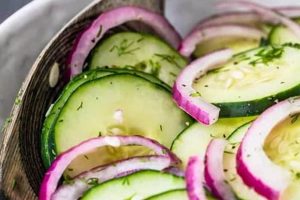
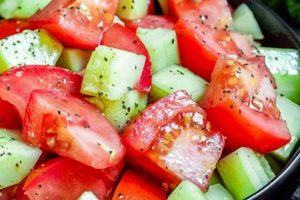
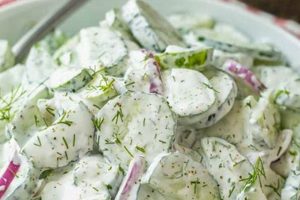
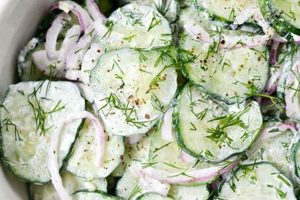
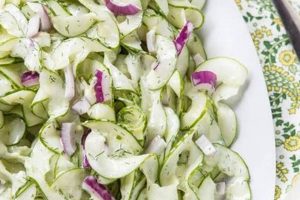
A refreshing and flavorful dish, this type of salad typically combines sliced cucumbers, crumbled feta cheese, and other complementary ingredients. Variations may include red onion, olives, tomatoes, fresh herbs like mint or dill, and a simple vinaigrette dressing. An example might feature thinly sliced English cucumbers, Kalamata olives, crumbled feta, chopped fresh dill, and a lemon-herb vinaigrette.
The combination of cool, crisp cucumber, salty and tangy feta, and bright, acidic dressing creates a balanced and satisfying culinary experience. This salad is often favored for its simplicity, versatility, and nutritional value. It can serve as a light lunch, a side dish, or part of a larger mezze platter. Historically, elements of this salad can be traced back to Mediterranean cuisines where fresh produce and cheeses are staples.
This exploration will delve further into variations of this culinary creation, offering guidance on ingredient selection, preparation techniques, and dressing options to enhance the flavor profile.
Tips for a Superior Salad
Optimizing ingredient selection and preparation techniques elevates this simple salad to a culinary delight.
Tip 1: Cucumber Selection: Opt for firm, unwaxed cucumbers. English cucumbers offer a less watery, seedless option. For added visual appeal, consider using a vegetable peeler to create alternating stripes of peel and flesh before slicing.
Tip 2: Feta Handling: High-quality feta, stored in brine, is essential. Drain the feta thoroughly before crumbling to prevent excess moisture in the salad. Consider using different varieties of feta, such as goat or sheep, for nuanced flavor profiles.
Tip 3: Enhancing Flavor with Herbs: Fresh herbs are crucial. Dill, mint, and parsley are excellent choices. Add herbs just before serving to maximize their aroma and flavor.
Tip 4: Red Onion Considerations: Soaking thinly sliced red onion in ice water for 10 minutes mellows its sharpness. This step is particularly beneficial for those sensitive to strong onion flavors.
Tip 5: Optimal Dressing Emulsification: Whisk the dressing ingredients vigorously to create a stable emulsion that evenly coats the salad components. Taste and adjust seasonings as needed before adding to the salad.
Tip 6: Timing is Key: Dress the salad shortly before serving to prevent the cucumbers from becoming soggy. This preserves the desired texture and freshness of the ingredients.
Tip 7: Serving Suggestions: This salad complements grilled meats, fish, or poultry beautifully. It also serves as a refreshing standalone dish.
By following these guidelines, one can achieve a harmonious balance of flavors and textures, ensuring a delightful culinary experience.
The subsequent section provides variations on this classic combination, exploring additional ingredients and flavor profiles.
1. Fresh, High-Quality Ingredients

The success of a cucumber and feta salad hinges directly on the freshness and quality of its components. This salad, characterized by its simple composition, allows the individual flavors of each ingredient to shine through. Subpar or less-than-fresh produce will result in a bland, watery, and ultimately disappointing dish. Conversely, vibrant, crisp cucumbers, flavorful feta stored properly in brine, and freshly picked herbs elevate the salad to a new level. For example, using a hothouse cucumber, known for its thin skin and minimal seeds, compared to a standard cucumber with thicker skin and more seeds, yields a noticeable difference in texture and overall enjoyment. Similarly, opting for high-quality feta packed in brine, rather than pre-crumbled dry feta, delivers a superior salty, tangy flavor that enhances the overall profile.
The impact of ingredient quality extends beyond flavor. Fresh produce offers optimal nutritional value, maximizing the health benefits of the salad. Furthermore, the visual appeal of the dish is directly related to the quality of the ingredients. Vibrant green cucumbers, creamy white feta, and colorful, fragrant herbs create an aesthetically pleasing presentation that enhances the dining experience. Consider the difference between bright green, firm cucumbers and dull, slightly yellowed ones; the former signals freshness and promises a crisp, refreshing bite, while the latter suggests a less desirable texture and flavor.
Therefore, prioritizing fresh, high-quality ingredients is not merely a suggestion, but a fundamental requirement for a truly exceptional cucumber and feta salad. Challenges such as sourcing high-quality feta or finding truly fresh produce can be overcome through careful shopping practices and an understanding of seasonal availability. The payoff for this effort is a salad that delivers a delightful sensory experience, showcasing the inherent flavors of each carefully chosen component. This principle underscores the importance of quality ingredients in achieving culinary excellence, even in simple preparations.
2. Proper Cucumber Preparation
Proper cucumber preparation is essential for optimizing both the texture and flavor profile of a cucumber and feta salad. It directly influences the overall culinary experience, impacting factors such as water content, visual appeal, and the harmonious integration of ingredients. Neglecting this crucial step can result in a watery salad with uneven flavor distribution, diminishing the intended refreshing and vibrant character of the dish.
- Peeling and Slicing Techniques
The choice of whether to peel the cucumber and the method of slicing significantly affects the final product. Leaving the skin on adds a subtle bitterness and textural contrast, while peeling results in a smoother, milder flavor. Thinly slicing ensures optimal integration with the other ingredients and prevents large cucumber pieces from dominating the salad. Alternatively, thicker slices or chunks can provide a more substantial bite. The slicing technique also affects visual appeal; uniform slices create a more polished presentation, whereas irregular cuts contribute to a rustic aesthetic.
- Seed Removal
Cucumbers, particularly standard varieties, contain a seed core that can contribute excess moisture to the salad, diluting the flavors. Removing the seeds, typically by halving the cucumber lengthwise and scooping them out with a spoon, helps maintain the desired texture and prevents the salad from becoming watery. This step is particularly important if the salad will be prepared in advance, as the cucumbers will release moisture over time.
- Salting and Draining
Salting sliced cucumbers and allowing them to drain for a period, typically 15-30 minutes, draws out excess moisture. This process, known as osmosis, firms the cucumber slices and concentrates their flavor. Thoroughly patting the slices dry after draining further ensures a crisp, non-watery salad. This step is especially beneficial when using cucumbers with a higher water content.
- Chilling
Chilling the prepared cucumbers prior to assembling the salad enhances their refreshing quality. This also helps maintain the crispness of the slices, especially in warmer environments. However, avoid chilling for excessively long periods, as this can lead to a loss of flavor and texture.
These seemingly minor steps in cucumber preparation contribute significantly to the overall success of a cucumber and feta salad. By understanding and implementing these techniques, one can achieve a harmonious balance of textures and flavors, creating a truly refreshing and satisfying culinary experience. The interplay of these preparation methods with the other components of the salad, such as the feta cheese, herbs, and dressing, ultimately determines the final quality and enjoyment of the dish.
3. Authentic Feta Cheese
Authentic feta cheese plays a pivotal role in defining the characteristic flavor profile of a cucumber and feta salad. Its distinct salty, tangy, and slightly acidic notes provide a crucial counterpoint to the cool, refreshing cucumber, creating a balanced and harmonious culinary experience. Understanding the characteristics of authentic feta, its production methods, and regional variations allows for informed ingredient selection, significantly impacting the overall quality and authenticity of the salad.
- Origin and Production
True feta is traditionally made in specific regions, primarily Greece, using sheep’s milk or a blend of sheep and goat milk. This geographical specificity links the cheese to its terroir, reflecting the unique environmental factors that influence its flavor profile. Traditional production methods involve curdling the milk, draining the whey, and aging the cheese in brine for a period, contributing to its characteristic texture and taste. Deviations from these established practices, such as using cow’s milk or omitting the brining process, result in a product that lacks the distinct characteristics of authentic feta.
- Texture and Flavor Profile
Authentic feta possesses a crumbly texture, ranging from soft and creamy to slightly firm, depending on its age and fat content. Its flavor is predominantly salty and tangy, with subtle nuances of lactic acidity and a hint of sheep or goat milk flavor. These distinct flavor characteristics are crucial for balancing the mildness of the cucumber and other salad components. Substituting feta with other cheeses, even those with similar textures, compromises the authenticity and overall flavor balance of the salad.
- Regional Variations
While adhering to core production principles, feta exhibits regional variations that influence its flavor and texture. Greek feta, protected by a designation of origin, typically features a more intense, salty flavor. Variations from other regions might exhibit milder flavors or different textural characteristics. Understanding these regional nuances allows for informed selection based on personal preference and the desired flavor profile for the salad. For example, a stronger feta may pair well with milder cucumbers and a lighter vinaigrette, while a milder feta may require bolder accompanying flavors.
- Storage and Handling
Proper storage is crucial for preserving the quality and integrity of feta cheese. Storing feta in brine helps maintain its moisture content and prevents it from drying out or developing off-flavors. Exposure to air can cause the cheese to oxidize and become hard, negatively impacting both its texture and flavor. Proper handling, such as using clean utensils and avoiding excessive handling, also helps maintain the quality and hygiene of the cheese, ensuring the optimal sensory experience when incorporated into the salad.
The selection of authentic feta significantly influences the overall taste and authenticity of a cucumber and feta salad. By understanding the characteristics of genuine feta, its production methods, regional variations, and proper storage practices, one can ensure that this key ingredient contributes its intended flavor profile, enhancing the overall culinary experience. This emphasis on authenticity underscores the importance of ingredient selection in crafting a truly exceptional dish, showcasing the harmonious balance of flavors that define this classic salad.
4. Balanced Vinaigrette
A balanced vinaigrette is crucial for a successful cucumber and feta salad recipe. It provides the necessary acidity to cut through the richness of the feta and complements the refreshing cucumber. The vinaigrette acts as a unifying element, binding the ingredients together and enhancing their individual flavors. A poorly constructed vinaigrette can overwhelm the delicate flavors of the salad, while a well-balanced one elevates the dish to a new level of culinary enjoyment.
- Acidity
Acidity, typically derived from vinegar or citrus juice, is the backbone of a vinaigrette. It provides brightness and balances the saltiness of the feta. Common choices include red wine vinegar, white wine vinegar, lemon juice, or lime juice. The level of acidity should be carefully calibrated to complement, not overpower, the other ingredients. For example, a robust red wine vinegar might overwhelm the delicate flavors of the cucumber, while a milder white wine vinegar or lemon juice might provide a more harmonious balance. The specific acidity choice can also influence the overall flavor profile of the salad, adding subtle fruity or tangy notes.
- Oil
Oil contributes richness and texture to the vinaigrette. Extra virgin olive oil is a classic choice, imparting a fruity, peppery flavor that complements Mediterranean ingredients. Other options include lighter oils like grapeseed or avocado oil, which offer a more neutral flavor profile. The ratio of oil to acid significantly affects the mouthfeel and overall taste of the vinaigrette. A higher proportion of oil creates a richer, more emulsified dressing, while a higher proportion of acid results in a sharper, more tart dressing. The quality of the oil also plays a role; a high-quality extra virgin olive oil can significantly enhance the flavor complexity of the vinaigrette.
- Sweetness
A touch of sweetness can balance the acidity and add depth to the vinaigrette. A small amount of honey, maple syrup, or agave nectar can achieve this balance. The level of sweetness should be subtle, enhancing rather than dominating the other flavors. For instance, a hint of honey can complement the herbal notes in the salad, while a touch of maple syrup can add a subtle caramel undertone. Overly sweet vinaigrettes can mask the other flavors and create an unbalanced profile.
- Seasoning and Aromatics
Seasoning and aromatics enhance the complexity of the vinaigrette. Salt and freshly ground black pepper are essential for enhancing the overall flavor profile. Additional aromatics, such as minced garlic, shallots, or herbs like oregano or thyme, can add depth and complexity. The choice of aromatics should complement the other ingredients in the salad. For example, fresh dill or mint can enhance the refreshing qualities of the cucumber, while oregano or thyme can add a more savory dimension. The quantity of aromatics should be carefully considered; too much can overpower the delicate balance of the vinaigrette.
A well-balanced vinaigrette elevates the cucumber and feta salad from a simple combination of ingredients to a harmonious culinary experience. The interplay of acidity, oil, sweetness, and aromatics creates a dressing that complements and enhances the flavors of the cucumber and feta, resulting in a refreshing, flavorful, and satisfying dish. Achieving this balance requires careful consideration of each component and its contribution to the overall flavor profile. The specific choices made regarding these elements allow for customization and the creation of unique flavor combinations, further demonstrating the importance of a well-crafted vinaigrette in this classic salad.
5. Complementary Herbs
Complementary herbs play a crucial role in elevating the flavor profile of a cucumber and feta salad recipe. These herbs provide aromatic complexity, balancing the saltiness of the feta and the refreshing coolness of the cucumber. The selection and application of herbs can significantly influence the overall sensory experience, transforming a simple salad into a more nuanced and sophisticated dish. The inherent characteristics of each herb, such as its flavor profile, aroma, and texture, interact with the other salad components, creating synergistic flavor combinations that enhance the overall culinary experience.
Fresh herbs are typically preferred, as they offer the most vibrant flavors and aromas. Dill, with its slightly tangy, anise-like notes, is a classic pairing for feta and cucumber, creating a refreshing and herbaceous flavor combination. Mint, with its cool, invigorating character, provides a contrasting element that enhances the overall balance. Parsley, with its clean, slightly peppery flavor, offers a versatile option that complements the other ingredients without overpowering them. Other herbs, such as oregano, thyme, or chives, can also be incorporated to create unique flavor profiles tailored to individual preferences. For example, a combination of dill and mint creates a bright, refreshing flavor profile, while the addition of oregano introduces a more savory, earthy dimension. The quantity of herbs used should be carefully considered; too much can overwhelm the delicate balance of the salad, while too little may not provide the desired aromatic impact.
Incorporating herbs effectively involves understanding their individual characteristics and how they interact with the other salad components. Delicate herbs like dill and mint are best added just before serving to preserve their fresh flavors and aromas. Heartier herbs like oregano or thyme can be added earlier in the preparation process. The herbs can be chopped, torn, or left whole, depending on the desired visual presentation and flavor release. The interplay of these factors determines the final flavor profile and overall success of the salad. Achieving a harmonious balance of flavors requires careful consideration of each herb’s contribution and its interaction with the other ingredients, ultimately transforming a simple cucumber and feta salad into a more complex and satisfying culinary creation.
6. Optimal Serving Temperature
Optimal serving temperature significantly influences the sensory experience of a cucumber and feta salad recipe. Temperature affects flavor perception, texture, and the overall freshness of the dish. Serving the salad at the correct temperature enhances the interplay of flavors and textures, creating a more harmonious and enjoyable culinary experience. Conversely, an incorrect temperature can diminish the intended flavors and compromise the overall quality of the salad.
- Enhanced Flavor Perception
Chilling the salad enhances the perception of refreshing flavors, particularly the coolness of the cucumber and the tanginess of the feta. A cold temperature accentuates these characteristics, creating a more vibrant and invigorating taste experience. Conversely, serving the salad at room temperature or warmer can dull these flavors, making the dish less refreshing. The contrast between the cold temperature and the individual flavors of the ingredients creates a more dynamic and enjoyable sensory experience.
- Texture Optimization
Serving the salad chilled maintains the crispness of the cucumbers and prevents the feta from becoming overly soft or oily. This optimal temperature preserves the desired textural contrast between the crunchy cucumber and the creamy feta, enhancing the overall mouthfeel. A warmer temperature can cause the cucumbers to wilt and the feta to soften excessively, resulting in a less appealing texture.
- Preservation of Freshness
A cold temperature helps preserve the freshness of the herbs and other delicate ingredients, maintaining their vibrant flavors and aromas. Chilling slows down enzymatic activity, which can lead to degradation of flavor and texture over time. Serving the salad promptly after chilling ensures that the ingredients are at their peak freshness, maximizing their contribution to the overall flavor profile. Conversely, prolonged storage at warmer temperatures can cause the herbs to wilt and lose their aromatic intensity.
- Food Safety Considerations
Maintaining a cold temperature is essential for food safety, particularly for salads containing dairy products like feta cheese. Chilling inhibits the growth of harmful bacteria, reducing the risk of foodborne illness. Adhering to safe food handling practices, including proper refrigeration and serving temperatures, ensures a safe and enjoyable dining experience. Leaving the salad at room temperature for extended periods can create an environment conducive to bacterial growth, posing health risks.
Serving a cucumber and feta salad at the optimal temperature maximizes its refreshing qualities, enhances flavor perception, and preserves the desired textures. This attention to temperature highlights the interconnectedness of various culinary elements and their impact on the overall dining experience. By considering and controlling the serving temperature, one can ensure that the carefully selected ingredients and balanced flavors of this classic salad are showcased to their fullest potential, creating a truly delightful culinary experience. Ignoring this crucial element can compromise the overall quality and enjoyment of the dish, underscoring the importance of optimal serving temperature in achieving culinary excellence.
Frequently Asked Questions
This section addresses common inquiries regarding cucumber and feta salad preparation, offering practical guidance for optimal results.
Question 1: Can different types of cucumbers be used?
While English cucumbers are often preferred for their lower water content and lack of seeds, other varieties, such as Persian or garden cucumbers, can be used. Seed removal is recommended for varieties with large seed cores to prevent excess moisture in the salad.
Question 2: What can be substituted for feta cheese if a dairy-free option is needed?
Vegan feta cheeses, typically made from soy or nuts, can be substituted. However, these alternatives may have different flavor profiles and textures. Tofu, cut into cubes and marinated in a mixture of nutritional yeast, lemon juice, and salt, can also provide a comparable salty, tangy element.
Question 3: How long can the salad be stored?
Ideally, this salad is best consumed immediately after preparation to maximize freshness and prevent the cucumbers from becoming watery. If storage is necessary, refrigerate in an airtight container for up to 24 hours. However, some textural changes may occur.
Question 4: Can the vinaigrette be prepared in advance?
Yes, the vinaigrette can be prepared in advance and stored separately in an airtight container in the refrigerator for up to three days. Whisk thoroughly before using to re-emulsify the ingredients.
Question 5: What other vegetables can be added to the salad?
Tomatoes, red onion, bell peppers, and olives are common additions that complement the flavors of cucumber and feta. However, consider the water content of additional vegetables and adjust the preparation accordingly to maintain the desired texture.
Question 6: How can the salad be made more substantial as a main course?
Adding protein, such as grilled chicken, fish, chickpeas, or quinoa, transforms the salad into a more substantial meal. Adjusting the quantity of ingredients and the vinaigrette accordingly ensures a balanced and satisfying dish.
Understanding these frequently asked questions enables informed decision-making during preparation, ultimately contributing to a more successful and enjoyable culinary outcome.
Further exploration of recipe variations and serving suggestions follows.
Cucumber and Feta Salad Recipe
Exploration of this straightforward yet nuanced culinary creation reveals the importance of quality ingredients, proper preparation techniques, and a balanced vinaigrette. Freshness, highlighted through crisp cucumbers and vibrant herbs, is paramount. Authentic feta cheese, with its characteristic salty tang, provides a crucial flavor counterpoint. A well-crafted vinaigrette, balancing acidity, oil, and aromatics, unifies the components. Optimal serving temperature further enhances the sensory experience. Addressing common inquiries provides practical guidance for achieving culinary success.
This seemingly simple salad demonstrates the significant impact of thoughtful ingredient selection and meticulous preparation. Culinary exploration extends beyond complex recipes; even basic preparations offer opportunities for nuanced flavor development and enhanced sensory experiences. One is encouraged to experiment with variations, incorporating personal preferences and seasonal ingredients, to fully appreciate the potential of this versatile and refreshing dish.