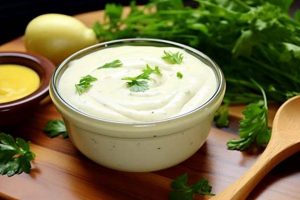
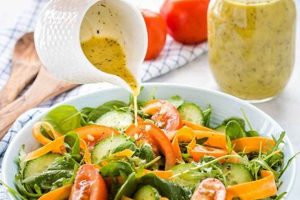
A plant-based emulsion designed to mimic the flavor profile of traditional Caesar dressing typically involves a combination of blended nuts or seeds (such as cashews or sunflower seeds), nutritional yeast for a cheesy flavor, lemon juice for tartness, garlic, Dijon mustard, and seasonings. Olive oil or avocado oil contributes a rich texture and mouthfeel, while capers or brine can add a salty, briny element.
This style of dressing offers an alternative for individuals following a vegan lifestyle or those seeking to reduce their consumption of animal products. It provides a comparable sensory experience to traditional Caesar dressing without the use of eggs, anchovies, or Parmesan cheese, common ingredients that impart the signature umami and salty notes. This allows individuals to enjoy the familiar flavors of a Caesar salad while adhering to dietary restrictions or preferences. The growing interest in plant-based diets has led to increased development and refinement of such recipes, resulting in diverse and sophisticated flavor profiles.
Exploration of specific ingredient variations, preparation techniques, and complementary salad components will further illuminate the versatility and culinary potential of this plant-based culinary creation.
Tips for Crafting Exceptional Plant-Based Caesar Dressings
Achieving a truly delicious plant-based Caesar dressing requires attention to detail and an understanding of flavor balancing. The following tips offer guidance for creating a dressing that rivals traditional versions.
Tip 1: Soak Cashews for Optimal Creaminess: Soaking raw cashews in hot water for at least 30 minutes before blending yields a smoother, creamier texture, essential for replicating the richness of traditional Caesar dressing.
Tip 2: Embrace Nutritional Yeast for Cheesy Notes: Nutritional yeast provides a savory, umami-rich flavor reminiscent of Parmesan cheese. Experiment with the quantity to achieve the desired intensity.
Tip 3: Balance Tanginess with Lemon Juice and Vinegar: A combination of lemon juice and apple cider vinegar or white wine vinegar contributes brightness and balances the richness of the other ingredients. Start with a small amount and adjust to taste.
Tip 4: Incorporate Dijon Mustard for Depth: Dijon mustard adds complexity and a subtle tang, enhancing the overall flavor profile. A teaspoon or two typically suffices.
Tip 5: Emulsify with Oil Gradually: Slowly drizzling olive or avocado oil into the blender while processing creates a stable emulsion, resulting in a smooth and cohesive dressing.
Tip 6: Season Thoughtfully with Salt and Pepper: Proper seasoning is crucial. Start with a small amount of sea salt and black pepper and adjust according to preference.
Tip 7: Explore Umami Boosters: Capers, caper brine, or a splash of soy sauce or tamari can further enhance the savory, umami notes of the dressing.
Tip 8: Adjust Consistency as Needed: If the dressing is too thick, add water a tablespoon at a time until the desired consistency is reached. For a thicker dressing, refrigerate for a short period to allow it to thicken further.
By following these tips, one can create a flavorful and satisfying plant-based Caesar dressing that complements a variety of salads and dishes.
A well-executed plant-based Caesar dressing enhances not only salads but also roasted vegetables, grain bowls, and sandwiches. Experimentation with variations on the basic recipe will further expand its culinary applications.
1. Vegan

The term “vegan,” in the context of a Caesar salad dressing recipe, signifies the complete absence of animal-derived ingredients. This distinction is crucial, as traditional Caesar dressings often incorporate ingredients like anchovies, eggs, and Parmesan cheese. A vegan approach requires innovative substitutions to replicate the characteristic flavors and textures while adhering to plant-based principles.
- Ingredient Selection
Veganism dictates the exclusive use of plant-based ingredients. This necessitates replacing traditional Caesar components with suitable alternatives. For instance, nutritional yeast stands in for Parmesan cheese, providing a savory, umami-rich flavor, while capers or their brine can mimic the salty, briny notes of anchovies. Plant-based oils like olive or avocado oil replace egg yolks in creating the emulsion.
- Ethical Considerations
The choice to consume a vegan Caesar salad dressing often aligns with ethical concerns regarding animal welfare and exploitation. By eliminating animal products, individuals can align their dietary choices with their values. This ethical dimension drives innovation in developing plant-based alternatives that offer comparable flavor and satisfaction.
- Environmental Impact
Veganism can also be motivated by environmental sustainability. Animal agriculture contributes significantly to greenhouse gas emissions and deforestation. Opting for plant-based alternatives, like a vegan Caesar dressing, can reduce an individual’s environmental footprint.
- Health Implications
While not inherently healthier, vegan diets can offer certain health benefits. A vegan Caesar dressing, for example, might be lower in saturated fat and cholesterol compared to traditional versions. However, nutritional content varies depending on the specific ingredients and preparation methods. Careful consideration of ingredient choices is crucial to ensure a balanced and nutritious outcome.
The vegan designation of a Caesar salad dressing recipe signifies a commitment to plant-based ingredients, often driven by a combination of ethical, environmental, and health considerations. Successful vegan versions rely on carefully chosen plant-based substitutes that capture the essence of a traditional Caesar dressing while adhering to vegan principles.
2. Caesar Flavor
Authentic Caesar flavor, a key objective in vegan Caesar salad dressing recipes, presents a unique challenge. Replicating the complex interplay of savory, tangy, and umami notes found in traditional Caesar dressings, which typically rely on ingredients like anchovies, Parmesan cheese, and egg yolks, requires careful consideration of plant-based alternatives and their synergistic effects. Achieving this balance is crucial for a successful vegan interpretation.
- Umami: The Foundation of Flavor
Umami, often described as a savory, meaty, or brothy taste, forms the cornerstone of Caesar flavor. Traditionally derived from anchovies and Parmesan, achieving this depth in a vegan context requires leveraging plant-based sources. Nutritional yeast, with its cheesy, nutty notes, serves as a primary source of umami. Other contributors include mushrooms, soy sauce or tamari (used sparingly), and even miso paste. Balancing these components is crucial; overreliance on any single ingredient can create an unbalanced or overpowering flavor profile.
- Tanginess: Balancing Richness
Tanginess, provided by lemon juice and often a touch of vinegar, plays a critical role in balancing the richness of the dressing. This acidity cuts through the creamy, savory elements, preventing the dressing from becoming overly heavy. The type of acid used can subtly influence the final flavor. Lemon juice offers a bright, citrusy tang, while white wine vinegar provides a sharper, more complex acidity. Apple cider vinegar contributes a mellow sweetness. The correct balance enhances the other flavor components, creating a more nuanced and palatable dressing.
- Garlic and Black Pepper: Essential Aromatics
Garlic and black pepper provide essential aromatic complexity to Caesar flavor. Freshly minced or grated garlic delivers a pungent bite, while freshly ground black pepper adds a subtle heat and depth. These aromatics complement the umami and tangy elements, creating a more well-rounded flavor profile. The quantity of each should be carefully calibrated to avoid overpowering the more delicate flavors.
- Textural Considerations: Beyond Taste
While not strictly a flavor component, the texture of the dressing contributes significantly to the overall sensory experience. A creamy, emulsified texture, typically achieved with egg yolks in traditional recipes, is essential for replicating the mouthfeel of a classic Caesar. In vegan versions, soaked cashews or other nuts and seeds create a smooth, creamy base that emulsifies with the oil and other ingredients, enhancing the perception of the other flavors and contributing to a more satisfying culinary experience.
Successfully recreating Caesar flavor in a vegan context hinges on a careful understanding of these interconnected elements. By thoughtfully selecting and balancing plant-based alternatives for umami, tanginess, and aromatics, and achieving the desired creamy texture, a vegan Caesar salad dressing can capture the essence of the classic flavor profile while adhering to plant-based principles.
3. Creamy Texture

Creamy texture is a defining characteristic of a successful plant-based Caesar dressing, directly influencing its palatability and overall sensory experience. Traditional Caesar dressings achieve their creaminess through emulsified raw egg yolks. Replicating this texture in a vegan context requires alternative methods and ingredients. This exploration examines the crucial role of creamy texture in plant-based Caesar dressing recipes.
Several techniques and ingredients contribute to a creamy, emulsified texture in vegan Caesar dressings. Soaking raw cashews or sunflower seeds in hot water softens them, allowing for a smooth, creamy consistency when blended. The addition of blended white beans, such as cannellini beans, also contributes creaminess and body. Avocado, due to its naturally creamy texture, can be incorporated to enhance the dressing’s richness and smoothness. Tahini, made from ground sesame seeds, offers another avenue for achieving a creamy, slightly nutty flavor and texture.
Consider a dressing made with soaked cashews. The blending process transforms the softened nuts into a smooth, viscous base. This emulsifies with the added oil, creating a stable, creamy texture that coats the salad greens effectively, mimicking the cling and richness of a traditional Caesar. Conversely, a dressing made without a creamy base might feel thin and watery, lacking the desired mouthfeel and failing to adequately coat the salad components.
A well-emulsified, creamy dressing also contributes to the overall flavor perception by evenly distributing the other ingredients, such as nutritional yeast, lemon juice, and spices, across the palate. This homogeneity of flavor is crucial for a balanced and satisfying experience.
The practical significance of achieving a creamy texture in vegan Caesar dressings lies in its ability to elevate the dish beyond a simple salad. A creamy dressing enhances the sensory experience, making it more enjoyable and satisfying. It contributes to a perception of richness and indulgence, often associated with traditional Caesar salads, while adhering to plant-based principles. Mastering the techniques for creating creamy, emulsified vegan Caesar dressings is essential for achieving a truly satisfying culinary experience.
4. Balanced Tanginess
Balanced tanginess is paramount in a vegan Caesar salad dressing recipe. It provides the essential acidic counterpoint to the richness of the other ingredients, preventing the dressing from becoming cloying or heavy. This balance is typically achieved through a combination of lemon juice and vinegar, although other acidic elements like lime juice or even a touch of citric acid can be employed. The specific type and quantity of acid used significantly impact the final flavor profile.
Consider the interplay of lemon juice and apple cider vinegar. Lemon juice contributes a bright, citrusy tang, while apple cider vinegar adds a subtle sweetness and mellow acidity. The combination creates a more complex and balanced tanginess than either ingredient alone. Too much lemon juice can result in a dressing that is overly tart and sharp, whereas relying solely on apple cider vinegar might lack the necessary brightness. A well-balanced approach considers the interplay of these acidic components to achieve the desired flavor profile. For instance, a recipe might call for two tablespoons of lemon juice and one teaspoon of apple cider vinegar to achieve a specific balance. This precise ratio is determined through careful experimentation and taste testing, ensuring the tanginess complements the other flavors without overpowering them.
Achieving balanced tanginess is crucial not only for flavor but also for textural stability. The acidity helps to emulsify the dressing, keeping the oil and other ingredients from separating. Furthermore, the tanginess can brighten and enhance the other flavors in the salad, such as the savory notes of nutritional yeast or the peppery bite of black pepper. A dressing lacking sufficient tanginess can taste flat and uninspired, while excessive acidity can make it unpleasant. Mastery of this element is essential for creating a truly exceptional vegan Caesar salad dressing.
5. Umami Richness
Umami richness is fundamental to a successful vegan Caesar salad dressing, providing the savory depth that makes the dressing truly satisfying. While traditional Caesar dressings rely on ingredients like anchovies and Parmesan cheese for umami, vegan versions must achieve this complexity through plant-based sources. This necessitates a deep understanding of umami and how to build it using ingredients like nutritional yeast, mushrooms, soy sauce (or tamari), miso paste, and seaweed.
Nutritional yeast, a deactivated yeast with a cheesy, nutty flavor, is a cornerstone of vegan Caesar dressings. Its inherent umami notes provide a foundation upon which other flavors can build. For example, incorporating finely chopped or blended cremini mushrooms adds another layer of earthy umami, complementing the nutritional yeast. A small amount of soy sauce or tamari can further intensify the savory depth, mimicking the salty, umami contribution of anchovies in traditional versions. A touch of white miso paste, while requiring careful balancing due to its potent flavor, can introduce a fermented complexity reminiscent of aged cheese. Dried seaweed, such as dulse or nori flakes, offers a distinctly oceanic umami note that can further enhance the dressing’s complexity.
The interplay of these ingredients is crucial. Relying solely on nutritional yeast might result in a one-dimensional umami profile. Combining it with other sources, such as mushrooms and a touch of soy sauce, creates a more nuanced and layered flavor experience. Consider a dressing featuring a base of nutritional yeast and blended cashews, enhanced with sauteed and finely chopped shiitake mushrooms and a dash of tamari. This combination yields a rich, savory dressing that rivals the umami depth of traditional Caesar dressings, showcasing the potential of plant-based ingredients to deliver complex flavor profiles.
The practical significance of understanding umami in vegan Caesar salad dressings lies in its ability to transform a simple plant-based emulsion into a truly satisfying culinary experience. Strategic use of umami-rich ingredients allows for the creation of vegan dressings that are not merely imitations but stand on their own as complex and delicious culinary creations.
6. Ingredient Quality
Ingredient quality significantly impacts the final flavor, texture, and overall success of a vegan Caesar salad dressing recipe. Superior ingredients contribute not only to a more robust and nuanced flavor profile but also to a smoother, more emulsified texture. Understanding the role of ingredient quality is essential for creating exceptional plant-based Caesar dressings.
- Freshness of Produce
Fresh, high-quality produce forms the foundation of any good dressing. Using ripe, flavorful lemons ensures vibrant tanginess, while selecting fresh garlic contributes a pungent bite that enhances the overall complexity. Wilted or aged produce can impart off-flavors and detract from the final product. For instance, using a lemon that is past its prime can result in a bitter or muted flavor, negatively impacting the dressing’s balance.
- Quality of Nuts and Seeds
Raw cashews or sunflower seeds, commonly used to create the creamy base of vegan Caesar dressings, should be fresh and of high quality. Rancid nuts can impart a bitter, unpleasant flavor that overwhelms the other ingredients. Opting for high-quality nuts and seeds ensures a smooth, creamy texture and a clean, neutral flavor that allows the other components to shine. The difference between freshly roasted cashews and older, potentially rancid ones can be significant, impacting both the flavor and texture of the final dressing.
- Type of Oil
The choice of oil significantly influences the flavor and texture of the dressing. Extra virgin olive oil offers a robust, fruity flavor that complements the other ingredients, while avocado oil provides a neutral base that allows the other flavors to shine. Refined or lower-quality oils can introduce unwanted flavors or have a less desirable mouthfeel. The quality of the oil directly impacts the emulsification process, influencing the dressing’s stability and texture.
- Nutritional Yeast Selection
Nutritional yeast, the primary source of umami in vegan Caesar dressings, varies in quality and flavor. Opting for a high-quality nutritional yeast with a pronounced cheesy, nutty flavor is essential for achieving the desired savory depth. Lower-quality versions can have a bitter or less nuanced flavor profile, impacting the overall balance of the dressing. Furthermore, different brands of nutritional yeast can vary in texture and particle size, influencing how they blend and incorporate into the dressing.
The cumulative effect of using high-quality ingredients in a vegan Caesar salad dressing recipe is substantial. It translates to a dressing with superior flavor, smoother texture, and enhanced overall appeal. By prioritizing ingredient quality, one elevates the final product from a simple condiment to a culinary highlight. The investment in premium ingredients is reflected in the nuanced flavor profile, the stable emulsion, and the overall satisfaction derived from consuming a truly exceptional plant-based Caesar dressing.
7. Simple Preparation
Simple preparation is a desirable attribute of any recipe, and vegan Caesar salad dressing is no exception. Ease of preparation broadens the appeal of plant-based cuisine, encouraging wider adoption. A streamlined process, minimizing complex techniques or specialized equipment, contributes to the accessibility and practicality of vegan cooking, making it a more viable option for busy individuals or those new to plant-based diets. This simplicity also encourages experimentation with flavor variations and customization, fostering creativity in the kitchen.
Consider a basic vegan Caesar dressing recipe. Soaking cashews, blending ingredients, and adjusting seasonings are all straightforward steps achievable with common kitchen tools. This contrasts with more complex culinary endeavors that might require specialized equipment or advanced techniques. This simplicity translates to a shorter preparation time, a significant advantage for weeknight meals or impromptu gatherings. Furthermore, simple preparation reduces the likelihood of errors, increasing the chances of a successful outcome, even for novice cooks. For example, a recipe requiring only a blender eliminates the need for whisking or emulsifying by hand, simplifying the process and minimizing potential pitfalls.
The practical significance of simple preparation in vegan Caesar salad dressing recipes lies in its contribution to the broader adoption of plant-based diets. By demonstrating that delicious, satisfying meals can be created with minimal effort, such recipes dispel the misconception that vegan cooking is inherently complex or time-consuming. This accessibility fosters a more inclusive approach to plant-based cuisine, empowering individuals to incorporate more plant-based meals into their diets, regardless of culinary skill level. The ease of preparation encourages exploration and experimentation, fostering a deeper appreciation for the versatility and deliciousness of plant-based ingredients.
Frequently Asked Questions
This section addresses common inquiries regarding plant-based Caesar salad dressings, offering practical guidance and clarifying potential uncertainties.
Question 1: How can the creamy texture of traditional Caesar dressing be achieved without eggs?
Soaking raw cashews or sunflower seeds in hot water for at least 30 minutes, then blending them until smooth, creates a creamy emulsion that effectively replicates the texture of egg-based dressings. Other options include silken tofu, white beans, or avocado.
Question 2: What can replace the Parmesan cheese flavor in a vegan Caesar dressing?
Nutritional yeast provides a savory, umami-rich flavor profile reminiscent of Parmesan. Its unique properties make it an ideal substitute in vegan cooking, contributing both flavor and nutritional value.
Question 3: How can one achieve the characteristic umami flavor of Caesar dressing without anchovies?
Capers, caper brine, or a combination of soy sauce or tamari (used sparingly), miso paste, or seaweed can provide the savory, umami notes typically imparted by anchovies.
Question 4: What type of oil is best suited for a vegan Caesar dressing?
Extra virgin olive oil offers a robust flavor that complements the other ingredients. Avocado oil provides a more neutral flavor profile, allowing other components to shine. The choice depends on individual preference and the desired flavor outcome.
Question 5: How can the tanginess of a vegan Caesar dressing be adjusted?
Lemon juice is the primary source of acidity. Additional tang can be achieved with a touch of white wine vinegar or apple cider vinegar. Start with small amounts and adjust to taste, ensuring a balance between tanginess and richness.
Question 6: How long can vegan Caesar dressing be stored?
Stored in an airtight container in the refrigerator, the dressing typically lasts for up to five days. Proper storage preserves freshness and prevents bacterial growth.
Careful attention to ingredient selection and preparation techniques contributes significantly to a satisfying plant-based Caesar salad dressing experience. Addressing these common questions provides a foundation for culinary success.
Experimentation with different ingredient combinations and flavor profiles allows for personalization and culinary discovery within the realm of vegan Caesar dressings.
Vegan Caesar Salad Dressing Recipe
Exploration of the vegan Caesar salad dressing recipe reveals a complex interplay of factors contributing to its successful execution. Achieving a truly satisfying plant-based version necessitates careful consideration of ingredient quality, flavor balancing, and textural elements. Replicating the characteristic creaminess, tanginess, and umami richness of traditional Caesar dressings requires strategic use of plant-based alternatives. Soaked cashews or sunflower seeds create the desired emulsion, while nutritional yeast provides the signature savory notes. Balanced acidity from lemon juice and vinegar brightens the dressing, while additional umami can be achieved through ingredients like capers, miso paste, or seaweed. Emphasis on fresh, high-quality ingredients elevates the final product, resulting in a dressing that stands on its own as a culinary creation.
The increasing demand for plant-based alternatives presents an opportunity for continued innovation and refinement of vegan Caesar salad dressing recipes. Further exploration of ingredient combinations and preparation techniques promises to yield even more nuanced and sophisticated flavor profiles, expanding the culinary landscape and offering a wider range of options for those seeking delicious and ethically conscious cuisine. The potential for culinary creativity within the realm of plant-based cuisine remains vast, promising exciting developments in the future.