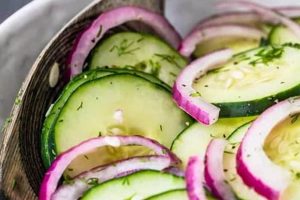
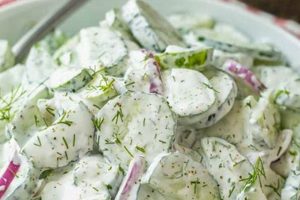
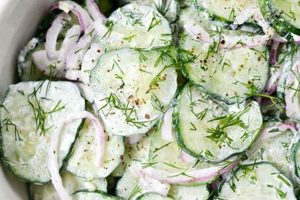
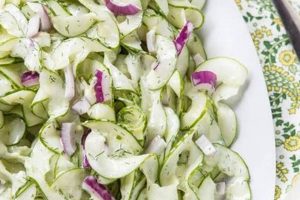
This dish typically features thinly sliced cucumbers dressed in a flavorful mixture often incorporating rice vinegar, sesame oil, garlic, chili, and sugar. Variations may include soy sauce, cilantro, or other aromatics, leading to a refreshing and subtly complex flavor profile. A simple preparation, it can be served as a light side dish, appetizer, or part of a larger meal.
The refreshing and light nature of this culinary creation makes it a popular choice in warmer climates. Its simple ingredient list offers accessibility, while the balance of sweet, sour, salty, and spicy flavors provides a delightful sensory experience. Historically, this dish reflects the resourcefulness of Taiwanese cuisine, utilizing readily available ingredients to create a balanced and flavorful meal component. The preparation often emphasizes quick pickling or marinating techniques, allowing the cucumbers to retain their crisp texture while absorbing the surrounding flavors.
Further exploration will delve into specific regional variations, ingredient sourcing recommendations, and step-by-step preparation instructions, offering a comprehensive guide to creating an authentic culinary experience.
Tips for a Perfect Taiwanese Cucumber Salad
Achieving optimal flavor and texture requires attention to detail throughout the preparation process. The following tips offer guidance for creating a truly exceptional salad.
Tip 1: Cucumber Selection and Preparation: Opt for smaller, firmer cucumbers for a crisper texture. Prior to slicing, gently score the cucumbers lengthwise with a fork to facilitate flavor absorption. Thinly and evenly slicing the cucumbers is crucial for consistent marinating.
Tip 2: Marinating Time: While a brief marination period allows for a refreshing crunch, extending the time enhances flavor development. A minimum of 30 minutes is recommended, with optimal results achieved after an hour.
Tip 3: Balancing Flavors: Achieving the ideal balance of sweet, sour, salty, and spicy is essential. Adjust the proportions of sugar, vinegar, soy sauce (if used), and chili to suit individual preferences.
Tip 4: Garlic and Ginger: Freshly minced or grated garlic and ginger provide a more pungent and aromatic flavor compared to pre-minced alternatives. Use sparingly, as these ingredients can easily overpower the delicate cucumber flavor.
Tip 5: Sesame Oil Selection: Toasted sesame oil offers a richer, nuttier flavor that complements the other ingredients. Use it sparingly as a finishing touch rather than as the primary oil in the marinade.
Tip 6: Chili Incorporation: Incorporating fresh chilies, either thinly sliced or finely chopped, provides a more dynamic heat than chili flakes or powders. Adjust the amount according to desired spice level.
Tip 7: Serving and Garnishing: Serve the salad chilled for optimal refreshment. Garnishing with toasted sesame seeds and freshly chopped cilantro enhances both visual appeal and flavor profile.
By following these tips, one can consistently create a Taiwanese cucumber salad that is both flavorful and refreshing, showcasing the balance and simplicity of this classic dish.
The following section will offer a complete recipe guide, incorporating these tips for a seamless culinary experience.
1. Fresh Cucumbers

Fresh cucumbers are fundamental to a Taiwanese cucumber salad recipe, providing the textural and flavor base upon which the dish is built. Their selection and preparation significantly influence the final result, impacting both the salad’s refreshing qualities and its ability to absorb the marinade’s flavors.
- Variety Selection
While various cucumber types can be used, certain varieties are preferred for their optimal characteristics. Persian cucumbers, for instance, are favored for their thin skin, minimal seeds, and crisp flesh. These attributes contribute to a pleasant texture and minimize bitterness. Other suitable options include English cucumbers or smaller, locally sourced varieties often found in Taiwanese markets. The choice of cucumber directly influences the salad’s overall quality.
- Sourcing and Quality
Locally sourced, in-season cucumbers generally offer the best flavor and texture. Look for firm cucumbers with vibrant green skin, free from blemishes or soft spots. These indicators suggest freshness and optimal hydration, essential for a crisp and refreshing salad. The sourcing of ingredients directly impacts the final dish’s quality and flavor profile.
- Preparation Techniques
Proper preparation enhances both the flavor and texture of the cucumbers. Lightly scoring the cucumber’s skin with a fork before slicing aids in marinade absorption. Thin and even slicing ensures consistent flavor distribution and a pleasant mouthfeel. Techniques like lightly salting and draining the sliced cucumbers before marinating can further enhance their crispness by drawing out excess moisture.
- Flavor Profile and Contribution
Cucumbers possess a mild, refreshing flavor that serves as a canvas for the marinade’s complexity. Their inherent coolness complements the often spicy and tangy elements of the dressing. The cucumber’s subtle flavor allows the other ingredients to shine while contributing a refreshing element crucial to the dish’s overall balance.
The careful consideration of cucumber variety, sourcing, and preparation techniques ultimately determines the success of a Taiwanese cucumber salad. These factors contribute significantly to the final dish, impacting its texture, flavor absorption, and overall refreshing quality, highlighting the importance of fresh, high-quality cucumbers in this classic Taiwanese preparation.
2. Balanced Marinade
The balanced marinade forms the heart of a Taiwanese cucumber salad recipe, transforming simple cucumbers into a complex and flavorful dish. This marinade, characterized by a dynamic interplay of sweet, sour, salty, and spicy components, is crucial for achieving the desired flavor profile. The careful balance of these elements is not merely a matter of preference but a reflection of core principles in Taiwanese cuisine, emphasizing harmony and contrast. For instance, the sweetness, often derived from sugar or mirin, tempers the sharpness of the vinegar, while the salt enhances the overall savory notes. The addition of chili, whether fresh, dried, or in oil form, provides a pungent heat that balances the cooling nature of the cucumbers. This intricate interplay creates a symphony of flavors that elevates the simple cucumber to a culinary delight.
The practical significance of this balance is evident in the final product. An overly sweet marinade can be cloying, while an excess of vinegar can make the salad unpleasantly tart. Too much salt can overpower the delicate cucumber flavor, and excessive chili can obscure the other nuanced notes. Achieving the correct balance ensures that each element complements the others, resulting in a harmonious and refreshing flavor profile. This balance also allows for regional variations, with some recipes emphasizing a sweeter profile, while others highlight a more pronounced acidity or spiciness. These variations reflect regional palates and culinary traditions, demonstrating the versatility of this seemingly simple dish.
A well-executed Taiwanese cucumber salad exemplifies the importance of balance in flavor. The marinade, acting as the flavor vehicle, is not merely a dressing but a crucial component that elevates the dish. It is the careful orchestration of sweet, sour, salty, and spicy elements that distinguishes a truly authentic and satisfying Taiwanese cucumber salad. Understanding this interplay allows for greater appreciation of the dish and provides a foundation for culinary exploration and adaptation.
3. Aromatic Enhancements

Aromatic enhancements play a vital role in Taiwanese cucumber salad recipes, elevating the dish beyond its simple components. These enhancements, often derived from alliums like garlic and ginger, contribute layers of complexity and depth, transforming the cucumber’s refreshing base into a more nuanced and flavorful experience. The pungent notes of garlic, whether minced, crushed, or thinly sliced, add a savory dimension, while ginger contributes a subtle warmth and a peppery bite. These aromatics not only enhance the overall flavor profile but also offer potential health benefits, as both garlic and ginger are known for their antioxidant and anti-inflammatory properties.
Consider the interplay between these aromatics and the other ingredients. The sharpness of garlic complements the tangy vinegar and spicy chili, creating a savory counterpoint to the sweetness. Ginger, with its unique warmth, balances the cooling nature of the cucumbers, adding a layer of complexity that enhances the overall sensory experience. For example, a recipe might call for a small amount of finely minced garlic to provide a subtle pungent undertone, while a bolder variation might incorporate larger pieces of crushed garlic for a more assertive flavor. Similarly, the amount and form of ginger, whether grated, minced, or julienned, can be adjusted to achieve the desired level of aromatic intensity.
The judicious use of aromatic enhancements demonstrates the sophistication of Taiwanese cuisine. Rather than masking the natural flavors of the ingredients, these additions enhance and amplify them, creating a balanced and harmonious flavor profile. Understanding the role of aromatics allows for greater control over the final dish, enabling culinary experimentation and personalized adjustments to achieve specific flavor profiles. This understanding also provides insight into the broader principles of Taiwanese gastronomy, where balance and harmony are paramount. The careful integration of aromatics into a seemingly simple cucumber salad underscores the attention to detail and nuanced approach to flavor that characterizes Taiwanese culinary traditions.
4. Precise Technique
Precise technique is integral to a successful Taiwanese cucumber salad recipe, impacting both the final dish’s texture and flavor. While the ingredient list remains relatively simple, the methods employed in preparation significantly influence the outcome. Consider the act of slicing the cucumbers: thin, uniform slices ensure even marinating and a pleasant mouthfeel. Overly thick or uneven slices result in inconsistent flavor distribution and a less refined texture. Similarly, the method of crushing or mincing aromatics like garlic and ginger affects their potency and how their flavors infuse the dish. Crushing garlic releases more of its pungent oils than slicing, leading to a more pronounced garlic flavor.
Cause and effect relationships are directly observable in the application of precise techniques. For instance, salting the cucumbers before marinating draws out excess moisture, resulting in a crisper final product. This seemingly minor step has a significant impact on the salad’s texture, preventing it from becoming watery or soggy. Another example lies in the timing of adding certain ingredients. Adding toasted sesame oil just before serving, rather than incorporating it into the marinade, preserves its delicate aroma and prevents it from becoming bitter. These examples illustrate the practical significance of understanding the impact of specific techniques on the final dish.
Mastery of precise technique elevates the Taiwanese cucumber salad from a simple side dish to a culinary expression. It transforms readily available ingredients into a harmonious blend of flavors and textures. Challenges may arise in achieving the desired level of precision, particularly for those unfamiliar with specific techniques. However, through careful attention to detail and a willingness to experiment, one can develop the skills necessary to create a consistently excellent Taiwanese cucumber salad. This pursuit of precision underscores the attention to detail inherent in Taiwanese culinary traditions, emphasizing the importance of technique in achieving culinary excellence.
5. Cultural Context
Cultural context provides a deeper understanding of the Taiwanese cucumber salad recipe, moving beyond a simple list of ingredients and methods to reveal its significance within Taiwanese cuisine and culture. This dish, often served as a refreshing counterpoint to richer, heavier dishes, reflects a broader emphasis on balance and harmony in Taiwanese culinary traditions. Its presence on the table signifies more than just a side dish; it embodies a cultural appreciation for fresh, seasonal ingredients and the art of balancing contrasting flavors. The simplicity of the recipe belies a deeper connection to agricultural practices and resourcefulness, utilizing readily available ingredients to create a flavorful and nutritious dish. This resourcefulness stems from a historical context where fresh produce was readily available, and dishes often emphasized simplicity and quick preparation.
Consider the prevalence of cucumbers in Taiwanese cuisine and their role in reflecting the island’s subtropical climate. The refreshing nature of cucumbers makes them a welcome addition to meals, particularly during warmer months. The Taiwanese cucumber salad, with its light and tangy marinade, exemplifies this preference for cooling dishes that balance heavier flavors. Regional variations, perhaps incorporating local ingredients or adjusting the balance of sweet, sour, salty, and spicy elements, further highlight the connection between the dish and specific cultural influences. For example, a coastal region might incorporate seaweed or seafood-derived seasonings, reflecting the availability of these ingredients and local culinary preferences. These regional variations provide valuable insights into the diverse culinary landscape of Taiwan.
Understanding the cultural context of the Taiwanese cucumber salad enhances appreciation for its place within a larger culinary narrative. It provides a framework for interpreting the dish’s simplicity, its emphasis on fresh ingredients, and the balance of flavors. This understanding transcends the purely technical aspects of preparation and allows for a more nuanced appreciation of the dish as a cultural artifact. While challenges might arise in accessing authentic ingredients or replicating traditional preparation techniques outside of Taiwan, recognizing the cultural context provides a deeper appreciation for the dish’s significance and encourages culinary exploration grounded in cultural understanding. It highlights the importance of considering food not just as sustenance, but as a reflection of cultural values and traditions.
Frequently Asked Questions
This section addresses common inquiries regarding Taiwanese cucumber salad recipes, providing clarification and guidance for optimal preparation and enjoyment.
Question 1: What type of cucumber is best suited for this salad?
While various cucumbers can be utilized, Persian cucumbers are generally preferred due to their thin skin, minimal seeds, and crisp texture. English cucumbers or smaller, locally sourced varieties are also suitable alternatives.
Question 2: How long should the cucumbers marinate?
A minimum of 30 minutes is recommended for adequate flavor absorption. Optimal results are typically achieved after an hour of marinating. Extended marinating times can further enhance flavor development but may compromise crispness.
Question 3: Can the level of spiciness be adjusted?
The spiciness can be easily adjusted by varying the amount of chili used. Fresh chilies offer more control over heat intensity compared to chili flakes or powders.
Question 4: What is the role of sesame oil in the recipe?
Toasted sesame oil adds a rich, nutty aroma and flavor. It is typically used sparingly as a finishing touch, enhancing the overall sensory experience.
Question 5: How should the salad be stored?
The salad should be stored in an airtight container in the refrigerator. It is best consumed within two days to maintain optimal flavor and texture.
Question 6: Can this salad be served as part of a larger meal?
The refreshing nature of this salad makes it an ideal accompaniment to a variety of dishes. It serves as a palate cleanser and complements both lighter and richer main courses.
Careful attention to these details ensures a consistently flavorful and refreshing Taiwanese cucumber salad. Addressing these common questions facilitates a deeper understanding of the recipe and its nuances.
The next section will offer concluding remarks and suggestions for further exploration of Taiwanese cuisine.
Taiwanese Cucumber Salad Recipe
Exploration of the Taiwanese cucumber salad recipe reveals a dish characterized by simplicity, balance, and cultural significance. From the careful selection of fresh cucumbers to the precise balancing of sweet, sour, salty, and spicy elements in the marinade, each step contributes to the final product’s refreshing and complex flavor profile. Aromatic enhancements, precise techniques, and an understanding of the dish’s cultural context further enrich the culinary experience. The seemingly simple act of preparing a cucumber salad embodies a deeper understanding of Taiwanese culinary principles, emphasizing harmony, balance, and resourcefulness.
This exploration serves as an entry point into the rich tapestry of Taiwanese cuisine. Further investigation into regional variations, ingredient sourcing, and culinary traditions offers continued opportunities for culinary discovery and a deeper appreciation of the cultural narratives embedded within each dish. The Taiwanese cucumber salad, though simple in its preparation, offers a complex and rewarding culinary experience, inviting further exploration of the vibrant and diverse world of Taiwanese gastronomy. It represents not merely a recipe, but a reflection of cultural values and culinary artistry.