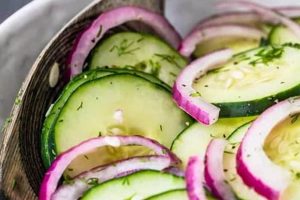
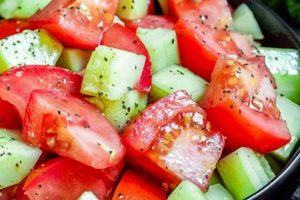
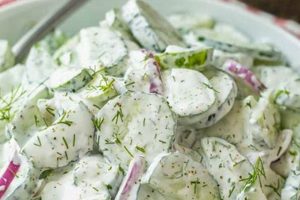
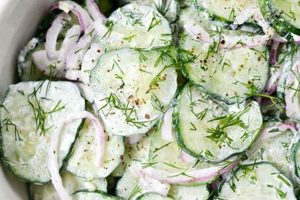
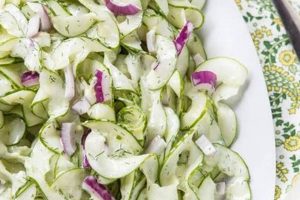
A refreshing and crisp salad featuring cucumbers as the primary ingredient, prepared without the addition of onions. This variation caters to those who dislike onions’ pungent flavor or experience digestive discomfort from them. A basic version might include sliced cucumbers tossed with vinegar, oil, salt, and pepper. More complex recipes could incorporate ingredients such as fresh herbs, other vegetables, or a creamy dressing.
Omitting onions broadens the appeal of this classic dish, making it suitable for individuals with specific dietary preferences or sensitivities. This adaptation also allows the delicate flavor of cucumbers to shine. Historically, cucumbers have been valued for their cooling properties, making cucumber salad a popular choice in warmer climates. Removing the sometimes overpowering onion allows for a lighter, more refreshing experience, particularly during hot weather.
This approach to cucumber salad opens up a world of culinary possibilities, ranging from simple, everyday side dishes to elegant additions to more elaborate meals. Exploration of various flavor combinations and preparation methods will yield diverse and delicious results.
Tips for Preparing Onion-Free Cucumber Salad
Achieving optimal flavor and texture in cucumber salad without onions requires attention to detail. The following tips offer guidance for creating a delicious and satisfying culinary experience.
Tip 1: Choose the Right Cucumber: Select firm, unwaxed cucumbers. English cucumbers are ideal due to their thin skin and minimal seeds. For a classic presentation, standard cucumbers can be peeled and seeded before slicing.
Tip 2: Embrace Thin Slices: Thinly slicing the cucumbers ensures they absorb the dressing effectively and contribute to a pleasant, crisp texture.
Tip 3: Salt and Drain Excess Moisture: Salting the cucumber slices and allowing them to drain for a period reduces excess water, preventing a watery salad. This step enhances the flavor concentration and prevents the dressing from becoming diluted.
Tip 4: Explore Flavorful Alternatives to Onions: Fresh herbs such as dill, mint, or parsley can add depth and complexity to compensate for the absence of onions. Bell peppers or celery offer a satisfying crunch.
Tip 5: Consider the Dressing: A simple vinaigrette of vinegar, oil, salt, and pepper is a classic choice. Alternatively, a creamy dressing based on yogurt or sour cream offers a richer flavor profile.
Tip 6: Chill Before Serving: Chilling allows the flavors to meld and enhances the refreshing quality of the salad. Serve cold for optimal enjoyment.
Tip 7: Garnish Thoughtfully: A sprinkle of fresh herbs or a dusting of paprika adds visual appeal and complements the flavors of the salad.
By following these tips, one can create an onion-free cucumber salad that is both flavorful and refreshing. Careful preparation and attention to ingredient selection are key to a successful culinary outcome.
These techniques offer a foundation for creating delicious variations to suit a range of palates and occasions.
1. Fresh Cucumbers

Fresh cucumbers are essential for a successful onion-free cucumber salad. Their crisp texture and mild, refreshing flavor form the foundation of the dish. Using fresh cucumbers ensures the salad retains its vibrancy and avoids the unpleasant mushiness that can occur with older produce. The quality of the cucumbers directly impacts the overall sensory experience. For example, a salad made with wilted cucumbers will lack the desired crispness and have a less appealing flavor, even with a well-balanced dressing. Prioritizing fresh cucumbers elevates the final product considerably.
Beyond texture and flavor, the freshness of cucumbers influences the salad’s visual appeal. Vibrant, green cucumbers contribute to an aesthetically pleasing presentation, enhancing the dining experience. Conversely, dull or yellowing cucumbers detract from the salad’s overall appearance. This visual aspect is particularly important when serving the salad to guests or as part of a larger meal. Freshness, therefore, contributes significantly to both the culinary and aesthetic aspects of the dish. Furthermore, fresh cucumbers generally contain more moisture, contributing to a juicier and more satisfying salad. This inherent moisture also plays a role in how the cucumbers interact with the dressing, absorbing flavors more effectively.
Selecting and utilizing fresh, high-quality cucumbers is crucial for achieving a delicious and visually appealing onion-free cucumber salad. This foundational ingredient’s quality directly influences the final product’s texture, flavor, and overall enjoyment. Understanding the importance of cucumber freshness empowers one to create a truly exceptional culinary experience. This emphasis on ingredient quality highlights the potential for simple dishes to deliver remarkable results when thoughtfully prepared.
2. No Onions

The “no onions” specification within a cucumber salad recipe signifies a deliberate omission with significant implications for flavor, dietary considerations, and overall culinary experience. This seemingly simple exclusion shapes the recipe’s character and directs ingredient selection, preparation methods, and potential flavor combinations.
- Flavor Profile
Excluding onions removes their pungent, sometimes sharp, flavor, allowing the subtle, refreshing taste of cucumbers to dominate. This shift creates a milder salad suitable for palates sensitive to strong flavors. The absence of onions also allows other ingredients, such as fresh herbs or delicate spices, to contribute more prominently to the overall taste profile.
- Dietary Considerations
Onions can cause digestive discomfort for some individuals. A “no onions” recipe caters to these sensitivities, making the salad accessible to a wider range of people. This consideration highlights the importance of dietary inclusivity in recipe development. Removing onions also simplifies the salad for those following low-FODMAP or other restrictive diets where onions are limited.
- Ingredient Alternatives and Flavor Balancing
The absence of onions necessitates exploring alternative ingredients to provide depth and complexity. Fresh herbs like dill, mint, or parsley can offer a contrasting freshness. Adding ingredients with a mild crunch, such as bell peppers or celery, can compensate for the textural element onions typically provide. Balancing these flavors without overpowering the cucumber’s delicate taste becomes a key culinary challenge.
- Cultural and Culinary Context
While onions are common in many cucumber salad variations, some regional cuisines traditionally omit them. Understanding these culinary traditions provides context for the “no onions” preference and can inspire exploration of authentic flavor combinations. This perspective emphasizes the diversity of culinary approaches to a seemingly simple dish like cucumber salad.
The “no onions” specification is more than a simple ingredient omission; it defines the cucumber salad’s character. It necessitates a thoughtful approach to flavor balancing, ingredient selection, and an understanding of the broader culinary context. This nuanced perspective elevates the simple cucumber salad from a basic side dish to a carefully considered culinary creation.
3. Flavorful Additions

Within the context of a cucumber salad recipe specifically excluding onions, “flavorful additions” take on a crucial role. They compensate for the absent pungent onion flavor, providing depth, complexity, and balance to the overall taste profile. Careful consideration of these additions is essential to create a satisfying and well-rounded culinary experience.
- Fresh Herbs
Fresh herbs offer a bright, aromatic counterpoint to the cucumber’s subtle flavor. Dill, mint, and parsley are popular choices, each contributing a distinct character. Dill imparts a slightly tangy, herbaceous note, while mint adds a refreshing coolness. Parsley provides a clean, slightly peppery flavor. The selection of herbs can drastically influence the final taste of the salad, offering a spectrum of flavor profiles from bright and herbaceous to cool and refreshing.
- Spices
A judicious use of spices can add warmth and complexity. A pinch of paprika offers a subtle smokiness, while a dash of cayenne pepper introduces a touch of heat. Black pepper provides a classic, subtly pungent bite. The choice and quantity of spices should complement the other ingredients and avoid overpowering the cucumber’s delicate flavor. Experimentation with different spice combinations can yield unique and intriguing flavor profiles, transforming a simple cucumber salad into a more complex culinary creation.
- Acidic Elements
Beyond the standard vinegar in a vinaigrette, other acidic components can brighten the salad and enhance its flavors. A squeeze of lemon or lime juice adds a citrusy tang, while a splash of rice vinegar introduces a subtle sweetness. These acidic elements not only contribute to the taste but also help to balance the overall flavor profile, preventing the salad from becoming bland. The type and amount of acid used play a crucial role in achieving the desired balance and complexity.
- Textural Elements
Since onions contribute a certain crunch, their absence requires consideration of alternative textural components. Chopped bell peppers or thinly sliced celery offer a satisfying crispness. Toasted nuts or seeds, such as sesame or sunflower seeds, can introduce a contrasting crunch and nutty flavor. These additions not only enhance the textural experience but also contribute to the overall flavor profile, adding layers of complexity to the salad.
The strategic incorporation of flavorful additions in a cucumber salad without onions elevates the dish beyond its simple components. The interplay of fresh herbs, spices, acidic elements, and textural contrasts creates a dynamic and satisfying culinary experience. Thoughtful consideration of these elements allows for customization and exploration of a wide range of flavor profiles, demonstrating the versatility of this seemingly simple salad.
4. Balanced Dressing
Balanced dressing is crucial for a successful cucumber salad, especially when onions are omitted. The dressing takes center stage in defining the flavor profile, as the cucumber’s delicate taste requires careful complementing rather than overpowering. A well-balanced dressing enhances the inherent freshness of the cucumbers and other ingredients, creating a harmonious and refreshing culinary experience. The absence of onions necessitates a dressing that provides sufficient flavor complexity while maintaining a light and refreshing character.
- Acidity
Acidity provides brightness and helps to cut through the cucumber’s subtle sweetness. Vinegar is a common choice, with variations like white wine vinegar, apple cider vinegar, or rice vinegar offering nuanced flavor profiles. Lemon or lime juice can also provide a citrusy tang. The level of acidity should be carefully calibrated to enhance the cucumbers without creating an overly sharp or sour taste. For example, a delicate rice vinegar dressing complements the cucumber’s subtle flavors more effectively than a strong red wine vinegar, which might overpower them. The right balance of acidity elevates the cucumber’s inherent freshness without masking its delicate character.
- Sweetness
A touch of sweetness balances the acidity and adds depth to the dressing. A small amount of sugar, honey, or maple syrup can achieve this balance. However, excessive sweetness can detract from the refreshing nature of the salad. A light touch is key, allowing the cucumber’s natural flavors to shine through. For instance, a hint of honey in a vinaigrette complements the herbal notes of dill and mint, creating a balanced and flavorful dressing. The judicious use of sweetness ensures the dressing complements rather than dominates the other flavors.
- Oil
Oil contributes richness and helps to distribute the flavors throughout the salad. Extra virgin olive oil offers a robust flavor, while lighter oils like grapeseed or avocado oil provide a more neutral base. The choice of oil influences the overall taste and mouthfeel of the dressing. A high-quality extra virgin olive oil, for example, can add a peppery note and a luxurious texture, while a lighter oil allows the other flavors to take center stage. The oil’s role is crucial in creating a harmonious blend of flavors and a pleasant textural experience.
- Seasoning
Salt and pepper are essential seasonings, enhancing the other flavors and providing foundational balance. Freshly ground black pepper adds a subtle bite, while salt enhances the overall taste profile. Additional seasonings, such as garlic powder, onion powder (if tolerated), or a pinch of red pepper flakes, can add complexity. However, restraint is crucial to avoid overpowering the cucumber’s delicate flavor. Carefully balancing the seasonings ensures that they enhance rather than dominate the overall taste of the salad. The goal is to create a harmonious blend of flavors that complements the cucumber’s refreshing nature.
A balanced dressing is paramount in a cucumber salad without onions. It requires careful consideration of acidity, sweetness, oil, and seasonings. Each element contributes to the overall flavor profile, enhancing the cucumbers’ delicate taste and creating a refreshing and harmonious dish. The interplay of these components elevates the simple cucumber salad to a more nuanced and satisfying culinary experience. This attention to balance exemplifies how a seemingly basic dish can achieve culinary excellence through thoughtful preparation and ingredient selection.
5. Proper Chilling
Proper chilling is essential for optimizing a cucumber salad recipe without onions. Temperature significantly impacts the sensory experience of this dish, influencing flavor, texture, and overall enjoyment. Chilling enhances the cucumbers’ refreshing qualities, making them particularly appealing in warmer weather. Furthermore, chilling allows the flavors of the dressing and other ingredients to meld, creating a more cohesive and complex flavor profile. The absence of onions, with their inherent pungency, further emphasizes the importance of chilling, as the more delicate flavors benefit significantly from this process.
The chemical processes within the cucumber are also affected by temperature. Chilling slows down enzymatic activity, which can lead to undesirable softening and flavor degradation. Maintaining a cool temperature preserves the cucumbers’ crisp texture, a key characteristic of a successful salad. For instance, a chilled cucumber retains its firmness and provides a satisfying crunch, while a room-temperature cucumber may become slightly soft and less appealing. This textural difference highlights the practical significance of proper chilling. Additionally, chilling helps to maintain the vibrant green color of the cucumbers, enhancing the visual appeal of the salad. A brightly colored salad is more inviting and contributes to a positive dining experience.
In summary, proper chilling is an integral component of preparing a high-quality cucumber salad without onions. It amplifies the refreshing qualities, allows flavors to meld, preserves crisp texture, and maintains visual appeal. Understanding the impact of temperature on this specific salad underscores the importance of seemingly simple culinary practices. By chilling the salad thoroughly, one ensures an optimal sensory experience, highlighting the delicate flavors and textures of the ingredients. This attention to detail elevates the dish from a simple side to a carefully considered culinary creation.
6. Crisp Texture
Crisp texture represents a defining characteristic of a successful cucumber salad, particularly when onions, which offer their own textural element, are omitted. This textural element contributes significantly to the overall sensory experience, impacting enjoyment and satisfaction. Achieving and maintaining crispness requires careful consideration of cucumber selection, preparation techniques, and ingredient interactions. The absence of onions places greater emphasis on the cucumber’s inherent texture, making its preservation paramount.
Several factors influence cucumber crispness. Varietal selection plays a role; English cucumbers, for instance, possess a naturally thinner skin and fewer seeds, contributing to a more delicate crunch. Standard cucumbers benefit from peeling and seeding before slicing to minimize textural interference from tougher elements. Salting sliced cucumbers and allowing them to drain draws out excess moisture, preventing a watery salad and maintaining structural integrity. This step is crucial for preventing the cucumbers from becoming soggy and losing their desirable crispness. Over-dressing can also compromise texture; a balanced, light dressing avoids saturating the cucumber slices, preserving their crunch. Consider a vinaigrette instead of a heavy, creamy dressing, which can weigh down the cucumbers and make them soggy. Moreover, chilling the salad enhances the perception of crispness. Lower temperatures firm the cucumber’s cellular structure, creating a more pronounced textural contrast against the other ingredients.
The significance of crisp texture within a cucumber salad without onions extends beyond mere sensory pleasure. It represents a key indicator of freshness and proper preparation. A crisp cucumber signifies careful handling and attention to detail, reflecting a commitment to quality. The perceived freshness influences enjoyment and satisfaction, elevating the dish beyond a simple side to a carefully considered component of a meal. Maintaining this crisp texture presents a culinary challenge, requiring a nuanced understanding of ingredient behavior and appropriate techniques. This pursuit of textural excellence underscores the potential for even simple dishes to achieve remarkable results when thoughtfully prepared.
Frequently Asked Questions
This section addresses common inquiries regarding cucumber salad recipes that exclude onions.
Question 1: What can be used as a substitute for the flavor of onions in cucumber salad?
Fresh herbs such as dill, mint, chives, or parsley offer excellent alternatives, providing a fresh, aromatic dimension. Alternatively, a small amount of finely diced bell pepper or celery can introduce a subtle vegetal note and a bit of crunch.
Question 2: How can one prevent the salad from becoming watery?
Salting the sliced cucumbers and allowing them to drain in a colander for approximately 15-20 minutes effectively removes excess moisture. This step is crucial for maintaining a desirable texture and preventing the dressing from becoming diluted.
Question 3: What type of dressing is most suitable for a cucumber salad without onions?
A light vinaigrette based on vinegar, oil, salt, and pepper is a classic choice. Variations incorporating yogurt or sour cream offer a richer, creamier texture, while lemon or lime juice provides a citrusy twist.
Question 4: How long can cucumber salad be stored in the refrigerator?
Properly stored in an airtight container, cucumber salad typically remains fresh for up to three days in the refrigerator. However, the texture may soften slightly over time.
Question 5: Can other vegetables be added to an onion-free cucumber salad?
Tomatoes, bell peppers, and radishes complement cucumbers well. However, it is advisable to consider the textural and flavor compatibility of any additions to ensure a balanced and harmonious salad.
Question 6: Are there specific cucumber varieties best suited for this type of salad?
English cucumbers are ideal due to their thin skin and minimal seeds. However, standard cucumbers can also be used effectively after peeling and seeding. Persian cucumbers are another suitable variety, offering a crisp texture and delicate flavor.
Careful preparation and ingredient selection are key to a successful and flavorful cucumber salad without onions. Understanding these fundamental principles empowers one to create a refreshing and satisfying culinary experience.
This FAQ section aims to provide a comprehensive understanding of common considerations related to cucumber salad recipes without onions. The information presented herein facilitates informed decision-making in ingredient selection, preparation techniques, and flavor combinations.
Cucumber Salad Recipe No Onions
Cucumber salad recipes omitting onions offer a refreshing and adaptable culinary canvas. Exploration of this specific preparation reveals the importance of ingredient selection, balancing flavors, and understanding textural interplay. Fresh, crisp cucumbers form the foundation, supported by carefully chosen additions like herbs, spices, and a balanced dressing. Proper chilling enhances the sensory experience. The absence of onions shifts the focus to the cucumber’s delicate flavor, necessitating careful consideration of complementary ingredients and preparation techniques. This seemingly simple dish offers a surprising depth of culinary potential.
This exploration underscores the importance of culinary adaptability and the potential for creating delicious and satisfying dishes tailored to individual preferences and dietary needs. The versatility of cucumber salad recipes without onions allows for continued experimentation and personalized flavor combinations. Embracing culinary creativity within specific parameters expands possibilities and enhances appreciation for the nuanced interplay of ingredients and techniques.