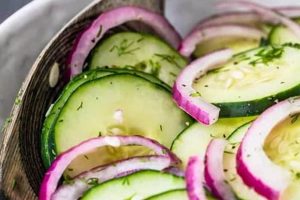
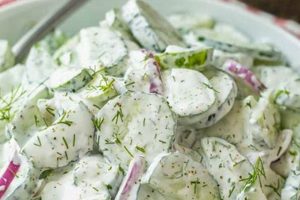
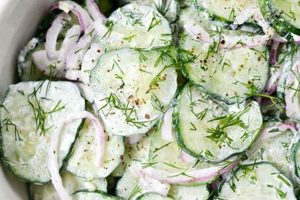
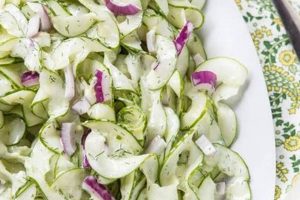
A refreshing and flavorful dish, typically composed of thinly sliced cucumbers marinated in a mixture featuring soy sauce as a prominent ingredient. Variations can include additional components such as sesame oil, rice vinegar, garlic, ginger, chili flakes, and sugar, offering a spectrum of sweet, salty, sour, and spicy notes. A simple version might involve just cucumbers, soy sauce, and sesame oil, while more complex renditions can incorporate a wider array of ingredients and techniques like quick pickling or incorporating toasted sesame seeds.
This type of salad offers a light and healthy side dish, ideal for balancing richer meals. The hydrating nature of cucumbers combined with the umami of soy sauce creates a palate-cleansing effect. Historically, cucumbers have been cultivated and consumed across various cultures for millennia, and their incorporation into salads seasoned with soy sauce reflects the culinary fusion of East Asian flavors. This preparation highlights the versatility of cucumbers, demonstrating their adaptability in both simple and elaborate culinary contexts. The dishs appeal extends to its ease of preparation and adaptability to diverse dietary needs, often aligning with vegan, vegetarian, and gluten-free lifestyles (when using tamari or coconut aminos).
Further exploration of this culinary theme could delve into specific regional variations, detailed ingredient lists and preparation instructions, nutritional information, and suggestions for complementary dishes. An examination of the historical and cultural influences shaping this dish could offer valuable insights. Additionally, exploring the diverse applications of soy sauce in culinary practices would provide a broader understanding of its significance in global gastronomy.
Tips for an Exceptional Cucumber Salad with Soy Sauce
Optimizing a cucumber salad with soy sauce involves attention to detail and a balance of flavors. The following tips offer guidance for achieving superior results.
Tip 1: Cucumber Selection and Preparation: Opt for firm, unwaxed cucumbers. English or Persian varieties are recommended for their thinner skin and fewer seeds. Thinly slicing or mandolining the cucumbers ensures even marinating and a pleasant texture. Salting the cucumbers prior to dressing draws out excess moisture, preventing a watery salad.
Tip 2: Balancing Flavors: Soy sauce provides saltiness and umami. Counterbalance this with acidity from rice vinegar or a touch of sugar. A small amount of sesame oil adds richness and aroma.
Tip 3: Enhancing Flavor Complexity: Freshly minced garlic and ginger add pungent notes. A pinch of red pepper flakes introduces heat. Toasted sesame seeds provide a nutty crunch and visual appeal.
Tip 4: Marinating Time: A brief marinating period of 15-30 minutes allows the flavors to meld. Over-marinating can result in mushy cucumbers.
Tip 5: Ingredient Ratios: Start with a small amount of soy sauce and adjust to taste. Too much soy sauce can overpower the delicate cucumber flavor.
Tip 6: Serving Suggestions: This salad pairs well with grilled meats, fish, or tofu. It also serves as a refreshing light lunch or side dish. Consider garnishing with chopped fresh herbs like cilantro or mint.
Tip 7: Customization: Adapt the recipe to individual preferences. Experiment with different types of vinegar, chili flakes, or additional vegetables like thinly sliced red onion or bell pepper.
By following these guidelines, one can elevate a simple cucumber salad into a flavorful and satisfying culinary experience.
These insights provide a foundation for creating a delicious and versatile cucumber salad. Further exploration might include variations based on regional cuisines or specific dietary needs.
1. Cucumbers (type, preparation)

Cucumber selection and preparation significantly influence the final outcome of a cucumber salad featuring soy sauce. Different cucumber varieties offer varying textures and flavor profiles. English cucumbers, known for their thin skin and minimal seeds, contribute a delicate crunch and mild flavor, absorbing the soy sauce marinade effectively without becoming overly saturated. Alternatively, Persian cucumbers provide a similar profile, while standard slicing cucumbers, with their thicker skin and higher water content, may require peeling, seeding, and salting to prevent a watery salad. The choice of cucumber directly impacts the texture, flavor absorption, and overall presentation of the dish.
Preparation methods further refine the cucumber’s characteristics within the salad. Thin slicing, often achieved with a mandoline, ensures even marinating and a delicate texture. Alternatively, smashing the cucumbers before slicing creates more surface area for flavor absorption and adds a rustic appeal. Salting the cucumbers and allowing them to drain excess moisture prior to marinating prevents dilution of the soy sauce mixture, maintaining the intended flavor balance. Each technique contributes uniquely to the final dish’s sensory experience, from textural contrast to flavor intensity.
Understanding the interplay between cucumber variety and preparation technique allows for optimization of the salad. Choosing a variety suited to the desired texture and flavor profile, followed by appropriate preparation, ensures a balanced and enjoyable culinary experience. This knowledge empowers informed decisions, transforming a simple cucumber salad with soy sauce into a nuanced and satisfying dish.
2. Soy sauce (type, quantity)
Soy sauce constitutes a foundational element in cucumber salad recipes, contributing a complex interplay of salty, umami, and subtly sweet notes. The type and quantity of soy sauce employed significantly influence the final flavor profile. Variations exist, ranging from light soy sauce, characterized by its lower sodium content and delicate flavor, to dark soy sauce, possessing a richer, more intense flavor due to added molasses or caramel. Furthermore, tamari, a gluten-free alternative brewed primarily from soybeans, offers a distinct umami depth.
The quantity of soy sauce used must be carefully calibrated to achieve a harmonious balance. An excessive amount can overpower the delicate cucumber flavor, while an insufficient quantity may render the salad bland. The ideal proportion depends on the desired intensity and the other ingredients incorporated, such as vinegar and aromatics. For instance, a salad emphasizing a lighter, more refreshing profile might benefit from a smaller quantity of light soy sauce, whereas a salad aiming for a robust, umami-forward flavor could incorporate a larger quantity of dark soy sauce or tamari. Consider a scenario where a light soy sauce is used as a base, complemented by a touch of mirin for sweetness and rice vinegar for brightness. Alternatively, a bolder flavor profile might involve dark soy sauce balanced with a hint of sesame oil and a dash of chili garlic sauce. These examples illustrate the dynamic interplay between soy sauce type and other ingredients.
Understanding the nuances of soy sauce types and their impact on flavor allows for precise control over the final dish. Careful consideration of the desired flavor profile, coupled with judicious selection and quantity of soy sauce, ensures a well-balanced and satisfying cucumber salad. This knowledge empowers informed decision-making, elevating the dish beyond a simple side to a carefully crafted culinary experience. Furthermore, awareness of sodium content across different soy sauce types allows for adjustments catering to specific dietary requirements. This highlights the practical significance of understanding soy sauce selection and its impact on the overall dish.
3. Acidity (vinegar, citrus)
Acidity plays a crucial role in balancing the flavors of a cucumber salad with soy sauce. The saltiness and umami of soy sauce benefit from a counterpoint of sourness, creating a more complex and palatable profile. This acidity can be introduced through various sources, most commonly vinegar or citrus juices, each contributing unique flavor nuances. The careful application of these acidic components elevates the salad beyond simple ingredients to a well-balanced and refreshing dish.
- Rice Vinegar:
Rice vinegar, with its mild and slightly sweet flavor, harmonizes well with the savory notes of soy sauce. It adds a subtle brightness without overpowering the delicate cucumber flavor. Its widespread use in East Asian cuisine makes it a natural complement to soy sauce-based dishes. For example, unseasoned rice vinegar provides a clean, crisp acidity, while seasoned rice vinegar, with its added sugar and salt, contributes a more complex sweetness.
- Apple Cider Vinegar:
Apple cider vinegar offers a slightly fruity and more assertive tartness compared to rice vinegar. This can provide a more pronounced contrast to the soy sauce, creating a bolder flavor profile. Its slightly sweeter undertones can complement the natural sweetness of the cucumbers, while its robust acidity can cut through the richness of added ingredients like sesame oil. For instance, apple cider vinegar might be preferred when incorporating bolder flavors like ginger or chili.
- Citrus Juices (Lemon, Lime):
Citrus juices, such as lemon or lime, offer a zesty and refreshing acidity. These options introduce aromatic complexity alongside the sourness, brightening the salad with vibrant notes. Lemon juice provides a classic pairing with cucumber, enhancing its fresh, vegetal flavors, while lime juice adds a tropical twist, complementing ingredients like cilantro or mint. The choice between lemon and lime often depends on the overall flavor profile desired, considering other aromatics and herbs present in the recipe.
- Balancing Acidity and Saltiness:
Achieving the right balance between acidity and saltiness is essential for a successful cucumber salad. Too much acid can make the salad overly tart, while too little can leave it tasting flat. The optimal ratio depends on the specific ingredients and personal preference. Starting with a smaller amount of acid and gradually adjusting to taste allows for fine-tuning the balance and achieving the desired flavor profile. Consider a scenario with a robust, salty soy saucea higher proportion of vinegar or citrus juice might be necessary to achieve balance, compared to a milder soy sauce which requires less acidity.
The considered use of acidity enhances the complexity of a cucumber salad with soy sauce, creating a dynamic interplay between salty, savory, and sour notes. Selecting an appropriate acidic componentwhether a subtle rice vinegar, a bolder apple cider vinegar, or a zesty citrus juiceand carefully balancing its quantity against the soy sauce contributes significantly to the overall culinary experience. This interplay transforms a simple combination of ingredients into a well-rounded and refreshing dish.
4. Aromatics (garlic, ginger)

Aromatics, particularly garlic and ginger, play a pivotal role in elevating cucumber salad with soy sauce beyond its basic components. These pungent ingredients introduce layers of complexity, enhancing the savory and refreshing characteristics of the dish. Their contribution extends beyond mere flavor enhancement; they influence the overall sensory experience, adding depth and intrigue to the otherwise simple combination of cucumber and soy sauce. The interaction between these aromatics and the other ingredients creates a synergistic effect, transforming the salad into a more sophisticated culinary creation.
Garlic, with its sharp, assertive flavor, provides a robust counterpoint to the subtle sweetness of the cucumbers and the umami of the soy sauce. Its intensity can be modulated through various preparation methods. Mincing garlic releases its full potency, while thinly slicing yields a milder flavor. Roasting garlic mellows its sharpness, introducing subtle sweetness and a creamy texture. Ginger, on the other hand, contributes a warm, slightly spicy note that complements the cool, refreshing nature of the cucumbers. Its unique flavor profile adds a dimension of complexity often absent in simpler preparations. Like garlic, ginger can be minced, grated, or even juiced, each technique offering varying levels of intensity.
The combined effect of garlic and ginger creates a balanced yet dynamic flavor profile. Their pungent notes cut through the richness of the soy sauce and sesame oil, preventing the salad from becoming overly heavy. Consider a scenario where a cucumber salad incorporates thinly sliced garlic and grated ginger. The garlic provides a sharp, savory bite, while the ginger adds a warm, spicy undertone. This combination complements the cool, refreshing cucumbers and the salty, umami soy sauce, creating a well-rounded flavor experience. Understanding the specific contributions of garlic and ginger, as well as the impact of different preparation techniques, allows for precise control over the final flavor profile. This knowledge empowers culinary exploration and customization, ensuring a cucumber salad tailored to individual preferences and desired levels of complexity. The judicious use of these aromatics transforms a simple side dish into a more nuanced and engaging culinary creation.
5. Optional enhancements (seeds, chili)
Optional enhancements, such as seeds and chili, offer opportunities to further refine and personalize cucumber salad with soy sauce. These additions introduce textural contrasts and nuanced layers of flavor, elevating the dish beyond its fundamental components. Consideration of these enhancements demonstrates an understanding of flavor interplay and the potential for customization within a seemingly simple recipe. Their presence, while optional, contributes significantly to the overall sensory experience and allows for adaptation to individual preferences.
Sesame seeds, particularly when toasted, contribute a nutty aroma and a satisfying crunch. This textural element contrasts with the smooth, cool cucumbers, creating a more dynamic mouthfeel. The toasting process enhances the inherent nuttiness of the seeds, adding depth to the flavor profile. Chili, whether in the form of flakes, powder, or fresh chilies, introduces an element of heat, balancing the cool cucumbers and the salty, umami soy sauce. The level of heat can be adjusted based on preference, ranging from a subtle warmth to a more pronounced spiciness. Incorporating both sesame seeds and chili exemplifies the potential for layering flavors and textures, creating a multi-dimensional culinary experience. For example, a cucumber salad with soy sauce, toasted sesame seeds, and a pinch of chili flakes offers a balance of salty, sweet, spicy, and crunchy elements. This combination demonstrates a considered approach to flavor composition and an understanding of the interplay between different ingredients.
The strategic use of optional enhancements demonstrates a nuanced understanding of flavor balance and texture. These additions, while not essential to the core recipe, provide opportunities for personalization and refinement. The choice of specific enhancements and their quantity allows for tailoring the salad to individual preferences and desired levels of complexity. This consideration elevates the dish from a simple side to a more thoughtfully composed culinary creation, highlighting the potential for creativity within even basic recipes. The ability to effectively incorporate these enhancements underscores a deeper understanding of culinary principles and the art of flavor manipulation.
6. Marinating Time (Duration, Impact)
Marinating time represents a critical factor in achieving the desired texture and flavor balance in cucumber salad with soy sauce. The duration of marination directly impacts the cucumber’s structural integrity and the degree of flavor penetration. Understanding this relationship allows for precise control over the final product, optimizing both sensory experience and culinary outcome.
- Optimal Marinating Time:
An optimal marinating time allows for adequate flavor absorption without compromising the cucumber’s crisp texture. A typical range of 15-30 minutes strikes a balance between flavor infusion and textural integrity. Within this timeframe, the soy sauce-based marinade penetrates the cucumber slices, imparting its savory and umami notes while preserving a desirable crunch. Exceeding this window risks over-marinating, leading to a loss of texture and potentially an overly salty or intensely flavored salad.
- Impact of Extended Marination:
Extended marinating periods, beyond the recommended 30 minutes, result in significant textural changes. The cucumbers lose their crispness, becoming progressively softer and potentially mushy. Osmosis, the movement of water across cell membranes, plays a crucial role in this process. As the cucumbers sit in the marinade, water is drawn out, leading to a loss of turgor pressure within the cells and resulting in a softer texture. Furthermore, prolonged exposure to the marinade can lead to excessive salt absorption, yielding an overly salty and less palatable salad.
- Flavor Penetration Over Time:
Flavor penetration increases with marinating time. Initially, the marinade primarily impacts the surface of the cucumber slices. As time progresses, the flavors gradually diffuse deeper into the cucumber’s flesh, intensifying the overall taste. However, this intensified flavor comes at the expense of texture. The challenge lies in finding the optimal point where flavor penetration is sufficient without sacrificing the desired crispness. This balance requires careful consideration of marinating time and an understanding of the interplay between flavor development and textural changes.
- Cucumber Variety Considerations:
Cucumber variety also influences the impact of marinating time. Thin-skinned varieties, such as English or Persian cucumbers, absorb marinades more readily due to their higher surface area-to-volume ratio. Consequently, these varieties may require shorter marinating times compared to thicker-skinned cucumbers to achieve the desired flavor penetration and prevent over-softening. Understanding these varietal differences allows for tailoring marinating times accordingly, optimizing the final product’s texture and flavor for specific cucumber types.
Marinating time acts as a crucial control point in cucumber salad preparation, influencing both textural and flavor characteristics. A well-defined marinating period ensures the desired balance between flavor infusion and textural integrity. Careful consideration of cucumber variety, marinade composition, and desired outcome allows for precise manipulation of marinating time to achieve optimal results. This understanding transforms a simple preparation into a carefully orchestrated culinary process, highlighting the significance of time as a key ingredient in achieving the perfect cucumber salad with soy sauce.
Frequently Asked Questions
This section addresses common inquiries regarding cucumber salad preparation with soy sauce, offering concise and informative responses.
Question 1: How can excess moisture be prevented in cucumber salad?
Salting the sliced cucumbers and allowing them to drain for 15-20 minutes before adding the dressing draws out excess water, preventing a watery salad.
Question 2: What type of soy sauce is best suited for this salad?
Light soy sauce is generally preferred for its balanced saltiness and delicate flavor. Dark soy sauce can be used sparingly for a richer, more intense umami note. Tamari provides a gluten-free alternative.
Question 3: Can other vegetables be added to cucumber salad?
Thinly sliced red onion, bell peppers, or shredded carrots can complement the cucumbers, adding flavor, texture, and visual appeal.
Question 4: How long can cucumber salad with soy sauce be stored?
Properly stored in an airtight container in the refrigerator, the salad can last for 2-3 days, though its texture may soften over time.
Question 5: What can be done if the salad becomes too salty?
A touch of sugar or a squeeze of lemon or lime juice can help balance excessive saltiness. Adding more unsalted cucumbers can also mitigate the saltiness.
Question 6: Can this salad be served warm?
While traditionally served cold, the salad can be served at room temperature. Avoid serving it warm, as heat diminishes the cucumbers’ refreshing qualities and can alter the flavor profile of the dressing.
Understanding these key aspects of preparation and storage optimizes the cucumber salad experience. Further exploration can involve experimenting with variations and adapting the recipe to individual preferences.
This concludes the FAQ section. Subsequent sections could explore specific recipe variations, cultural contexts, or nutritional information.
Cucumber Salad Recipe with Soy Sauce
Exploration of cucumber salad recipes featuring soy sauce reveals a dish characterized by simplicity, versatility, and a nuanced balance of flavors. From cucumber selection and preparation techniques to the careful calibration of soy sauce, acidity, and aromatics, each component contributes significantly to the final culinary outcome. Optional enhancements, such as sesame seeds and chili, offer further avenues for customization, while precise control over marinating time ensures optimal texture and flavor penetration. Understanding these elements allows for a deeper appreciation of the dish’s potential, transforming a seemingly basic preparation into a carefully orchestrated culinary experience.
The enduring appeal of cucumber salad with soy sauce lies in its adaptability and capacity for personalization. Continued exploration of regional variations and innovative ingredient combinations promises to further enrich the culinary landscape. This adaptable dish serves as a testament to the power of simple ingredients, thoughtfully combined, to create a truly satisfying and refreshing culinary experience. Further investigation into the cultural and historical influences shaping this dish can provide valuable context and inspire further culinary innovation.