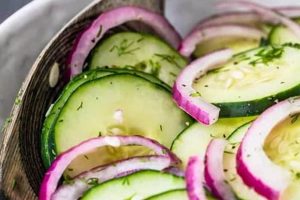
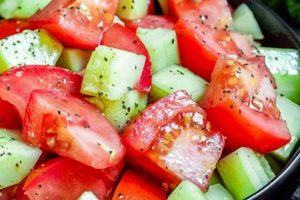
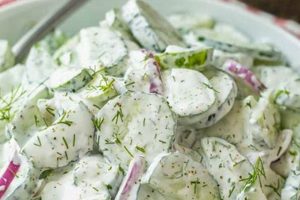
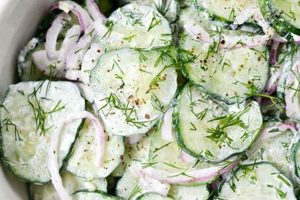
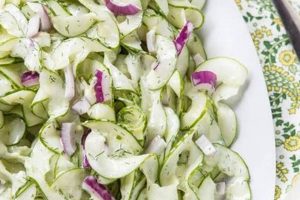
A light and refreshing dish featuring canned or fresh tuna combined with crisp cucumber, this culinary creation offers a healthy and flavorful meal option. Variations often include other ingredients such as red onion, herbs like dill or mint, and a simple vinaigrette. An example might involve flaked tuna, thinly sliced cucumber, chopped red onion, fresh dill, and a lemon-juice based dressing.
This type of salad provides a good source of protein from the tuna and beneficial nutrients from the cucumber. Its simplicity makes it a quick and easy meal, ideal for lunch, a light dinner, or part of a larger buffet spread. Historically, combining fish and fresh produce has been a staple in many cuisines, reflecting readily available ingredients and the desire for balanced nutrition. The modern iteration with canned tuna reflects the increased accessibility of preserved foods.
Further exploration will delve into specific ingredient choices, preparation methods, nutritional information, and variations to suit diverse palates and dietary needs. The following sections will provide detailed guidance on creating this versatile dish, from selecting the freshest ingredients to mastering the perfect vinaigrette.
Tips for a Superior Tuna and Cucumber Salad
Achieving optimal flavor and texture requires attention to detail throughout the preparation process. The following tips offer guidance for creating a truly exceptional dish.
Tip 1: Quality Tuna Selection: Opt for high-quality canned tuna packed in water or olive oil, or use sushi-grade fresh tuna for a premium experience. Draining canned tuna thoroughly prevents excess liquid from diluting the flavors.
Tip 2: Cucumber Preparation: English cucumbers, with their thinner skin and fewer seeds, are ideal. For a milder flavor, peel the cucumbers before slicing or dicing. Salting and draining the cucumber pieces beforehand removes excess moisture, ensuring a crisper salad.
Tip 3: Enhancing Flavor with Herbs: Fresh herbs elevate the overall taste profile. Dill, mint, and parsley complement the tuna and cucumber beautifully. Chives or tarragon offer more pungent alternatives.
Tip 4: The Art of the Vinaigrette: A simple vinaigrette of lemon juice or vinegar, olive oil, salt, and pepper is a classic choice. Experimenting with additions like Dijon mustard, minced garlic, or a touch of honey can create unique flavor combinations.
Tip 5: Red Onion Integration: Thinly sliced red onion adds a pleasant sharpness. Soaking the onion slices in cold water for a few minutes mellows their intensity.
Tip 6: Timing is Key: To prevent the salad from becoming soggy, combine the dressed ingredients shortly before serving. This preserves the crispness of the vegetables and the integrity of the flavors.
Tip 7: Consider Complementary Ingredients: Additions such as cherry tomatoes, avocado, or bell peppers introduce contrasting textures and flavors, further enhancing the salad’s appeal.
By following these guidelines, one can create a vibrant and flavorful dish that showcases the simple elegance of combining fresh ingredients with high-quality protein. These techniques contribute to a consistently satisfying culinary experience.
The following section will offer concluding remarks and suggest further culinary explorations involving these core ingredients.
1. Fresh, High-Quality Ingredients

The success of a tuna and cucumber salad rests significantly on the quality of its core components. Fresh, high-quality ingredients elevate this simple dish from mundane to exceptional. The inherent flavors of fresh tuna, whether canned in high-quality oil or sourced fresh from a reputable fishmonger, contribute a clean, savory foundation. Likewise, crisp, unwilted cucumbers offer a refreshing counterpoint, their subtle sweetness balancing the richness of the tuna. The impact extends beyond taste; fresh ingredients contribute to a superior texture, avoiding the mushiness that can result from subpar produce. Using high-quality ingredients maximizes the nutritional value of the salad, delivering essential vitamins, minerals, and lean protein.
Consider the difference between canned tuna packed in spring water versus tuna preserved in low-grade oil. The former retains the tuna’s natural flavor, while the latter can impart an undesirable metallic taste. Similarly, a freshly picked, firm cucumber offers a satisfying crunch, contrasting with the soft texture of a cucumber past its prime. These distinctions highlight the importance of ingredient selection in shaping the overall sensory experience. Choosing ripe, in-season produce further amplifies the flavor and nutritional benefits. Locally sourced ingredients often offer the peak of freshness, minimizing time from harvest to plate.
Prioritizing fresh, high-quality ingredients ensures a superior culinary outcome. While convenience might tempt one to compromise on quality, the resulting difference in flavor, texture, and nutritional value underscores the significance of this choice. Investing in quality ingredients elevates the simple tuna and cucumber salad, transforming it into a truly enjoyable and healthful meal. This principle extends to other culinary endeavors, emphasizing the foundational role of fresh, high-quality components in achieving optimal results.
2. Balanced Flavor Profiles
Balanced flavor profiles are essential for a successful tuna and cucumber salad. The inherent mildness of both tuna and cucumber necessitates careful consideration of complementary flavors. This balance prevents any single ingredient from overpowering the others, creating a harmonious and palatable result. The delicate flavor of the tuna, whether fresh or canned, provides a savory backdrop. The cucumber contributes a refreshing, slightly sweet element. Without other ingredients to enhance and balance these subtle tastes, the salad can be bland. A well-constructed vinaigrette plays a crucial role in achieving this balance. The acidity of vinegar or lemon juice cuts through the richness of the tuna, while a touch of sweetness, perhaps from a drizzle of honey or a pinch of sugar, complements the cucumber’s natural sweetness. The addition of herbs, such as dill or mint, introduces another layer of complexity, further enhancing the overall flavor profile.
Consider a tuna and cucumber salad with only a basic oil and vinegar dressing. While edible, it might lack the depth and complexity of a salad incorporating a broader range of flavors. Introducing a salty element, like capers or olives, provides a savory counterpoint to the sweetness of the cucumber. A hint of spice, perhaps from a dash of red pepper flakes, can add intrigue. These examples demonstrate how balancing contrasting flavorssweet, sour, salty, and spicyelevates a simple tuna and cucumber salad into a more sophisticated and satisfying dish. This principle of balance applies across culinary practices, highlighting the importance of considering the interplay of different taste elements in achieving a delicious outcome.
Mastering balanced flavor profiles in a tuna and cucumber salad exemplifies the power of thoughtful ingredient combination. The interplay of contrasting yet complementary flavors creates a dynamic culinary experience that transcends the individual components. Challenges can arise from overpowering ingredients or an imbalance of flavors. However, understanding the principles of balance empowers one to create a harmonious and delicious dish that highlights the inherent qualities of tuna and cucumber while enhancing them with carefully chosen complementary ingredients.
3. Proper Preparation Techniques
Proper preparation techniques are crucial for optimizing the flavor, texture, and overall quality of a tuna and cucumber salad. These techniques directly impact the final result, transforming simple ingredients into a cohesive and enjoyable dish. Consider the effect of neglecting to drain canned tuna adequately. Excess liquid will dilute the dressing and render the salad watery, compromising both flavor and texture. Similarly, failing to salt and drain cucumber slices can lead to a soggy salad, as the cucumber’s inherent moisture leaches into the other ingredients. Conversely, meticulous attention to these seemingly minor steps elevates the salad significantly. Thoroughly drained tuna maintains its integrity and readily absorbs the flavors of the dressing. Salting and draining cucumbers draws out excess moisture, resulting in a crisper, more flavorful salad.
The importance of proper knife skills further exemplifies this connection. Uniformly dicing the cucumber ensures even distribution throughout the salad and a consistent textural experience. Thinly slicing red onion minimizes its pungent bite, allowing its flavor to meld harmoniously with the other ingredients. Conversely, coarsely chopped vegetables create an uneven texture and potentially overpowering onion flavor. These practical examples demonstrate the direct link between preparation techniques and the final product. Imagine a salad with large chunks of cucumber alongside thinly sliced red onion and flaked tuna. The disparity in size and texture creates a disjointed culinary experience. However, consistent dicing creates a harmonious blend of textures, maximizing enjoyment.
Understanding the significance of proper preparation techniques underscores the difference between a mediocre and an exceptional tuna and cucumber salad. Challenges can arise from overlooking these seemingly small steps, but the resulting disparity in quality underscores their importance. The practical application of these techniques ultimately determines the success of the dish, highlighting the crucial link between preparation and outcome. This principle extends beyond tuna and cucumber salad, demonstrating the broader importance of meticulous preparation in any culinary endeavor.
4. Optimal Texture Combinations
Optimal texture combinations are essential for a truly satisfying culinary experience, particularly in a tuna and cucumber salad recipe. The interplay of different textures creates a dynamic and engaging sensory experience, elevating the dish beyond simply a combination of flavors. This exploration delves into the key textural elements that contribute to a successful tuna and cucumber salad.
- Contrast and Harmony:
A successful tuna and cucumber salad hinges on the contrast and harmony of textures. The tender, flaky nature of tuna provides a foundation of softness. This contrasts beautifully with the crisp, cool crunch of cucumber, creating a dynamic textural interplay. Imagine biting into a salad where both the tuna and cucumber possess similar levels of softness. The experience would lack the excitement and satisfaction derived from contrasting textures. This principle applies broadly in culinary arts, where the juxtaposition of textures often defines a dish. Consider the classic combination of crispy fried chicken with creamy mashed potatoes, or the contrast of a flaky croissant with soft, yielding butter.
- Enhancing Texture through Preparation:
Preparation methods significantly impact texture. Dicing the cucumber into uniform pieces ensures a consistent crunch throughout the salad. Leaving the cucumber in larger pieces can create an uneven textural experience. Similarly, ensuring the tuna is not overly dry or mushy contributes to the overall balance. Consider the impact of over-processing tuna, which can result in a paste-like consistency. This would detract from the desired textural contrast, illustrating the importance of careful preparation in preserving the ideal textures of individual components. Think of how different cooking methods impact the texture of vegetables: steaming preserves crispness, while boiling can result in a softer texture.
- The Role of Additional Ingredients:
Incorporating additional ingredients can further enhance textural complexity. Toasted nuts or seeds introduce a welcome element of crunch, contrasting with the softer tuna and cucumber. Adding ingredients like chickpeas or avocado provides a creamy counterpoint. Consider the addition of croutons to a Caesar salad; their crunchy texture complements the soft lettuce and creamy dressing. Similarly, adding a sprinkle of toasted sesame seeds to the tuna and cucumber salad could enhance its textural appeal. This exemplifies how incorporating ingredients with varying textures contributes to a more dynamic and enjoyable eating experience.
- The Importance of Freshness:
Freshness plays a vital role in optimal texture. A fresh cucumber offers a satisfying crunch, while one that is past its prime becomes soft and watery. Similarly, using high-quality canned tuna or fresh tuna ensures the desired flaky texture, avoiding a dry or stringy consistency. Imagine the difference between a salad made with a crisp, freshly picked cucumber and one made with a cucumber that has been sitting in the refrigerator for several days. The former offers a vibrant crunch, while the latter may be limp and less appealing. This highlights how freshness directly impacts texture and overall enjoyment.
The interplay of these textural elements defines the overall sensory experience of a tuna and cucumber salad. Careful consideration of texture, alongside flavor, elevates this seemingly simple dish into a complex and satisfying culinary creation. By understanding the impact of ingredient choice, preparation techniques, and the interplay of contrasting textures, one can consistently achieve a harmonious and delightful balance, enriching the dining experience.
5. Nutritional Value Consideration

Nutritional value is a significant factor when considering a tuna and cucumber salad recipe. This dish offers a combination of macronutrients and micronutrients beneficial for health and well-being. Understanding the nutritional composition allows for informed dietary choices and recipe modifications to meet specific needs. Exploring the nutritional components of this salad provides a comprehensive picture of its health benefits.
- Protein Content:
Tuna, a primary ingredient, serves as an excellent source of lean protein. Protein plays a vital role in building and repairing tissues, supporting immune function, and maintaining healthy hair and nails. A typical serving of tuna provides a substantial amount of protein, contributing significantly to daily requirements. The protein content can vary based on the type of tuna used; for example, albacore tuna generally contains more protein than skipjack. This protein density makes the salad a satisfying and nutritious meal option.
- Healthy Fats:
Depending on the preparation method and type of tuna used (canned in oil versus fresh), the salad can provide a source of healthy fats, particularly omega-3 fatty acids. These fats are essential for heart health, brain function, and reducing inflammation. While fresh tuna naturally contains omega-3s, canned tuna packed in olive oil provides an additional source. However, opting for tuna packed in water reduces overall fat content for those seeking a lower-fat option. Careful consideration of the type of tuna and added oils allows for customization based on individual dietary needs.
- Vitamins and Minerals:
Both tuna and cucumber contribute essential vitamins and minerals. Tuna is a good source of vitamin D, vitamin B12, selenium, and niacin, while cucumbers provide vitamin K, vitamin C, and potassium. These nutrients play vital roles in various bodily functions, from maintaining bone health to supporting the immune system. The combined vitamin and mineral content of the salad contributes to a balanced and nutritious meal. Adding other vegetables, such as bell peppers or tomatoes, can further enhance the micronutrient profile.
- Low Calorie Density:
Tuna and cucumber salad tends to be relatively low in calories, particularly when prepared with a light vinaigrette. This makes it a suitable option for those managing weight or seeking a lighter meal. The high water content of cucumbers contributes to the low calorie density, promoting satiety without excessive calorie intake. Avoiding calorie-dense dressings or additions, such as mayonnaise or cheese, further contributes to the salad’s lightness. This characteristic makes it a flexible option for various dietary plans.
The nutritional composition of a tuna and cucumber salad contributes significantly to its appeal as a healthy and satisfying meal. Understanding the balance of protein, healthy fats, vitamins, minerals, and calorie content allows for informed choices regarding ingredients and preparation methods. This knowledge empowers individuals to tailor the recipe to their specific dietary needs and preferences, maximizing both enjoyment and nutritional benefit. This nutritional profile adds to the versatility of this simple yet valuable culinary creation, solidifying its role as a healthful and flavorful meal option.
Frequently Asked Questions
This section addresses common inquiries regarding tuna and cucumber salad preparation and variations.
Question 1: What type of tuna is best suited for this salad?
Canned tuna packed in water or olive oil is commonly used. For a richer flavor, consider higher-quality canned tuna packed in olive oil or fresh sushi-grade tuna. Draining canned tuna thoroughly is essential.
Question 2: How can sogginess be prevented?
Salting and draining the cucumber slices before combining them with the other ingredients helps remove excess moisture. Dressing the salad shortly before serving also prevents the vegetables from becoming waterlogged.
Question 3: Can other vegetables be added?
Certainly. Cherry tomatoes, bell peppers, avocado, and red onion are complementary additions. Consider flavor and texture compatibility when incorporating other vegetables.
Question 4: What are some suitable dressing alternatives?
While a simple vinaigrette is classic, variations using Greek yogurt, tahini, or a combination of citrus juices and herbs offer distinct flavor profiles. Adjusting ingredients to personal preferences is encouraged.
Question 5: How long can the salad be stored?
Refrigeration in an airtight container is recommended. Consume within two days for optimal quality. Note that the texture of the cucumbers may soften slightly over time.
Question 6: Is this salad suitable for meal prepping?
Yes, but it is advisable to store the dressing separately and combine it with the other ingredients shortly before consumption to maintain optimal texture and prevent sogginess.
Understanding these key aspects ensures consistent, high-quality results. Experimentation with various ingredients and dressings allows for personalized adaptations to suit individual preferences and dietary needs.
The following section will offer a collection of recipe variations for further culinary exploration.
Tuna and Cucumber Salad Recipe
This exploration of tuna and cucumber salad recipes has highlighted the essential elements that contribute to a successful dish. From the importance of fresh, high-quality ingredients and balanced flavor profiles to proper preparation techniques and optimal texture combinations, each aspect plays a crucial role in the final outcome. Nutritional value considerations further underscore the appeal of this versatile salad as a healthy and flavorful meal option. Understanding these key principles empowers culinary enthusiasts to create consistently delicious and satisfying tuna and cucumber salads tailored to individual preferences.
The simplicity of this dish belies its potential for culinary creativity. Experimentation with various ingredients, dressings, and flavor combinations offers a pathway to personalized adaptations and innovative variations. Further exploration might involve incorporating diverse cultural influences or exploring complementary ingredients to expand the culinary possibilities. The foundational principles outlined herein provide a framework for continued exploration and refinement, ensuring that the tuna and cucumber salad remains a refreshing and adaptable culinary staple.