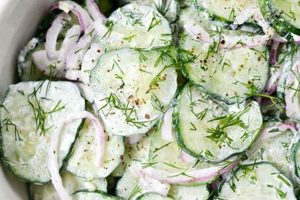
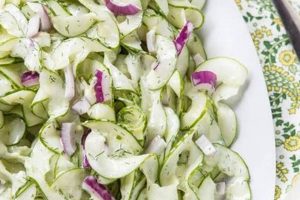
This refreshing dish combines the vibrant flavors of ripe tomatoes and crisp cucumbers with the distinctive elements of Greek cuisine: Kalamata olives, salty feta cheese, and a simple vinaigrette often featuring oregano and red wine vinegar. A classic example includes chopped tomatoes and cucumbers, crumbled feta, sliced red onion, Kalamata olives, and a dressing of olive oil, red wine vinegar, oregano, salt, and pepper.
The simplicity of this salad contributes to its widespread appeal. It offers a light and flavorful complement to grilled meats, fish, or other Mediterranean dishes. The combination of fresh vegetables, healthy fats from olive oil, and the tangy feta creates a balanced and nutritious meal component. Its origins likely stem from the abundant availability of these core ingredients in the Mediterranean region, making it a staple in Greek cuisine for generations.
Further exploration of this culinary staple could include regional variations, the nutritional value of the ingredients, and techniques for achieving optimal flavor and texture. Detailed preparation instructions, tips for selecting high-quality ingredients, and suggestions for serving and pairing opportunities can enrich the understanding and appreciation of this classic salad.
Tips for a Superior Greek Tomato Cucumber Salad
Optimizing the preparation of this classic dish elevates its inherent simplicity to a truly exceptional culinary experience. Attention to detail in ingredient selection and technique ensures a vibrant and flavorful salad.
Tip 1: Ingredient Quality is Paramount: Opt for ripe, in-season tomatoes for optimal sweetness and flavor. Select firm cucumbers with smooth skin. High-quality feta cheese, preferably from sheep’s milk, contributes significantly to the authentic taste.
Tip 2: Proper Vegetable Preparation: Salt the chopped cucumbers and allow them to rest in a colander for approximately 15 minutes to draw out excess moisture. This prevents a watery salad. Seed the tomatoes for a cleaner, less watery final product.
Tip 3: Olive Oil Selection: Extra virgin olive oil offers the best flavor profile for the vinaigrette. A robust, peppery oil complements the other ingredients well.
Tip 4: Fresh Herbs are Essential: Fresh oregano is traditional and highly recommended. Dried oregano can be substituted, but use it sparingly as the flavor is more concentrated. Consider adding other fresh herbs like mint or dill for a nuanced taste.
Tip 5: Red Wine Vinegar Adds Brightness: Red wine vinegar provides the necessary acidity to balance the richness of the olive oil and feta. Lemon juice offers a suitable alternative.
Tip 6: Timing is Key: Dress the salad just before serving to prevent the vegetables from becoming soggy. The feta can be added slightly earlier to allow its flavors to meld with the vegetables.
Tip 7: Consider Kalamata Olives: Kalamata olives introduce a salty, briny element that enhances the complexity of the salad. Ensure they are pitted before adding.
By adhering to these guidelines, one can consistently produce a Greek tomato cucumber salad that embodies freshness, flavor, and authenticity.
Through careful consideration of these elements, a simple salad transforms into a delightful culinary creation, showcasing the vibrant flavors of the Mediterranean.
1. Fresh, Ripe Ingredients

The foundation of an exceptional Greek tomato cucumber salad rests upon the quality of its ingredients. Freshness, above all, dictates the flavor profile and overall enjoyment of this simple dish. Utilizing produce at its peak ripeness ensures optimal sweetness, texture, and aroma, resulting in a truly vibrant and satisfying culinary experience.
- Tomatoes:
Ripe tomatoes, preferably in-season varieties like heirloom or beefsteak, provide the essential sweetness and juiciness. Avoid underripe or mealy tomatoes, as they lack flavor and can negatively impact the salad’s overall texture. Locally sourced tomatoes, when available, often offer superior flavor due to reduced transit times and optimal growing conditions.
- Cucumbers:
Firm cucumbers with smooth, unblemished skin are ideal. Look for varieties specifically suited for salads, such as English or Persian cucumbers, which tend to have thinner skins and fewer seeds. Avoid cucumbers that feel soft or have wrinkled skin, as these indicate age and potential bitterness. The crispness of the cucumber provides a refreshing counterpoint to the softness of the tomatoes.
- Herbs:
Fresh oregano is the quintessential herb in Greek cuisine. Its pungent, slightly bitter flavor complements the other ingredients perfectly. Other fresh herbs, such as mint or dill, can be added to enhance the aromatic complexity. Dried herbs can be substituted if fresh are unavailable, but their flavor is more concentrated, so use sparingly. The freshness of the herbs contributes significantly to the overall vibrancy of the salad.
- Onions (Optional):
While not always included, thinly sliced red onion adds a pungent bite and a pop of color. Soaking the sliced red onion in cold water for a few minutes can mellow its sharpness. Other onion varieties, like shallots or scallions, offer milder alternatives.
The emphasis on fresh, ripe ingredients underscores the simplicity and purity of this classic Greek salad. By prioritizing quality produce, the inherent flavors of the tomatoes, cucumbers, and herbs shine through, creating a dish that is both refreshing and deeply satisfying. The careful selection of each component contributes to a harmonious balance of flavors and textures, elevating a simple combination of ingredients to a culinary masterpiece.
2. Authentic Greek Feta
Authentic Greek feta, a Protected Designation of Origin (PDO) product, plays a crucial role in a genuine Greek tomato cucumber salad. Made from sheep’s milk, or a mixture of sheep and goat’s milk, it possesses a distinct tangy, salty flavor and a crumbly texture that contributes significantly to the salad’s overall character. Substitutes, such as cow’s milk feta or other brined cheeses, lack the specific flavor profile and texture that define true Greek feta. This distinction impacts the authenticity and ultimately the sensory experience of the salad.
The use of authentic Greek feta elevates the salad beyond a simple combination of vegetables. Its salty, tangy notes provide a crucial counterpoint to the sweetness of ripe tomatoes and the refreshing coolness of cucumbers. The creamy, crumbly texture adds another layer of complexity, contrasting with the crispness of the vegetables. For example, imagine tasting a Greek salad made with a bland, rubbery cow’s milk feta; the overall experience would be significantly diminished. The unique characteristics of authentic Greek feta contribute directly to the balanced and harmonious flavor profile expected of this classic dish.
Understanding the importance of authentic Greek feta in this context provides practical value. Consumers seeking an authentic culinary experience must prioritize sourcing genuine PDO-certified feta. While other cheeses may offer a similar appearance, they cannot replicate the specific flavor and textural nuances that define Greek feta. This awareness empowers informed choices, ensuring that the final product aligns with the intended culinary outcome a truly authentic and flavorful Greek tomato cucumber salad. This recognition emphasizes the significance of ingredient selection in achieving culinary authenticity and maximizing flavor.
3. High-Quality Olive Oil
High-quality olive oil is not merely an ingredient but a cornerstone of a truly exceptional Greek tomato cucumber salad. It serves as the foundation of the vinaigrette, binding the flavors together and contributing significantly to the salad’s overall sensory experience. The quality of the olive oil directly impacts the final taste, aroma, and mouthfeel of the dish, making its selection a crucial step in the preparation process.
- Flavor Profile:
Extra virgin olive oil, the highest quality grade, boasts a complex flavor profile ranging from fruity and peppery to grassy and herbaceous. These nuanced flavors enhance the other ingredients, creating a harmonious balance. A robust, peppery olive oil, for example, complements the tangy feta and the sweetness of ripe tomatoes exceptionally well. In contrast, lower-quality olive oils may possess neutral or even undesirable flavors, detracting from the overall taste of the salad.
- Aroma:
The aroma of high-quality olive oil contributes significantly to the sensory appeal of the salad. A fragrant olive oil, redolent of fresh olives and herbs, elevates the dining experience, stimulating the appetite and enhancing enjoyment. This aromatic complexity is absent in lower-grade oils, which may have a bland or even musty smell.
- Texture and Mouthfeel:
High-quality olive oil possesses a smooth, luxurious mouthfeel that coats the palate and enhances the texture of the salad. This richness adds a dimension of indulgence, transforming a simple salad into a more satisfying culinary experience. Lower-quality oils may feel greasy or thin, lacking the desirable textural qualities.
- Health Benefits:
Extra virgin olive oil is rich in monounsaturated fats and antioxidants, offering potential health benefits. These compounds contribute to the overall nutritional value of the salad. While this aspect is secondary to flavor considerations, it adds another layer of value to using high-quality olive oil. Refined olive oils, while less expensive, undergo processing that diminishes their nutritional content.
The choice of olive oil significantly influences the final outcome of a Greek tomato cucumber salad. Opting for high-quality extra virgin olive oil not only elevates the taste and aroma but also contributes to a richer, more satisfying culinary experience. Understanding these nuances empowers informed decision-making, ensuring that the selected olive oil complements and enhances the other ingredients, resulting in a salad that truly embodies the fresh, vibrant flavors of the Mediterranean.
4. Simple Vinaigrette

A simple vinaigrette forms an integral component of a classic Greek tomato cucumber salad. Its purpose extends beyond merely dressing the salad; it acts as a unifying element, harmonizing the distinct flavors of the individual components. The vinaigrette’s simplicity is key to allowing the fresh, vibrant flavors of the tomatoes, cucumbers, and feta to shine through without being overshadowed. A complex or heavily flavored dressing would mask the delicate balance of the salad. The essential elements of this vinaigrette typically include extra virgin olive oil, red wine vinegar, oregano, salt, and pepper. This uncomplicated combination provides brightness, acidity, and a subtle herbal note that enhances the overall flavor profile without overpowering the primary ingredients.
The interaction between the vinaigrette and the salad’s components exemplifies a synergistic relationship. The acidity of the red wine vinegar cuts through the richness of the olive oil and feta, while simultaneously enhancing the sweetness of the tomatoes. The oregano adds a subtle herbal complexity that complements the fresh flavors of the cucumbers and other vegetables. Consider, for example, a Greek salad dressed with a heavy, creamy dressing. The fresh flavors of the tomatoes and cucumbers would be lost, replaced by the dominant taste of the dressing. This highlights the importance of the simple vinaigrette’s role in preserving the integrity of the individual ingredients while creating a cohesive and balanced flavor profile.
Practical application of this understanding lies in the careful balance of ingredients within the vinaigrette itself. Too much vinegar can make the salad overly tart, while insufficient olive oil can result in a dry, unappealing texture. Achieving the optimal balance ensures that the vinaigrette complements rather than dominates the salad, allowing the fresh, vibrant flavors of the Mediterranean diet to take center stage. This careful consideration underscores the significant, albeit often understated, role of the simple vinaigrette in creating a truly authentic and satisfying Greek tomato cucumber salad.
5. Proper Seasoning
Proper seasoning is fundamental to a successful Greek tomato cucumber salad recipe. It elevates the inherent flavors of the fresh ingredients, creating a balanced and harmonious flavor profile. Salt, primarily, enhances the sweetness of the tomatoes and cucumbers while tempering any potential bitterness from the onions or herbs. Freshly ground black pepper adds a subtle layer of complexity and spice. The absence of proper seasoning results in a bland, underwhelming dish, failing to showcase the vibrant flavors characteristic of this Mediterranean classic. For instance, a salad with insufficient salt will taste flat, even if the ingredients are of high quality. Conversely, excessive salt can overpower the delicate flavors of the vegetables. This delicate balance underscores the importance of proper seasoning.
The practical application of this understanding lies in tasting and adjusting throughout the preparation process. Salting the cucumbers separately and allowing them to drain helps prevent a watery salad and seasons them effectively. Adding salt to the tomatoes and onions also enhances their individual flavors. A final seasoning of the entire salad, after the vinaigrette is added, ensures a balanced and well-integrated flavor profile. This iterative approach allows for adjustments based on the specific ingredients and personal preferences, leading to a consistently flavorful and satisfying outcome. Consider a scenario where the feta is particularly salty; adjusting the overall seasoning accordingly prevents an overly salty final product.
In conclusion, proper seasoning acts as a critical component in maximizing the flavor potential of a Greek tomato cucumber salad. It transforms a simple combination of fresh ingredients into a vibrant and harmonious culinary experience. The careful balance of salt and pepper, along with the strategic seasoning of individual components, elevates the inherent flavors of the vegetables, herbs, and feta. This understanding, combined with practical application, ensures a consistently delicious and authentically Greek salad, showcasing the true essence of Mediterranean cuisine.
Frequently Asked Questions
This section addresses common inquiries regarding the preparation and enjoyment of Greek tomato cucumber salad, offering practical guidance for achieving optimal results.
Question 1: Can other types of cheese be substituted for feta?
While other cheeses can be used, authentic Greek feta, made from sheep’s milk, provides the distinct tangy and salty flavor characteristic of this salad. Substitutions may alter the intended flavor profile.
Question 2: How can a watery salad be avoided?
Salting the cucumbers and allowing them to drain in a colander for approximately 15 minutes prior to adding them to the salad draws out excess moisture. Seeding the tomatoes also helps prevent excess liquid.
Question 3: What type of olive oil is recommended?
Extra virgin olive oil, the highest quality grade, offers the best flavor and aroma. A robust, peppery variety complements the other ingredients particularly well.
Question 4: Can dried herbs be used in place of fresh?
While fresh herbs are preferred for their vibrant flavor, dried herbs can be substituted if necessary. Use dried herbs sparingly, as their flavor is more concentrated.
Question 5: When should the salad be dressed?
Dressing the salad just before serving prevents the vegetables from becoming soggy and maintains their crisp texture. Adding the feta slightly earlier allows its flavors to meld with the vegetables.
Question 6: How long can the salad be stored?
While best enjoyed immediately, the salad can be stored in an airtight container in the refrigerator for up to 24 hours. However, some textural changes may occur.
Understanding these aspects contributes significantly to the successful preparation and enjoyment of a truly authentic and flavorful Greek tomato cucumber salad.
Further exploration could delve into regional variations, specific ingredient sourcing recommendations, or accompanying dishes that complement this classic Mediterranean staple.
Greek Tomato Cucumber Salad Recipe
Exploration of the Greek tomato cucumber salad recipe reveals the importance of fresh, high-quality ingredients. Authentic Greek feta, extra virgin olive oil, and ripe, seasonal produce contribute significantly to the dish’s characteristic flavor profile. Proper seasoning and a simple vinaigrette further enhance the inherent flavors of the tomatoes, cucumbers, and other components, creating a harmonious balance of taste and texture. Emphasis on ingredient selection, preparation techniques, and the delicate balance of flavors underscores the potential for culinary excellence even in simplicity.
The enduring popularity of this classic Mediterranean salad reflects its refreshing simplicity and nutritional value. Continued appreciation of this dish lies in understanding the interplay of its components and their contribution to the overall culinary experience. Further exploration of regional variations and creative adaptations promises to enrich the culinary landscape and perpetuate the legacy of this timeless recipe.