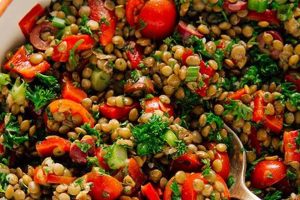
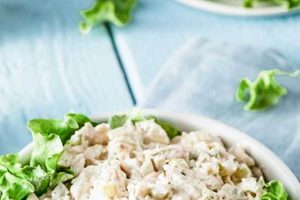
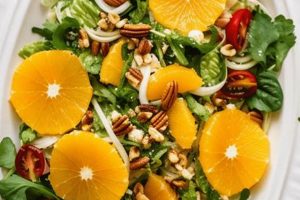
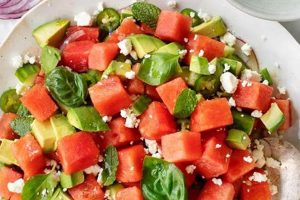
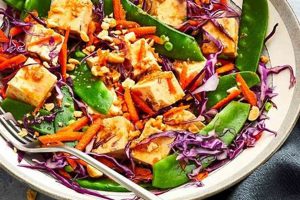
A salad designed to rest for a full day allows flavors to meld and ingredients to marinate, resulting in a more complex and nuanced final dish. This technique often involves layering components and a slow, deliberate introduction of the dressing, preventing the salad from becoming soggy or wilted. For example, a layered salad with roasted vegetables, grains, and a vinaigrette might benefit from this extended rest period.
The extended marination period enhances the overall taste experience, transforming individual ingredients into a harmonious blend. This method can be particularly advantageous for robust flavors and textures, allowing tougher vegetables to soften and absorb the dressing thoroughly. Historically, this approach reflects a resourceful way to prepare meals in advance, ensuring both flavor and convenience, particularly for large gatherings or busy schedules.
This article will delve deeper into the nuances of creating such salads, exploring specific ingredient combinations, dressing options, and techniques to maximize flavor development during the 24-hour rest period.
Tips for Crafting a Delicious Salad with a 24-Hour Rest
Proper technique is essential to maximize the benefits of extended marination. These tips offer guidance for constructing layered salads that develop rich, complex flavors over a 24-hour period.
Tip 1: Layer Strategically: Heartier, less absorbent vegetables like chopped carrots or bell peppers should form the base. More delicate ingredients, such as leafy greens or herbs, should be placed near the top to prevent them from wilting.
Tip 2: Dress Wisely: Vinaigrettes are often preferred as creamy dressings can make the salad heavy. Introduce the dressing gradually, starting with a small amount on the bottom layer and increasing slightly with each subsequent layer. Avoid overdressing.
Tip 3: Consider Ingredient Compatibility: Certain ingredients pair better together and benefit more from extended marination. For instance, roasted vegetables and grains complement each other well. Avoid highly perishable items or those prone to discoloring quickly.
Tip 4: Choose an Appropriate Container: A large, airtight container or a bowl with a tight-fitting lid is crucial for preventing the salad from drying out or absorbing unwanted odors from the refrigerator.
Tip 5: Time the Dressing Introduction Carefully: While some dressings can be added immediately, more delicate dressings or those with strong flavors might be best added a few hours before serving. This prevents the salad from becoming overly saturated.
Tip 6: Refrigerate Consistently: Maintain a consistent, cool temperature throughout the 24-hour rest. Avoid repeatedly removing the salad from the refrigerator, as temperature fluctuations can impact flavor development and food safety.
Tip 7: Taste and Adjust: Prior to serving, assess the flavor profile and adjust seasoning as needed. A final drizzle of olive oil, a sprinkle of fresh herbs, or a touch of salt and pepper can enhance the final dish.
By following these guidelines, one can ensure a well-balanced and flavorful salad, demonstrating the significant impact of time and thoughtful preparation.
These considerations showcase the transformative potential of the 24-hour resting period, elevating simple ingredients into a culinary experience. The following section will offer concluding remarks.
1. Layered Construction

Layered construction is a crucial technique in 24-hour salads, directly impacting the final dish’s quality and flavor. This method involves strategically arranging ingredients to optimize flavor development, prevent sogginess, and enhance textural contrast during the extended marination period.
- Preventing Sogginess:
Layering creates a barrier between delicate ingredients and the dressing, preventing them from becoming waterlogged. Heartier components, such as grains, roasted vegetables, or denser greens, form the base, shielding more delicate items like leafy greens or herbs placed on top. This preserves crispness and texture, crucial for a pleasing salad experience even after 24 hours.
- Promoting Even Flavor Distribution:
Strategic layering ensures that each ingredient interacts optimally with the dressing. By placing certain components closer to the dressing and others further away, one can control the intensity of flavor absorption. This technique allows for a more nuanced and balanced flavor profile, preventing some elements from becoming overly saturated while others remain bland.
- Enhancing Visual Appeal:
A layered salad offers an attractive presentation, showcasing the variety of ingredients and creating visual interest. The different colors and textures become distinct layers, enhancing the dining experience. This visual appeal adds to the overall enjoyment of the salad, making it more appetizing.
- Maximizing Ingredient Compatibility:
Layering enables the grouping of complementary ingredients, maximizing their interaction during marination. For example, placing ingredients that benefit from absorbing the dressing near the bottom and those that require less dressing near the top allows for customized flavor development within the same salad. This thoughtful arrangement ensures each component contributes its best qualities to the final dish.
Through considered layering, a 24-hour salad evolves from a simple mixture of ingredients into a carefully constructed dish where texture, flavor, and visual appeal are optimized. This technique is fundamental to achieving the desired outcome of a well-balanced and flavorful salad after the extended marination period.
2. Gradual Dressing Introduction

Gradual dressing introduction plays a vital role in the success of a 24-hour salad recipe. Instead of adding all the dressing at once, a measured approach ensures even flavor distribution and prevents oversaturation, particularly crucial during extended marination. This technique significantly impacts the final texture and taste of the salad components.
Adding dressing incrementally allows each layer to absorb an appropriate amount, preventing the bottom layers from becoming soggy while ensuring the top layers receive sufficient flavor. Consider a layered salad with roasted vegetables, grains, and leafy greens. Introducing the vinaigrette in stagesa portion on the roasted vegetables, another on the grains, and a lighter amount on the greensprevents the greens from wilting while allowing the hardier vegetables and grains to absorb the dressing fully. This staged approach also allows for customized flavor intensity in each layer. One might use a more robust vinaigrette on the base layer and a lighter version on more delicate ingredients. This nuanced control contributes to a more complex and balanced flavor profile.
Understanding the impact of gradual dressing introduction is essential for achieving the desired outcome in a 24-hour salad. This method demonstrates a key principle of this style of salad preparation: the strategic manipulation of time and ingredient interaction. The careful, layered introduction of the dressing, coupled with the extended marination period, optimizes flavor development and texture preservation, highlighting the transformative potential of this technique. Neglecting this gradual approach can lead to unevenly flavored and textured salads, diminishing the benefits of the 24-hour rest.
3. Ingredient Compatibility

Ingredient compatibility is paramount in a 24-hour salad recipe. The extended marination period intensifies flavor interactions, making thoughtful ingredient selection crucial for a successful outcome. Harmonious combinations enhance the final dish, while incompatible choices can lead to undesirable flavors or textures.
- Texture Preservation:
Certain ingredients retain their texture better than others during extended marinades. Robust vegetables like carrots and bell peppers hold up well, while delicate greens might become wilted. Combining ingredients with complementary textures ensures a balanced and enjoyable final product. For example, pairing roasted root vegetables with sturdy kale creates a more texturally satisfying result than combining cucumbers with spinach, which might become overly soft.
- Flavor Balancing:
The 24-hour marination period allows flavors to meld and intensify. Balancing strong and subtle flavors is essential. Pairing bold ingredients like olives or feta cheese with milder components like quinoa or roasted sweet potatoes creates a more harmonious flavor profile. An excess of strong flavors can overpower the dish, while an absence of bold notes might result in a bland salad.
- Moisture Content:
Ingredients with high water content, like tomatoes, can release excess moisture during marination, leading to a watery salad. Balancing these with ingredients that absorb moisture, such as grains or croutons, is key. For instance, adding croutons just before serving can help offset excess moisture from tomatoes or cucumbers marinated for 24 hours. This consideration ensures a pleasant texture and prevents the salad from becoming diluted.
- Acidity and Alkalinity:
Certain ingredients can react negatively with acidic dressings over time. Avoiding combinations like acidic dressings with ingredients like avocado, which can discolor, is important. Opting for more stable ingredients like roasted vegetables or grains when using acidic dressings ensures the salad maintains its visual appeal and desired flavor throughout the marination process.
Careful consideration of these compatibility factors ensures a well-balanced and flavorful 24-hour salad. Understanding how ingredients interact during extended marination is fundamental to maximizing flavor development and achieving the desired textural outcome. Neglecting these considerations can result in a disappointing final product, highlighting the significance of ingredient compatibility in this type of salad preparation.
4. Extended Marination
Extended marination forms the cornerstone of a 24-hour salad recipe. This technique, involving prolonged exposure of ingredients to a dressing, facilitates complex flavor development and textural transformation. The extended timeframe allows the dressing to penetrate the ingredients, softening tougher vegetables, and melding individual flavors into a cohesive whole. This process distinguishes a 24-hour salad from its quickly assembled counterparts. For example, marinating raw red onions for an extended period mellows their sharpness, while simultaneously infusing them with the flavors of the vinaigrette. Similarly, denser vegetables, such as carrots or broccoli, soften, absorbing the dressing and becoming more tender and flavorful.
The benefits of extended marination extend beyond flavor enhancement. It offers practical advantages, particularly for meal preparation. Preparing a salad 24 hours in advance allows flavors to develop fully, reducing active preparation time closer to serving. This is particularly beneficial for large gatherings or busy schedules. Furthermore, the extended marination can enhance the utilization of seasonal produce. Hearty winter vegetables, which might require longer cooking times, can soften and become more palatable through extended marination, offering a flavorful alternative to traditional cooking methods.
Extended marination is not merely a time-saving technique; it is a transformative process. It elevates simple ingredients, allowing their inherent flavors to deepen and meld, creating a more nuanced and satisfying culinary experience. Understanding the impact of this extended interaction between ingredients and dressing is fundamental to appreciating the complexity and depth of flavor achieved in a 24-hour salad recipe. This technique offers both culinary and practical benefits, reflecting a thoughtful approach to salad preparation that emphasizes both flavor and convenience.
5. Flavor Development

Flavor development is intrinsically linked to the 24-hour salad preparation method. The extended marination period acts as a catalyst, facilitating complex interactions between ingredients and the dressing. This slow, deliberate process allows flavors to meld, deepen, and harmonize, resulting in a final product that transcends the sum of its individual components. Cause and effect are clearly demonstrable: the extended contact time between the ingredients and dressing directly results in a more nuanced and complex flavor profile. For instance, the sharpness of raw onions mellows and integrates with the acidity of a vinaigrette, while the flavors of roasted vegetables deepen and become more pronounced. The gradual breakdown of cell walls in vegetables releases sugars and other compounds, contributing to a richer, more savory taste. This transformative process underscores the importance of flavor development as a defining characteristic of a 24-hour salad.
The practical significance of understanding this connection is substantial. It informs ingredient selection, dressing choices, and layering strategies. Recognizing how different ingredients interact with dressings over time enables the creation of salads with balanced and harmonious flavors. For example, one might choose to pair robust vegetables with a tangy vinaigrette, knowing that the extended marination will soften the vegetables and meld their flavors with the dressing. Conversely, delicate greens might be paired with a lighter vinaigrette and added closer to serving time to prevent them from becoming wilted. This understanding empowers informed decision-making during the preparation process, maximizing the potential for exceptional flavor development.
In summary, flavor development is not merely a byproduct of the 24-hour salad method; it is its central objective. The extended marination period, coupled with careful ingredient selection and layering, creates a synergistic environment for flavor enhancement. This understanding allows for the creation of salads that are both complex and balanced, transforming simple ingredients into a culinary experience that showcases the remarkable impact of time and thoughtful preparation.
Frequently Asked Questions
This section addresses common inquiries regarding the 24-hour salad method, offering clarity on its benefits, potential challenges, and best practices.
Question 1: Is a 24-hour marination period always necessary?
While a full 24 hours allows for maximum flavor development, shorter durations can still yield noticeable improvements. A minimum of 4 hours is recommended for noticeable flavor melding. The optimal duration depends on the specific ingredients and desired outcome.
Question 2: Can all types of dressings be used in a 24-hour salad?
While most dressings can be used, vinaigrettes are generally preferred due to their lighter consistency. Creamy dressings can sometimes make the salad heavy, especially during extended marinades. The specific dressing choice should complement the chosen ingredients.
Question 3: Are there any food safety concerns associated with 24-hour salads?
Proper refrigeration is crucial. Maintaining a consistent, cool temperature below 40F (4C) inhibits bacterial growth. Avoid using highly perishable ingredients or those prone to rapid spoilage. Adhering to food safety guidelines ensures the salad remains safe for consumption.
Question 4: Can leafy greens be included in a 24-hour salad without becoming wilted?
Leafy greens can be incorporated, but require strategic placement. Position them as the top layer to minimize contact with the dressing and prevent premature wilting. Consider adding more delicate greens shortly before serving to maintain their optimal texture.
Question 5: What are the key advantages of the 24-hour salad method?
This method offers enhanced flavor development, convenience for meal prepping, and optimized texture for certain vegetables. The extended marination allows for a more complex and nuanced flavor profile compared to traditional salad preparation. It also reduces active preparation time closer to serving.
Question 6: How does the 24-hour method impact the nutritional value of the salad?
The nutritional impact is generally minimal. Some vitamins might degrade slightly over time, but the overall nutritional content remains largely unchanged. The extended marination can enhance the bioavailability of certain nutrients in some vegetables.
Understanding these key aspects of the 24-hour salad method allows for successful implementation and optimal results. This approach encourages a more thoughtful approach to salad preparation, emphasizing the transformative potential of time and deliberate ingredient selection.
The following section will offer a selection of recipe variations to explore.
Conclusion
This exploration of 24-hour salad recipes has highlighted the transformative potential of extended marination. Strategic layering, gradual dressing introduction, and careful ingredient selection contribute significantly to the final product. The extended timeframe facilitates complex flavor development, softening textures, and melding individual components into a harmonious whole. The method offers both culinary advantages, resulting in richer, more nuanced flavors, and practical benefits, allowing for convenient meal preparation.
The 24-hour salad represents a shift from immediate gratification towards a more deliberate and considered approach to food preparation. This technique encourages an appreciation for the subtle yet significant impact of time on flavor development. Further exploration of ingredient combinations and dressing variations promises a continuous evolution of this culinary approach, offering a wide range of flavor profiles and textural experiences.