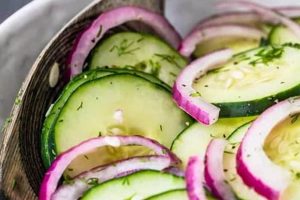
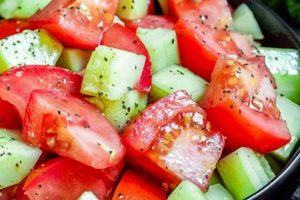
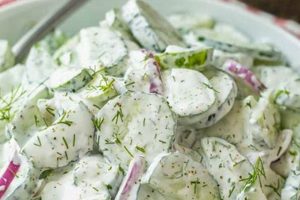
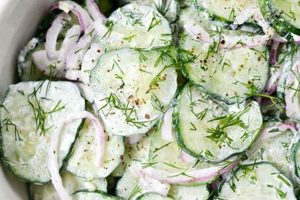
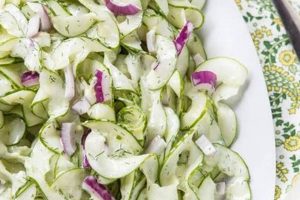
Cool, crisp, and refreshing, salads featuring cucumbers marinated in a vinegar-based dressing offer a versatile culinary experience. These preparations range from simple combinations of thinly sliced cucumbers and a basic vinaigrette to more complex versions incorporating onions, herbs, spices, and other vegetables. A classic example involves thinly sliced cucumbers tossed with a mixture of vinegar, sugar, and salt, allowed to marinate briefly to enhance the flavors.
Such salads are valued for their light, palate-cleansing qualities, making them ideal accompaniments to richer dishes. The vinegar component not only contributes a tangy flavor dimension but also acts as a natural preservative, extending the salad’s shelf life. Historically, vinegar-based cucumber salads have been a popular way to preserve this seasonal vegetable, ensuring its availability throughout the year. The simplicity of preparation and the readily available ingredients contribute to their enduring appeal across various cuisines.
This exploration will delve into the diverse world of cucumber and vinegar-based salads, examining variations in ingredients, preparation techniques, and cultural influences. From the delicate nuances of Asian-inspired recipes to the robust flavors of European traditions, the following sections will showcase the versatility and enduring popularity of this culinary staple.
Tips for Exceptional Cucumber and Vinegar Salads
Achieving optimal flavor and texture in cucumber and vinegar salads requires attention to detail. The following tips offer guidance for creating a truly exceptional dish.
Tip 1: Salt and Drain Excess Moisture: Prior to dressing, lightly salt sliced cucumbers and allow them to rest in a colander. This process draws out excess moisture, preventing a watery salad and promoting crisper texture.
Tip 2: Thinly and Evenly Slice Cucumbers: Uniformly thin slices ensure even marination and contribute to a pleasant mouthfeel. A mandoline slicer or sharp knife can achieve the desired thinness.
Tip 3: Balance Vinegar and Sweetener: The ratio of vinegar to sweetener (sugar, honey, or maple syrup) determines the overall flavor profile. Adjust according to personal preference, aiming for a harmonious balance of sweet and tart.
Tip 4: Explore Vinegar Varieties: Experiment beyond basic white vinegar. Rice vinegar, apple cider vinegar, or red wine vinegar offer distinct flavor nuances, adding complexity to the salad.
Tip 5: Incorporate Fresh Herbs and Spices: Fresh dill, mint, or parsley can elevate the flavor profile. A pinch of red pepper flakes adds a subtle heat, while black pepper provides a touch of earthiness.
Tip 6: Marinate Briefly for Optimal Flavor: While some prefer immediate consumption, a brief marination period (15-30 minutes) allows the flavors to meld and the cucumbers to absorb the dressing thoroughly. Avoid over-marinating, which can result in a mushy texture.
Tip 7: Consider Textural Variety: Incorporate thinly sliced red onion for a pungent bite or toasted sesame seeds for a nutty crunch. These additions enhance the overall sensory experience.
By implementing these tips, one can elevate a simple cucumber and vinegar salad to a truly remarkable culinary creation. Attention to these details ensures a delightful combination of flavors and textures, resulting in a refreshing and satisfying dish.
These insights into preparation techniques and flavor combinations provide a foundation for crafting exceptional cucumber and vinegar salads. The following section will conclude with a summary of key takeaways and suggest further culinary explorations.
1. Cucumbers (choice and preparation)

Cucumber selection and preparation significantly influence the final quality of vinegar-based cucumber salads. Variety choice impacts texture and flavor; English cucumbers, with their thinner skins and fewer seeds, offer a delicate crunch and mild flavor, ideal for salads. Garden cucumbers, while possessing a more robust flavor, may require peeling and seeding to prevent bitterness and excess moisture in the final dish. Persian cucumbers, smaller and less watery, provide a convenient option with minimal preparation. Ultimately, cucumber selection should align with the desired salad profile.
Preparation techniques further enhance the cucumber’s suitability for vinegar-based salads. Thin and even slicing ensures optimal flavor absorption and a pleasing texture. Salting and draining sliced cucumbers prior to dressing draws out excess moisture, preventing a watery salad and concentrating the cucumber’s flavor. This step is crucial for achieving a crisp and refreshing final product. Chilling the sliced cucumbers before combining them with the dressing also contributes to the desired cool and crisp characteristics of the salad.
Careful consideration of cucumber variety and meticulous preparation techniques are essential for creating a successful vinegar-based cucumber salad. These choices directly impact the final dish’s texture, flavor, and overall appeal. Understanding the nuances of cucumber selection and preparation allows for greater control over the final product, ensuring a delightful culinary experience.
2. Vinegar (type and proportion)
Vinegar selection and proportion play a crucial role in defining the flavor profile of cucumber salads. The type of vinegar contributes distinct characteristics, ranging from the sharp, clean taste of white vinegar to the mellow sweetness of rice vinegar. Apple cider vinegar offers a fruity tartness, while red wine vinegar imparts a more complex, slightly tannic note. The chosen vinegar significantly influences the overall balance and complexity of the salad’s flavor. For example, a light and refreshing cucumber salad might benefit from the subtle sweetness of rice vinegar, whereas a bolder, more savory salad might be enhanced by the robust character of red wine vinegar.
The proportion of vinegar relative to other ingredients, particularly the sweetener, determines the final balance of sweet and sour notes. A higher vinegar proportion results in a tangier salad, while a lower proportion allows the sweetness of other ingredients to dominate. Achieving the desired balance requires careful consideration of the other ingredients and the overall flavor profile being sought. For instance, a classic cucumber salad with a simple dressing might employ a 1:1 ratio of vinegar to sugar, creating a balanced sweet-and-sour flavor. A more complex salad incorporating other vegetables and herbs might require adjustments to the vinegar proportion to maintain overall harmony.
Understanding the interplay between vinegar type and proportion allows for precise control over the final flavor profile of a cucumber salad. Careful selection and measurement contribute not only to the desired balance of sweet and sour notes but also to the overall complexity and depth of flavor. This knowledge empowers culinary exploration, enabling the creation of cucumber salads tailored to specific palates and preferences. The choice of vinegar also has practical implications for the salad’s shelf life, with higher acidity contributing to natural preservation.
3. Sweetener (balance and options)

Sweetener plays a critical role in cucumber salad recipes with vinegar, acting as a counterpoint to the vinegar’s acidity. Balance is key; an excess of sweetener can mask the refreshing qualities of the cucumber and vinegar, while insufficient sweetness can result in an overly sharp, unpalatable dish. The interplay between sweetener and vinegar creates the desired sweet-and-sour profile characteristic of many cucumber salad variations. This balance influences not only the overall taste but also how the flavors interact on the palate. For instance, a classic American cucumber salad often uses granulated sugar, balanced carefully with white vinegar to achieve a familiar, pleasantly tart flavor. In contrast, some Asian-inspired cucumber salads might employ mirin or rice syrup, complementing the milder rice vinegar and adding a subtle umami note.
Options for sweeteners extend beyond granulated sugar, offering opportunities to introduce nuanced flavors and textures. Honey provides a floral sweetness and subtle viscosity, while maple syrup adds a touch of caramel complexity. Agave nectar offers a neutral sweetness, allowing the cucumber and vinegar flavors to shine. Even less conventional choices like fruit juices or jams can contribute sweetness and introduce fruity undertones. Selecting a sweetener should consider the desired overall flavor profile. A light and refreshing cucumber salad might benefit from the clean sweetness of granulated sugar or agave nectar, while a more robust salad might be enhanced by the richer notes of honey or maple syrup. Experimentation with different sweeteners allows for customization and discovery of unique flavor combinations.
Understanding the role and impact of sweeteners in cucumber and vinegar salads allows for informed choices regarding both type and quantity. Achieving a harmonious balance between sweet and sour is essential for a successful dish, enhancing the natural flavors of the cucumbers and creating a more complex, enjoyable culinary experience. This understanding allows for adaptation of recipes to suit individual preferences and exploration of diverse flavor profiles within the seemingly simple framework of a cucumber and vinegar salad.
4. Aromatics (herbs and spices)
Aromatic herbs and spices contribute significantly to the complexity and depth of flavor in cucumber salad recipes with vinegar. Careful selection and application of these ingredients elevate the salad beyond a simple combination of cucumbers and vinegar, adding layers of nuance and enhancing the overall sensory experience. The choice of aromatics can drastically alter the final flavor profile, allowing for a wide range of variations within this basic culinary framework.
- Fresh Herbs
Fresh herbs provide brightness and vibrancy to cucumber salads. Dill, with its slightly anise-like flavor, is a classic pairing with cucumbers and vinegar, offering a refreshing, herbaceous counterpoint to the acidity. Mint contributes a cooling element, while parsley adds a subtle peppery note. Chives offer a delicate onion flavor that complements the crispness of the cucumbers. The quantity of fresh herbs used should be carefully considered; too much can overpower the delicate cucumber flavor, while too little may not provide sufficient aromatic impact.
- Dried Spices
Dried spices offer concentrated flavors and can introduce warmth and complexity to cucumber salads. A pinch of red pepper flakes adds a touch of heat, balancing the cool cucumber and tangy vinegar. Black pepper provides a subtle earthiness and enhances the overall savoriness. Ground coriander or cumin can introduce warm, aromatic notes, particularly suitable for salads with Asian or Middle Eastern influences. When using dried spices, it’s crucial to use them sparingly, as their concentrated flavors can easily overpower the other ingredients.
- Alliums
Members of the allium family, such as red onion, shallots, or garlic, contribute pungent and savory notes to cucumber salads. Thinly sliced red onion adds a sharp bite and a pop of color, while finely minced shallots provide a milder onion flavor. A small amount of minced garlic can introduce a more assertive savory element. The intensity of alliums can be adjusted by macerating them briefly in the vinegar dressing, mellowing their sharpness and allowing their flavors to infuse the dressing.
- Seeds
Adding seeds provides textural contrast and subtle flavor enhancements. Toasted sesame seeds offer a nutty crunch and a delicate sesame aroma, complementing Asian-inspired cucumber salads. Celery seeds contribute an earthy, slightly bitter note that can balance the sweetness of the dressing. Poppy seeds offer a mild, nutty flavor and a pleasing visual element. Incorporating seeds adds another layer of complexity to the salad, enhancing both the taste and texture.
The strategic use of aromatics, including fresh herbs, dried spices, alliums, and seeds, elevates cucumber salad recipes with vinegar from simple to sophisticated. These additions contribute layers of flavor and texture, transforming the salad into a more complex and satisfying culinary experience. By understanding the individual characteristics of various aromatics and how they interact with cucumbers and vinegar, one can create a wide range of flavor profiles and tailor the salad to individual preferences. The careful balance of these elements ensures a harmonious and delicious final product.
5. Texture (slicing and additions)

Texture plays a crucial role in the overall enjoyment of cucumber salad recipes with vinegar. The way cucumbers are sliced and the incorporation of additional ingredients significantly influence the sensory experience. Thinly sliced cucumbers offer a delicate, almost translucent quality, readily absorbing the vinegar dressing and providing a pleasant crispness. Thicker slices, while retaining more of the cucumber’s inherent crunch, may not absorb the dressing as effectively. The choice of slicing technique directly impacts both the flavor delivery and the perceived freshness of the salad. A salad composed of uniformly thin slices offers a consistent texture and flavor experience, while a salad with varying slice thicknesses provides a more dynamic, albeit less predictable, textural interplay.
Consideration of textural variety extends beyond cucumber preparation to encompass the addition of complementary ingredients. Nuts, such as toasted sesame seeds or chopped walnuts, introduce a satisfying crunch and contribute a nutty flavor dimension. Seeds, like poppy or sunflower seeds, offer a subtle textural variation and visual interest. Croutons, either store-bought or homemade, provide a contrasting crispness and absorb some of the dressing, adding a textural element distinct from the cucumbers. Even the addition of ingredients like thinly sliced red onion or bell pepper introduces textural nuances, enhancing the overall sensory experience. For example, a cucumber salad with thinly sliced cucumbers and toasted sesame seeds provides a harmonious balance of crispness and crunch, while the addition of croutons introduces a contrasting textural element.
Achieving a desirable textural balance in cucumber salad recipes with vinegar hinges on understanding the interplay between slicing techniques and supplementary ingredients. This understanding allows for manipulation of texture to create a more dynamic and satisfying culinary experience. A well-executed cucumber salad will offer not only a refreshing flavor profile but also a range of complementary textures, ensuring a more engaging and enjoyable consumption experience. This attention to detail elevates the simple cucumber salad from a basic side dish to a more complex and considered culinary creation.
6. Marinating (time and temperature)
Marinating time and temperature significantly influence the final quality of cucumber salad recipes with vinegar. Marination allows the cucumbers to absorb the flavors of the vinegar dressing, enhancing their taste and creating a more cohesive flavor profile. Temperature affects the rate of this absorption and the overall texture of the cucumbers. A longer marinating time at a cooler temperature results in a more gradual flavor infusion and helps maintain the cucumbers’ crispness. Conversely, a shorter marinating time at room temperature allows for quicker flavor absorption but may compromise texture, potentially leading to softer cucumbers. For instance, a classic cucumber salad might benefit from a 30-minute marination in the refrigerator, allowing ample time for flavor development while preserving the cucumbers’ desirable crunch. A quick pickle, on the other hand, might involve a shorter marinating time at room temperature to achieve a tangy flavor quickly.
The optimal marinating time and temperature depend on the desired outcome and specific recipe. A delicate cucumber salad with thinly sliced cucumbers might require a shorter marinating time to prevent over-softening, while a salad with thicker cucumber slices or a more robust flavor profile might benefit from a longer marination. Similarly, a salad intended for immediate consumption might be marinated at room temperature for a quicker turnaround, while a salad prepared in advance might be marinated in the refrigerator to maintain optimal freshness and texture. Understanding the impact of marinating time and temperature allows for precise control over the final product, ensuring the desired balance of flavor and texture. For example, a cucumber salad intended as a refreshing side dish might be marinated briefly in the refrigerator to maintain crispness, while a salad designed as a more substantial component of a meal might be marinated longer at a slightly warmer temperature to develop more intense flavors.
Careful consideration of marinating time and temperature is essential for achieving the desired flavor and texture in cucumber salad recipes with vinegar. This understanding allows for adaptation of recipes and techniques to specific needs and preferences, ensuring a consistently satisfying culinary outcome. Mastering this element of preparation allows for a greater degree of control over the final product, enabling the creation of cucumber salads tailored to individual tastes and occasions. The proper balance of time and temperature contributes not only to flavor development but also to food safety, particularly when incorporating other ingredients susceptible to bacterial growth.
Frequently Asked Questions
This section addresses common inquiries regarding cucumber salad recipes featuring vinegar, offering practical guidance and clarifying potential uncertainties.
Question 1: How can excess moisture be prevented in cucumber salads?
Salting sliced cucumbers and allowing them to drain in a colander for approximately 15-30 minutes prior to dressing draws out excess water, preventing a watery salad.
Question 2: What type of vinegar is best suited for cucumber salads?
Various vinegars offer distinct flavor profiles. Rice vinegar imparts a mild sweetness, while apple cider vinegar provides a brighter tang. White vinegar offers a neutral, clean acidity, while red wine vinegar contributes a more complex, slightly tannic note. Selection depends on desired flavor outcomes.
Question 3: How can the sharpness of raw onions be mitigated in cucumber salad?
Soaking thinly sliced onions in ice water for 10-15 minutes can mellow their pungency. Alternatively, briefly macerating the onions in the vinegar dressing helps soften their sharpness and infuse the dressing with onion flavor.
Question 4: How long can cucumber salad with vinegar be stored?
Properly stored in an airtight container in the refrigerator, cucumber salad with vinegar typically lasts for 3-5 days. However, texture may soften over time. Discard any salad exhibiting signs of spoilage.
Question 5: What are suitable alternatives to granulated sugar in the dressing?
Honey, maple syrup, agave nectar, or even a small amount of fruit preserves offer alternative sweeteners, each contributing distinct flavor nuances. Adjust quantities according to desired sweetness.
Question 6: How can a bland cucumber salad be improved?
Consider incorporating fresh herbs like dill or mint, or adding a pinch of red pepper flakes for a touch of heat. A small amount of minced garlic or shallot can also enhance the flavor profile. Adjusting the vinegar-to-sweetener ratio can further balance the taste.
Addressing these common inquiries provides a foundation for successfully preparing and enjoying flavorful cucumber salads. The insights offered empower culinary experimentation and adaptation to individual preferences.
The subsequent section will offer a selection of varied and enticing cucumber salad recipes incorporating vinegar, providing practical examples of the principles discussed herein.
Cucumber Salad Recipes with Vinegar
Exploration of cucumber salad recipes with vinegar reveals a deceptively simple dish offering remarkable versatility. Careful selection of cucumbers, vinegars, sweeteners, and aromatics allows for a wide spectrum of flavor profiles, from refreshingly mild to vibrantly bold. Attention to textural nuances through slicing techniques and supplementary ingredients further enhances the sensory experience. Proper marination techniques, balancing time and temperature, ensure optimal flavor infusion and textural integrity. These seemingly minor details contribute significantly to the overall culinary success of cucumber salad recipes with vinegar, demonstrating the impact of informed choices on even the most basic preparations. Understanding these elements empowers adaptation and innovation, allowing for the creation of personalized variations tailored to individual preferences.
Cucumber salad recipes with vinegar, often viewed as a humble side dish, represent a testament to the transformative power of culinary technique. The potential for creativity within this seemingly simple framework is vast. Further exploration of global culinary traditions promises to reveal even more diverse and nuanced applications of this classic combination, highlighting its enduring appeal and adaptability. Continued experimentation with ingredients and techniques offers a path toward deeper appreciation of the subtle complexities inherent in cucumber salad recipes with vinegar, encouraging culinary discovery and innovation.