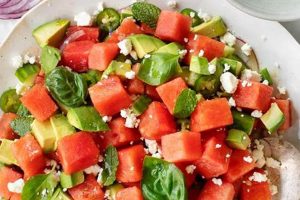
Dishes featuring cantaloupe combined with other ingredients, often other fruits, vegetables, herbs, or proteins, and dressed with a complementary sauce or vinaigrette, offer a refreshing and nutritious culinary experience. A simple example includes cubed cantaloupe, feta cheese, mint, and a light lemon vinaigrette.
These flavorful combinations provide a good source of vitamins, minerals, and antioxidants, promoting hydration and contributing to a healthy diet. Historically, the fruit’s refreshing qualities made it a popular choice in warmer climates, and its incorporation into salads likely evolved as culinary practices diversified and incorporated a wider range of ingredients. The adaptability of the melon allows for both sweet and savory preparations, catering to diverse palates and dietary preferences.
This exploration will delve into various preparation methods, ingredient pairings, and serving suggestions to showcase the versatility and appeal of these dishes. From simple everyday meals to elegant presentations suitable for special occasions, the possibilities are vast and invite culinary creativity.
Tips for Crafting Exceptional Cantaloupe Salads
Achieving optimal flavor and presentation requires attention to detail. The following tips offer guidance for creating exceptional dishes featuring this versatile melon.
Tip 1: Melon Selection and Preparation: Select a ripe cantaloupe with a sweet aroma and slight give at the stem end. Ensure thorough chilling before preparation. Neat, uniform cuts, whether cubed, balled, or sliced, enhance visual appeal.
Tip 2: Balancing Flavors: Consider the interplay of sweet, savory, acidic, and herbaceous elements. Pair the melon’s sweetness with salty cheeses like feta or prosciutto, acidic components like lime juice or balsamic vinegar, and fresh herbs such as mint or basil.
Tip 3: Texture Considerations: Incorporate a variety of textures to create a more engaging culinary experience. Toasted nuts, seeds, or croutons provide crunch, while creamy cheeses or avocados contribute a smooth contrast.
Tip 4: Dressing Selection: Light vinaigrettes or dressings complement the delicate flavor of cantaloupe. Avoid heavy, creamy dressings that can overpower the other ingredients. A simple vinaigrette with a touch of honey or maple syrup can enhance the melon’s sweetness.
Tip 5: Enhancing Visual Appeal: Consider the color palette and arrangement of ingredients. Vibrant greens, reds, and contrasting whites create an appetizing presentation. Garnishing with fresh herbs or edible flowers adds an elegant touch.
Tip 6: Timing is Key: Prepare the salad shortly before serving to prevent the melon from releasing excess moisture and compromising the textures of other components. This maintains the freshness and vibrancy of the dish.
Tip 7: Explore Flavor Combinations: Experiment with different ingredients to discover unique flavor profiles. Consider incorporating spicy elements like chili flakes or jalapeo, or earthy flavors like roasted vegetables or mushrooms.
By following these guidelines, one can elevate simple ingredients into a sophisticated and satisfying culinary creation that showcases the versatility and refreshing nature of cantaloupe.
The following section will provide specific recipe examples that illustrate these principles in action.
1. Fresh, Ripe Cantaloupe

Fresh, ripe cantaloupe forms the cornerstone of any successful cantaloupe salad recipe. The quality of the melon directly impacts the overall flavor, texture, and enjoyment of the dish. Selecting and preparing optimal cantaloupe is crucial for achieving desired results.
- Aroma and Appearance:
A ripe cantaloupe exhibits a sweet, musky aroma, particularly at the stem end. The rind should have a creamy, yellow-orange hue, potentially with some netting or webbing. Avoid melons with bruises, soft spots, or a dull, greenish appearance.
- Texture and Ripeness:
Gently pressing the blossom end (opposite the stem) should yield a slight give, indicating ripeness. An overly firm melon lacks sweetness, while excessive softness suggests overripeness. The melon should feel heavy for its size.
- Storage and Preparation:
Whole cantaloupe can be stored at room temperature for a few days to ripen further, then refrigerated once ripe to maintain optimal quality. Before preparing the salad, thoroughly chill the melon to enhance its refreshing qualities. Clean the rind thoroughly before cutting to prevent bacterial contamination.
- Flavor Impact:
A fresh, ripe cantaloupe offers a delicate sweetness and juicy texture that complements other salad ingredients. Its flavor profile provides a base upon which other components, such as savory cheeses, tangy dressings, and aromatic herbs, can build, creating a complex and satisfying culinary experience.
By prioritizing the selection of a high-quality, fresh, ripe cantaloupe, one ensures that the foundation of the salad is strong. This attention to detail contributes significantly to the overall success of the recipe, maximizing flavor, texture, and enjoyment.
2. Complementary Flavor Pairings

Cantaloupe, with its delicate sweetness and refreshing character, provides a versatile base for diverse flavor combinations in salads. Strategic pairing of ingredients enhances the melon’s inherent qualities while creating balanced and complex flavor profiles. Understanding these pairings allows for culinary exploration and consistently delicious results.
- Salty and Savory:
Salty elements provide a counterpoint to cantaloupe’s sweetness, creating a dynamic taste experience. Examples include feta cheese, prosciutto, or cured olives. These ingredients also contribute a savory dimension, enhancing the overall complexity of the salad. The saltiness draws out the melon’s sweetness, creating a harmonious balance.
- Acidic and Tangy:
Acidity brightens the flavor profile and cuts through the sweetness of the cantaloupe. Citrus fruits like lime or lemon, or vinegars like balsamic or apple cider, offer a refreshing contrast. These tangy notes add depth and prevent the salad from becoming overly sweet. The acidity also complements the melon’s juicy texture.
- Herbaceous and Aromatic:
Fresh herbs contribute aromatic complexity and enhance the overall freshness of the salad. Mint, basil, and cilantro are classic pairings with cantaloupe, offering distinct flavor profiles that complement the melon’s subtle sweetness. These herbaceous notes create a refreshing and vibrant sensory experience.
- Spicy and Peppery:
Incorporating spicy elements adds a layer of complexity and intrigue to cantaloupe salads. A pinch of chili flakes, a few slices of jalapeo, or a drizzle of sriracha can introduce a pleasant heat that contrasts with the melon’s sweetness. This unexpected pairing adds a dynamic dimension to the flavor profile.
These complementary flavor pairings, when thoughtfully combined, transform cantaloupe salad from a simple dish into a sophisticated culinary experience. The interplay of sweet, salty, acidic, herbaceous, and spicy elements creates a harmonious balance that elevates the inherent qualities of the cantaloupe, resulting in a refreshing and flavorful salad.
3. Balanced Textures

Texture plays a crucial role in the overall enjoyment of a cantaloupe salad. A variety of textures creates a more engaging and satisfying sensory experience. Balancing the soft, juicy nature of cantaloupe with contrasting textures elevates the dish from simple to sophisticated.
- Crunchy Elements:
Crunchy elements provide a textural counterpoint to the softness of cantaloupe. Toasted nuts like almonds or pecans, seeds like pumpkin or sunflower, or croutons offer a satisfying contrast. These additions create textural interest and prevent the salad from feeling monotonous.
- Creamy Components:
Creamy ingredients complement the juicy texture of cantaloupe while adding richness and depth. Avocado, soft cheeses like feta or goat cheese, or a dollop of Greek yogurt contribute a smooth, luxurious element. The interplay of creamy and juicy textures enhances the overall sensory experience.
- Chewy Additions:
Chewy textures introduce another layer of complexity. Dried fruits like cranberries or raisins, or chewy grains like quinoa or farro, provide a pleasant contrast to the other textures in the salad. This variety keeps the palate engaged and adds dimension to each bite.
- Crispy Greens:
Incorporating fresh, crisp greens provides a refreshing backdrop for the other ingredients. Baby spinach, romaine lettuce, or arugula add a light, crisp texture that complements the softness of the cantaloupe and other elements. These greens contribute to both the textural and visual appeal of the salad.
The interplay of these varied texturescrunchy, creamy, chewy, and crispcreates a dynamic and satisfying cantaloupe salad. This attention to textural balance elevates the dish, providing a more engaging and enjoyable culinary experience.
4. Appropriate Dressings

Dressings significantly influence the overall balance and flavor profile of cantaloupe salad recipes. The right dressing enhances the melon’s natural sweetness and complements other ingredients without overpowering their flavors or compromising textures. An inappropriate dressing, conversely, can mask delicate flavors, create an undesirable textural experience, or result in a dish that lacks cohesion.
Light, flavorful dressings generally work best with cantaloupe. Vinaigrettes, with their balance of acidity and oil, offer a refreshing counterpoint to the melon’s sweetness. For example, a simple vinaigrette made with olive oil, lemon juice, salt, and pepper provides a bright, clean flavor that enhances the cantaloupe without masking its delicate taste. A honey-lime vinaigrette adds a touch of sweetness and complexity, while a balsamic vinaigrette contributes a deeper, slightly tangy flavor profile. Conversely, heavy, creamy dressings, such as ranch or blue cheese, tend to overpower the subtle flavors of cantaloupe and other salad components. Their richness can also clash with the melon’s refreshing juiciness.
The choice of dressing should also consider the other ingredients in the salad. If the salad includes salty cheese or cured meats, a lighter vinaigrette provides balance. For salads with milder ingredients, such as cucumbers and herbs, a slightly sweeter or more complex vinaigrette might be appropriate. Understanding the interplay of flavors within the salad allows for selection of a dressing that enhances the overall composition rather than dominating it. Matching dressing consistency to salad components is also essential. A light vinaigrette maintains the crispness of fresh greens and prevents the melon from becoming soggy, whereas a thicker dressing might weigh down delicate ingredients. Careful consideration of dressing selection contributes significantly to a successful and enjoyable cantaloupe salad experience.
5. Thoughtful Presentation
Thoughtful presentation elevates cantaloupe salad recipes from simple meals to visually appealing culinary experiences. Visual appeal significantly influences perceived flavor and enjoyment. A well-presented salad entices the appetite and enhances the dining experience. Consider a salad of cantaloupe, feta, and mint. Simply tossing the ingredients together results in a palatable dish. However, arranging the melon slices artfully on a platter, crumbling the feta over them, and scattering fresh mint leaves creates a more enticing presentation. This attention to detail communicates care and elevates the perceived value of the dish.
Several factors contribute to thoughtful presentation. Color plays a vital role. The vibrant orange of cantaloupe provides a natural focal point. Combining it with contrasting colors, such as the white of feta or the deep green of spinach, creates visual interest. Texture also contributes to presentation. Balancing smooth cantaloupe with crunchy elements like toasted nuts or seeds adds visual texture. The arrangement of ingredients also matters. Instead of simply mixing everything together, consider layering or grouping ingredients to create visual depth and highlight individual components. Appropriate serving dishes further enhance the presentation. A simple white plate provides a clean backdrop that allows the colors of the salad to shine. Alternatively, a rustic wooden bowl can contribute to a more casual, summery aesthetic.
While flavor remains paramount, presentation enhances the overall dining experience. The visual appeal of a thoughtfully presented cantaloupe salad stimulates the senses and prepares the palate for enjoyment. This attention to detail, even in simple recipes, demonstrates care and elevates the perceived culinary value. It transforms a basic salad into a more memorable and satisfying experience.
Frequently Asked Questions
Addressing common inquiries regarding the preparation and enjoyment of cantaloupe-based salads provides clarity and facilitates culinary success.
Question 1: How does one select a ripe cantaloupe for a salad?
A ripe cantaloupe exhibits a fragrant aroma, especially at the stem end. The rind should have a creamy yellow-orange hue with a slight give when pressed gently at the blossom end. Avoid melons with bruises, soft spots, or a dull, greenish appearance.
Question 2: Can cantaloupe be combined with savory ingredients?
Cantaloupe’s subtle sweetness complements a range of savory ingredients. Pairings such as prosciutto, feta cheese, or cured olives create a balanced flavor profile. Herbs like mint or basil enhance the freshness and complexity of such combinations.
Question 3: What dressings are suitable for cantaloupe salads?
Light vinaigrettes, such as those made with citrus juice or balsamic vinegar, generally complement cantaloupe best. Heavy, creamy dressings can overpower the delicate flavor of the melon. The dressing should enhance, not mask, the other ingredients.
Question 4: How can one prevent cantaloupe salad from becoming watery?
Preparing the salad close to serving time minimizes moisture release. Thoroughly drying the cantaloupe after cutting also helps. Adding the dressing just before serving further prevents the salad from becoming overly watery.
Question 5: What are some suitable additions to enhance textural variety?
Toasted nuts, seeds, croutons, and crispy greens add contrasting textures to the softness of cantaloupe. Creamy elements like avocado or feta cheese provide another layer of textural complexity.
Question 6: How should cantaloupe be stored for optimal freshness?
Whole cantaloupes can be stored at room temperature for a few days to ripen further. Once ripe, refrigeration helps maintain optimal quality. Cut cantaloupe should be stored in an airtight container in the refrigerator and consumed within a few days.
Careful consideration of these points ensures optimal flavor, texture, and presentation, enhancing the overall enjoyment of cantaloupe salads.
Further exploration of specific recipe variations provides practical application of these principles.
Cantaloupe Salad Recipes
Exploration of cantaloupe salad recipes reveals the versatility of this refreshing fruit. Emphasis on ingredient selection, flavor pairings, textural balance, and presentation elevates the dish beyond simple preparations. From sweet to savory combinations, the potential for culinary creativity is vast. Optimal results depend on understanding the interplay of flavors and textures, ensuring a harmonious and satisfying culinary experience.
The adaptability of cantaloupe allows for continuous exploration and innovation within the culinary landscape. Thoughtful consideration of preparation techniques and ingredient combinations unlocks the full potential of cantaloupe, transforming a simple salad into a sophisticated and refreshing dish. Continued experimentation promises further exciting developments within the realm of cantaloupe-centric cuisine.