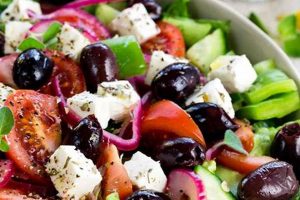
Dishes centered around fresh spinach leaves, tossed with crumbled feta and other complementary ingredients, offer a versatile foundation for culinary creativity. A simple version might include a vinaigrette, red onion, and sliced cucumbers. More elaborate preparations could incorporate dried cranberries, toasted nuts like walnuts or pecans, or even grilled chicken or salmon.
The combination of spinach and feta provides a nutritional powerhouse. Spinach offers vitamins A, C, and K, alongside minerals like iron and folate. Feta contributes calcium and protein. The versatility of these salads allows for the incorporation of various other healthy components, like other vegetables, fruits, and lean protein sources, making them a complete and balanced meal option. While the specific origins of combining these ingredients are difficult to pinpoint, the Mediterranean diet, known for its health benefits, has long utilized both spinach and feta.
Further exploration will delve into specific recipe variations, highlighting different flavor profiles, dietary considerations, and preparation techniques. From classic simplicity to innovative combinations, the possibilities for these salads are extensive.
Tips for Spinach and Feta Salads
Creating a successful spinach and feta salad involves attention to detail and an understanding of how different elements contribute to the final dish. The following tips provide guidance for optimal results.
Tip 1: Baby Spinach Preference: Baby spinach offers a tender texture and mild flavor, ideal for salads. Mature spinach can be used but requires thorough washing and removal of tough stems.
Tip 2: High-Quality Feta Matters: Invest in good quality feta cheese, preferably stored in brine. Its salty, tangy flavor is central to the salad’s profile.
Tip 3: Proper Drying Prevents Sogginess: Ensure spinach is thoroughly dried after washing. Excess moisture dilutes the dressing and creates an unpleasant texture.
Tip 4: Dressing Timing is Key: Dress the salad just before serving. This prevents the spinach from wilting and maintains its fresh appearance.
Tip 5: Ingredient Balance is Crucial: Balance the salty feta with other flavors. Sweet elements like dried cranberries or roasted red peppers can provide a pleasing contrast.
Tip 6: Textural Variety Enhances Enjoyment: Incorporate ingredients with different textures, such as toasted nuts, crunchy vegetables, or crispy chickpeas, for a more engaging culinary experience.
Tip 7: Proper Storage Extends Freshness: Store leftover salad components separately. Combine them just before serving to maintain optimal freshness and prevent wilting.
By following these guidelines, one can consistently create delicious and satisfying spinach and feta salads. Attention to ingredient quality, preparation techniques, and flavor balance ensures a positive culinary outcome.
These tips serve as a starting point for exploring a wide range of flavor combinations and creative variations on the classic spinach and feta salad theme.
1. Fresh Spinach
Fresh spinach forms the foundation of spinach salad recipes featuring feta cheese. Its flavor and texture significantly influence the overall culinary experience. Understanding spinach selection and preparation is essential for achieving optimal results.
- Leaf Variety
Different spinach varieties offer varying textures and flavors. Baby spinach, with its tender leaves and mild taste, is often preferred for salads. Mature spinach, while offering a more robust flavor, requires more thorough preparation, including removal of thick stems. The choice of spinach variety directly impacts the salad’s overall character.
- Quality Indicators
Selecting high-quality spinach is crucial. Look for vibrant green leaves, free from wilting or discoloration. Avoid spinach with slimy or damaged leaves. Freshness is paramount for both flavor and texture.
- Preparation Techniques
Proper handling ensures optimal enjoyment. Thoroughly washing and drying the spinach removes any grit and prevents excess moisture from diluting the dressing. Torn or chopped leaves create a manageable salad, while whole leaves offer a more rustic presentation.
- Storage and Shelf Life
Proper storage maintains freshness. Refrigerate unwashed spinach in a sealed container or bag, ideally with a paper towel to absorb moisture. Consume spinach within a few days of purchase for optimal quality. Prompt consumption preserves its nutritional value and vibrant flavor.
The quality and preparation of fresh spinach significantly impact the final salad. Choosing the right variety, ensuring freshness, and employing proper handling techniques contribute to a more enjoyable and flavorful spinach and feta salad experience. These factors are fundamental to a successful dish.
2. Quality Feta

Feta’s contribution to a spinach salad extends beyond mere saltiness; its creamy texture and tangy, slightly acidic notes play a critical role in balancing the other ingredients. Quality feta, typically made from sheep’s milk or a blend of sheep and goat’s milk, possesses a distinct complexity of flavor absent in lower-quality alternatives often made from cow’s milk. This complexity elevates the overall sensory experience of the salad. A high-quality feta, properly stored in brine, retains a pleasant crumbly texture, crucial for even distribution throughout the salad. Inferior feta, often drier and more rubbery, lacks this desirable characteristic, detracting from both the taste and mouthfeel.
The impact of feta quality becomes readily apparent when comparing salads made with different grades of cheese. A salad prepared with a premium Greek feta, stored in brine, offers a bright, tangy flavor that complements the spinach and other ingredients, enhancing their individual profiles. Conversely, a salad made with a lower-quality, pre-crumbled feta, often packaged dry, may taste bland and lack the characteristic tang, resulting in a less satisfying dish. Furthermore, high-quality feta maintains its structure better in the salad, while inferior feta can become excessively mushy and contribute to a watery, less appealing final product. The difference is often palpable.
Selecting high-quality feta significantly impacts the overall success of a spinach salad. Prioritizing feta stored in brine, made from sheep or a combination of sheep and goat milk, ensures a richer, more nuanced flavor profile. This attention to detail elevates the salad from simple to exceptional, demonstrating the crucial role ingredient quality plays in culinary endeavors. The textural integrity of good feta also contributes positively to the eating experience, avoiding a watery or overly mushy salad. Ultimately, the investment in quality feta directly translates to a more satisfying and enjoyable meal.
3. Balanced Dressing

Balanced dressing plays a crucial role in spinach salad recipes featuring feta cheese. The dressing’s primary function extends beyond simply adding moisture; it serves as a unifying element, harmonizing the distinct flavors of spinach and feta. A well-balanced dressing complements the spinach’s earthy notes and the feta’s salty tang, creating a cohesive flavor profile. An overly acidic dressing can overwhelm the delicate spinach, while an excessively sweet or bland dressing fails to provide the necessary contrast to the feta’s sharpness. Consider a lemon-herb vinaigrette: the citrusy brightness of the lemon juice cuts through the richness of the feta, while herbs like oregano and dill provide an aromatic backdrop that enhances the spinach’s inherent flavors. This balance is key to a successful salad.
Practical examples further illustrate the importance of dressing balance. A vinaigrette made with excessive balsamic vinegar can overpower the other ingredients, rendering the salad too tart. Conversely, a dressing lacking acidity can result in a bland, uninspiring dish. The balance also affects the salad’s textural integrity. A dressing with too much oil can make the spinach leaves slippery and unappetizing. Conversely, a dressing lacking sufficient oil can fail to adequately coat the leaves, leading to uneven flavor distribution. A properly balanced dressing, such as a honey-mustard vinaigrette, combines sweetness, acidity, and a touch of Dijon mustard to create a harmonious flavor profile that enhances both the spinach and feta. It also provides the right consistency to cling to the leaves without making them soggy.
Careful consideration of dressing balance is essential for a successful spinach and feta salad. The interplay of acidity, sweetness, and other flavor components determines the overall harmony of the dish. Achieving this balance ensures that the spinach, feta, and other ingredients complement each other, creating a cohesive and enjoyable culinary experience. Understanding the nuances of dressing composition allows for informed choices and consistent, positive outcomes in these recipes. The dressing should enhance, not overpower, the individual ingredients, contributing to a well-rounded and flavorful salad.
4. Complementary Ingredients

Complementary ingredients in spinach salad recipes featuring feta cheese elevate the dish beyond a simple combination of greens and cheese. These additions introduce textural contrasts, nuanced flavors, and visual appeal, transforming the salad into a more complex and satisfying culinary experience. Consider the interplay of textures: the tender spinach and creamy feta benefit from the addition of crunchy elements like toasted nuts, seeds, or croutons. These contrasting textures create a more dynamic and enjoyable mouthfeel. Flavorwise, complementary ingredients offer opportunities to balance the inherent saltiness of the feta and the slight bitterness sometimes present in spinach. Sweet components, such as dried cranberries or roasted red peppers, provide a counterpoint to the feta’s tang, while acidic elements like a squeeze of lemon juice or a splash of red wine vinegar further brighten the flavor profile. Visually, complementary ingredients add color and interest, enhancing the salad’s presentation. Sliced red onion provides a vibrant pop of color, while segments of orange offer a contrasting hue and a burst of juicy sweetness.
Specific examples illustrate the transformative potential of complementary ingredients. A spinach salad with feta, toasted slivered almonds, and dried cranberries exemplifies the interplay of textures and flavors. The crunchy almonds contrast with the soft spinach and feta, while the tart cranberries balance the cheese’s saltiness. Another example, a spinach salad with feta, roasted red peppers, and Kalamata olives, demonstrates a different flavor profile. The sweetness of the roasted peppers complements the feta, while the briny olives add a savory depth. These examples demonstrate how carefully chosen complementary ingredients can elevate a simple spinach and feta salad into a multifaceted dish. Furthermore, the nutritional value of the salad can be enhanced through the addition of ingredients like protein-rich grilled chicken or nutrient-packed avocado slices.
Strategic selection of complementary ingredients is essential for maximizing the potential of spinach salad recipes with feta cheese. These additions contribute not only to flavor and texture but also to visual appeal and nutritional value. Understanding the interplay of different ingredients allows for the creation of balanced and satisfying salads tailored to specific preferences. By carefully considering the role of each component, one can consistently create delicious and well-rounded spinach and feta salads that offer a complete and enjoyable dining experience.
5. Proper Preparation
Proper preparation is paramount for maximizing the flavor and textural enjoyment of spinach salad recipes featuring feta cheese. Careful attention to each step, from ingredient handling to final assembly, ensures a successful and satisfying culinary outcome. Overlooking key preparatory steps can compromise the overall quality of the dish, diminishing its appeal and potentially affecting food safety.
- Spinach Handling
Gentle handling preserves the delicate leaves. Thorough washing removes soil and debris, while careful drying prevents excess moisture from diluting the dressing and creating a soggy salad. Torn or chopped leaves offer manageable bite-sized pieces, while leaving leaves whole presents a more rustic aesthetic. Improper washing can leave grit in the salad, while inadequate drying compromises texture and flavor.
- Feta Incorporation
The method of feta incorporation influences both flavor distribution and textural integrity. Crumbling feta ensures even distribution of its salty, tangy notes throughout the salad. Adding large chunks of feta creates pockets of intense flavor, while pre-crumbled feta, though convenient, can sometimes lack the desired creamy texture. Adding feta too early can lead to it drying out, while adding it too late may result in uneven distribution.
- Dressing Timing
Proper timing of dressing application preserves the spinach’s freshness and prevents premature wilting. Adding the dressing immediately before serving maintains the crispness of the leaves and prevents them from becoming soggy. Adding the dressing too early can leach moisture from the spinach, resulting in a less appealing texture and diluted flavor.
- Ingredient Order
The order in which ingredients are combined impacts the final presentation and flavor balance. Adding heavier ingredients, such as nuts or dried fruit, after the dressing ensures they don’t sink to the bottom. Layering ingredients thoughtfully creates visual appeal and allows for distinct flavors to emerge. Incorrect layering can lead to uneven distribution and a less appealing presentation.
Each stage of preparation contributes significantly to the final quality of a spinach salad with feta cheese. Attention to detail, from proper spinach handling to the timing of dressing application, ensures a balanced and enjoyable culinary result. Overlooking these crucial steps compromises the delicate balance of flavors and textures, resulting in a less satisfying dish. Proper preparation elevates this simple salad from ordinary to exceptional, showcasing the importance of culinary technique in achieving optimal results.
Frequently Asked Questions
This section addresses common inquiries regarding spinach salad recipes incorporating feta cheese, offering concise and informative responses to facilitate optimal preparation and enjoyment.
Question 1: Can other greens be substituted for spinach?
While spinach provides a classic base, other leafy greens like kale, arugula, or romaine can be substituted. However, flavor profiles will differ; kale offers a more robust, earthy taste, while arugula contributes a peppery note. Adjustments to the dressing may be necessary to complement the chosen green.
Question 2: What dressings best complement spinach and feta?
Lemon-herb vinaigrettes, honey-mustard dressings, and balsamic reductions all pair well with spinach and feta. The acidity in these dressings balances the saltiness of the feta and enhances the spinach’s flavor. Creamy dressings, while acceptable, can sometimes overpower the delicate nature of the spinach.
Question 3: How can wilting be prevented?
Thorough drying of spinach after washing and adding dressing immediately before serving are crucial for preventing wilting. Storing dressed salads is not recommended, as the spinach will inevitably wilt. Keeping components separate until serving time ensures optimal freshness.
Question 4: What protein sources complement this salad?
Grilled chicken, salmon, or shrimp are excellent protein additions. Chickpeas, lentils, and hard-boiled eggs offer plant-based protein options. The choice of protein should complement the overall flavor profile of the salad and dressing.
Question 5: Can this salad be made ahead of time?
While the entire salad is best assembled just before serving, components can be prepared in advance. Spinach can be washed and dried, other vegetables chopped, and the dressing prepared a day ahead. Store these components separately and combine them just prior to serving to maintain freshness.
Question 6: How should leftover feta be stored?
Store leftover feta in an airtight container submerged in brine or wrapped tightly in plastic wrap to maintain its moisture and prevent it from drying out. Proper storage ensures the feta remains fresh and flavorful for future use.
Understanding these common concerns facilitates successful preparation and enjoyment of spinach salad recipes featuring feta cheese. Careful consideration of ingredient selection, preparation techniques, and storage methods contribute to a consistently positive culinary experience.
This concludes the frequently asked questions section. Further exploration may focus on specific recipe variations or dietary adaptations.
Spinach Salad Recipes with Feta Cheese
Exploration of spinach salad recipes incorporating feta cheese reveals the critical interplay of ingredient quality, preparation techniques, and flavor balancing. Fresh, properly handled spinach provides a foundational bed of tender greens. High-quality feta, preferably stored in brine, contributes a crucial salty, tangy dimension. A balanced dressing, neither overly acidic nor excessively sweet, harmonizes these core components. Complementary ingredients, selected for textural and flavor contrast, elevate the dish beyond simplicity. Proper preparation, including meticulous attention to timing and ingredient order, preserves freshness and maximizes enjoyment. Addressing common inquiries regarding ingredient substitutions, dressing selection, and wilt prevention further empowers culinary success.
The potential of spinach salad recipes with feta cheese extends beyond basic sustenance. Thoughtful ingredient selection and careful preparation transform this seemingly simple dish into a canvas for culinary expression. From the bright tang of a lemon-herb vinaigrette to the satisfying crunch of toasted nuts, each element contributes to a harmonious whole. Culinary exploration yields not only a nutritious and flavorful meal but also an appreciation for the transformative power of balanced ingredients and considered techniques. The possibilities for variation within this framework are vast, offering a continuous invitation to creativity and culinary discovery.