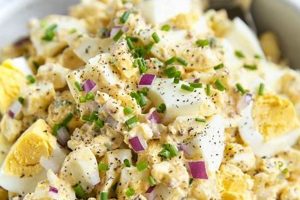
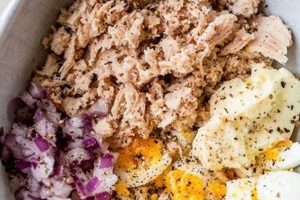
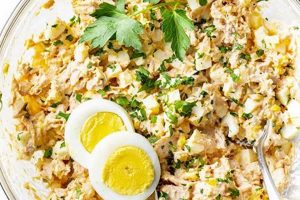
An exceptional egg salad sandwich involves more than simply combining chopped eggs and mayonnaise. It requires a careful selection of ingredients, precise proportions, and thoughtful techniques to elevate it from ordinary to extraordinary. A truly superior version might involve perfectly cooked eggs, finely diced celery and red onion, a touch of Dijon mustard, and perhaps a sprinkle of paprika or fresh herbs. A well-executed recipe will also offer guidance on achieving the ideal egg texture and mayonnaise consistency, avoiding a watery or overly dense final product.
Crafting a delicious egg salad sandwich offers several advantages. It provides a quick and easy meal option utilizing readily available ingredients. It’s a versatile dish, adaptable to various bread choices and accompaniments, from simple white bread to croissants or lettuce wraps. Historically, egg salad sandwiches have been a popular picnic and lunchbox staple, appreciated for their portability and satisfying nature. The dish allows for creative variations, incorporating ingredients like bacon, avocado, or different spices, catering to diverse palates.
This article will delve into the components of a truly remarkable egg salad sandwich, exploring variations on the classic recipe, offering tips for achieving optimal results, and providing suggestions for serving and presentation.
Tips for an Exceptional Egg Salad Sandwich
Elevating an egg salad sandwich from ordinary to extraordinary involves attention to detail and a few key techniques. These tips offer guidance on crafting a sandwich that stands out in terms of flavor, texture, and presentation.
Tip 1: Perfect Egg Cooking: Achieving the ideal egg texture is paramount. Overcooked eggs result in a dry, crumbly salad. Aim for a firm yet moist yolk by simmering eggs for 8-10 minutes, then immediately transferring them to an ice bath to halt the cooking process.
Tip 2: Precise Chopping: Uniformly chopped ingredients ensure a pleasant texture and even distribution of flavor. Dice eggs, celery, onion, and other additions into similarly sized pieces, avoiding overly large or small chunks.
Tip 3: Mayonnaise Mastery: The quality and quantity of mayonnaise significantly impact the final product. Opt for high-quality mayonnaise and incorporate it gradually, starting with a small amount and adding more until the desired consistency is reached, avoiding an overly wet salad.
Tip 4: Seasoning Savvy: Salt and pepper are essential, but consider enhancing the flavor profile with Dijon mustard, a dash of paprika, or a sprinkle of fresh herbs like dill or chives. Taste and adjust seasonings throughout the process.
Tip 5: Bread Selection: The bread serves as the foundation of the sandwich. Choose a bread that complements the egg salad, such as classic white bread, whole wheat, a croissant, or even a lettuce wrap for a lighter option.
Tip 6: Mindful Assembly: Evenly distribute the egg salad on the bread, ensuring a satisfying bite in every mouthful. Consider adding lettuce, tomato, or other desired accompaniments for added texture and flavor.
Tip 7: Chilling Time: Allowing the egg salad to chill for at least 30 minutes before serving allows the flavors to meld and enhances the overall experience.
By implementing these tips, one can create an egg salad sandwich that transcends the ordinary, delivering a truly satisfying culinary experience.
This exploration of techniques and flavor combinations provides a foundation for crafting an exceptional egg salad sandwich. The following section will offer concluding remarks and further inspiration.
1. High-Quality Ingredients
The pursuit of a truly exceptional egg salad sandwich hinges significantly on the quality of ingredients used. This principle applies to every component, from the eggs themselves to the mayonnaise, seasonings, and bread. Superior ingredients contribute not only to enhanced flavor but also to improved texture and overall enjoyment. The difference between a bland, forgettable sandwich and a memorable one often lies in the nuanced flavors derived from fresh, high-quality components.
Consider the impact of egg selection. Farm-fresh eggs, ideally sourced locally, possess richer yolks and a noticeably superior flavor compared to standard supermarket eggs. This depth of flavor translates directly to the final product. Similarly, the choice of mayonnaise plays a crucial role. A high-quality mayonnaise, made with real eggs and minimal additives, offers a creamier texture and a cleaner flavor profile, enhancing the overall richness of the egg salad. Even seemingly minor ingredients, such as freshly ground black pepper or a pinch of high-quality sea salt, contribute significantly to the final flavor complexity. Using freshly baked bread from a local bakery, rather than mass-produced varieties, provides a textural and flavorful foundation that elevates the entire sandwich.
In essence, the “masters egg salad sandwich recipe” prioritizes ingredient quality as a non-negotiable element. This commitment to excellence distinguishes a truly exceptional sandwich from a mediocre one. While convenience often dictates the use of readily available ingredients, understanding the profound impact of quality offers a pathway to a more rewarding culinary experience. The investment in superior ingredients, while potentially involving a slightly higher cost, ultimately yields a significantly more satisfying and flavorful result. This principle underscores the importance of sourcing the best possible components when striving for culinary excellence.
2. Precise Egg Cooking

Precise egg cooking stands as a cornerstone of a master-level egg salad sandwich. The final texture and overall palatability of the sandwich depend heavily on the eggs’ consistency. Overcooked eggs result in a dry, crumbly, and ultimately less satisfying filling, while undercooked eggs lead to a watery, unappetizing mixture. The goal is to achieve a perfectly cooked egg whitefirm yet tenderand a yolk that is fully cooked but still retains a creamy texture. This delicate balance contributes significantly to the overall quality of the sandwich.
The ideal cooking time and method may vary slightly depending on individual preferences and stovetop variations. However, a generally accepted method involves gently simmering eggs for 8-10 minutes, followed by immediate immersion in an ice bath to arrest the cooking process. This rapid cooling prevents the yolks from developing a greenish tinge and maintains their desirable creamy texture. For instance, using older eggs might necessitate a slightly shorter cooking time, whereas fresher eggs might benefit from an extra minute. Experimentation and careful observation are key to achieving consistent results. A properly cooked egg will yield a clean cut, revealing a fully set yolk without any runny remnants. This precision ensures optimal binding with the mayonnaise and other ingredients, creating a harmonious blend of flavors and textures.
Mastering egg cooking for egg salad is a seemingly small detail with substantial implications. It demonstrates an attention to detail and a commitment to quality that elevates the final product. The difference between a hastily boiled egg and a precisely cooked one is palpable in the finished sandwich. This seemingly simple step underscores the notion that culinary excellence often lies in the meticulous execution of fundamental techniques. The results are a testament to the understanding that even basic preparations can be elevated through careful attention and practice. This precision transforms a simple egg salad sandwich into a truly remarkable culinary experience.
3. Balanced Seasoning
Balanced seasoning distinguishes an ordinary egg salad sandwich from an exceptional one. It involves a nuanced understanding of flavor profiles and the interplay of different ingredients. More than simply adding salt and pepper, it requires a thoughtful approach to enhancing the inherent flavors of the eggs and other components without overpowering the delicate balance.
- Salt and Pepper Foundation:
Salt and freshly ground black pepper serve as the foundational seasoning elements. Salt enhances the natural flavors of the eggs and other ingredients, while pepper adds a subtle bite and complexity. The quantity of each depends on personal preference and the saltiness of other ingredients, such as mayonnaise or add-ins like olives or pickles. Proper seasoning requires tasting and adjusting throughout the process to achieve the desired balance.
- Acidity as a Brightener:
A touch of acidity brightens the richness of the mayonnaise and eggs. This can be achieved through a squeeze of lemon juice, a dash of white wine vinegar, or a dollop of Dijon mustard. The acidity cuts through the fattiness, adding a refreshing counterpoint and preventing the sandwich from tasting overly heavy. For example, a teaspoon of lemon juice can elevate the flavor profile significantly without overpowering the other ingredients.
- Herbaceous Enhancements:
Fresh herbs provide another layer of complexity and freshness. Finely chopped chives, dill, or tarragon complement the egg salad beautifully, adding a subtle aromatic dimension. The choice of herbs depends on personal preference and the desired flavor profile. A sprinkle of fresh dill, for example, can impart a bright, slightly tangy flavor that complements the richness of the eggs. Care should be taken not to overdo the herbs, as their flavors can easily become dominant.
- Spice as an Accent:
A hint of spice can add warmth and depth to the egg salad. A pinch of paprika, cayenne pepper, or a dash of hot sauce can introduce a subtle heat that complements the other flavors. The level of spice should be carefully calibrated to avoid overwhelming the delicate balance of the sandwich. A small amount of smoked paprika, for instance, can add a smoky depth without adding excessive heat.
Ultimately, balanced seasoning in a “masters egg salad sandwich recipe” demonstrates a nuanced understanding of flavor interactions. It’s a testament to the chef’s ability to enhance, not mask, the inherent flavors of each ingredient. This attention to detail elevates the sandwich beyond the ordinary, creating a culinary experience that is both satisfying and memorable. The careful orchestration of these elements transforms a simple egg salad sandwich into a sophisticated expression of culinary artistry.
4. Optimal Mayonnaise Ratio

The optimal mayonnaise ratio stands as a critical factor in achieving a master-level egg salad sandwich. Mayonnaise serves as the binding agent, contributing to the overall texture, moisture, and flavor profile. However, an improper ratio can either lead to a dry, crumbly mixture or an overly wet, unappetizing salad. The “masters egg salad sandwich recipe” emphasizes the importance of achieving the Goldilocks principlenot too much, not too little, but just the right amount. This balance ensures a harmonious blend of ingredients, where the mayonnaise complements rather than overwhelms the other components.
The precise ratio depends on several factors, including the size of the eggs, the desired consistency, and the inclusion of other moist ingredients. A general guideline suggests starting with one to two tablespoons of mayonnaise per two large eggs. However, this is merely a starting point. One must consider the interplay of other ingredients. For instance, the addition of ingredients like chopped celery or relish introduces moisture, potentially requiring a reduction in the amount of mayonnaise. Conversely, if the egg yolks are particularly dry, a slightly higher ratio might be necessary. The key lies in observing the mixture’s consistency and adjusting accordingly. The goal is to achieve a texture that is moist and creamy without being excessively wet. A visual inspection provides valuable cuesthe mixture should hold its shape without being stiff, and it should glisten slightly without appearing soupy.
Mastering the mayonnaise ratio demonstrates a nuanced understanding of the delicate balance required in a superior egg salad sandwich. It showcases an attention to detail often overlooked in simpler preparations. This careful calibration distinguishes a truly exceptional sandwich from a mediocre one, highlighting the importance of precision in culinary pursuits. Achieving the optimal ratio contributes significantly to the overall enjoyment of the sandwich, ensuring a harmonious blend of flavors and textures that delights the palate. It transforms a simple mixture of ingredients into a cohesive and satisfying culinary experience.
5. Thoughtful Textural Elements
A truly exceptional egg salad sandwich transcends mere flavor; it engages multiple senses, with texture playing a crucial role. “Thoughtful textural elements” elevate the sandwich from simple to sophisticated, offering a more complex and satisfying culinary experience. These elements introduce contrasting sensations, preventing a monotonous mouthfeel and enhancing the overall enjoyment. In the context of a “masters egg salad sandwich recipe,” textural considerations demonstrate a deep understanding of culinary principles and an attention to detail that distinguishes an ordinary sandwich from a remarkable one.
- Crunchy Counterpoints:
Finely diced celery, red onion, or water chestnuts provide a crisp, refreshing contrast to the creamy egg salad. This interplay of textures creates a more dynamic and engaging sensory experience. The subtle crunch of celery, for instance, enhances the smoothness of the mayonnaise and egg mixture, preventing the sandwich from becoming overly rich or heavy. These crunchy elements contribute a lightness and vibrancy that elevate the overall enjoyment.
- Creamy Components:
While the egg salad itself provides a creamy base, incorporating other creamy components can add depth and complexity. A dollop of Greek yogurt or a ripe avocado can introduce nuanced flavors and varying degrees of creaminess, further enhancing the textural profile. The smoothness of avocado, for example, complements the richness of the mayonnaise, creating a luxurious mouthfeel that amplifies the overall sensory experience. These creamy elements contribute to a sense of indulgence and satisfaction.
- Seedy Accents:
A sprinkle of toasted sesame seeds, poppy seeds, or chopped nuts adds a subtle nutty flavor and a pleasant textural variation. These small additions introduce another layer of complexity, preventing the sandwich from feeling one-dimensional. The delicate crunch of toasted sesame seeds, for example, provides a subtle contrast to the softness of the bread and the creaminess of the filling, adding a nuanced textural element that enhances the overall enjoyment. These seedy accents contribute a touch of sophistication and intrigue.
- Bread as a Foundation:
The choice of bread significantly impacts the overall textural experience. A crusty baguette offers a pronounced chewiness, while a soft brioche bun provides a pillowy backdrop. The bread’s texture should complement the filling, creating a harmonious balance. A lightly toasted sourdough, for example, offers a satisfying contrast to the creamy filling, while a flaky croissant provides a buttery, delicate counterpoint. The bread serves as the foundational textural element, influencing the overall perception of the sandwich.
By thoughtfully incorporating these textural elements, a “masters egg salad sandwich recipe” achieves a symphony of sensations that elevate the simple sandwich to an art form. These carefully chosen components demonstrate a mastery of culinary principles and an appreciation for the interplay of textures, transforming a humble lunch staple into a truly memorable culinary experience. The consideration of texture, alongside flavor, distinguishes a truly exceptional egg salad sandwich from a merely adequate one, showcasing the importance of sensory details in culinary excellence.
6. Fresh Bread Choice

Bread selection significantly impacts the overall quality of a master-level egg salad sandwich. The bread acts as more than a mere vehicle for the filling; it contributes to the structural integrity, flavor profile, and textural experience. A thoughtful bread choice elevates the sandwich, transforming it from a simple combination of ingredients into a cohesive culinary creation. A stale or poorly chosen bread, conversely, can detract from even the most meticulously prepared egg salad, diminishing the overall enjoyment. The connection between fresh bread and a “masters egg salad sandwich recipe” is integral, demonstrating an attention to detail that distinguishes exceptional culinary endeavors.
The structural integrity of the sandwich relies heavily on the bread’s ability to hold the filling without becoming soggy or falling apart. A sturdy, freshly baked loaf offers the necessary support, ensuring a pleasant eating experience. For example, a thinly sliced, day-old baguette might struggle to contain a generous portion of egg salad, resulting in a messy and unsatisfying sandwich. A denser, freshly baked sourdough, however, provides a robust foundation that maintains its integrity even with a substantial filling. Additionally, the bread’s flavor profile should complement the egg salad without overpowering the delicate balance of flavors. A strongly flavored rye bread, for instance, might clash with the subtle nuances of a classic egg salad, while a lightly textured brioche bun offers a buttery sweetness that harmonizes beautifully. Furthermore, the bread’s texture contributes to the overall sensory experience. A crusty roll offers a satisfying chewiness, while a soft white bread provides a pillowy contrast to the creamy filling. The interplay of textures enhances the enjoyment, preventing the sandwich from feeling one-dimensional.
In conclusion, the choice of fresh bread represents a crucial element in a “masters egg salad sandwich recipe,” demonstrating a commitment to quality that extends beyond the filling itself. This seemingly simple decision carries significant weight, impacting the structural integrity, flavor profile, and textural complexity of the final product. A discerning bread choice elevates the egg salad sandwich from a humble meal to a culinary experience worthy of the “master” designation. The selection demonstrates an understanding of the interconnectedness of ingredients and the importance of considering every component in pursuit of culinary excellence. It reflects a holistic approach that values the contribution of each element, ensuring a harmonious and satisfying final product.
Frequently Asked Questions
This section addresses common inquiries regarding the creation of superior egg salad sandwiches, offering insights and clarifications to ensure optimal results.
Question 1: How does one prevent overly watery egg salad?
Excess moisture often stems from overcooked yolks or excessive mayonnaise. Utilize perfectly cooked eggs and incorporate mayonnaise gradually, assessing the consistency before adding more. Incorporating finely diced celery can absorb excess moisture. Draining the cooked eggs thoroughly also helps mitigate this issue.
Question 2: What are the best egg varieties for egg salad?
Fresh, high-quality eggs, ideally farm-fresh, yield the best flavor and texture. While standard supermarket eggs suffice, the richer yolks of higher-quality eggs contribute significantly to a superior egg salad. The difference in flavor is often noticeable.
Question 3: Can egg salad be prepared in advance?
Egg salad can be prepared up to two days in advance. Store it in an airtight container in the refrigerator to maintain freshness and prevent absorption of other flavors. Allowing the flavors to meld in the refrigerator enhances the overall taste.
Question 4: Beyond celery, what other ingredients complement egg salad?
Red onion, chives, dill, bacon, avocado, and various spices offer flavorful complements. Consider incorporating ingredients that provide textural contrast, such as chopped water chestnuts or toasted nuts.
Question 5: How does one achieve the ideal egg texture for egg salad?
Simmering eggs for 8-10 minutes, followed by immediate immersion in an ice bath, yields firm yet moist yolks and prevents overcooking. This precise cooking method ensures optimal texture and prevents dry, crumbly egg salad.
Question 6: What bread types best complement egg salad?
Classic white bread, whole wheat, brioche buns, croissants, and even lettuce wraps offer suitable bases. The choice depends on individual preference and desired textural contrast. Consider the bread’s ability to hold the filling without becoming soggy.
Careful consideration of these frequently asked questions enhances one’s understanding of the nuances involved in crafting exceptional egg salad sandwiches. Attention to these details ensures a more satisfying and flavorful culinary experience.
This FAQ section provides a comprehensive resource for addressing common queries. Further exploration of specific recipe variations and advanced techniques will follow.
Masters Egg Salad Sandwich Recipe
This exploration of the “masters egg salad sandwich recipe” has delved into the critical components that elevate this seemingly simple dish to a culinary art form. From the meticulous selection of fresh, high-quality ingredients to the precise execution of cooking techniques and the nuanced understanding of flavor balancing, the pursuit of excellence in egg salad preparation requires attention to detail and a commitment to quality. The discussion encompassed the importance of perfectly cooked eggs, the optimal mayonnaise ratio, the thoughtful incorporation of textural elements, and the strategic choice of bread. Each element contributes significantly to the final product, transforming a humble sandwich into a truly satisfying culinary experience. The analysis highlighted the interplay of these components, emphasizing the synergistic effect of carefully considered choices.
The “masters egg salad sandwich recipe” represents more than a mere set of instructions; it embodies a philosophy of culinary excellence. It encourages a deeper appreciation for the nuances of flavor, texture, and presentation, even in seemingly simple preparations. This pursuit of mastery extends beyond the realm of egg salad, inspiring a more thoughtful and engaged approach to all culinary endeavors. By embracing the principles outlined herein, one can elevate everyday meals into memorable experiences, transforming the act of eating into a celebration of flavor and craftsmanship. The potential for culinary artistry exists within even the most basic of dishes, awaiting discovery and exploration by those who seek to elevate the ordinary to the extraordinary.